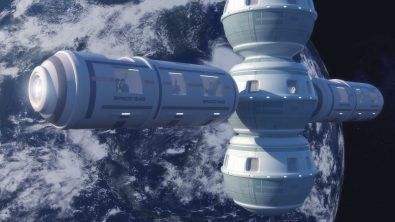
Designing orbital data centers with confidence using Simcenter Amesim and Simcenter 3D Space Systems Thermal

Unlock efficient orbital data center design with Simcenter Amesim and Simcener 3DSpace Systems Thermal, integrating power systems, thermal management, and energy storage for reliable performance in challenging environments.

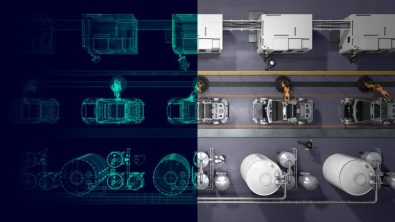
The Executable Digital Twin runs continuously alongside the physical asset, predicting states that no sensor alone can observe.

The architecture of truth: How Siemens’ AI-powered Executable Digital Twin is rewriting the rules of industrial intelligence

Discover how Executable Digital Twin closes the gap between physical assets and real-time insight – using physics-validated AI to optimize energy generation, transmission and consumption.

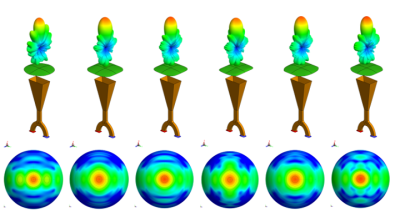
Antenna design variants and radiation patterns optimized with Simcenter Feko and Simcenter HEEDS

Accelerate antenna design optimization with Simcenter Feko and Simcenter HEEDS

Explore how Simcenter Feko and Simcenter HEEDS work together to automate antenna design exploration and optimization, from parameterized electromagnetic simulation to Pareto-optimal design evaluation.

Virtual Integrated Aircraft: A methodology for early aircraft systems integration with Simcenter systems simulation

The aerospace industry is facing unprecedented levels of complexity. Electrification, software-intensive architectures, thermal management challenges, and increasingly demanding verification and…

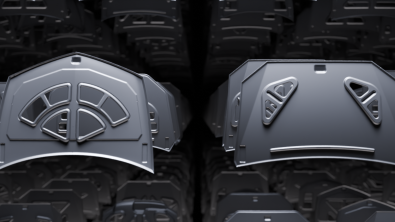
Simcenter PhysicsAI Generate producing physics-aware novel design concepts for automotive hood

What’s new in Simcenter PhysicsAI 2026.1?

Explore what’s new in Simcenter PhysicsAI 2026.1: generative AI for engineering design, improved hotspot predictions, 5× faster training, SPH support, and more.

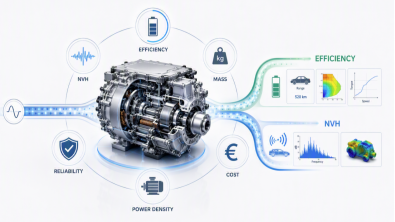
Balancing vehicle noise and vibration with e-efficiency for e-powertrains – a “multitasking challenge”

Electric vehicle e-powertrain development is a balancing act between efficiency, noise and vibration (NVH), cost, mass, and reliability. While efficiency directly influences vehicle range, NVH issues remain a major source of development challenges and budget overruns. This blog explores how engineers can assess e-efficiency and NVH simultaneously using a single synchronized measurement setup. By combining electrical, mechanical, acoustic, and vibration data in one test campaign, teams can directly correlate efficiency gains with NVH impacts, identify critical noise sources, and make faster, better-informed design decisions.
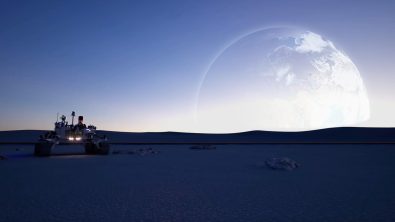
From Apollo to Artemis: How the digital twin is accelerating lunar rover development

Learn how aerospace engineers validate lunar rover designs using Simcenter digital twin simulation. Integrated thermal, structural, and thermo-mechanical analysis reduces hardware risk, accelerates iteration, and enables mission-critical design decisions before physical testing … essential for Artemis program success.

Virtual Integrated Aircraft: Designing cryogenic hydrogen storage through the digital thread

As the aerospace industry explores hydrogen-powered flight, one challenge quickly rises to the top: where do you store liquid hydrogen…

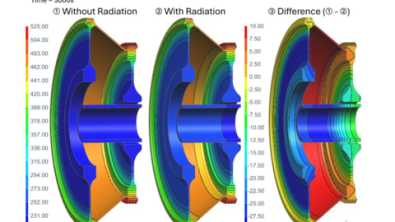
Effective methods to simulate radiation in turbomachinery

Designing modern gas turbines is a balancing act between physics and performance. As temperatures soar, even small thermal miscalculations can…