Featured posts

Latest posts

Simcenter knowledge base

Find all the answers you need in our Knowledge Base

You have questions about Simcenter system simulation solutions and you don’t know where to get answers? You want to increase your…

Combustion CFD with Adaptive Mesh Refinement

Combustion simulation – A cyclist’s guide to clean air with adaptive mesh refinement

While combustion simulation is my profession, cycling is my passion. Taking my daily exercise cycling through London, last week, the…

Simulation

Will your electronics survive an earthquake?

It’s a valid question. What if you could effectively verify the integrity of electronic assemblies and component – before you…

Prescan 2020.2 release presents a new hardware-in-the-loop solution compatible with NI hardware

Simcenter Prescan, the best physics-based simulation platform for testing and development of automated vehicles, announces the release of version 2020.2. This release introduces the Hardware in the Loop simulations with National Instruments Hardware

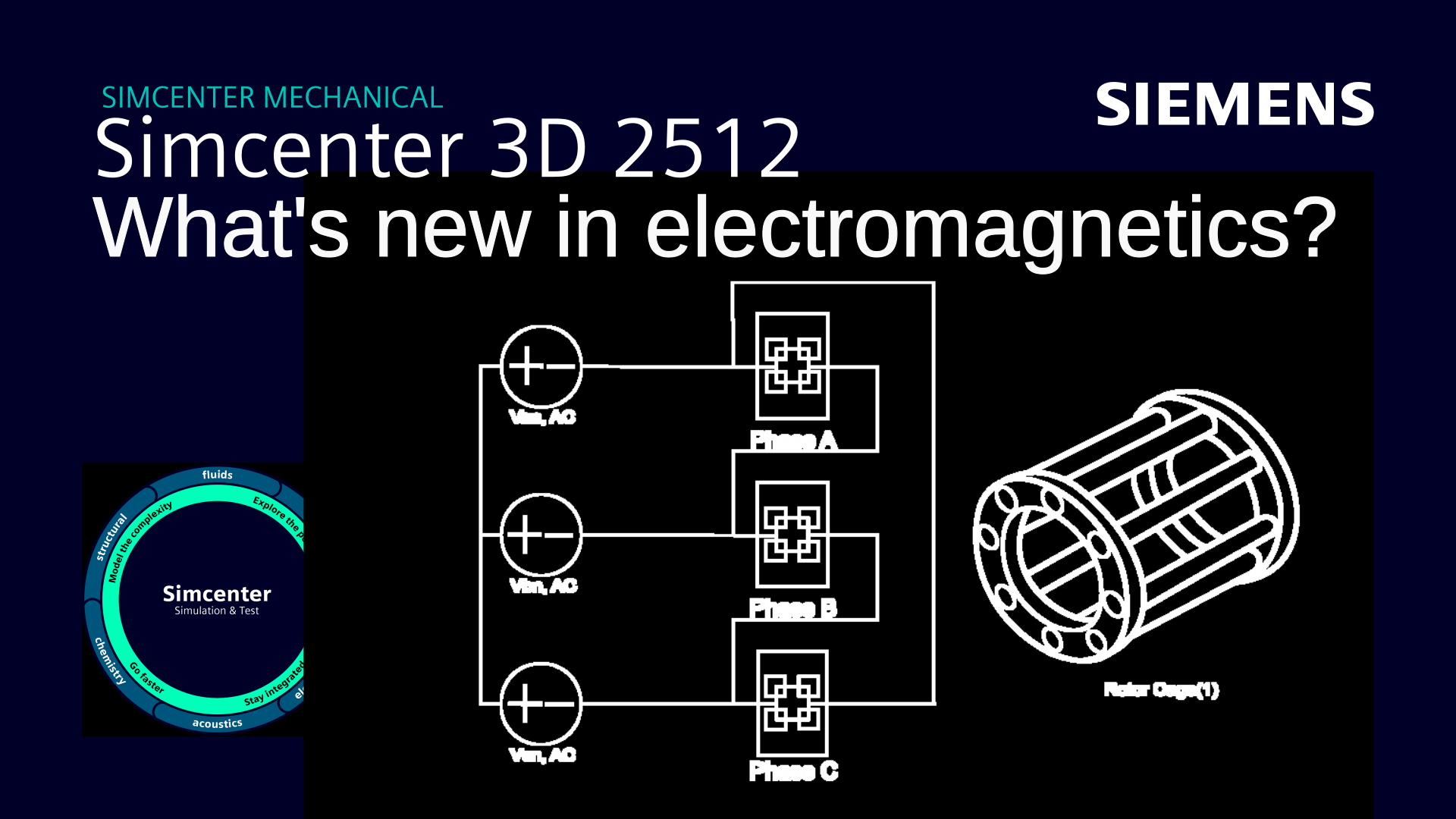
Improving Hysteresis and Eddy Losses in Electric Machines

The prediction of iron losses is an important aspect of improving the overall efficiency of electric machines.

STAR-CD/es-ice/DARS 2020.1 Released

The latest release of STAR-CD/es-ice/DARS, version 2020.1, is now available for download from our customer portal.  Download now and get…

Meet Siemens at NAFEMS CAASE20

Throughout the year, engineers at Siemens work with our customers and partners to deliver improved, more robust simulation software that will help users deliver innovations faster and with greater confidence. We are looking forward to sharing these new technologies with you at CAASE20.

Assessing composite variability’s impact on performance with virtual testing

Statistics impact our world One of Albert Einstein’s most famous quotes is: “God does not play dice with the universe”….

Acoustic response of an ultrasonic parking sensor

Ray Acoustics Modeling: Exploring Performance in the Full Frequency Range

Ray Acoustics Modeling treats high frequency sound behavior as if it were a ray of light, which makes simulating acoustic performance in large environments feasible.