The Executable Digital Twin runs continuously alongside the physical asset, predicting states that no sensor alone can observe.

The architecture of truth: How Siemens’ AI-powered Executable Digital Twin is rewriting the rules of industrial intelligence

Discover how Executable Digital Twin closes the gap between physical assets and real-time insight – using physics-validated AI to optimize energy generation, transmission and consumption.

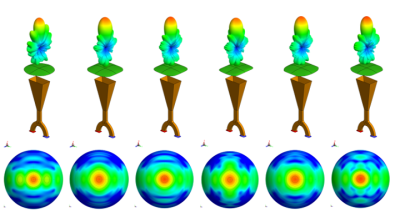
Antenna design variants and radiation patterns optimized with Simcenter Feko and Simcenter HEEDS

Accelerate antenna design optimization with Simcenter Feko and Simcenter HEEDS

Explore how Simcenter Feko and Simcenter HEEDS work together to automate antenna design exploration and optimization, from parameterized electromagnetic simulation to Pareto-optimal design evaluation.

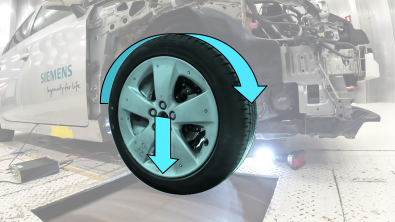
Peekaboo! Uncover hidden structural dynamics using FBS Decoupling in Simcenter Testlab 2606

Structural dynamics can sometimes hide in plain sight, masking the true behavior of complex assemblies. Discover how FBS Decoupling in Simcenter Testlab 2606 helps engineers isolate subsystem dynamics, uncover hidden structural characteristics, and gain deeper insight for more confident engineering decisions.

Redefining the backbone: How body engineering becomes the structural intelligence layer for faster, more confident decisions

Body engineering is no longer just about designing the vehicle structure. It has become a structural intelligence layer that connects safety, NVH, weight, manufacturability and sustainability decisions from the earliest concept stages.

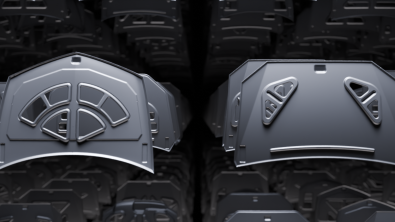
Simcenter PhysicsAI Generate producing physics-aware novel design concepts for automotive hood

What’s new in Simcenter PhysicsAI 2026.1?

Explore what’s new in Simcenter PhysicsAI 2026.1: generative AI for engineering design, improved hotspot predictions, 5× faster training, SPH support, and more.

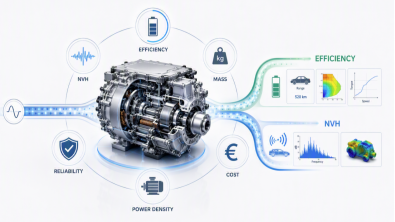
Balancing vehicle noise and vibration with e-efficiency for e-powertrains – a “multitasking challenge”

Electric vehicle e-powertrain development is a balancing act between efficiency, noise and vibration (NVH), cost, mass, and reliability. While efficiency directly influences vehicle range, NVH issues remain a major source of development challenges and budget overruns. This blog explores how engineers can assess e-efficiency and NVH simultaneously using a single synchronized measurement setup. By combining electrical, mechanical, acoustic, and vibration data in one test campaign, teams can directly correlate efficiency gains with NVH impacts, identify critical noise sources, and make faster, better-informed design decisions.
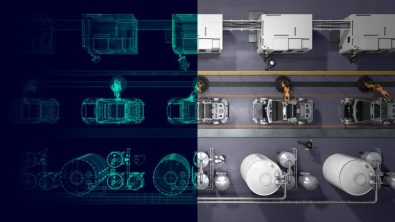
Simcenter Prescan 2606 release image

Python in the loop: AI-driven simulation and validation for autonomous systems – Simcenter Prescan 2606 

What’s new ADAS and autonomous system development increasingly relies on Python, machine learning frameworks, and large volumes of sensor data. Yet…

Simulation Model Traceability with ALM and Polarion

Elevating models with Polarion – Bridging simulation and ALM for true model traceability

In our last discussion, we explored how Simcenter Client for Git empowers engineers to efficiently discover and re-use simulation models…

Enhancing battery durability through Smart Virtual Sensing

Smart virtual sensing for EV battery durability testing

If you’ve been following the electric vehicle revolution, you know the headlines: EVs are getting heavier, batteries are expensive to…