Featured posts

Latest posts

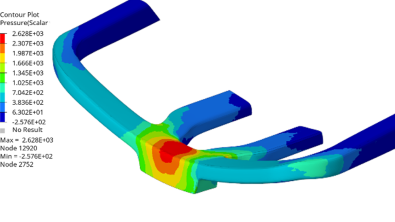
Use existing structural and fluid data to train Simcenter PhysicsAI

Unlock the power of your existing structural and fluid data! Learn how Simcenter Physics AI leverages your current assets to accelerate simulation workflows and drive innovation. Read to discover how.

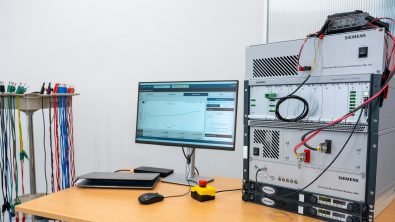
Simcenter Micred thermal characterization

Extend thermal characterization to high-power ICs and GaN devices

AI accelerators, high-power GPUs and low-resistance GaN devices are pushing conventional thermal characterization
methods into new territory. The new Simcenter Micred high-power sensing current generator provides the current required to capture high-fidelity thermal measurements, helping engineers compare designs, select materials and
calibrate simulation models.

When lightweighting is not enough: an engineer’s search for a better structural design

Every engineer is familiar with lightweighting and knows the satisfaction of a good optimization result. You define the design space….

The Relentless Pursuit of the Perfect Lap

The relentless pursuit of the perfect lap

The virtual driver: motorsport’s ultimate weapon in the war for lap time A single motorsport test campaign can cost millions…

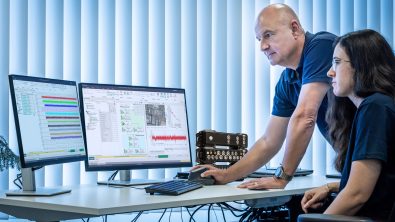
Simcenter at Auto Testing Expo

From data to decisions: Turning measurements into engineering intelligence at Automotive Testing Expo North America

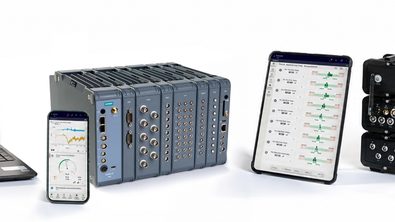
Discover how Siemens connects next-generation data acquisition, AI-ready workflows, virtual prototyping and physical testing to transform trusted measurement data into confident engineering decisions, featuring the debut of Simcenter SCADAS ES and Simcenter Testlab Go at Automotive Testing Expo North America 2026.

F1 Grand Prix in Belgium

A passion for F1 perfection at Visa Cash App Racing Bulls

Get ready for F1 innovation! Discover how Visa Cash App Racing Bulls uses Siemens Xcelerator to master digital transformation, simulation-led design and cutting-edge tech, driving their pursuit of perfection on the track.

Simcenter Testlab 2606: Faster and smarter next-generation testing, earlier trusted outcomes

Simcenter Testlab 2606 helps engineering teams move faster from measurement to trusted outcomes through a set of next-generation workflows that improve efficiency, confidence, and automation across the testing process. The release enables AI-ready data creation with better context, validation, processing, and workflow automation, expands virtual validation capabilities to support earlier decision-making, introduces free acquisition software for Simcenter SCADAS hardware, and industrializes ISO-compliant blocked force characterization for scalable system-level NVH prediction. Together, these innovations help organizations reduce manual effort, accelerate validation, and make better engineering decisions earlier in development.

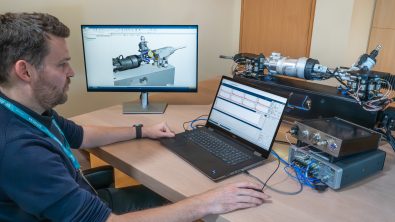
Industrializing component characterization for virtual NVH development: Automated component model extraction (AutoCMX)

Industrializing component characterization for virtual NVH development: Automated component model extraction (AutoCMX)

Simcenter Testlab 2606 introduces Automated Component Model Extraction (AutoCMX), an integrated hardware and software solution that automatically extracts ISO 20270-compliant component models for virtual NVH development. By automating blocked-force characterization and model generation, AutoCMX transforms component characterization from a slow, expert-driven process into a fast, repeatable workflow that produces virtual-prototype-ready models in minutes rather than days.

Virtual shaker testing: Learn before qualification, not during qualification

Virtual shaker testing: Learn before, not during qualification

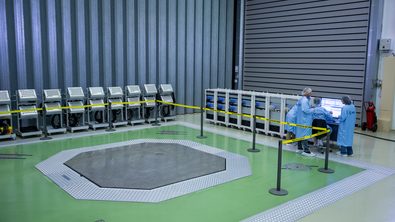
Qualification testing often happens when risk, cost, and schedule pressure are at their highest. Virtual Shaker Testing in Simcenter Testlab 2606 helps engineers learn before qualification rather than during qualification by creating a real-time virtual representation of the complete test setup. Engineers can predict system behavior, evaluate control settings, validate limiting and notching strategies, and compare virtual and physical models before exposing valuable hardware to full test levels. The result is earlier insight, lower qualification risk, and greater confidence when critical physical testing begins