The architecture of truth: How Siemens’ AI-powered Executable Digital Twin is rewriting the rules of industrial intelligence
Your assets are generating data every millisecond. Your decisions, however, are still being made on yesterday’s assumptions. What if the gap between physical reality and operational insight could be closed – in real time, at cloud scale, and with the unimpeachable authority of physics?
It is this engineering challenge that defined the creation of the Simcenter Executable Digital Twin Gateway – and the answer is already running in production.
The problem the dashboard doesn’t know
The world’s energy system is under pressure it has never faced before. Grids that were engineered for predictable, centralized generation are now absorbing the volatility of renewables, the surging demand of hyperscale data centers, and the unpredictability of fuel supply chains – simultaneously. Energy security has become an operational imperative more than ever, measured in real time, asset by asset, megawatt by megawatt.
These grids power the industrial operations that keep the world running. Walk into any one of those operations today, and you will find three data worlds co-existing in uncomfortable silence:
- Operational Technology: Operational historians, PLCs, SCADA systems – the heartbeat of the physical plant.
- Information Technology: ERP systems, SAP platforms, financial databases – the business nervous system.
- External Variables: Weather patterns, subsurface conditions, grid fluctuations – the environmental forces that shape everything but are owned by nobody.
The problem is not that these worlds exist in parallel. It is that they do not communicate. Manual analytics focus on isolated components and miss the systemic correlations that only emerge when all three worlds are read together. The result is an industrial operation that is perpetually reactive – always responding to what just broke, never truly predicting or optimizing what is running right now.
This is the gap that the Simcenter Executable Digital Twin was built to close: interconnecting these three data worlds into a physics-validated operational intelligence foundation. Rather than replacing enterprise intelligence platforms, it contributes engineering-grade insight that helps those platforms reason over industrial operations with greater confidence, accuracy, and context. But to understand why this matters, it helps first to understand what a digital twin has traditionally meant – and why that definition is no longer enough.
Why the industrial world needs an ‘Executable’ Digital Twin
For decades, the industrial world has been sold a comfortable illusion. The term “digital twin” has been stretched to cover everything from a 3D CAD model to a basic sensor-fed dashboard. But let’s be honest: a digitized version of an ink-on-paper print is not a twin. It is a photograph. Useful for design reviews, but completely blind to what is happening on the plant floor at 3 a.m. on a Tuesday. That was not a failure of ambition. It was a limitation of what technology could solve in real time. No tool existed that could continuously predict the physical state of a live asset, at speed, at scale, and with the accuracy that industrial operations demand.
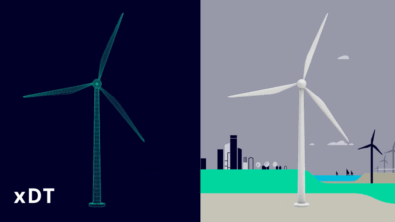
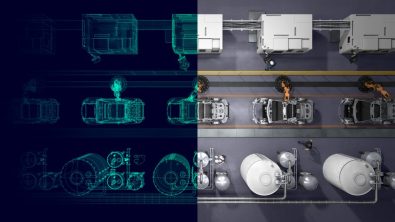
The Simcenter Executable Digital Twin is a deliberate and decisive answer to that unsolved problem. It is a live, real-time behavioral model – one that continuously predicts the physical states of an operational asset – running alongside it, not just representing it. It can shift left to sharpen engineering decisions during design, and shift right to be deployed within the live asset itself, turning insights into operational action on the plant floor, in the control room, and across the energy grid. That distinction – from passive representation to active, physics-grounded intelligence is the comprehensive digital twin problem that Siemens has solved.
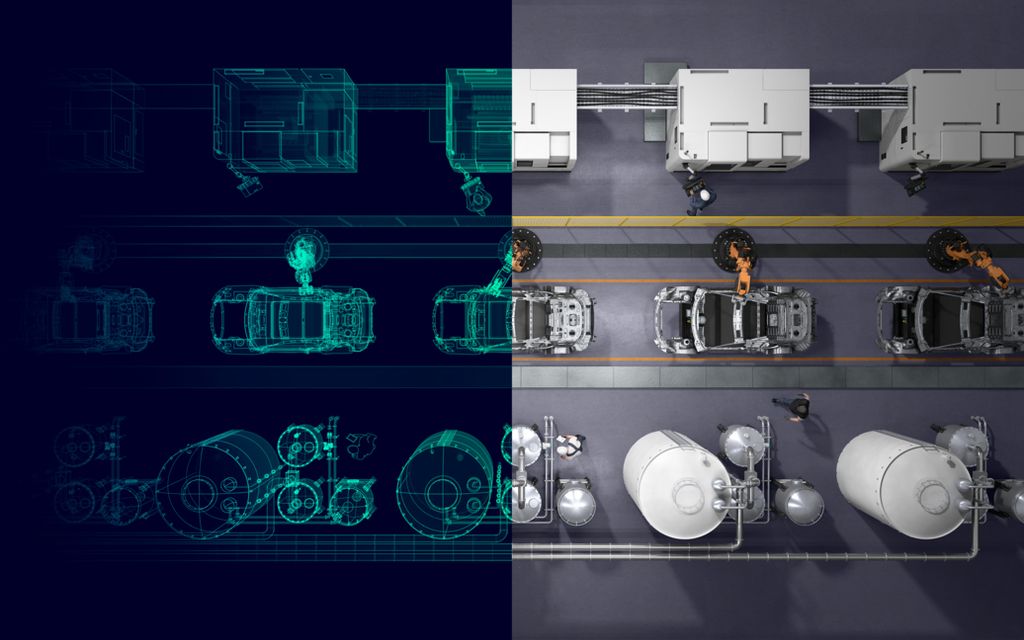
The questions it unlocks make that solution tangible: “Can I safely push 50MW more through this line right now?” “If I adjust inlet pressure by 2%, can I boost output without risking thermal limits?” Questions that once took days, or demanded experiments on live equipment, now resolve in seconds – on a virtual twin, with physics as the authority. That changes everything.
Curious to go deeper? This fascinating discussion between Jousef Murad and my colleague Leoluca Scurria dives into the world of Executable Digital Twins (xDT) – exploring the paradigm shift transforming the way industries connect the digital and physical worlds.
Pure physics and pure AI both fall short. Executable Digital Twin bridges the gap.
The engineering clarity at the heart of the xDT approach is one of its greatest strengths. Most industrial AI vendors will tell you that machine learning is the answer to everything. Siemens offers something more rigorous.
Physics simulation is extraordinarily precise. It respects real-world constraints with unrivaled fidelity. But it is computationally expensive, requiring HPC clusters, and far too slow for live operational decision-making. You cannot wait 48 hours for a simulation result when a turbine is currently running at the edge of its thermal envelope.
AI, on the other hand, is fast and scalable – but it infers patterns from historical data without grounding in physical boundaries. Ask a pure AI model what happens when you push a transmission line beyond its rated capacity, and it may return a plausible but physically invalid answer. In industrial operations, an answer that is fast but physically unsound is not a shortcut – it is a liability.
The Simcenter Executable Digital Twin elegantly resolves these competing needs in real-time and accurately. It converts deep, multi-physics simulation models – built with Simcenter, Siemens’ industry-leading simulation portfolio – into a compressed, executable format using reduced order modeling (ROM) and AI – without sacrificing physical accuracy. The result is a model that delivers the scientific truth of a full-fidelity simulation while running at operational speed, natively on cloud data infrastructure like Snowflake.
Accurate. Fast. Scalable. No compromise – all three, simultaneously.
Achieving this, however, requires more than clever algorithms. It requires an architecture – one in which the Executable Digital Twin does not stand alone but operates as the engine within a broader, interlocking system of intelligence.
The triad of industrial intelligence – Structure, Physics and Agents
The Executable Digital Twin is the engine at the center of a broader architecture – three interlocking capabilities that, together, transform raw operational data into genuine, continuously improving intelligence.
The Structure – Unified Namespace (UNS)
Data silos actively undermine industrial optimization. The Unified Namespace (UNS) hierarchically organizes all operational data – from the Site level down through Area, Line, and Cell – into a single, coherent data fabric that enables cross-domain intelligence. Snowflake acts as the data warehouse underpinning this fabric, providing secure data governance and scalable storage that ensures the architecture grows with the operation rather than constraining it.
The Physics – Executable Digital Twin
The xDT is the engine of physical truth within this triad. It enables multi-physics determinism – calculating unmeasurable metrics via virtual sensors and predicting states that no physical instrument can directly observe. This is the capability that separates genuine operational intelligence from sophisticated dashboarding.
The Agent – AI & Knowledge Graphs
AI agents and knowledge graphs structure semantic relationships across the data fabric, handling unstructured variables and detecting the unknown unknowns – the anomalies that no predefined rule set would ever catch. This is where the system moves from monitoring to genuine autonomous reasoning.
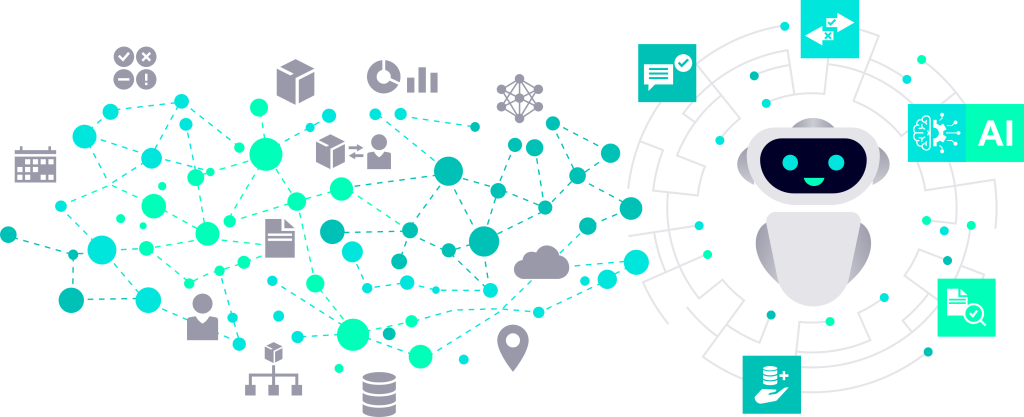
Together, these three pillars transform industrial data from a record of what happened into a continuously updated prediction of what will happen – and a prescription for what to do about it.
Building the Executable Digital Twin – From concept to production, faster than you think
One of the most persistent objections to adopting the Executable Digital Twin is the fear of implementation complexity – the worry that standing up a system like this requires years of integration work and an army of data scientists. The Simcenter Executable Digital Twin Gateway addresses this directly with a structured, rapid-deployment pathway built on Siemens’ deep library of pre-built equipment templates and proven methodology.
It starts with a scoping phase – a collaborative exercise to identify data sources, map operational dependencies, and build detailed virtual representations of the asset across its relevant physics domains in Simcenter. Decades of Siemens domain expertise are encoded into this digital form, ensuring the model is not a generic approximation but a physics-accurate reflection of the specific asset it represents. The result is then packaged into a lightweight, executable model that runs seamlessly on standard hardware – no specialist infrastructure required.
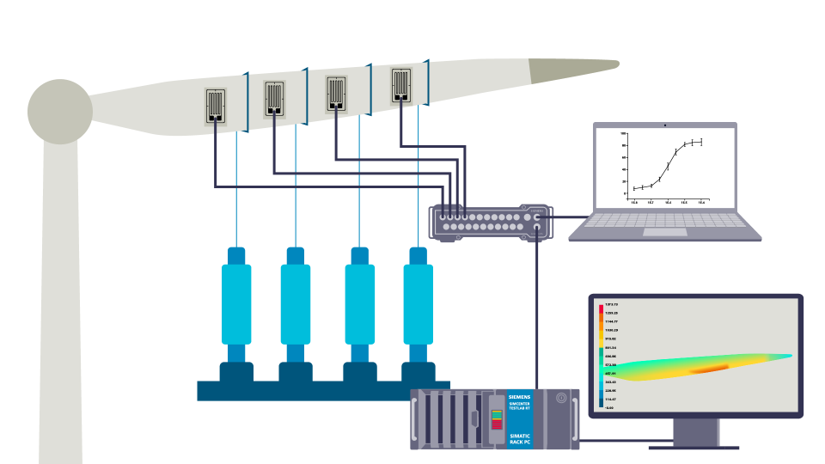
From there, the Executable Digital Twin is connected to a cloud data platform of your choice, linking the plant edge to operational data in the cloud. Standard Siemens equipment templates are then deployed and calibrated against historical operational data, and the Executable Digital Twin is connected to live IoT data streams. At this point, something fundamental changes – the model is no longer a static artifact sitting in an engineering environment. It is a living system, continuously updated by real-world data flowing in from the plant floor, second by second. Once live, the value accelerates. Real-time continuous root cause analysis, predictive alerts, and dynamic scenario simulation run in production – continuously, at scale, across every asset in the fleet.
The proof is already in the field. At BASF Antwerp – one of the world’s largest integrated chemical complexes – Siemens deployed an executable digital twin across the site’s pressurized water-cooling network using Simcenter Flomaster. The results were immediate and measurable: real-time visibility into flow velocities and pressure conditions across more than 50 production facilities, proactive identification of blocked or undertreated pipes, optimized biocide consumption, and physics-validated what-if scenario planning – all without installing a single new sensor, flow meter, or pressure transducer. The Executable Digital Twin has since been extended to the site’s steam system, with further expansion planned across additional pressurized grids. It is a blueprint for what rapid, high-impact deployment looks like in practice.
The industrial impact: Orchestrating the end-to-end energy ecosystem
The Executable Digital Twin earns its credibility in the field – and, in this case, the field is the entire energy value chain.
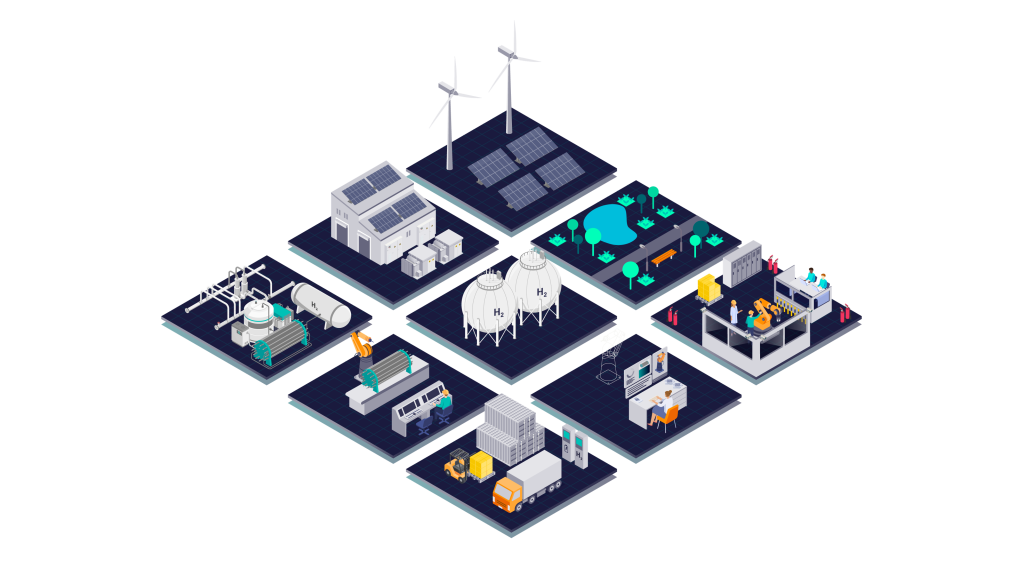
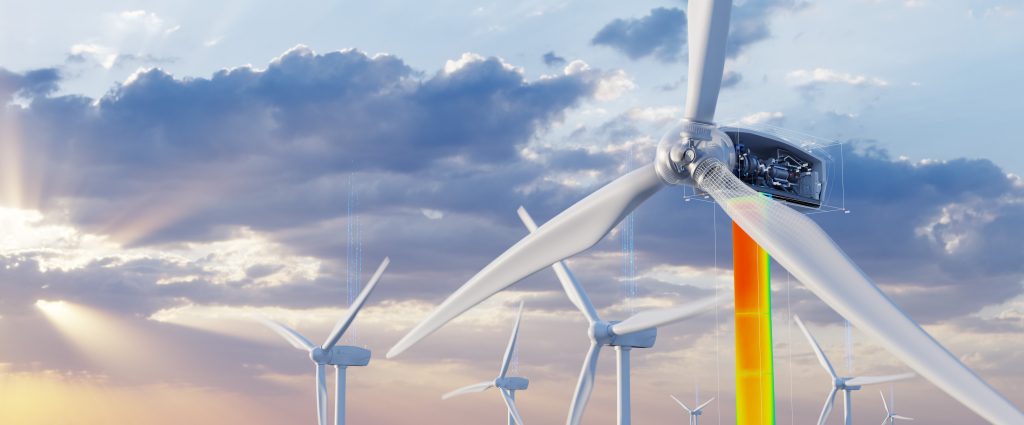
The modern energy grid is not a single system. It is a system of systems, stretching from the wind turbine on a hillside to the transmission tower crossing a valley to the server rack humming inside a hyperscale data center. Each node has its own physics, its own failure modes, its own hidden inefficiencies. Every megawatt left on the table – due to a static rating, an undetected thermal anomaly, or a curtailment that physics never actually required – is a megawatt the grid cannot afford to lose. The xDT operates across all three domains simultaneously, and that breadth is what makes it unlike anything else in the market.
On the generation side, it continuously maximizes megawatt output from wind and solar assets while actively reducing forced curtailment by understanding, in real time, what the physics of each asset will actually allow – not what a conservative design assumption once suggested. What-if scenarios – “If we adjust inlet pressure by 2%, can we boost output by 1.5% without risking thermal limits?” – run on the virtual twin, not the live asset, with physics validating every proposed operating point before a single valve is turned. Physics-validated N-1 contingency analysis runs in the background simultaneously, ensuring grid stability and safe routing are preserved even when a fault condition emerges.
In transmission, the Executable Digital Twin confronts one of the most stubborn inefficiencies in grid operations – the static line rating. A dispatch operator staring at a screen at peak demand should be able to answer one question with confidence: “Can I push 50MW more through Line 4701 right now?” Traditional operations cannot give that answer. They default to worst-case assumptions – ratings engineered for the hottest day of the year, with no wind, at maximum load – leaving significant capacity permanently off the table. The Executable Digital Twin integrates real-time, physics-validated weather data, including localized crosswind patterns that actively cool transmission lines, and surfaces the answer the operator actually needs: safe capacity is up 18% under current conditions. That is not an estimate or a model output rounded to the nearest assumption. That is physics-validated headroom, unlocked in real time through Dynamic Line Rating.
At the consumption end, the challenge shifts from capacity to thermal control. Hyperscale data centers push traditional cooling and power distribution infrastructure to the limits never designed for this density or this pace of growth. The Executable Digital Twin deploys complex thermo-fluid and mechatronic boundary models to predict thermal clustering before it manifests as a problem – adjusting cooling strategies proactively, reducing power consumption profiles, and verifying every proposed physical change safely in the virtual environment before it is made in the real one.
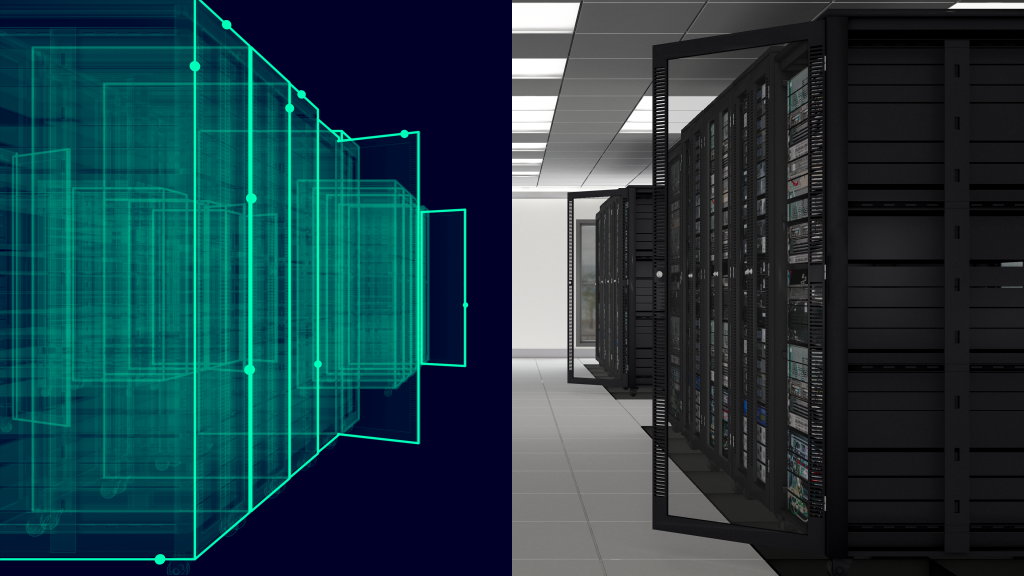
From the turbine to the tower to the server rack – the xDT does not optimize one part of the energy system. It governs the whole – generation, transmission, and consumption – with physics as the constant authority at every node.
The instant RCA & prediction flywheel – When the system catches what no human would
It is 3 a.m. on a Tuesday. A compressor bearing on Gas Turbine Unit 7 develops a subtle shift in its vibration signature – a deviation of 0.3% from its established baseline – no alarm fires. No threshold is breached – no operator notices. On a traditional monitoring system, this moment passes silently. Six weeks later, the bearing fails, the turbine trips offline, and the post-mortem begins.
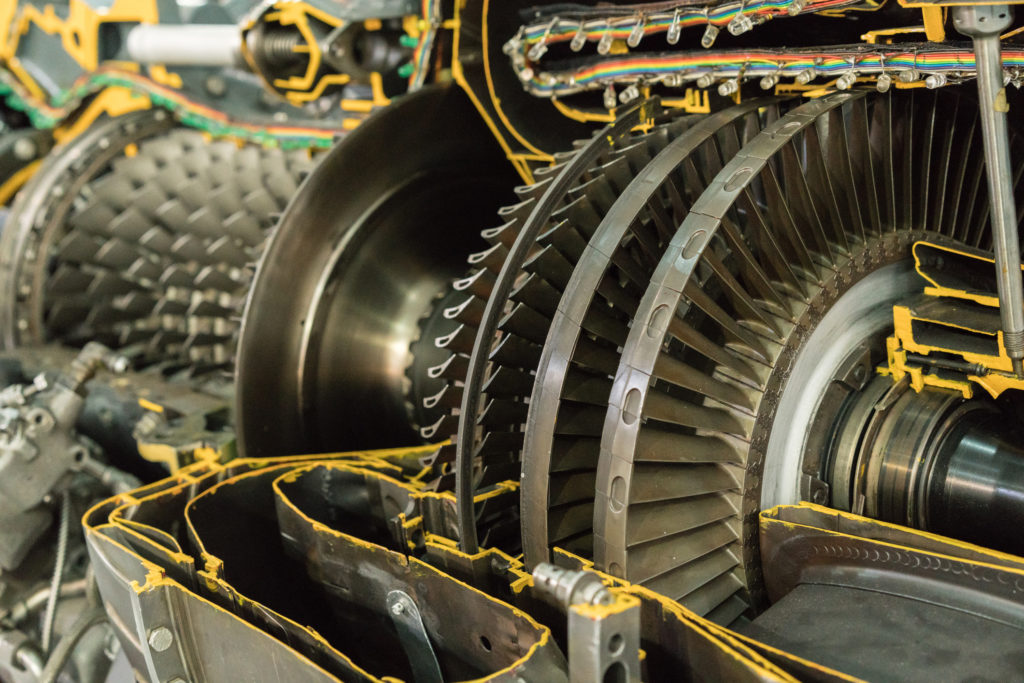
On a plant running the Executable Digital Twin, that 3 a.m. moment unfolds very differently.
AI agents continuously monitor the unified data fabric and detect deviations the moment they emerge. Within seconds, the data warehouse surfaces full operational context – historical maintenance records, ERP data, and recent weather history. The Executable Digital Twin then runs a physics-based simulation that confirms the root cause: early-stage bearing wear, accelerated by a thermal load pattern that began three days earlier following a grid frequency event. No fault trees. No guesswork. Physics pinpoints the cause and projects the failure timeline if left unaddressed.
The system prescribes the corrective action, documents the resolution, and most critically, feeds that resolution data back to continuously retrain and sharpen the predictive model continuously. The next time a similar thermal load pattern emerges anywhere in the fleet, the system will recognize it earlier and with greater confidence.
Every event the system resolves makes it smarter for the next one. This is not a monitoring system. It is a self-improving operational intelligence engine – and it never sleeps.
Ready to build your first Executable Digital Twin?
The hidden capacity in your assets is real. The thermal headroom in your transmission lines is real. The efficiency gains in your generation fleet are real. They are invisible to systems that were not built to see them.
The Executable Digital Twin was built to see them – and to act on them. Remember – the Executable Digital Twin is not a multi-year transformation program. It is a structured path to physics-grounded intelligence – built on proven templates, calibrated to your assets in real-time and live in production.
The only question that remains is how much longer your operation can afford to run without it. Connect with the Siemens team today and take the first step toward building your Executable Digital Twin.