Virtual shaker testing: Learn before, not during qualification
What’s new in Simcenter Testlab 2606
Qualification testing often happens when risk, cost, and schedule pressure are at their highest. Virtual shaker testing in Simcenter Testlab 2606 helps engineers learn before qualification rather than during qualification by creating a real-time virtual representation of the complete test setup. Engineers can predict system behavior, evaluate control settings, validate limiting and notching strategies, and compare virtual and physical models before exposing valuable hardware to full test levels. The result is earlier insight, lower qualification risk, and greater confidence when critical physical testing begins.
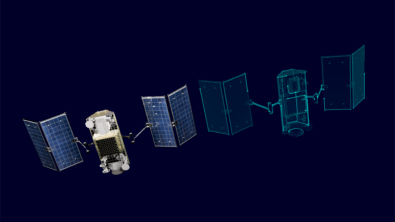
For spacecraft qualification programs, the most critical decisions often happen when there is no room for error.
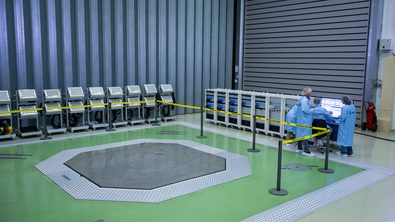
At the very end of the development lifecycle of space hardware, every hour matters, and every unsuccessful test run can carry significant consequences to the program, put design decisions under scrutiny, and possibly lead to costly delays. The flight window is a deadline that must be met at all costs (except, of course, for the mission’s ultimate success). If unexpected behavior appears during vibration qualification, test engineers must investigate, adapt, and make decisions while valuable hardware has already been subjected to shaker excitation.
This challenge extends beyond aerospace. Across industries, engineering teams are being asked to validate more with fewer prototypes, compressed schedules, and increased pressure to deliver confidence earlier in the development cycle. As programs accelerate and hardware becomes increasingly valuable, the ability to identify risk before the physical testing begins has become a competitive advantage.
How much can we learn about the test’s success with limited information? Can this be done without endangering the device under test? The quest for these answers will lead us to innovation.
When testing becomes the source of uncertainty
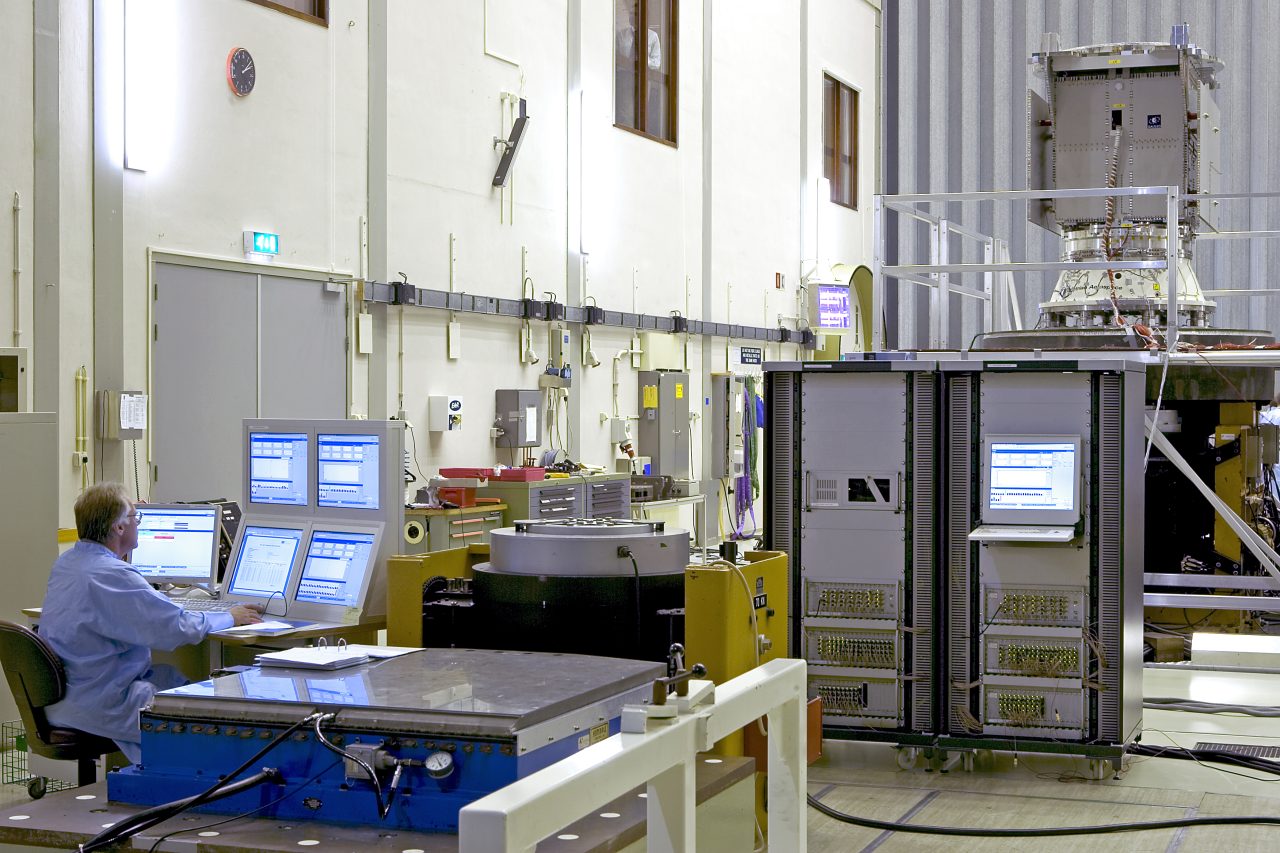
The goal of any dynamic environmental qualification test is to verify that a product survives the environment for which it is designed. In vibration environments, a Simcenter SCADAS vibration controller, in combination with the Simcenter Testlab Shock and vibration offer, can drive a vibration shaker with controlled excitation to meet the required environmental conditions. The test is successful if the product survives. Even though the test article’s response ultimately matters, these tests are quite complex. The interaction among the test article, shaker, vibration controller, fixture, and control strategy used during execution will play an important role in the test outcome.
Each of these elements influences the final response.
Because of the transient nature of the excitation, one of the most critical tests at the spacecraft level is a sine control test.
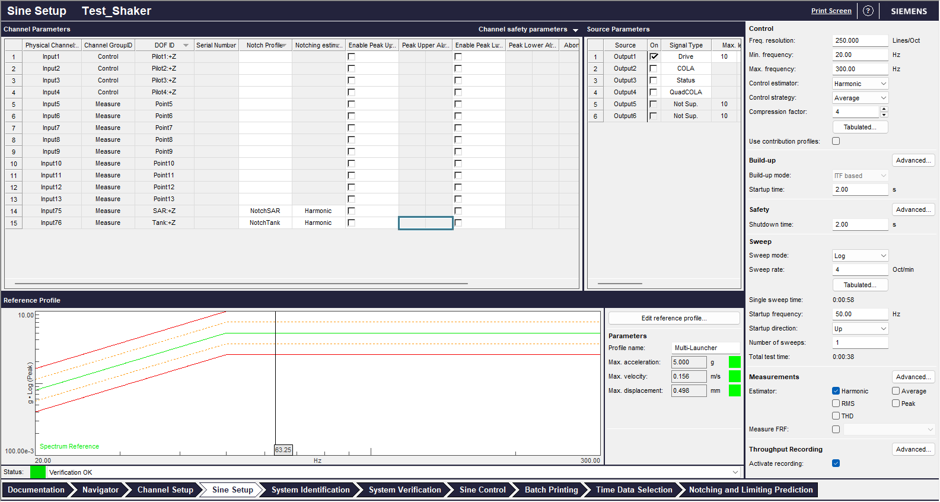
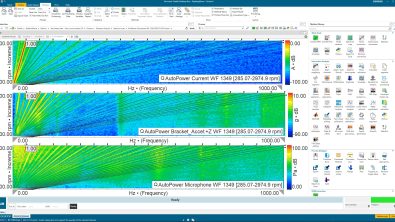
Simcenter Testlab Sine Control
As the vibrations sweep through the frequency range and across resonances, transient effects emerge. These transients are very difficult to predict and are typically linked to the tailored control action that is requested to reduce overshoots. This is what a controller must accomplish with the highest precision, but it also means that the controller itself is part of the system. Test engineers can still decide how fast and accurately the system shall react by tuning the control settings. Limiting and notching strategies may also be applied to reduce the responses at critical locations.
For experienced environmental test engineers, managing these interactions is part of the job. Yet even the most experienced specialists face the same fundamental challenge: the most valuable insights are often discovered while the physical test is already underway.
The pressure is very high. Learning during qualification is dangerous and potentially expensive. Additional investigation can eat up precious time from the test schedule, repeated runs expose valuable hardware to more vibration cycles, and every unexpected observation introduces uncertainty at a time when confidence is needed most.
What if…
…environmental test engineers could accurately understand the dynamic behavior of the sine control test, including the transient effects and the interaction with the control settings, without subjecting the spacecraft to the sine sweep?
A different way to prepare for qualification
Simcenter Testlab 2606 introduces virtual shaker testing as the sought-after approach to de-risk qualification. Test engineers can now evaluate the vibration control settings in a virtual environment.
At the heart of this approach, there is a simple but powerful idea: Instead of simulating the test, test a simulation.
This new workflow is enabled thanks to a broad offer that covers different parts of the virtual shaker testing
- Derivation of a stable model that can be directly derived from System Identification data and that can encompass the dynamics of the Shaker and the Device Under Test. This can be done directly in one of the Simcenter Testlab Dynamic Environmental Testing products by loading add-ins from the Simcenter Testlab Modal Analysis offer.
- Upload and real-time execution of the derived models in Simcenter Testlab RT.
- Virtual test execution with a solution from the Simcenter Testlab Shock and Vibration Testing product offer.
Building a virtual test environment
One of the powerful aspects of Simcenter Testlab 2606 is its ability to create a model from information already available in the testing workflow.
System Identification provides information needed to understand the full system under test. With the right tools, the same information can be used to create a digital twin of the complete test setup that can stably run in real time in a virtual environment.
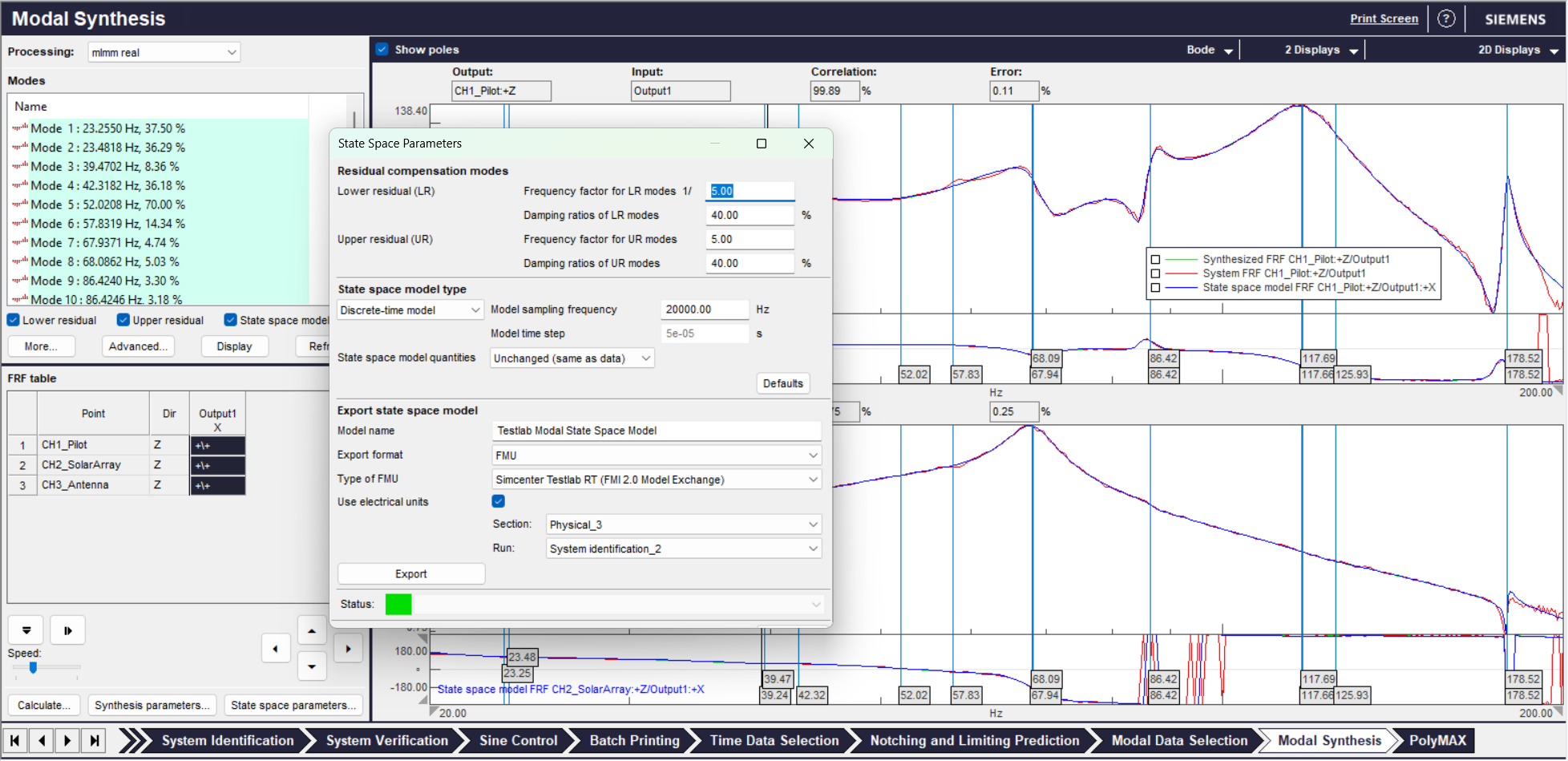
Simcenter Testlab Model synthesis
The derived digital twin captures the interactions between the test article and the shaker system. It can be uploaded and executed in real time in Simcenter Testlab RT and used in combination with Simcenter SCADAS Vibration Control hardware and Simcenter Testlab Shock and Vibration testing products as a platform to explore qualification scenarios before the physical campaign begins.
Simcenter Testlab RT
This new workflow adds an extra tool for pre-test analysis and can be used beyond evaluating test predictions; it provides an environment for learning, refining, and de-risking.
Understanding behavior before hardware is exposed
The real value of Virtual Shaker Testing emerges when engineers begin asking practical questions for test scenarios where transient phenomena are critical, for example, a sine control test
- How will the system behave as a sine sweep passes through a critical resonance?
- Could a localized overshoot occur in a sensitive region of the structure?
- How will a particular control setting influence the response?
- Would an alternative limiting or notching strategy improve confidence?
Historically, answers to these questions could only be validated with a number of physical runs executed under pressure on the physical hardware.
Simcenter Testlab Virtual shaker testing notch off
With Virtual Shaker Testing, engineers can investigate these scenarios before applying qualification-level loads. They can now enter qualification level tests with fewer unknowns and greater confidence.
From on-site de-risking to earlier program decisions
The immediate benefit of Virtual Shaker Testing is straightforward: engineers can de-risk qualification before executing it.
Simcenter Testlab Virtual shaker testing notch on
Yet the opportunity extends beyond the test facility.
As the required multi-physical simulation models become available earlier in development programs, the same Virtual Shaker Testing approach can support risk assessment long before a spacecraft reaches qualification. In theory, engineers can now begin exploring test decisions while designs are still evolving.
That creates a practical bridge between testing and simulation.
Simulation teams can now gain a clear view of what will happen during qualification, and Test engineers can gain earlier visibility into potential challenges.
Program teams can make informed decisions sooner, when corrective action is less expensive and easier to implement.
Instead of waiting until qualification to discover risks, organizations can begin evaluating the risks of testing decisions during the development process itself.
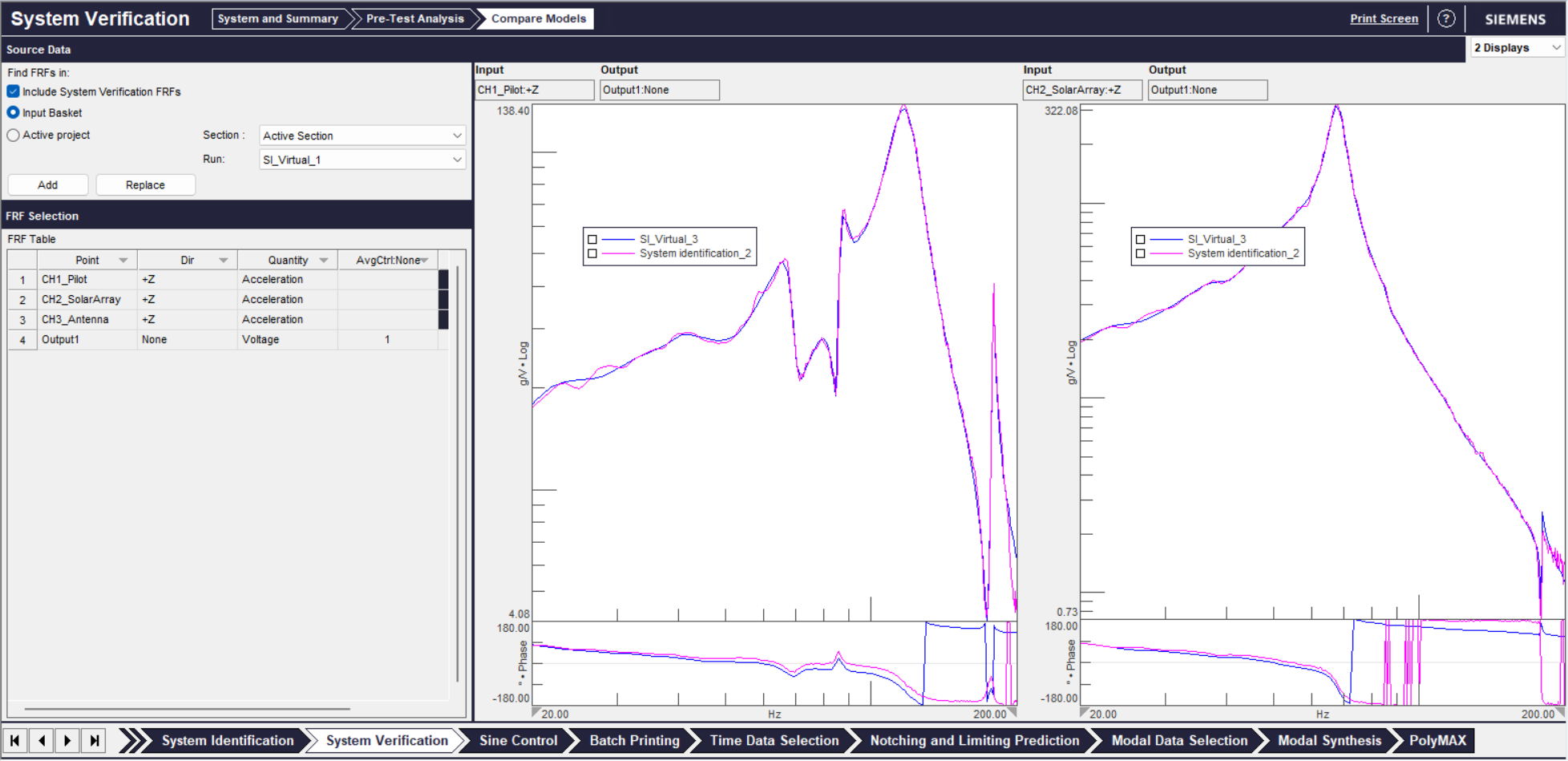
Simcenter Testlab Model compare
Building confidence through Model Compare
Virtual validation is only valuable when engineers will ultimately confirm the fidelity of the virtual environment.
That is why Simcenter Testlab 2606 extends the workflow with Model Compare capabilities.
A virtual representation must be more than visually convincing. It must provide sufficient accuracy to support engineering decisions. Model Compare provides confidence that the virtual environment reflects the physical system well enough to guide trust in the decision taken with the digital twin.
This creates a practical and streamlined validation workflow.
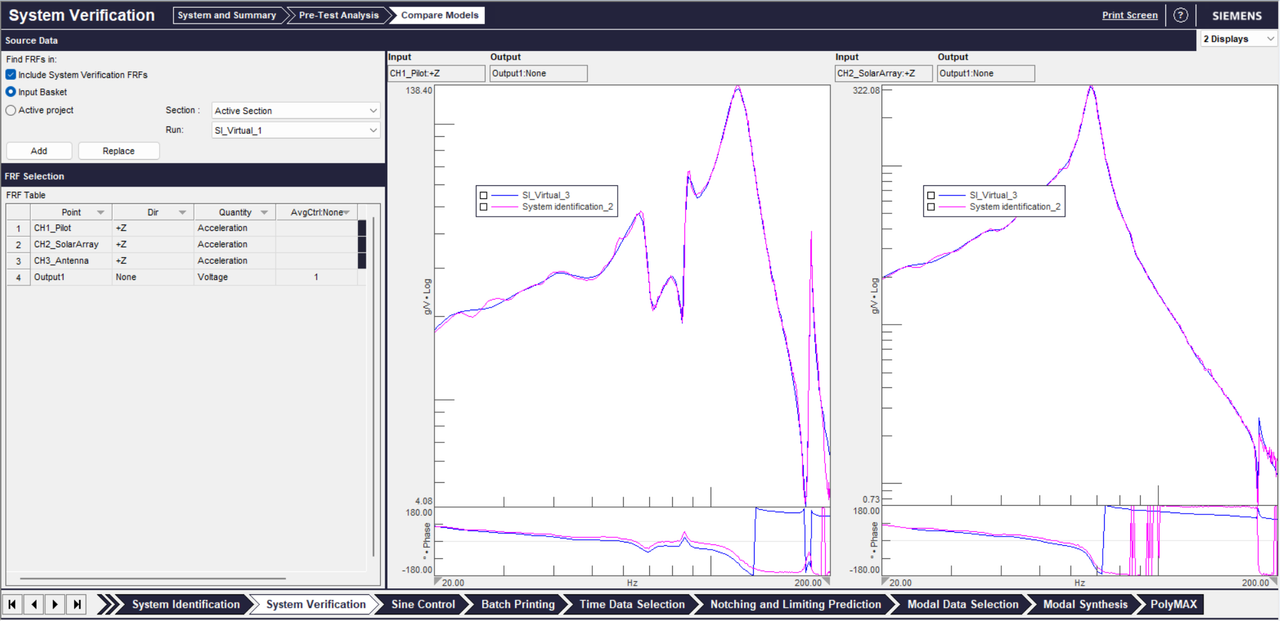
Simcenter Testlab Model compare
The result is a workflow focused not only on predictions, but on trusted predictions.
De-risk the test before the hardware
The pressure on qualification programs continues to grow: hardware is becoming more valuable, development schedules are becoming more aggressive, and engineering teams are expected to deliver with greater confidence while having fewer opportunities for trial and error.
With real-time Virtual Shaker Testing, engineering teams can evaluate system behavior beforehand, investigate potential risks without exposing hardware to full test loads, and refine test strategies before entering the program’s most critical phases.
The result is that Simcenter Testlab 2606 provides the tools for a new way to perform critical dynamic environmental testing, not just new software.
- Instead of learning during qualification, engineers can now learn before.
- Instead of discovering risk in the physical campaign, they can, with the right models, theoretically address it earlier.
- They can enter qualification with greater confidence and fewer unknowns.
Predict behavior. Optimize test settings. Reduce qualification risk before exposing valuable spacecraft hardware to full-qualification physical testing.