The real threat to next‑generation aircraft programs isn’t weight
How a small change can reshape an aircraft program
243 kilograms isn’t a particularly large number on an aircraft weighing tens of thousands of kilograms, but when it‘s announced in a meeting, and nobody can immediately explain where it had come from, experienced engineers may find themselves having cold sweats.
The weight wasn’t sitting on a factory floor waiting to be loaded onto an airplane. It wasn’t the result of a supplier mistake. No engineer had accidentally installed the same component twice. The aircraft had gained weight while it was still a computer simulation.
New information had arrived from a supplier, and a revised analysis from one team had changed assumptions. Several engineers updated their models, which required a handful of design decisions to be revisited. Individually, each step was sensible. Collectively, they changed the aircraft. That was when the real work began, because adding 243 kilograms to an aircraft is easy. Understanding the implications can take months.
When most people think about aircraft development, they imagine engineers wrestling with difficult physics. They imagine aerodynamicists searching for efficiency, structural engineers fighting weight growth and test pilots pushing prototypes to their limits. Yet after spending time with engineers across a modern aircraft program, I became convinced that the industry’s greatest challenge lies somewhere else entirely.
The real challenge is understanding the consequences of change.
This realization led me to Emma and her colleagues.
Emma had spent most of her professional life trying to answer questions that passengers never think to ask. Passengers notice cabins, windows and wing shapes. Emma worried about load paths, certification evidence and the uncomfortable possibility that a decision made by one team could quietly affect the work of another. As a structural engineer, her responsibility was not simply to understand the aircraft. It was to understand how thousands of engineering decisions remained connected to one another.
She knew that the aircraft program development had always involved change. Airlines requested new capabilities. Suppliers identified opportunities. Manufacturing teams discovered more efficient production methods. Certifying authorities asked new questions. Weight estimates evolved as the program matured. None of this surprised anyone.
What surprised people was how difficult it could be to understand the ripple effects.
The additional weight eventually led engineers to revisit load assumptions across portions of the aircraft. Those revised loads prompted new questions about structural margins. New discussions emerged around certification evidence. Teams began tracing dependencies through analyses that had been performed months earlier. Nobody had found a flaw in the aircraft. Nobody doubted its safety. Yet hundreds of hours of engineering effort were suddenly directed toward answering a deceptively simple question: what else changed when the aircraft gained 243 kilograms?
For several weeks, the additional weight became an unwelcome travelling companion. It appeared in conversations that had nothing to do with mass properties. It surfaced in certification reviews, structural assessments and planning meetings. Engineers who had never met one another suddenly found themselves discussing the same change from entirely different perspectives.
What fascinated Emma was how quickly the original problem stopped being about the weight itself. The revised mass distribution altered load assumptions in certain operating conditions. That part was expected. Aircraft programs are designed to cope with change. The question was whether every analysis that depended on those assumptions still represented reality.
At first, nobody could answer with confidence.
The loads team needed to understand how the revised conditions propagated through existing envelopes. Structural specialists wanted to know whether previously calculated margins remained valid. Aeroelasticity engineers were examining potential effects elsewhere in the program. Certification specialists were already thinking several steps ahead, trying to determine which assumptions underpinned the evidence they would eventually present to regulators.
The further Emma followed the threads, the more she noticed a pattern. None of the teams were struggling because they lacked expertise. Every team possessed part of the answer, but nobody possessed the entire answer. One afternoon, Emma sat with colleagues from three different disciplines, each staring at variations of the same aircraft represented in different ways. A loads engineer was reviewing system-level behavior. A stress analyst was focused on structural detail. A certification specialist was tracing dependencies across previous submissions. All three were trying to answer the same question. All three were using different evidence.
That was the moment she realized the program’s greatest challenge wasn’t complexity
It was continuity.
Most people imagine aircraft program development as a sequence of analyses. Emma had come to see it as a sequence of handoffs. Information passed from one specialist to another. Assumptions created in one activity became inputs elsewhere. An answer generated by one model evolved into a requirement for another. Individually, each step was logical. The risk emerged in the spaces between them.
The more engineers I interviewed, the more common this observation became. One veteran structures specialist told me that aircraft programs rarely lose time because of a single difficult calculation. They lose time because hundreds of small dependencies must remain aligned over several years. A younger engineer described his job as maintaining trust between models. Another joked that he spent less time solving equations than trying to discover who else would be affected by the answers.
The irony is that aerospace engineers have become extraordinarily good at simulation. Long before a prototype flies, engineers can predict structural behavior under thousands of operating conditions. They can evaluate gust loads, maneuver loads, emergency scenarios and fatigue life. Entire aircraft live digital lives before they ever leave the ground.
Yet the better these analyses become, the more important the connections between them become.
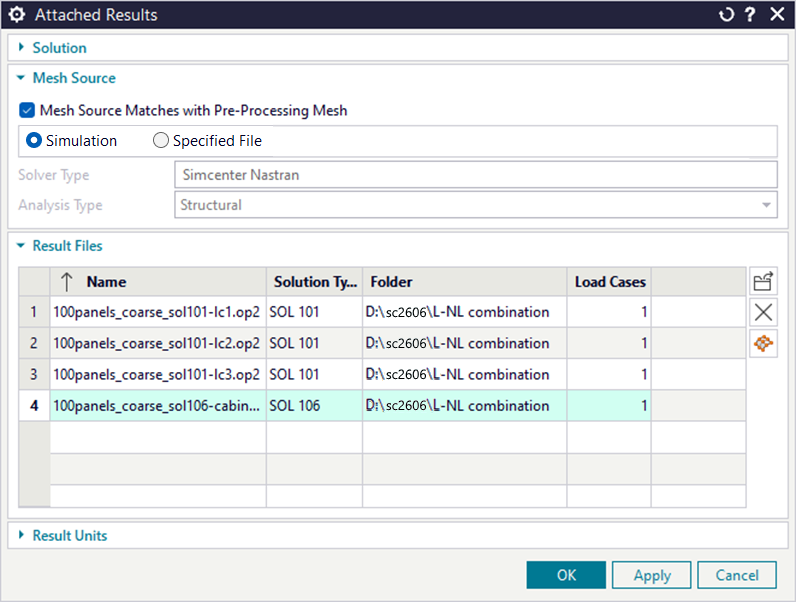
One example repeatedly surfaced during my investigation. Engineers often found themselves navigating between nonlinear structural behavior and certification-oriented Margin of Safety assessments. Historically, these activities could require significant effort to reconcile. Teams needed confidence that the analyses providing the highest-fidelity insight could also support the workflows needed to demonstrate compliance.
This is precisely where Emma’s team began changing how they worked. Rather than treating structural assessment, certification, loads development and aeroelasticity as separate activities connected through manual effort, they started treating them as parts of the same engineering conversation. Engineers could spend less time translating information between disconnected activities and more time understanding the implications of what they were seeing. New capabilities enabling direct use of Simcenter Nastran SOL106 results within Margin of Safety processes helped reduce that gap, allowing engineers to incorporate nonlinear behavior while maintaining scalable assessment workflows across large numbers of load cases.
To outsiders, that may sound like a technical enhancement.
To Emma’s team, it represented something else.
Fewer arguments.
Fewer handoffs.
Fewer opportunities for assumptions to become disconnected from the analyses that produced them.
Fighting the distance
They had seen the benefits of improving their processes so they picked their battle against distance: distance between disciplines, distance between assumptions and consequences, and distance between the engineer who changes something and the engineer who must later understand the implications of that change.
How software can help
This is where the broader Simcenter portfolio enters the story. Seen from the outside, Simcenter can appear to be a collection of specialized applications serving different engineering disciplines. Seen from inside an aircraft program, however, it increasingly functions as a connected engineering environment. The value is not any single analysis. The value is the thread connecting them.
Elsewhere in the program, engineers faced a different challenge. Aircraft models evolve continuously. Every change must be reflected in the Global Finite Element Model, often one of the most important representations of the aircraft’s structural behaviour. Maintaining that model can consume enormous amounts of engineering effort, particularly when teams are forced to rebuild work that already exists.
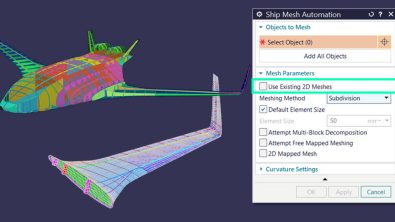
Enhanced automation for associative airframe meshing offered a different approach. Engineers could preserve existing mesh information while benefiting from broader meshing capabilities and controls, making it easier to respond when designs inevitably changed.
Again, the improvement was not merely technical.
It shortened the distance between change and understanding.

The struggle extends to many departments
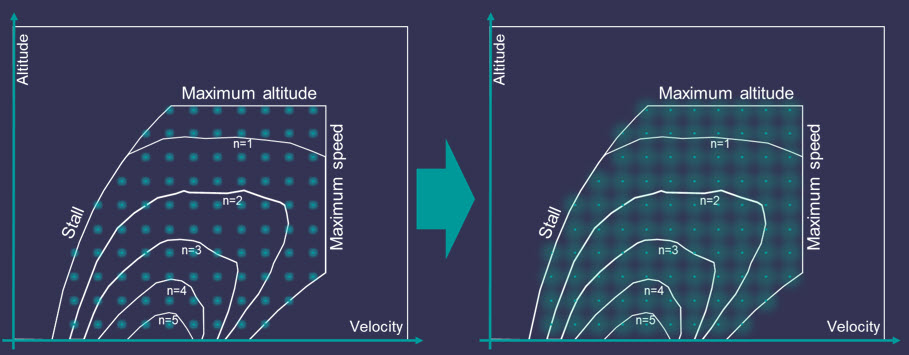
The same theme continued to appear throughout the program. Aeroelasticity specialists spoke about the challenge of evaluating flight envelopes without generating impractical numbers of computationally expensive CFD solutions. New interpolation capabilities within Simcenter Zona, integrated Simcenter Femap for key scenarios, helped address that problem by allowing engineers to interpolate CFD background flow data between operating conditions, improving coverage of the flight envelope while reducing the need for additional CFD computations.
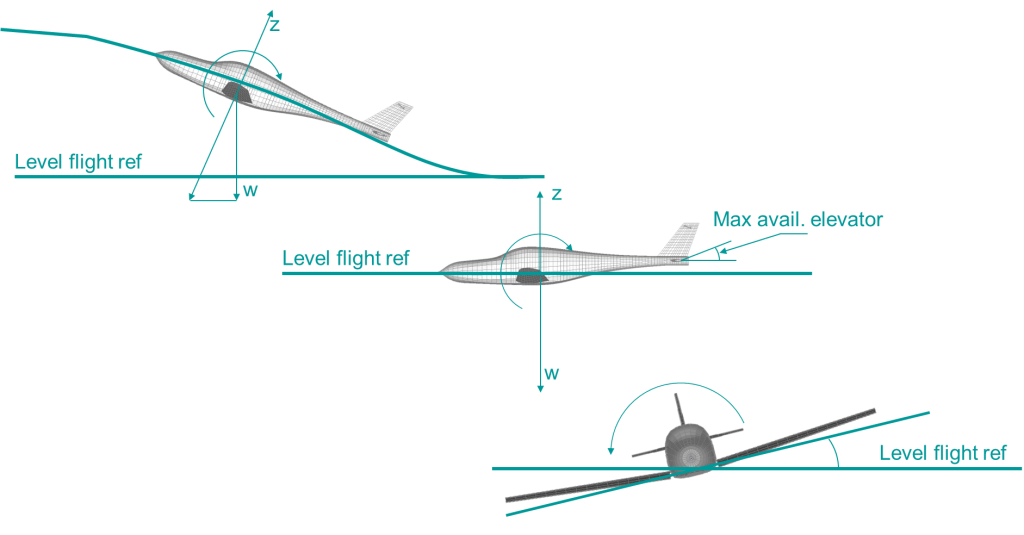
Certification specialists described a related struggle. Generating, managing and maintaining trim cases required for certification could become a project in itself. New workflows linking trim analysis more directly to certification requirements helped streamline that process and improve traceability between regulations and engineering activities.
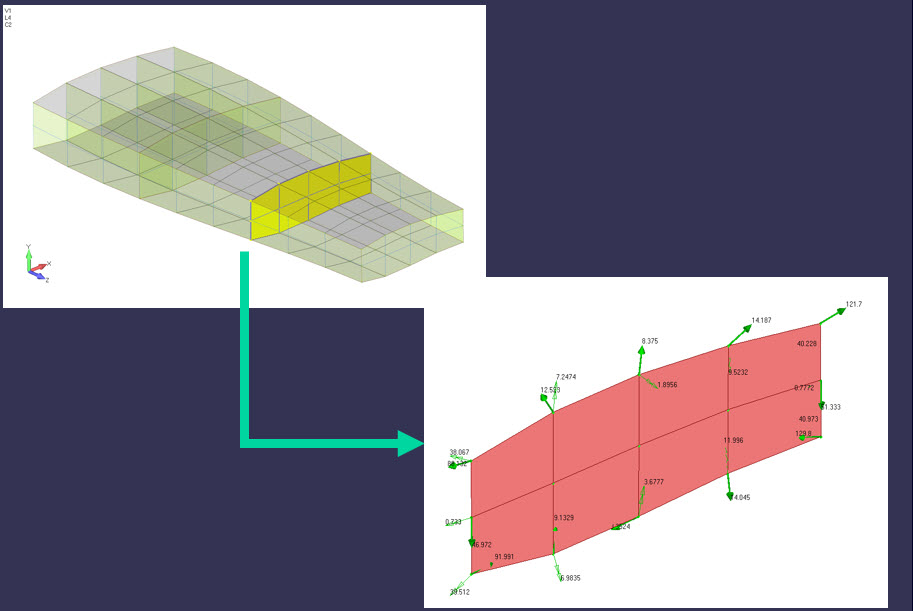
Perhaps the most revealing conversations came from engineers responsible for transferring information between disciplines. Modern aircraft programs depend upon a constant exchange of data between global and local models. A structural detail may depend on loads derived from much larger simulations. Any uncertainty introduced during that transfer creates additional work downstream.
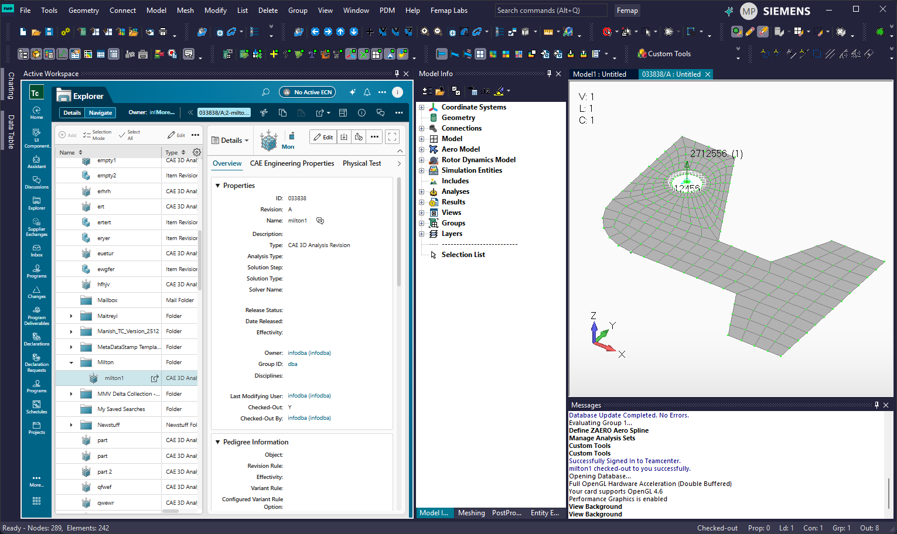
New support in Simcenter Nastran for integrated forces and moments at monitor points in dynamic analyses helped simplify load extraction and transfer, allowing engineering teams to generate free-body and VMT diagrams directly from modal frequency and transient-response analyses with Simcenter 3D. What sounds like a specialized technical capability ultimately serves a very human objective: reducing ambiguity between teams.
Late one evening, after another review session had stretched beyond its scheduled finish time, I asked Emma whether aircraft development was becoming more complicated.
She thought for a moment before answering.
“No,” she said. “The aircraft are becoming more connected.”
At first the distinction seemed subtle but the longer I reflected on it, the more important it became.
Complexity is often unavoidable. Modern aircraft must satisfy demanding performance, safety and certification requirements. Engineers will always face difficult physics and difficult decisions.
Connection is different.
Connection determines how quickly those engineers understand the consequences of change. It determines how effectively information moves between disciplines. It determines whether a revised assumption triggers a straightforward update or months of uncertainty.
That realization ultimately changed the way I viewed the original mystery.
The story had begun with 243 kilograms.
By the end, I no longer believed the weight mattered very much.
What mattered was that those 243 kilograms revealed something hidden inside almost every modern aerospace program. Aircraft are no longer limited primarily by our ability to model complexity. They are increasingly limited by our ability to coordinate knowledge across thousands of interconnected activities.
In that sense, the hidden story of aircraft development is not really about aircraft at all.
It is a story about relationships—between engineers, between disciplines and between decisions made months apart by people who may never meet.
And those relationships, it turns out, can be every bit as difficult to manage as the aircraft itself.
More on the latest releases
The updates discussed in this blog are just the tip of the iceberg. To find out more about what else is new in the latest Simcenter releases check out this webpage, or see some of the other release blogs: