What’s new in Simcenter E-Machine Design 2606?
Electric machine development increasingly extends beyond initial machine sizing and performance prediction. Engineers need to rapidly evaluate design alternatives, prepare data for vibration and acoustic studies, transfer machine definitions into detailed electromagnetic and thermal simulations, and connect machine behavior with inverter and control development workflows.
Simcenter E-Machine Design 2606 introduces new capabilities that help accelerate machine design activities while expanding model reuse across the broader simulation ecosystem. The release extends support for downstream simulation workflows, including the export of motor designs with hairpin windings, while also introducing enhancements for machine evaluation and vibration synthesis studies. Together, these capabilities help engineers move more efficiently from machine design to downstream engineering analyses.
Getting started with Support Center
Extend hairpin winding designs into downstream simulation workflows
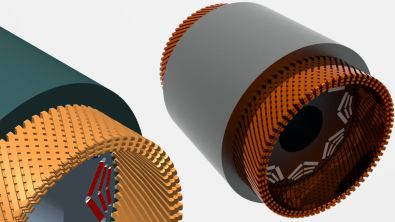
Hairpin windings are increasingly adopted in high-performance electric machines due to their improved slot fill factor, manufacturability and power density. However, transferring hairpin winding definitions into downstream simulation environments often requires significant manual effort and reconstruction of winding geometry.
Simcenter E-Machine Design 2606 introduces enhanced export capabilities that preserve winding definitions, end-winding geometry and electrical connectivity when transferring machine designs into downstream simulation workflows.
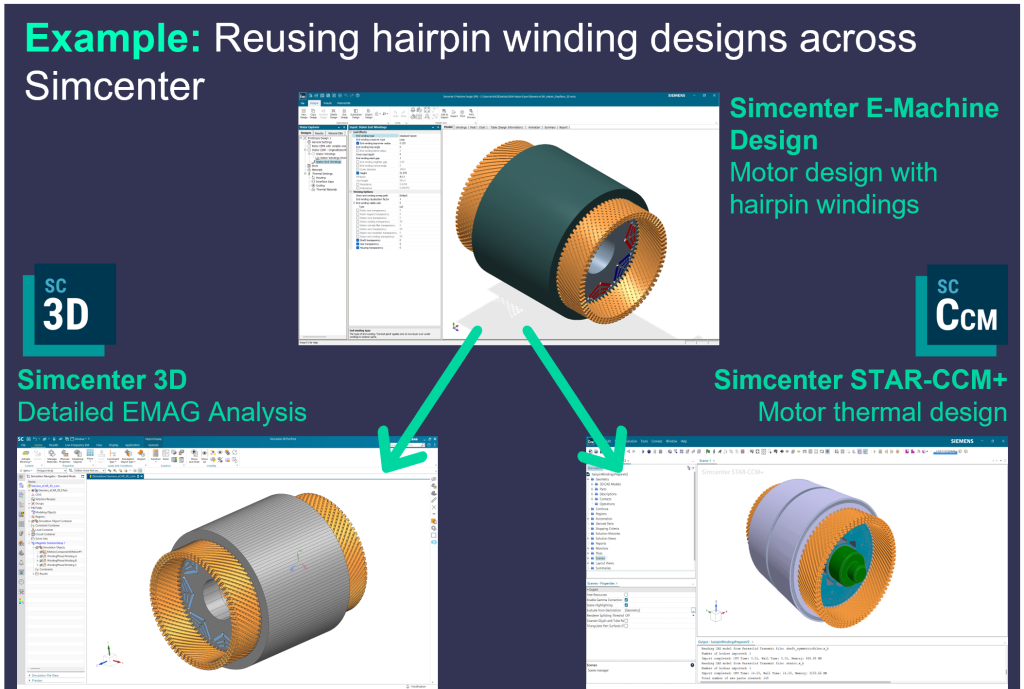
Motor designs containing hairpin windings can now be exported with detailed 3D winding representations, including end-winding definitions. These machine models can be reused in downstream electromagnetic and thermal simulation workflows, helping engineers preserve design intent while avoiding the effort of rebuilding detailed winding geometry.
The exported machine definitions can be leveraged in Simcenter 3D for detailed electromagnetic analyses and in Simcenter STAR-CCM+ for thermal investigations, reducing the effort required to recreate detailed machine models across downstream workflows.
Accelerate machine design and evaluation
Early-stage machine development often requires engineers to evaluate a large number of design alternatives before committing to detailed finite element analyses. To support this process, Simcenter E-Machine Design 2606 integrates Simcenter SPEED analytics for induction machines.
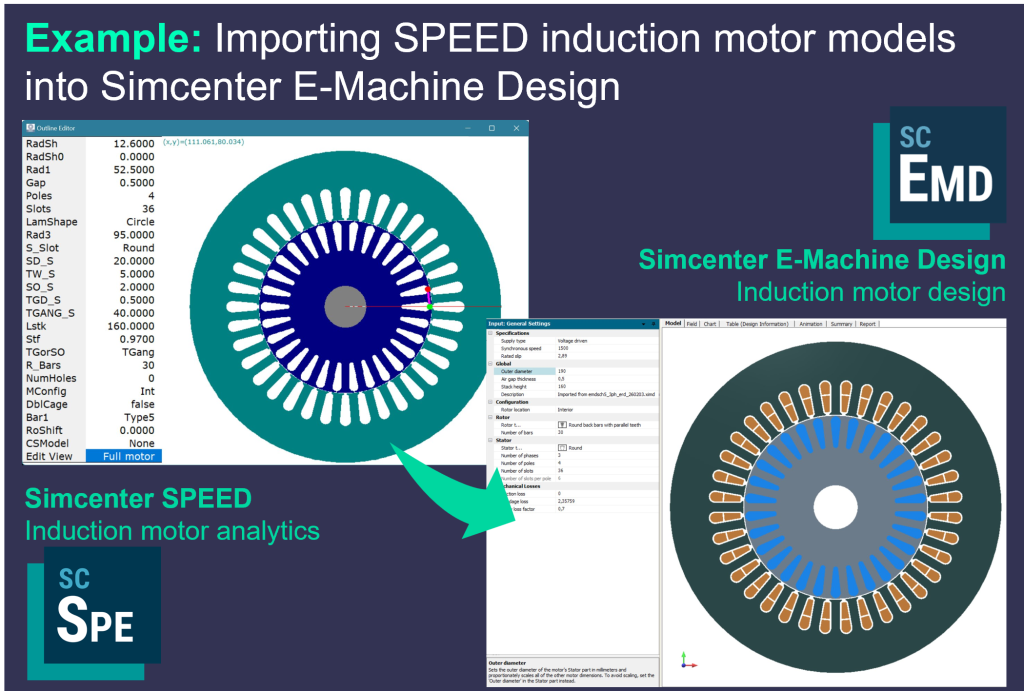
By leveraging proven analytical machine models, engineers can evaluate induction motor performance in seconds, making it easier to explore design alternatives and compare machine concepts during the early stages of development. Existing Simcenter SPEED induction motor models can now be imported directly into Simcenter E-Machine Design, enabling model reuse while preserving previous engineering investments.
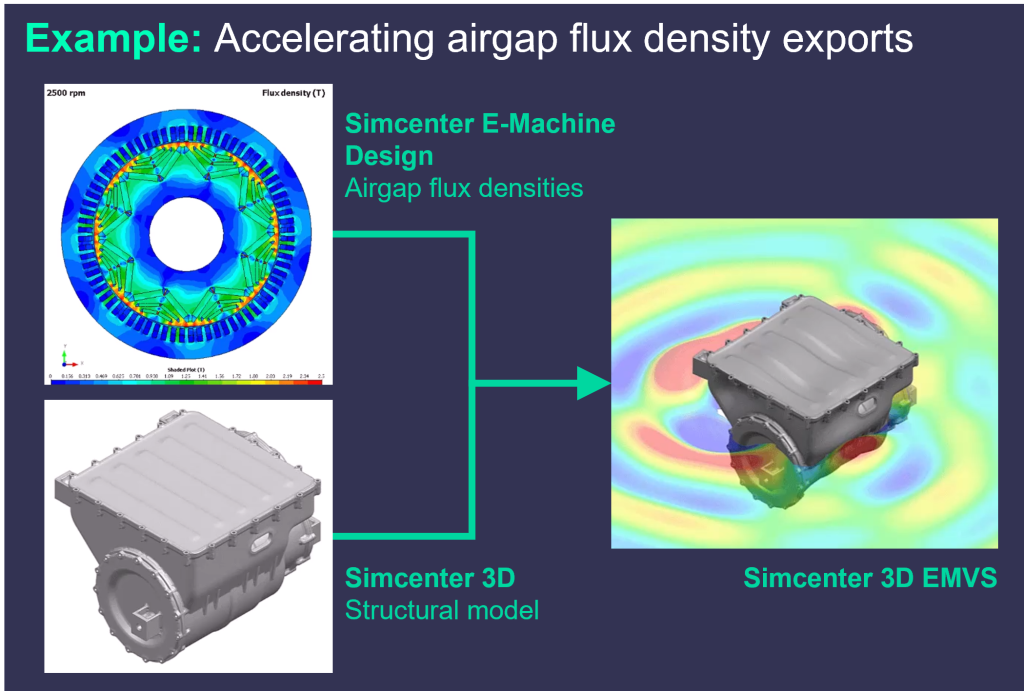
The release also improves the preparation of vibration synthesis studies through faster airgap flux density exports for the Electric Motor Vibration Synthesis (EMVS) module in Simcenter 3D. Electromagnetic solves are now parallelized and unnecessary loss computations can be skipped when generating EMVS datasets, reducing the time required to prepare vibration synthesis inputs and enabling earlier noise and vibration assessments.
Connect machine models to drive system development
Machine development increasingly requires close interaction between electromagnetic design, power electronics and control strategies. To support these workflows, Simcenter E-Machine Design 2606 extends model reuse beyond machine design and detailed simulation into drive system development.
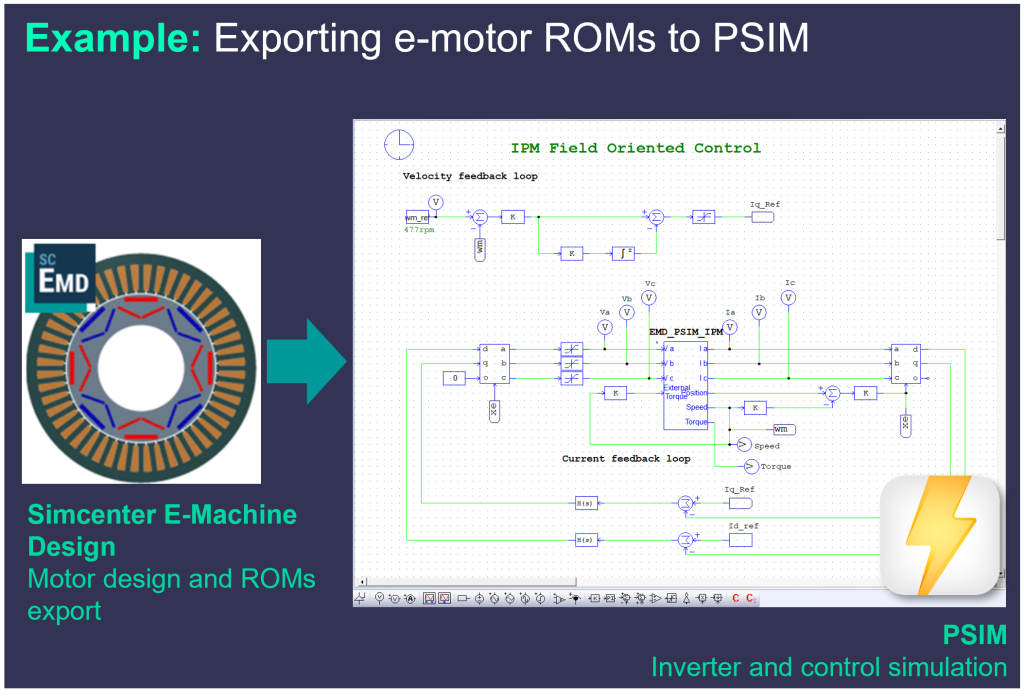
Reduced-order motor models (ROMs) can now be exported to Simcenter PSIM, enabling engineers to reuse machine behavior directly within inverter and control simulations. This eliminates the need to manually recreate motor characteristics and enables faster evaluation of interactions between the motor, inverter and control system.
By connecting machine design with system-level simulation, engineers can evaluate electric drive performance earlier in the development process while maintaining consistency across machine, inverter and control models.
Improving continuity across the electric machine development process
Simcenter E-Machine Design 2606 strengthens continuity throughout the electric machine development workflow. From induction motor evaluation and vibration synthesis preparation to detailed multiphysics simulation and drive system development, the new capabilities help engineers accelerate design exploration while reusing consistent machine definitions across downstream engineering workflows.