Simcenter 3D 2606: Explore what’s new in low frequency electromagnetics
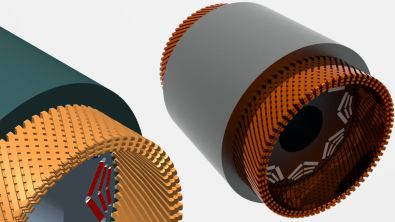
Powered by the proven low-frequency electromagnetic technology of Simcenter MAGNET, Simcenter 3D provides advanced capabilities for the simulation of transformers, inductors and electric machines. The electromagnetic technology inherited from MAGNET brings decades of solver development and application expertise into the broader Simcenter environment.
Simcenter 3D 2606 continues to expand these capabilities, introducing new functionality that further strengthens transformer-focused workflows while simplifying electric machine and electromagnetic device analyses. From streamlined frequency-domain studies and electro-thermal evaluations to more efficient model maintenance and eccentricity investigations, the latest release helps engineers perform more analyses with less manual effort.
Getting started with Support Center
Strengthen transformer and electromagnetic device workflows
Transformers, inductors and other winding-based electromagnetic devices often require engineers to evaluate performance across a wide range of operating conditions. These studies frequently combine frequency-domain electromagnetic analyses with thermal investigations, creating additional workflow complexity and simulation setup effort.
Simcenter 3D 2606 introduces new capabilities that simplify both frequency-domain and electro-thermal studies, helping engineers evaluate electromagnetic device performance more efficiently.
Simplify frequency sweeps for time-harmonic analyses
Frequency-domain studies are widely used to characterize transformer windings and electromagnetic devices across varying operating frequencies. Traditionally, evaluating frequency-dependent behavior often requires multiple analyses or parametric studies, increasing model preparation effort and workflow complexity.
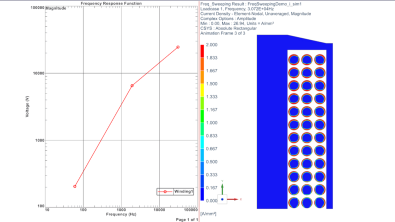
Simcenter 3D 2606 introduces a new frequency-transient workflow that streamlines frequency sweep studies directly within time-harmonic analyses. Engineers can perform frequency sweeps more efficiently while continuing to leverage existing frequency-domain modeling and post-processing workflows.
By reducing setup effort and simplifying frequency-response investigations, the new workflow enables faster evaluation of transformer and winding performance across operating frequencies.
Extend electromagnetic studies with simplified electro-thermal analysis
Thermal behavior is often a critical consideration in the design of transformers and other electromagnetic devices. During the electromagnetic design phase, engineers frequently need to assess the thermal impact of electromagnetic losses across multiple design alternatives. While detailed CFD analyses provide higher-fidelity thermal predictions, they may require additional modeling effort that is not always justified during early-stage design evaluations.
Simcenter 3D 2606 extends the integrated electro-thermal capabilities inherited from Simcenter MAGNET into the Simcenter 3D environment. Using heat-transfer-coefficient-based cooling models, engineers can directly reuse electromagnetic losses and evaluate thermal performance within the electromagnetic simulation workflow. This approach supports rapid thermal validation during the electromagnetic design phase without the effort associated with building dedicated CFD models.
By extending electromagnetic studies with thermal predictions, engineers can assess temperature evolution across operating conditions earlier in the design process while maintaining a streamlined workflow for long transient evaluations.
Simplify engineering workflows and model maintenance
As electromagnetic models evolve, engineers must continuously adapt simulation setups to accommodate geometry updates, design variations and new operating conditions. These activities often require significant manual effort and can reduce engineering productivity.
Maintain electromagnetic definitions through geometry changes
Geometry modifications are a natural part of product development. However, updates to CAD geometry can often invalidate electromagnetic definitions such as current flow assignments and permanent magnet orientations, requiring engineers to manually rebuild portions of the simulation setup.
Simcenter 3D 2606 introduces enhanced associative patterning capabilities that automatically recognize geometry changes and preserve electromagnetic definitions across design updates.
Current flow and magnetization assignments can be propagated automatically when patterned geometry is modified, helping engineers maintain simulation intent without manually recreating electromagnetic definitions.
Evaluate multiple eccentricity scenarios from a single model
Electric machine development frequently requires engineers to investigate manufacturing tolerances, assembly variations and operating conditions. Rotor eccentricity studies are a common example, often requiring multiple geometry variants and simulation models.
Simcenter 3D 2606 allows engineers to define eccentricity directly within motion settings, enabling multiple eccentricity scenarios to be evaluated using a single simulation model while leveraging existing solver-supported pre-motion and post-motion capabilities.
This approach reduces model preparation effort, simplifies study management and allows engineers to explore a broader range of operating conditions without maintaining multiple simulation models.
Continue advancing low-frequency electromagnetic simulation
Simcenter 3D 2606 builds upon the proven electromagnetic technology of Simcenter MAGNET while continuing to expand both the analytical capabilities and engineering productivity of low-frequency electromagnetic workflows.
From transformer-focused frequency-domain and electro-thermal studies to more efficient model maintenance and design-variation investigations, the latest release helps engineers perform more analyses with less manual effort within an integrated Simcenter environment.