From component libraries to system models: Automating systems model integration

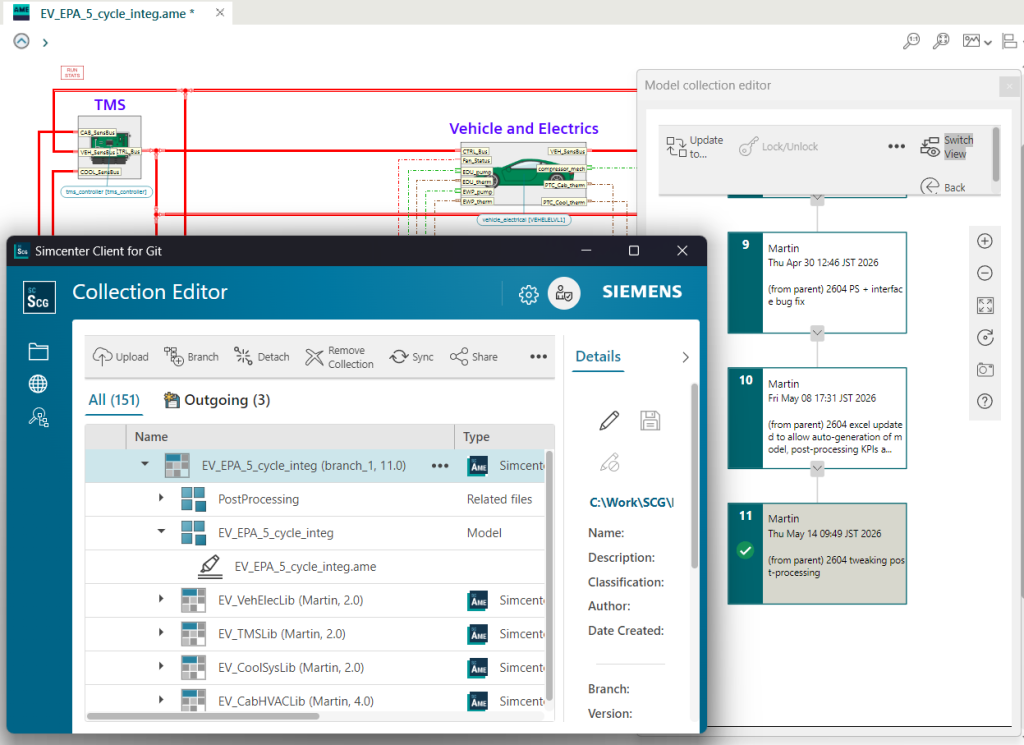
In our previous post, we explored the power of a modular approach to EV thermal management, emphasizing the creation of well-defined, validated component models through interface contracts. But what happens once these individual components are ready? How do we integrate them into a cohesive system, manage their evolution, and ensure a smooth, error-free deployment?
This article explains how systems model integration deployed with Simcenter Client for Git reduces integration errors and enables collaborative EV thermal system development for simulation engineers and systems architects.
Predefined interface contracts enable automated model integration
Once component models have been implemented and validated according to their model contracts, the next logical step is to build an integrated system model from these library components.
While the visual representation of such an integrated system model might appear complex, the advantage of this approach is that all connections are predefined. This allows for significant automation. Simcenter Amesim’s physical ports, exchanging power flows, improve readability of the model and further simplify this automation. By adhering to the established process and interface contracts, we virtually eliminate manual mistakes and connection errors, dramatically increasing the likelihood that the model will work correctly the first time
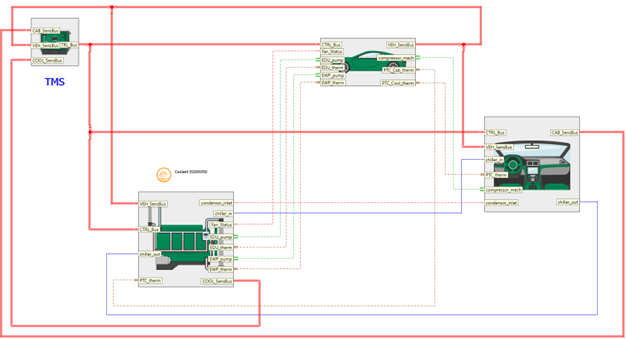
It’s important to note that integrating complex dynamics can sometimes introduce overall instabilities. A phased approach is often recommended, where lower fidelity components can initially be treated as boundary conditions.
This allows for a gradual increase in the level of detail and complexity in the model configuration until the target fidelity is reached.
Version control manages component dependencies across a distributed team
A critical aspect of integrated system model deployment, especially in collaborative environments, is robust version control and management. This is where Simcenter Client for Git (SCG) provides critical capabilities.
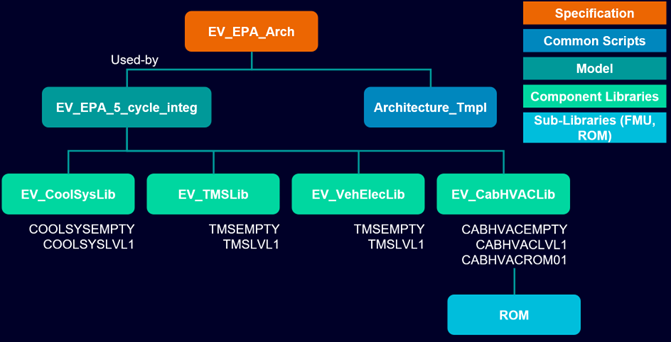
When you upload your libraries, Simcenter Client for Git automatically recognizes the associations between components and creates new Collections (equivalent to Git repositories) for each new library or sub-library required.
This ensures that your entire model architecture, from individual components to the integrated system, is managed under a single, version-controlled umbrella.
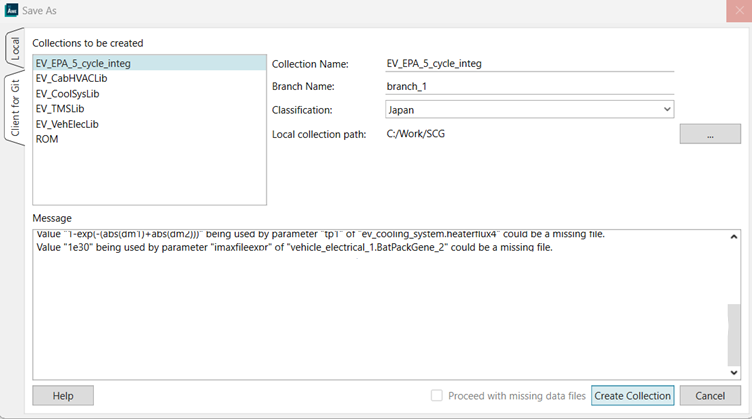
This process formalizes the system architecture development, defining the final implementation of the integrated system model as a single source of truth outside of the authoring tool (in this case, Simcenter Amesim, but the principle applies broadly).
From version 2604, Simcenter Client for Git can also handle access to other Git repositories, enabling model integrators to work with multiple sources.

Standardized naming conventions enable reusable post-processing scripts
One of the significant benefits of this structured approach is that components, their parameters, and variables adhere to predefined naming conventions. This enables them to be accessed effortlessly and generically using scripting.
This means that the scripts used to execute models and retrieve results are not specific to each individual model. Instead, they can be applied to any model following the same process, saving significant development time and allowing engineers to focus on the crucial task of post-processing and analysis.
Simcenter Amesim offers extensive built-in post-processing features for both time and frequency domains.
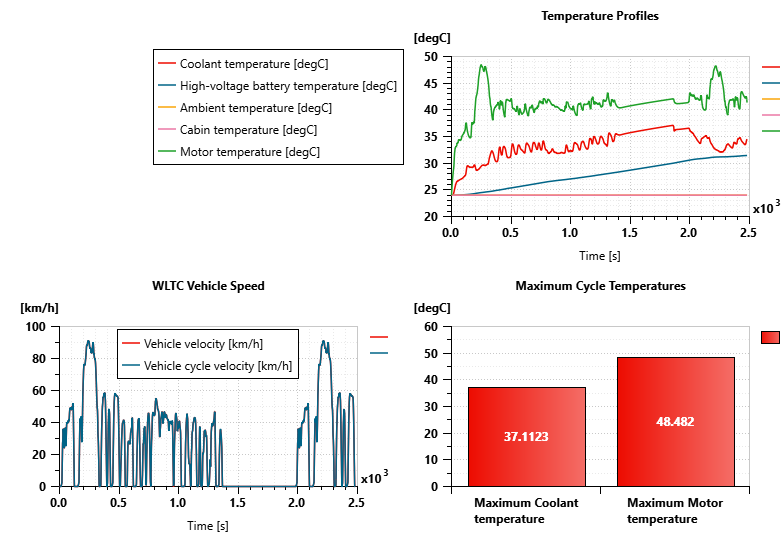
For quick and flexible analysis, exported simulation data can easily be used in a new Simcenter Amesim model dedicated solely to post-processing. Alternatively, engineers can leverage Simcenter Amesim APIs or integrate with more standard post-processing tools like Plotly for advanced visualization and analysis.
Conclusion: Building the future of simulation
By adopting integrated model deployment with version control tools like Simcenter Client for Git, simulation teams can move beyond individual component validation to seamlessly assemble, manage, and analyze complex system models.
This approach addresses the critical challenge of managing component dependencies in collaborative environments. Traditional methods that bundle libraries as complete zip files lock components into rigid lifecycles, creating version conflicts and integration errors. Version-controlled component libraries solve this by enabling independent development lifecycles while maintaining system-level integrity.
📌Key takeaways
- Predefined interface contracts enable automated model assembly, eliminating manual connection errors
- Version-controlled component libraries allow independent development lifecycles across distributed teams
- Standardized naming conventions enable reusable post-processing scripts across any model following the same process
As EV thermal systems grow more complex, requiring coordination across battery, HVAC, powertrain, and power electronics domains, the ability to manage component dependencies independently while maintaining system-level integration will increasingly differentiate high-performing engineering teams.
How does your team currently manage version control and dependencies across distributed simulation models?
In the next blog, we’ll explore how version control capabilities in Simcenter Client for Git enable collaborative model development
FAQ
Q: What’s the difference between Simcenter Client for Git and a standard git versioning tool?
A: Simcenter Client for Git is designed to understand the complex nature of systems models, with many interdependencies. It understands the file structure and ensures that models are uploaded with all the necessary information to be executed, reducing manual errors. It enables collaboration by providing an individual lifecycle to each dependency.
For a direct comparison to Git, it would be necessary to create a repository per model or library and manage the versioning relationships between the two.
Key points
- Integrates with model comparison tools
- Integrates directly with Simcenter Amesim (API available for 3rd party tools)
- Automatically includes all required dependencies during uploads
Q: Can Simcenter Client for Git integrate with existing PLM systems?
A: Yes, a standard out-of-the-box workflow is supported by Teamcenter. In addition, Simcenter Client for Git can integrate with PLM systems through APIs, enabling model version control to align with broader product lifecycle workflows.
Q: How does automated model assembly reduce time-to-deployment?
A: By eliminating manual connection errors and providing predefined interface contracts, teams can deploy integrated models in days rather than weeks, reducing iteration cycles by up to 60%.
Q: What happens when a component library is updated?
A: Simcenter Client for Git tracks component dependencies independently. When a library is updated, only affected system models are flagged, preventing unnecessary rework across unrelated projects