Proxy-Testbench

Introduction to Coroutines

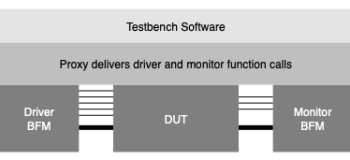
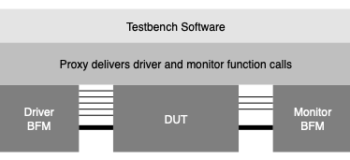
In the first post of this series on Python verification we discussed the proxy-driven testbench and how a proxy-driven architecture…

Proxy-driven testbench

Verification Learns a New Language

Abraham Lincoln once said, “What is conservatism? Is it not adherence to the old and tried, against the new and…

Leveraging ISO 26262 tool certification in IEC 61508

The majority of safety critical standards contain a section discussing the activities and analysis required to ensure tools deployed in…

The UVM Config DB and Scope

Introduction With any large software project, you need to share information and control across widely separated blocks. In the bad…

UVM Transaction Coding Style

How to write a UVM transaction class? There has been a split in UVM – how to create a sequence…

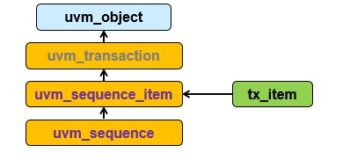
Extend transactions from uvm_sequence_item

Why are UVM transactions built with uvm_sequence_item?

What is a UVM transaction? A transaction in UVM is a class with properties for the signals, such as address…

What Does Importing a SystemVerilog Package Mean?

In my last webinar I explained what happens when you import a package in SystemVerilog. There were still many questions,…

The Many Flavors of Equivalence Checking: Part 5, Summary of the Most Popular LEC and SLEC Use Cases

As I noted at the beginning of this series, the term “logic equivalence checking” (LEC) applies to a number of…

ISO 26262 Safety Analysis

ISO 26262 Safety Analysis: We all need something to lean on

Introduction In my last post (Colliding Worlds of Safety Analysis), I highlighted the challenges facing safety teams and the opportunity…