What's new in Z-planner Enterprise 2604

What's new in Z-planner Enterprise 2604

This release focuses on delivering greater accuracy, improved efficiency, and expanded capabilities for engineers tackling today’s complex electronic designs. Let’s...
What’s new in BluePrint-PCB 2604

What’s new in BluePrint-PCB 2604

The recent addition of BluePrint-PCB to the Siemens portfolio represents a significant evolution for our customers, as it provides an advanced documentation tool for the PCB development lifecycle, from design through manufacturing release.
What's new in Valor 2604

What's new in Valor 2604

The latest release of Valor NPI 2604 continues to strengthen our Design-For-Manufacturing (DFM) validation by bringing new constraint types, additional checks and enhanced analysis capabilities.
ASTER Technologies strengthens Siemens digital thread for optimized PCB manufacturability

ASTER Technologies strengthens Siemens digital thread for optimized PCB manufacturability

Siemens EDA is pleased to announce its acquisition of ASTER Technologies, a trusted name within the PCB design industry with more than...
What's new in Z-planner Enterprise 2510

What's new in Z-planner Enterprise 2510

The Z-planner Enterprise 2510 release of Z-planner continues to refine the product by focusing on simulation accuracy, overall ease of use and collaboration.
What's new in Valor NPI 2510

What's new in Valor NPI 2510

The Valor NPI 2510 release brings additional checks, better manufacturing awareness and  exciting visual enhancements that show a significant evolution of the product offering.
What’s new in Z-planner Enterprise 2504

What’s new in Z-planner Enterprise 2504

Z-planner Enterprise 2504 release The latest 2504 release of Z-planner Enterprise delivers powerful updates that streamline stackup planning, improve rigid-flex...
What’s new in Valor NPI 2504

What’s new in Valor NPI 2504

The latest Valor NPI 2504 release delivers powerful enhancements that make your Design for Manufacturing (DFM) analysis faster, more intelligent,...
Avoid overspending on stackup materials in your PCBs - 8 high speed materials to consider

Avoid overspending on stackup materials in your PCBs - 8 high speed materials to consider

PCB material discussions are often focused around stackup material selection. These tend to be framed by questions like: ‘We use material ‘x’ for our designs and really like it. What do you think of it?’ This often veils the real question which is: ‘Do you know a good alternative to it?’
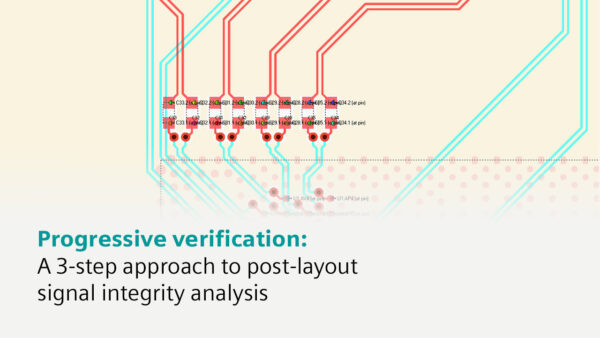
Progressive verification: A 3-step approach to post-layout signal integrity analysis

Progressive verification: A 3-step approach to post-layout signal integrity analysis

Progressive verification prioritizes analysis based on their ease of completion. It focuses on getting the simple stuff out of the way as quickly as possible, tackling those big problems that can be identified quickly first and then sifting through progressively finer and more granular issues for better signal integrity.
What’s new in Z-planner Enterprise 2409 – stackup design wizard, impedance, compare stackups, DFSI

What’s new in Z-planner Enterprise 2409 – stackup design wizard, impedance, compare stackups, DFSI

What's new in version 2024.1 of Z-planner Enterprise including information on the enhanced stackup design wizard, impedance tab, compare stackups, improved import/export, DFSI and more
Component Assembly Risk Assessment tool in Valor NPI 2403

Component Assembly Risk Assessment tool in Valor NPI 2403

With a Manufacturing Driven Design, Valor NPI brings specialized component assembly knowledge into and throughout the entire NPI lifecycle. This allows designers and NPI engineers to have immediate and direct access to the knowledge of their specialists throughout the design flow, allowing individual and intelligent DFM reviews to happen at any all points of the process.
4 things a PCB librarian needs to know about PCB fabrication

4 things a PCB librarian needs to know about PCB fabrication

a PCB librarian also needs to understand how the PCB is going to be built by a PCB fabrication factory. The PCB fabrication process involves dozens of steps, which can often be more complicated than the PCB assembly process.
The PCB assembly process: The 4 Things a PCB librarian must know

The PCB assembly process: The 4 Things a PCB librarian must know

PCB assembly is one of the main fields that a good PCB librarian needs to know in detail, as it is the point where your board components interact with your final design. Understanding this interaction and the PCB assembly process in general is vital for your initial library creation and to ensure a seamless Design for Manufacturing strategy early in your design process.
Manufacturing supply chain resilience

Manufacturing supply chain resilience

PCB Components and the flexibility of manufacturing supply chain resilience involves alternate parts form an important part of Design for Manufacturing (DFM) within the industry. Leveraging a digital twin allows ...
Are you normal?

Are you normal?

Siemens recently commissioned a survey through Aberdeen Research looking at the state of the Printed Circuit Board (PCB) industry within North America and Europe to learn about the challenges the PCB industry sees. It covered the technologies they are implementing, the general timelines they are given, and to learn how Design for Manufacturing (DFM) strategies and software are being leveraged to help meet a company’s overall goals
Are you still verifying your PCB prototype visually?

Are you still verifying your PCB prototype visually?

After completing component placement, it may take months for designer to complete the routing process and finish the entire PCB layout. At this point the CAM data can then be handed out to manufacturers for PCB manufacturing and assembly. After investing this much time and effort, you would probably expect the final prototype to be built as expected, with high quality and reliability.
Are your alternative parts well validated before release

Are your alternative parts well validated before release

In alternate part selection, many aspects need to be considered: electrical function, physically fit, supply chain flexibility, cost, etc. Every aspect is important during alternative part selection, but realistically, electrical and physical fit are the main prerequisites when choosing a new alternative part. alternative parts well validated
What’s New in Valor NPI 2311

What’s New in Valor NPI 2311

Each new Valor NPI release brings exciting features and improvements, and Valor NPI version 2311 is no different. One of the most prominent recent changes for release 2311 is the 3D board viewer. This allows users to toggle between the typical 2-D board view, and a 3-D board view. While less visually prominent, the addition of high-risk component detection is no less impactful among the overall improvements. The Valor Parts Library now associates individual components with a manufacturing risk value. This allows you to consider at-a-glance relative yield values based on component choices. Valor NPI version 2311 also facilitates the placement of XD components in a zigzag array.
Strengthening PCB Solder Connections

Strengthening PCB Solder Connections

To increasing the overall solder strength within a PCB design, designers should be focusing on two distinct but related factors: The material composition of the solder, and the pad and footprint layouts for individual components. The composition of the solder itself will depend upon the application of the board, the components, construction method and materials within the board, and the overall final board quality. The overall footprint of the component will be dependent upon the components within a BOM and the recommended assembly guidelines of your assemblers. Both of these factors rely on discussions and interactions with your assembly house and leaving these discussions until after the design has been released ultimately limits your assembly options.
Manufacturing Driven Design leverages the intelligence within your PCB Design

Manufacturing Driven Design leverages the intelligence within your PCB Design

Intelligent Process-Driven DFM Analysis for PCB Designers Recent component shortages and distribution disruptions have exposed both the fragility of global...
Stencil design considerations during library cell design

Stencil design considerations during library cell design

Library cell design seems to be an easy part of the entire design process, but in reality, it can be a complicated part of this process, as it involves many different aspects to consider. It should not only comply with the electrical needs, but also needs to meet manufacturing requirements. Solder paste printing is one of the manufacturing processes that may need considerations during your library cell creation. To be more straightforward, the stencil design is something need to be considered during library cell design.
What are the advantages and disadvantages of a thinner PCB?

What are the advantages and disadvantages of a thinner PCB?

Design for manufacturing (DFM) is an essential aspect of the new product introduction (NPI) process, and PCB design is a...
How to Optimize PCB Design for the SMT Assembly Process Flow

How to Optimize PCB Design for the SMT Assembly Process Flow

PCB (Printed Circuit Board) design layout optimization is critical for the success of SMT (Surface Mount Technology) assembly. SMT assembly involves placing surface mount components directly onto the surface of the PCB, as opposed to through-hole components, which require holes to be drilled through the PCB. SMT assembly is faster, more precise, and more cost-effective than through-hole assembly, but it requires careful design optimization to ensure a successful assembly process.
Migrating from Gerber to ODB++ CAM Compare

Migrating from Gerber to ODB++ CAM Compare

Gerber files have long been the industry standard for PCB design and manufacturing data. However, with the increasing complexity of modern designs, Gerber files have become less effective in conveying all the necessary data required for manufacturing. ODB++ is a newer format that was developed specifically to address the shortcomings of Gerber files. ODB++ is a comprehensive format that includes all the necessary data for manufacturing, including component placement, drill files, and manufacturing details such as the thickness of the PCB and the type of solder mask just to mention a few.
Manufacturing Driven Design – Taking DFM to the Next Level

Manufacturing Driven Design – Taking DFM to the Next Level

Manufacturing Driven Design (MDD) is an evolutionary approach to DFM. It enables the effortless exchange of manufacturing process constraints so that an OEM can assess the manufacturability of a design in perfect alignment with their supplier
What is DFM and DFA?

What is DFM and DFA?

DFM and DFA are relevant to almost any product be it assembling bicycles where primarily the product is mechanical components to electronic devices such as cell phones, routers, and computers which require both mechanical and electrical components. The primary focus of this blog will be PCB Design through PCB Fabrication and PCB Assembly within the electronic realm and how it relates to DFM and DFA.
Rigid-Flex Material Considerations

Rigid-Flex Material Considerations

Flex and rigid-flex designs refer to a PCB that is partially or entirely constructed using flexible rather than exclusively rigid...
What’s New in Valor NPI 2305

What’s New in Valor NPI 2305

Valor NPI has recently been updated with version 2305. Included within are many of the revisions and feature updates for this latest version of the software

What’s New in Z-planner V2023.1

What’s New in Z-planner V2023.1

Z-planner V2023.1 builds on previous versions by enhancing rigid/flex useability, tighter integration with Xpedition and HyperLynx and the addition of more Mil-Aero materials to the dielectric materials library.
6 material properties that can save you money when designing your PCB stackup

6 material properties that can save you money when designing your PCB stackup

Introduction Stackup decisions are critical to every PCB and electronic product, but they don’t always get the attention that they...
Optimizing PCB DFM Guidelines

Optimizing PCB DFM Guidelines

Typical DFM checklists assume the use of legacy DFM formats. In a world where much of our data transfer is becoming intelligent and seamless, why are we relying on designs from 60 years ago?
Making Parts Part of Manufacturing Driven Design

Making Parts Part of Manufacturing Driven Design

When it comes to PCB assembly level MDD, many designers have not concerned themselves with the component manufacturing Bill of Material (BOM). Designers work from a CAD library that has component libraries associated with internal part numbers (IPN) their company uses. The CAD Design Rule Checking software uses those CAD library shapes for its analysis and even, in some cases, the avoidance of where components are placed. There is nothing wrong conceptually with this mentality. However, like all things, the details matter.

The Mysterious Case of the Missing Bowties Part III

The Mysterious Case of the Missing Bowties Part III

Previously… People often say ‘better late than never’, but I’ve never heard my boss say that. After much difficulty in...
The Mysterious Case of the Missing Bowties Part II

The Mysterious Case of the Missing Bowties Part II

Previously… After receiving our boards and having them pass inspection I breathed a sigh of relief as this project was...
The Mysterious Case of the Missing Bowties Part I

The Mysterious Case of the Missing Bowties Part I

It was just another Monday at the office. I had released a design I had been working on for four...
Advanced DFM Constraints management in ADM (Analysis Definition Manager)- Valor NPI 2211

Advanced DFM Constraints management in ADM (Analysis Definition Manager)- Valor NPI 2211

The Analysis Definition Manager (ADM), introduced in Valor NPI 10.0, is a constraints management tool for creating and maintaining sets of Design for Manufacturing DFM rules to be used during the analysis in Valor NPI.
What materials are used in PCBS?

What materials are used in PCBS?

As a fundamental component of electronic products, printed circuit boards (PCBs) appear in every electronic product. PCBs connect all kinds of components together, making the electronic products work in the way we expect them to. So what materials are used in PCBs? Let’s look at the PCB together.

Valor NPI at Electronica 2022

Valor NPI at Electronica 2022

Valor NPI is pleased to be showcased at this year’s Electronica show from November 15th-18th in München, Germany. Located in...
Top 5 rigid-flex design guidelines

Top 5 rigid-flex design guidelines

Rigid-flex DFM I am not sure if you have seen a rigid-flex circuit before, but I bet you must have...
3 use models of the CAM Compare tool

3 use models of the CAM Compare tool

Using the CAM Compare tool Valor NPI comes coupled with multiple tool kits specifically designed to manage and assist with...
What’s New in Z-planner V2022.1

What’s New in Z-planner V2022.1

Creating the correct PCB stackup using the proper materials and then transferring that information to your fabricator is extremely important in the success of your PCB design.  Being able to “left-shift” this stage of your design process can add huge cost and quality savings into your entire design.
What is the PCB Design Process?

What is the PCB Design Process?

The PCB design process can be different depending on your company, but the fundamental aspects are all the same –...
How do you track changes made to your CAM files?

How do you track changes made to your CAM files?

PCB DFM comparison of CAM files CAM Compare is a popular DFM tool that comes packaged with every version of...
Why is Design for Manufacturing important?

Why is Design for Manufacturing important?

Who is PCB DFM for? For those of us that have climbed a mountain to take in the gaze of...
Choosing the right laminate for your PCB design

Choosing the right laminate for your PCB design

A balanced approach to material selection involves understanding and considering more than just electrical parameters. In general, with dielectric materials, every parameter that improves performance comes at a marginal increase in cost. Because of this, ensuring that you don’t overdesign within your materials is quite important.
What's new in Valor NPI v11.5

What's new in Valor NPI v11.5

Valor NPI 11.5 continues to introduce new and existing capabilities in MRA-Revolution, with a more complete Classification set which includes design preparations and analysis use of copper reference layers. Comparing an ODB++ to fabricator changes becomes easy and precise with the new CAM Compare flow and the first connection to stackup setup is established with Z-Planner integration.
Proactive Design for Test (DFT) best practices

Proactive Design for Test (DFT) best practices

The process of PCB DFT needs to be considered sooner and more proactively in our PCB design process, incorporated in the schematic phase, not during the layout phase. A designer should determine what nets will be needed to be tested based on their likelihood of failure and position those pins in open, accessible real-estate.
Practical advice on PCB stackup planning

Practical advice on PCB stackup planning

The more technology advances, the more attention we must pay to every aspect of printed circuit board (PCB) design, including...
Test Drive Valor NPI Free for 30 Days

Test Drive Valor NPI Free for 30 Days

This free, online trial will let you learn how moving manufacturing knowledge into the layout process can eliminate potential manufacturing issues early with Valor NPI.
Global aerospace leader seamlessly integrates Valor NPI into an Allegro® workflow

Global aerospace leader seamlessly integrates Valor NPI into an Allegro® workflow

Corporate Goal: reduce re-designs and increase product quality A few years ago corporate management at a global aerospace leader examined...
What is New Product Introduction (NPI) and How Does it Apply to PCBs?

What is New Product Introduction (NPI) and How Does it Apply to PCBs?

The pace of PCB new product introductions has increased exponentially over the past few years – and with it the need for a proper NPI process. It’s not just that PCBs are used in more and more products across numerous industries; it’s also that more PCBs are needed in those products. For example, consider how many PCBs are used in even the lowest-end cars today versus how many were used years ago. As new-model cars become increasingly connected to online services, the need for PCBs will continue to grow.
PCB Stackup Design e-book

PCB Stackup Design e-book

While not the final word on the subject of stackups, Bill’s e-book goes a long way to helping you plan ahead, providing an important voice in a space that is surprisingly lacking in content. I would also recommend exploring Z-planner Enterprise, a stackup tool that Bill has spent years developing. Now all you need is a sharp pencil.
What is Design for Manufacturing?

What is Design for Manufacturing?

PCB Design for Manufacturing DFM looks at all factors that may impact the manufacturability of a PCB design, such as assembly, fabrication, flex/rigid-flex, microvia, panel and substrate. It should also consider whether SMT component placement and soldering can be conducted automatically to reduce costs. DFM can involve general manufacturing specifications and/or the specifications of a specific manufacturer.
How do you do PCB Stackup Planning?

How do you do PCB Stackup Planning?

Being able to quickly qualify materials based on your known electrical tolerances, and not upon the materials availability of your selected fabricator is key for efficient stackup design. This allows you to optimize the design around the available materials and take complete control of your stackup.
Flex & rigid-flex PCB DFM: Learn from the expert

Flex & rigid-flex PCB DFM: Learn from the expert

Flex and rigid-flex circuits use unique materials in the manufacturing process and must be handled differently than FR4 PCBs.
Creating Custom Automation in Valor NPI Using Scripting Languages

Creating Custom Automation in Valor NPI Using Scripting Languages

The most modern language supported and delivered with Valor NPI is Python. If Perl is your language of choice then an additional module needs to be acquired through Active State. When all else fails there is the legacy C-Shell that is also included with Valor NPI.
The last step in PCB design needs more attention

The last step in PCB design needs more attention

We put a lot of attention on the first step of a process and then it seems we fall behind schedule. By the time you get to the last step of a process you are out of time and just need to wrap things up. How often are you pressed by management to get a PCB design out the door and sent to the fab house?
Valor Parts Library: What You Need to Know

Valor Parts Library: What You Need to Know

Are you familiar with the Valor Parts Library? Whether you are experienced with VPL or this is your first exposure,...