10 simulation podcasts every engineer should listen to – Siemens experts sharing insights
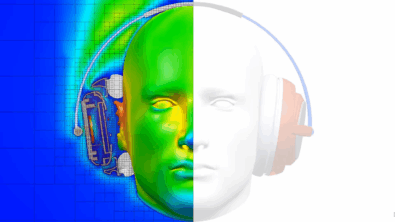
Conversations with Siemens experts on simulation, AI, cloud and digital engineering
If you are looking for expert insights into simulation, ranging from Computational Fluid Dynamics (CFD), to mechanical and systems simulation, digital twins, AI/ML and engineering optimization, the answer lies in conversations led by experienced industry professionals.
In this curated selection, we highlight simulation podcasts hosted by Jousef Murad featuring expert interviews with Siemens industry specialists, every simulation engineer should listen to. These episodes combine theory with real-world applications, offering practical insights, best practices, and forward-looking perspectives on industrial simulation and digital engineering.
Whether your focus is simulation fundamentals, visualization, optimization, AI-augmented simulation, or executable digital twins, this list will help you discover podcasts that can truly elevate your engineering expertise.
Let’s begin with a foundational episode on CFD, with a person that can be considered a pioneer in the field of modern applied CFD, before exploring advanced workflows, optimization strategies, the role of cloud deployment and high-performance computing.
1. Milovan Perić – Computational Fluid Dynamics (CFD)
Podcast #100 — 1:15:11
Computational Fluid Dynamics lies at the core of modern industrial simulation, and few voices are as authoritative on the subject as Milovan Perić. With a career spanning academia, industrial software development, and applied research, Perić has played a pivotal role in shaping how CFD is practiced today.
In this episode, he shares deep insights drawn from decades of work on numerical methods for fluid flow, including body-fitted grids, multigrid techniques, moving meshes, and parallel computing. The discussion highlights how these methods evolved from academic research into robust tools used daily in industrial environments.
Perić also reflects on his transition from academia to industry, including the creation of the CFD code Comet and his leadership roles at CD-adapco, where he helped drive the development of state-of-the-art CFD technology later integrated into Siemens’ simulation portfolio. Topics such as turbulence modeling, free-surface flows, cavitation, and fluid–structure interaction are discussed through the lens of real engineering challenges.
This episode is particularly valuable for engineers who want to understand not only how CFD works, but why certain modeling choices matter in real-world applications.
Why listen:
- Gain expert perspective on the foundations of CFD methods
- Understand how academic research translates into industrial simulation tools
- Learn how CFD supports complex engineering decision-making
2. Bob Ransijn – Siemens’ Digital Thread: Connecting design & simulation
Podcast #157 — 25:41
System simulation plays a central role in modern engineering, connecting physical behavior, data, and decision-making across the product lifecycle. In this episode, Bob Ransijn, a seasoned System Simulation Specialist and Presales Manager at Siemens Digital Industries Software, offers a clear and insightful overview of how system simulation has evolved into a cornerstone of contemporary engineering.
Bob traces the origins of simulation from its early applications, including its roots in large-scale scientific projects, to today’s multi-physics and data-driven approaches. He explains the fundamentals of system simulation, clarifies the key differences between digital twins and digital threads, and shows how these concepts work together to support connected engineering workflows.
The conversation also explores how AI and machine learning are accelerating the development of reduced-order models, enabling faster simulations, predictive maintenance, and real-time digital twins. Beyond technology, Bob emphasizes the democratization of simulation, highlighting how modern tools make advanced simulation accessible to a broader range of engineers and industries, from automotive to aerospace.
This episode is ideal for engineers seeking a system-level perspective on simulation and digital engineering.
Why listen:
- Understand the fundamentals of system simulation
- Learn the differences between digital twins and digital threads
- Discover how AI enables faster, real-time simulation models
3. Leoluca Scurria – The Paradigm shift of Executable Digital Twins (XDTs)
Episode #162 — 24:30
Executable Digital Twins represent a major shift in how industries connect the digital and physical worlds. In this episode, Leoluca Scurria, Global Product Manager at Siemens, explains why XDTs go beyond traditional digital twins and how they are transforming decision-making across industrial operations.
The conversation explores what makes XDTs fundamentally different: simulation models that are no longer limited to design phases but are embedded into real-time operations. Leoluca shares concrete examples of how companies in manufacturing and process industries are already using Executable Digital Twins to gain insights into complex systems in some cases, to “measure the unmeasurable.”
A key theme of the episode is the growing role of AI and agentic systems in building lightweight, real-time models that scale efficiently. Leoluca also addresses common misconceptions and pitfalls organizations face when adopting new digital twin technologies, offering practical guidance on how leaders can start small, prove value, and scale intelligently.
This episode is particularly valuable for engineers, product leaders, and decision-makers looking to move from simulation insights to operational impact.
Why listen:
- Understand how Executable Digital Twins differ from traditional digital twins
- Discover real-world industrial use cases of XDTs
- Learn how AI enables real-time, scalable digital twin solutions
4. Justin Hodges – Engineering optimization with Simcenter HEEDS
Podcast #125 — 42:06
Artificial Intelligence is rapidly transforming the way engineers approach simulation and optimization. In this episode, Justin Hodges shares his journey from classical Computational Fluid Dynamics (CFD) to advanced AI-driven simulation workflows, illustrating how machine learning is becoming a powerful complement to traditional numerical methods.
Justin’s interest in AI began during an internship at Siemens Healthineers, where he combined CFD with AI techniques to model airway diseases. This experience shaped both his academic path, culminating in a Ph.D. focused on CFD and AI, and his professional career at Siemens. Throughout the conversation, he explains how AI enhances CFD by uncovering complex patterns in data, accelerating simulations, and enabling faster design exploration.
The episode also explores Justin’s work with engineering optimization, where machine learning models significantly reduce computational time and cost compared to conventional approaches. Beyond technical topics, Justin emphasizes the importance of emotional intelligence, mentorship, and work-life balance in demanding engineering roles. He also discusses his recent book aimed at helping CFD and CAE practitioners confidently approach machine learning projects.
This episode is ideal for engineers interested in the practical intersection of AI, CFD, and optimization.
Why listen:
- Understand how AI and machine learning enhance CFD workflows
- Learn how AI-driven optimization reduces simulation time and cost
- Gain practical insights into applying AI in engineering simulation
5. Rafael Ritterbusch – Fluid-Structure Interaction (FSI) and Multiphysics simulation
Podcast #123 — 41:07
Fluid-Structure Interaction sits at the intersection of structural mechanics and fluid dynamics, making it one of the most challenging areas of industrial simulation. In this episode, Rafael Ritterbusch shares deep insights into FSI and multiphysics simulation, drawing from more than a decade of experience across CFD, structural solvers, and CAE interoperability.
Currently a Product Manager for structural solvers at Siemens Digital Industries Software, Rafael explains how modern simulation workflows increasingly require tight coupling between fluid and structural domains. The conversation explores why accurate FSI modeling is critical in industries such as aerospace, automotive, energy, and marine engineering, where structural response and fluid behavior directly influence performance, safety, and reliability.
Rafael also discusses the evolution of FSI within Simcenter STAR-CCM+, highlighting key challenges engineers face when integrating CFD and solid mechanics, from solver interoperability to numerical stability and scalability. His perspective bridges technical depth and product strategy, offering a clear view of how multiphysics simulation continues to mature within industrial environments.
This episode is particularly valuable for engineers working on complex coupled problems who want to better understand how to deploy FSI simulation in real-world projects.
Why listen:
- Understand the fundamentals and challenges of Fluid-Structure Interaction
- Learn how multiphysics simulation supports industrial engineering workflows
- Gain expert insight into CFD–structural solver integration
6. Simon Fischer – Why CFD engineers need marketing skills
Podcast #159 — 40:09
Engineering expertise alone is no longer sufficient to create impact. In this episode, Simon Fischer shares a unique career journey that bridges physics, CFD, and technical marketing, illustrating how engineers can amplify the value of their work through storytelling and communication.
Recorded live at Realize LIVE 2025 in Amsterdam, the conversation follows Simon’s path from building wind tunnels and running CFD simulations for high-performance engine development, including Formula One applications, to leading marketing initiatives at Simcenter Solutions. Along the way, he explains why visual storytelling, post-processing choices, and narrative clarity are just as important as equations when communicating complex simulation results.
Using memorable examples ranging from Guinness foam bubbles to strawberry sauce optimization, Simon demonstrates how simulation connects engineering to everyday products. He also reflects on the skills engineers must develop beyond technical expertise to collaborate effectively across disciplines and influence decision-making.
This episode is particularly relevant for engineers working at the intersection of simulation, visualization, and communication.
Why listen:
- Learn how engineers can communicate CFD results more effectively
- Understand why visualization and storytelling matter in simulation
- Gain insight into career paths that combine engineering and marketing
7. Stephan Groß – CFD visualization best practices
Podcast #158 — 49:13
CFD visualization plays a crucial role in how simulation results are understood, trusted, and ultimately used to make engineering decisions. In this episode, Stephan Groß shares his journey from working on race car aerodynamics to becoming one of the leading voices in CFD post-processing and scientific visualization.
Drawing from both engineering and technical marketing experience at Siemens, Stephan explains why visualization is far more than a final aesthetic step. He discusses how storytelling, visual clarity, and smart post-processing choices can transform raw numerical data into powerful engineering insights and why poor visualization can undermine even the most accurate simulation.
The conversation also explores common mistakes engineers make in CFD visualization, from misleading color scales to overloaded plots, and how to avoid them. Looking ahead, Stephan shares his perspective on the future of CFD visualization, including the growing role of AI, cinematic rendering techniques, and immersive technologies such as VR in making simulation more accessible and impactful.
This episode is especially valuable for engineers who want their simulation results to inform decisions, not just fill reports.
Why listen:
- Learn best practices for CFD post-processing and visualization
- Understand how storytelling improves simulation impact
- Explore emerging trends in AI-driven and immersive visualization
8. Petr Kodl – GPU-accelerated Fluid Dynamics
Podcast #121 — 45:10
High-performance computing (HPC) is becoming a critical enabler for modern CFD, and GPU acceleration is at the center of this transformation. In this episode, Petr Kodl from Siemens discusses how GPU-enabled CFD is reshaping simulation workflows by dramatically increasing computational throughput while preserving model fidelity.
The conversation focuses on the benefits of running Simcenter STAR-CCM+ on GPUs, highlighting how GPU acceleration enables engineers to simulate complex fluid dynamics problems more efficiently without compromising accuracy. Petr explains why simulation throughput is one of the key bottlenecks for CFD engineers and how GPUs help overcome this limitation by enabling larger models, faster turnaround times, and more efficient design exploration.
The episode also addresses the challenges engineers face when navigating an increasingly heterogeneous hardware landscape, including CPUs, ARM architectures, and GPUs. Petr provides guidance on how to evaluate hardware options and select the computing architecture that best fits specific simulation needs and workloads.
This episode is especially valuable for simulation engineers looking to scale CFD performance and make informed decisions about high-performance computing infrastructure.
Why listen:
- Understand the benefits of GPU-accelerated CFD simulation
- Learn how Simcenter STAR-CCM+ leverages GPUs for higher throughput
- Gain insights into choosing the right hardware for simulation workloads
9. Joel Davison – The importance of SaaS in engineering simulation
Podcast #170— 0:30:43
Engineering simulation is undergoing one of its most significant transformations in decades, a shift from traditional on‑premise compute infrastructure to cloud‑based, Software‑as‑a‑Service (SaaS) delivery. In this episode, Jousef Murad sits down with Joel Davison, Director of Simcenter SaaS Product Management at Siemens, to unpack what this evolution means for engineering teams, IT organizations, and long‑term simulation strategy.
Joel explains how cloud‑native access to high‑performance computing (HPC) breaks free from the constraints of local hardware, eliminating the heavy capital expenditure and maintenance burden that traditionally falls on engineering IT. By embracing hyperscale cloud environments, teams gain on‑demand elasticity, instantly tapping into the latest CPU architectures, GPUs, and ARM‑based compute without worrying about hardware refresh cycles or obsolescence.
A key part of the conversation tackles industry‑wide concerns around data security, IP protection, and total cost of ownership. Joel argues that modern cloud providers now surpass most local setups in both security posture and long‑term financial efficiency, especially when factoring in reduced downtime, scalability, and the ability to right‑size infrastructure on the fly.
The episode also maps out the maturity journey companies follow when adopting cloud‑enabled engineering. Rather than a binary “cloud or not” decision, organizations can mix deployment models, from maintaining local simulation while leveraging cloud‑connected services, to embracing full HPC orchestration in the cloud. This flexible approach allows teams to evolve at their own pace while steadily reducing complexity and accelerating development cycles.
This conversation is essential listening for anyone seeking to understand not only the technology behind cloud‑based simulation, but also the organizational, operational, and strategic implications it introduces.
Why listen:
- Understand how cloud and SaaS delivery remove hardware bottlenecks and IT constraints
- Learn why hyperscale providers often offer stronger security and better long‑term economics
- Explore practical adoption pathways, from hybrid workflows to full cloud HPC
- Hear how cloud‑native simulation unlocks elasticity, collaboration, and access to cutting‑edge compute
10. Robin Bornoff – The Evolution of Industrial Simulation
Podcast #132 — 1:11:11
Industrial simulation has evolved from isolated numerical analyses into a strategic pillar of digital engineering. In this episode, Robin Bornoff shares a long-term perspective on how simulation technologies have transformed and continue to reshape modern engineering workflows.
With a background spanning CFD research, electronic thermal simulation, and product strategy, Robin reflects on more than 25 years of experience in the simulation domain. He discusses how simulation tools have matured from standalone solvers into integrated platforms that support design space exploration, digital threads, and AI-enabled optimization. Drawing from his work at Flomerics, Mentor Graphics, and Siemens, he provides concrete examples of how simulation drives better design decisions earlier in the development cycle.
The conversation also explores the growing role of machine learning in simulation, particularly in accelerating design space exploration and enabling predictive capabilities across complex engineering systems. Robin highlights how these advances are changing not only the technology itself, but also how engineers collaborate, validate designs, and innovate across industries such as electronics, manufacturing, and energy.
This episode is especially valuable for engineers and technical leaders seeking a strategic understanding of where industrial simulation is heading.
Why listen:
- Gain a long-term perspective on the evolution of industrial simulation
- Understand how AI and machine learning enhance simulation workflows
- Learn how simulation supports digital threads and system-level optimization
About Jousef Murad
Jousef Murad hosts a series of expert-led, industry-focused interviews featuring specialists in:
- CFD, simulation & modeling
- Digital Twins & system engineering
- Optimization & automated exploration
- Design-to-simulation workflows
- Industrial innovation & digital transformation
These podcasts bridge the gap between theory and real-world engineering practice, making them essential listening for professionals seeking to stay ahead of technological trends.
Jousef Murad hosts a series of expert-led, industry-focused conversations that explore how simulation, digital engineering, and emerging technologies are applied in real-world industrial contexts.
Through in-depth discussions with engineers, researchers, and product leaders, the channel focuses on sharing knowledge, experience, and practical insights across topics such as:
- CFD, simulation & modeling
- Digital Twins & system engineering
- Optimization & automated exploration
- Design-to-simulation workflows
- Industrial innovation & digital transformation
Rather than promoting tools or trends, these conversations highlight the people behind the technology — how they think, how they work, and what they have learned along the way.
🎧 If you value learning from experts and real engineering experience, subscribe to Jousef Murad’s YouTube channel to stay up to date with new episodes and ongoing discussions around simulation and digital engineering.
>> Follow the channel, explore the episodes, and join a growing community of engineers learning from each other.


Comments
Leave a Reply
You must be logged in to post a comment.
Listening to expert talks about simulation and AI can be really inspiring, especially after a long day of learning and exploring new technologies. I recently took a short break and came across Win aura . I tried a few spins and noticed they even offer welcome bonuses for players from Belgium. At first, I lost a few rounds, but after risking a slightly bigger bet, I finally hit a solid win. That quick pause really helped me relax before diving back into Siemens podcasts and picking up insights on digital engineering and simulation best practices.
jwow