Simcenter testing technology to the rescue – helping avalanche research institute SLF saving lives

Looking out my window here in Belgium, it is clear that summer is over, and winter is approaching fast. Dreaming of fresh powder and off-piste slopes (no mama – I would never do that), I just booked my yearly snowboard holiday!
Snow fun and physical testing
Although I am normally pretty good in separating work from personal life, sometimes I am tempted to combine both. A few years ago, I hooked up the Simcenter SCADAS XS in my backpack to some sensors, analyzing the structural behavior of my snowboard on the slopes (if you are curious how to practically do such thing and what the eigenfrequency of a snowboard is, feel free to read this blog).
More recently, I had the pleasure to visit one of our customers, who also combines our Simcenter testing solutions with snow, slopes and … avalanches !
From snow fun to avalanche
Hopefully nobody of us will ever be confronted with avalanches, because over 150 people are yearly killed by the weight and fierce forces of millions of tons of snow travelling at speeds of up to 320 km/h (200 mph). No chance to outrun that on your skis or snowboard!
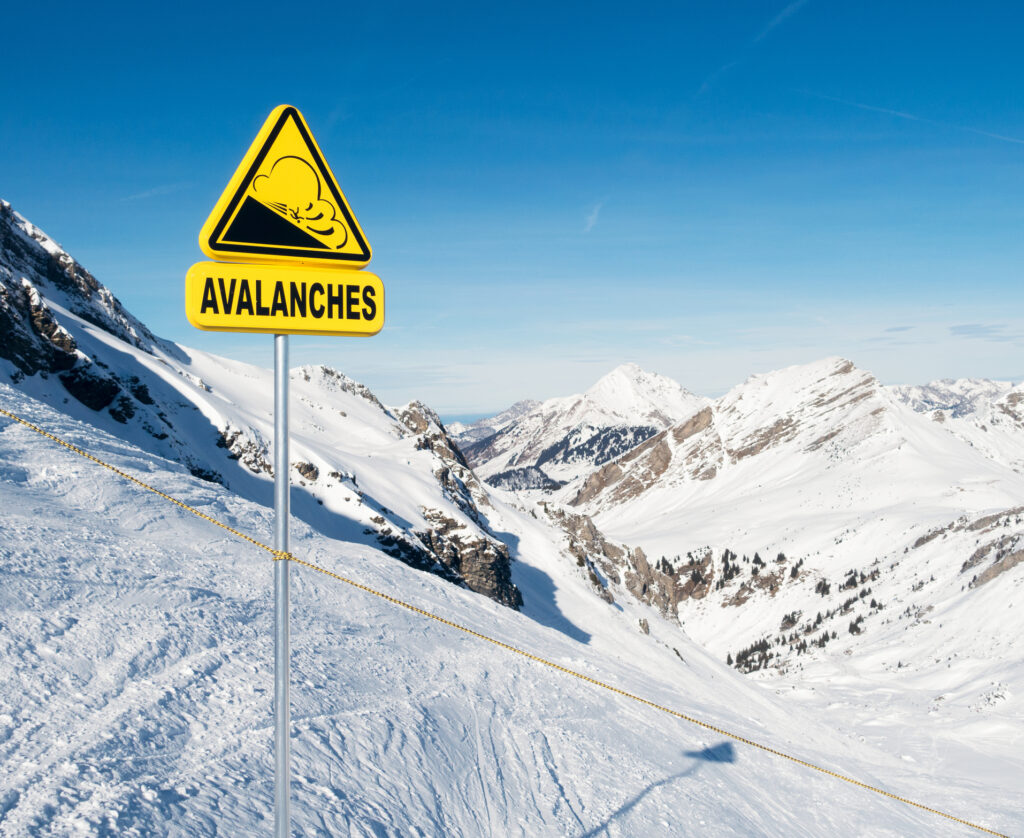
Avalanches can also cause a lot of damage to buildings and structures, sometimes wiping out whole villages and their inhabitants or destroying critical infrastructure such as roads and bridges. Understanding its physics and being able to predict avalanches is crucial in saving lives, and this is exactly what the Swiss based WSL institute for snow and avalanche research SLF is doing.
How to measure an avalanche
In the Vallée de la Sionne, SLF built an avalanche test site which is size-wise unique in the world and not exactly your day to day testing facility.
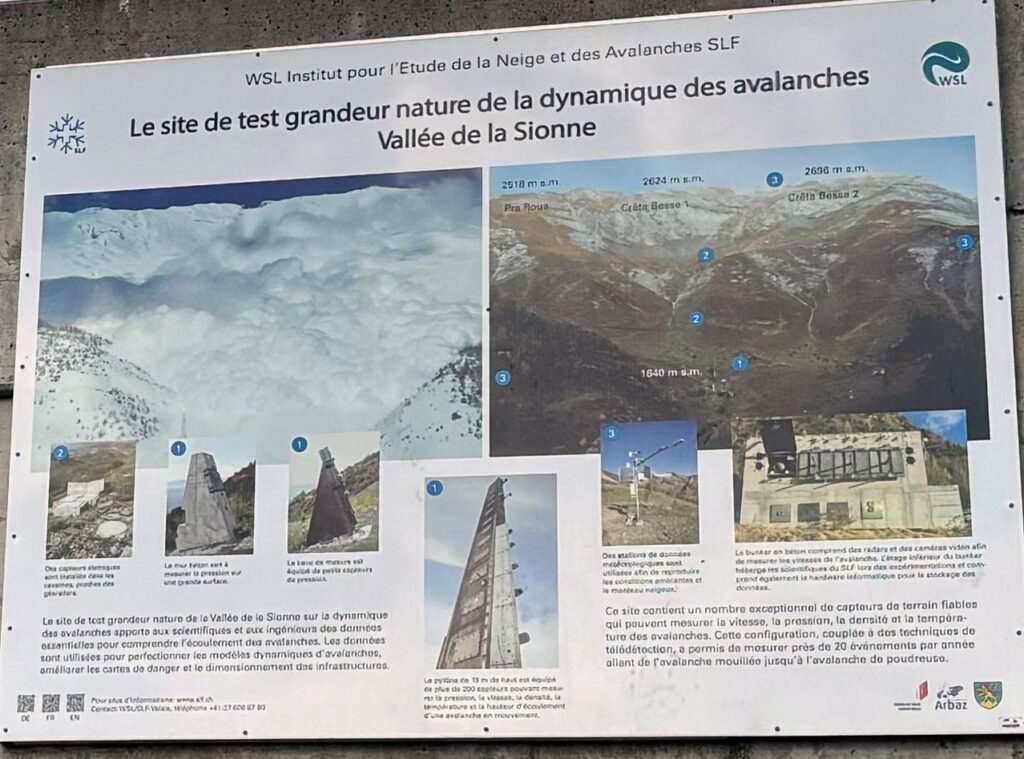
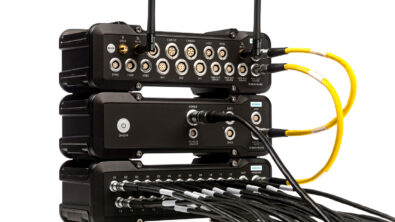
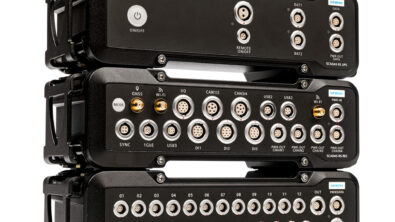
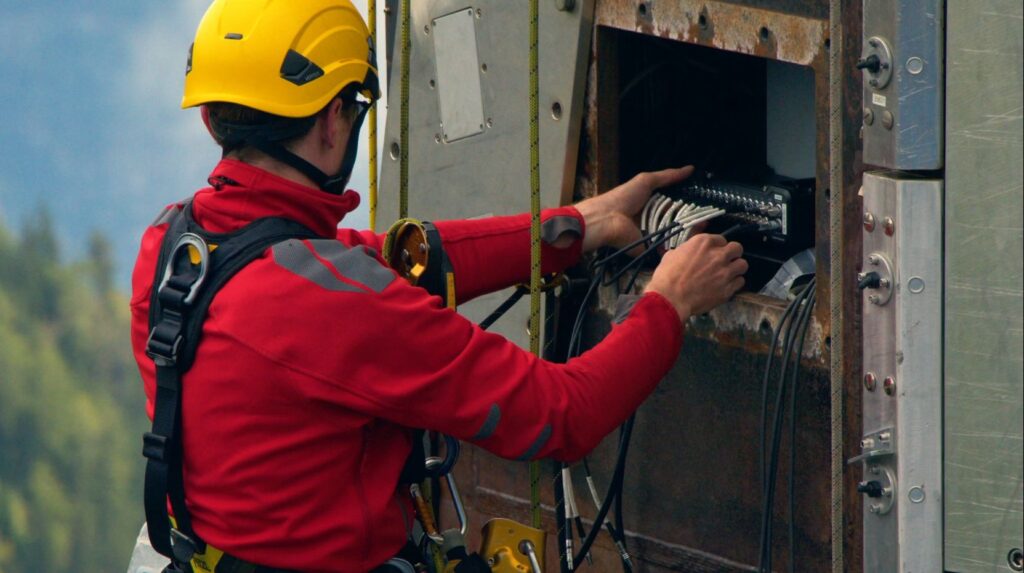
In the community of Arbaz – close to the city of Sion – along the slope of the mountain, several obstacles were built, like a 20 meters high pole, walls and wedges. Those obstacles are equipped with sensors measuring the forces, temperatures, displacements, snow thickness and speed of the impacting avalanche. Inside the different obstacles (and close to the sensors), multiple Simcenter SCADAS RS units monitor, measure and centrally store the variety of sensor data during naturally induced, full-scale avalanches.
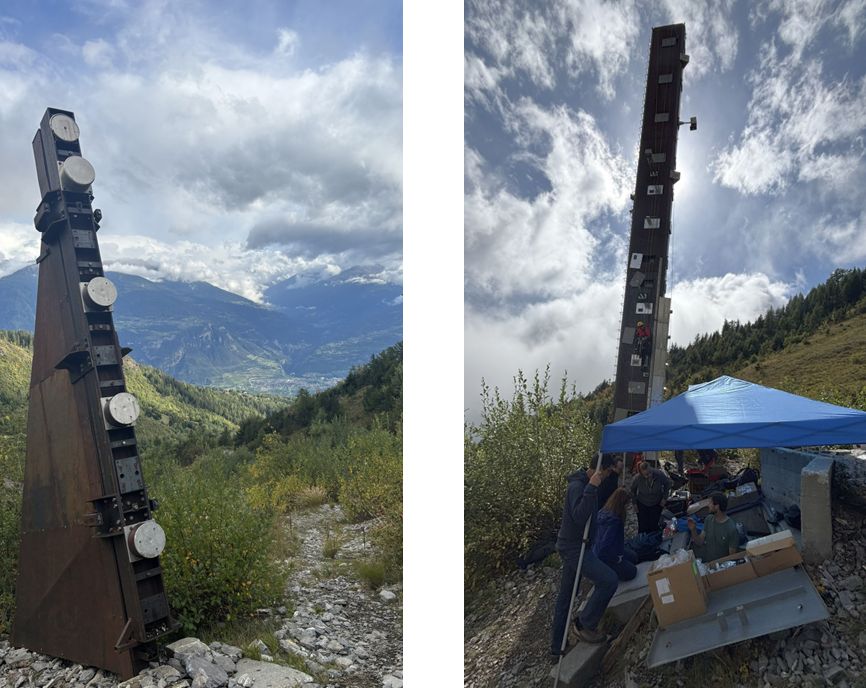
Not your everyday testing setup
Due to the distributed nature of the setup, the different SCADAS RS units are connected via a single fiber-optic connection, covering several hundreds of meters of distance. All data from the different measurement locations is synchronized and securely stored in a central recorder unit inside the central bunker – inaccessible in winter times when covered with a thick pack of snow.
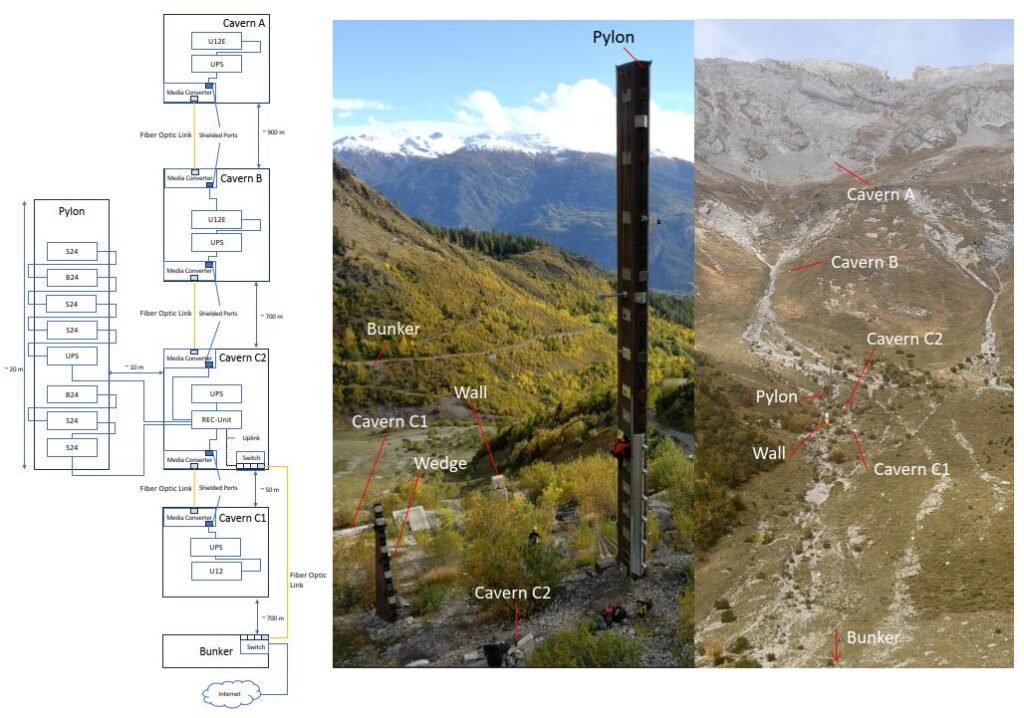
The whole system is constantly in monitoring mode, and automatically starts collecting data when the sensors on top of the mountain indicate the start of an avalanche, on average once or twice a week. The full control of the test system and the access to the data is possible from a nice and warm office in Davos, more than 5 hours away by car.
Test and simulation go hand in hand
The test data from the different sensors is further analyzed and used to optimize and improve the SLF simulation models that predict and visualize the physics and movement of avalanches.
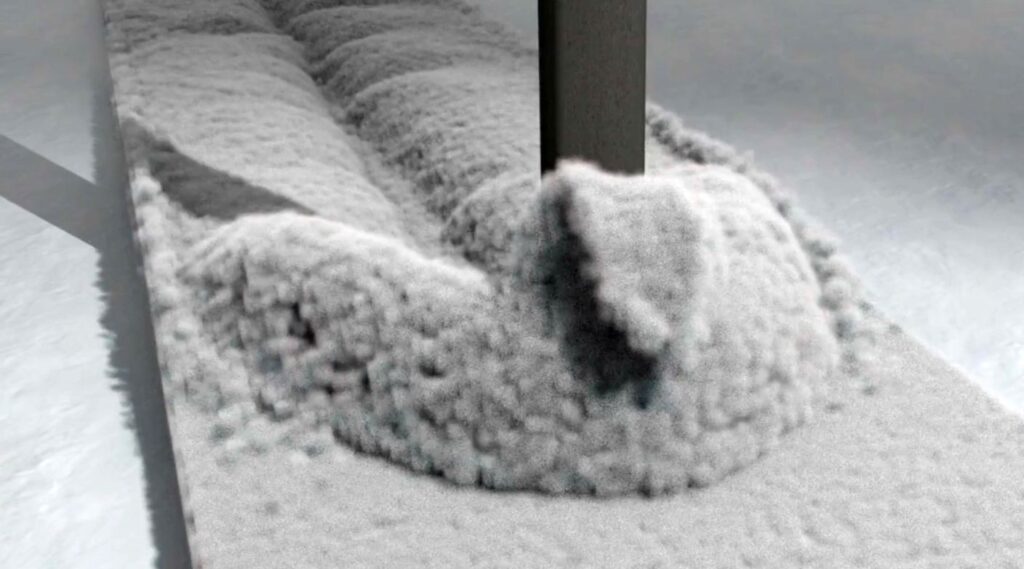
Ultimately this leads to better insights in how to protect people and infrastructure from avalanches: not only me as a snowboarder, but especially the local residents in the villages around. It also clearly shows and helps understanding the evolutions due to climate change.
Read the written case here or enjoy the video case below and see for yourself how our Simcenter testing solutions fulfill the technical requirements from SLF:
The ruggedness and the flexibility to measure a variety of sensors, combined with its distributed setup and remote access makes the SCADAS RS the perfect instrument for SLF. Read more on SCADAS RS on our website or in this blog.
Happy to have witnessed in person the great work that SLF is doing in improving safety and saving lives, I will feel a lot more secure during my upcoming snowboard trip. And for all of you going on ski holidays as well – enjoy it but make sure to stay safe!