Simcenter Day BeNeLux in Eindhoven: from Benchmarking to Physics-AI

A day of real-world CAE stories, practical workflows, and a glimpse at what’s next for simulation

Yesterday I joined a day dedicated to simulation engineers at Hotel Van der Valk in Eindhoven. The program blended deep technical content with the kind of honest, experience-based lessons you only get when engineers share what actually worked (and what didn’t) on real projects. Alongside Siemens experts, a strong lineup of customers presented how they use simulation to shorten design cycles, build confidence earlier, and explore new methods like AI-driven prediction.
Almost exactly a year on from the announcement of the Altair acquisition, for many this was the first time that the formal Altair products and the pre-existing Simcenter products were shown together. It therefore made sense that Thierry Olberchts, Director of simulation and testing for aerospace, aviation, and space programs, kicked off the day with an introduction to how the two companies have come together to create the new Simcenter.
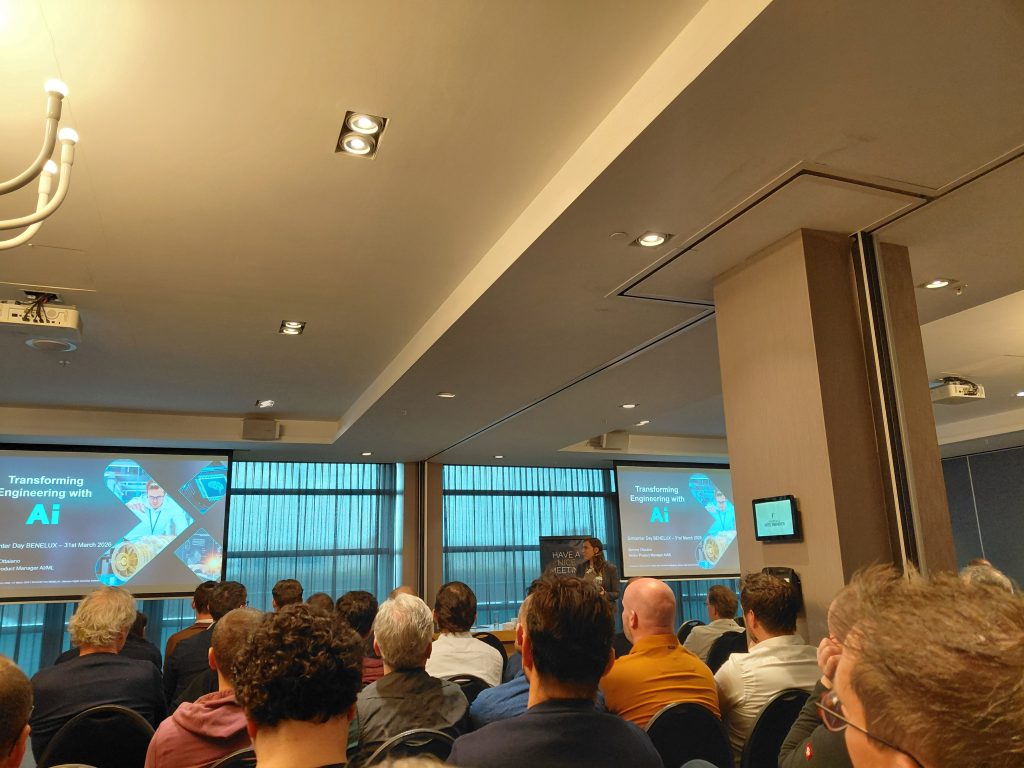
AI is becoming more than just a buzzword; a show of hands during the presentation showed that most engineers are now regularly using it in their day-to-day work. There was, therefore, keen interest from many to see what Simcenter has to offer. Simona Ottaiano, Senior Product Manager – AI/ML, Simulation and Test Solutions introduced what is currently available, particularly in Simcenter X, what is expected in the upcoming release, and what will come next. From Chat, to Co-pilots, as well as Agents helping you get your work done faster than ever before. Personally, I am a big fan of the chat that was previously released in Simcenter X. Getting help via asking a question instead of trawling through help documents is a huge time saver for an infrequent user such as myself.
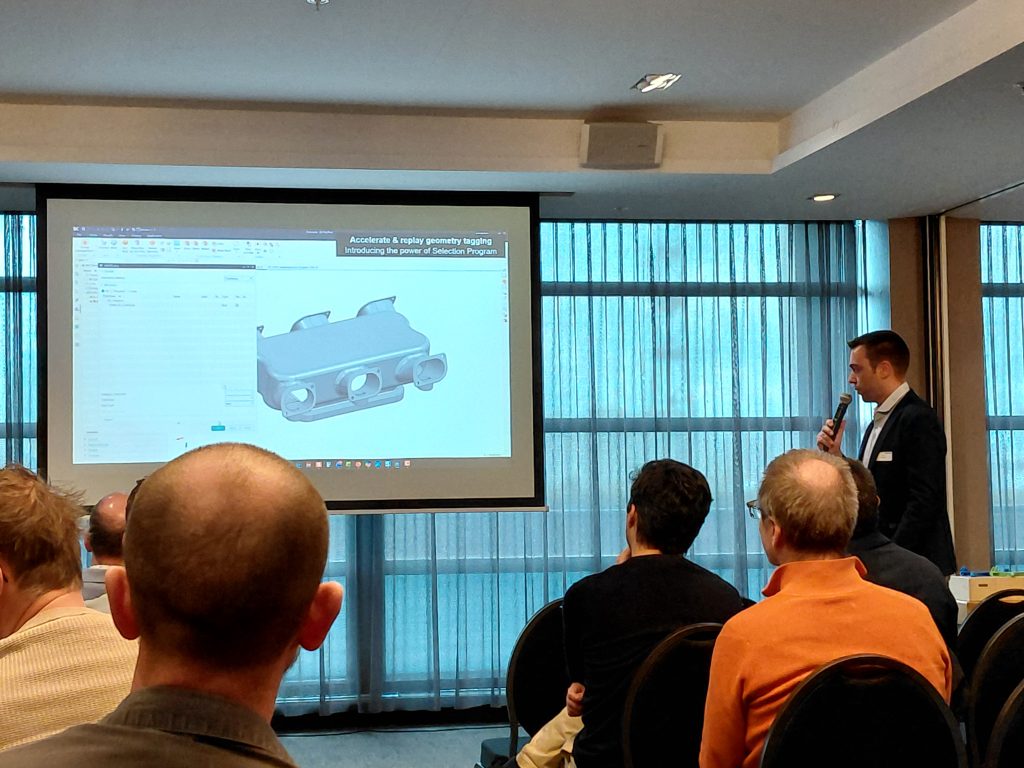
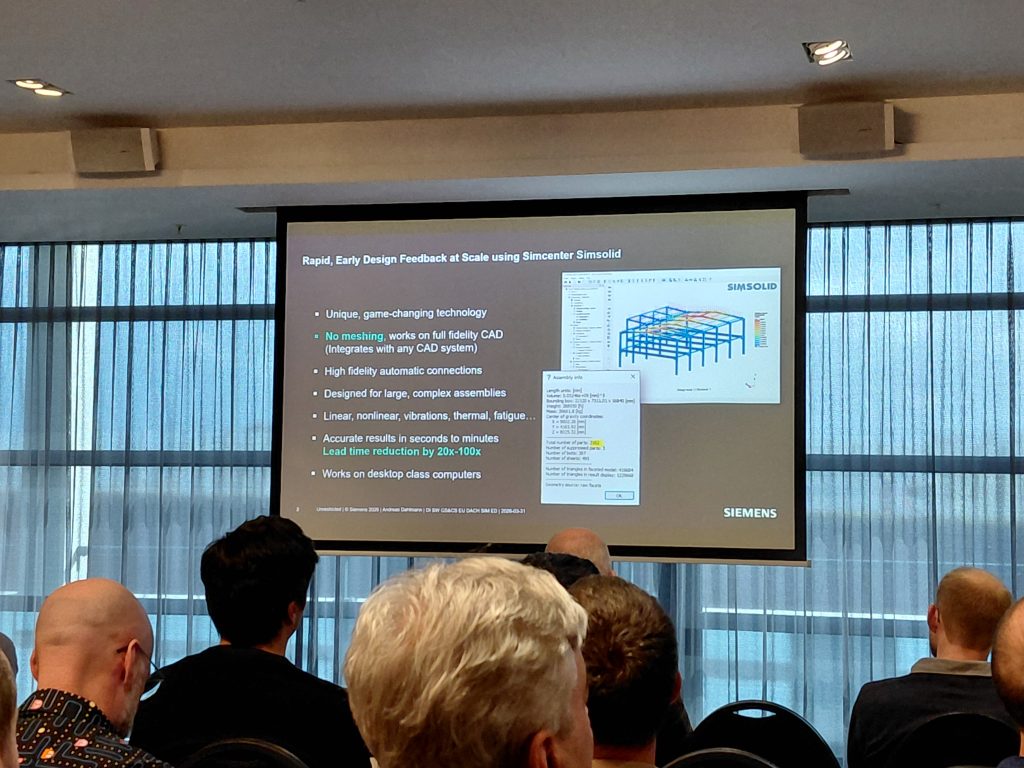
In the afternoon, we split into three tracks: Simcenter Fluids and thermal, Simcenter Mechanical, and Simcenter Hyperworks with each track following the same structure of What’s new in their products, followed by customer presentations. However, the Simcenter Hyperworks and Simcenter Mechanical tracks then rejoined, as if to highlight the two past companies coming together, we were given a demonstration of how Designcenter NX, Simcenter 3D, and Simcenter Simsolid can be used in a single workflow that takes you from design to fully featured simulation results in less than ten minutes.
Below are the customer highlights that stood out to me most—spanning structural dynamics, CFD, multiphysics, automation, and the steady shift toward simulation-driven decision making from day one.
Customer highlights
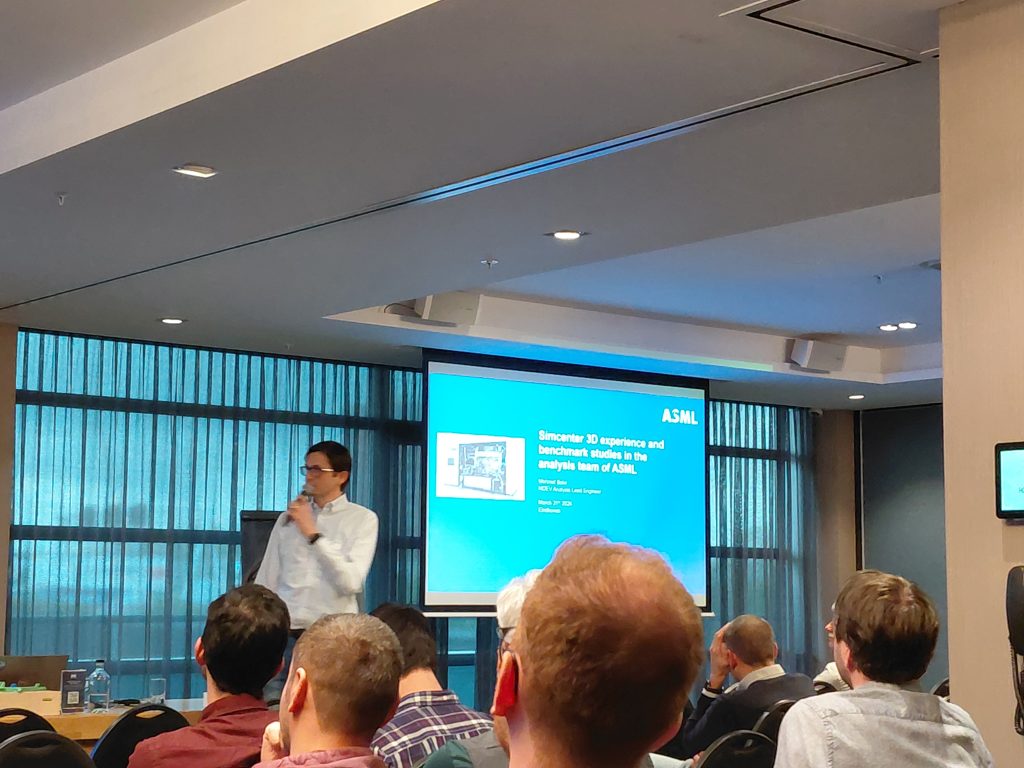
ASML: benchmarking Simcenter 3D for digital verification
Mehmet Bakir shared how ASML’s Computational Analysis & Digital Engineering team approached Simcenter 3D with a refreshingly pragmatic question: how does it perform on representative benchmark cases across different domains, and what’s the day-to-day user experience for simulation specialists? While Simcenter 3D is widely used by ASML designers for early iterations, this study focused on the digital verification side—evaluating whether it can serve as a strong alternative in an expert simulation environment. The takeaway was balanced and useful: strong performance overall, clear areas for improvement, and a much sharper picture of where the tool fits best in the broader simulation landscape.
Daikin: shortening the design cycle with structural simulation
Mouhamad Ali Mkanna described how Daikin’s simulation team uses Simcenter 3D to move faster without sacrificing confidence—especially in structural work. He highlighted hands-on use of dynamic and nonlinear solvers, and how those capabilities support day-to-day engineering decisions throughout the product design cycle.

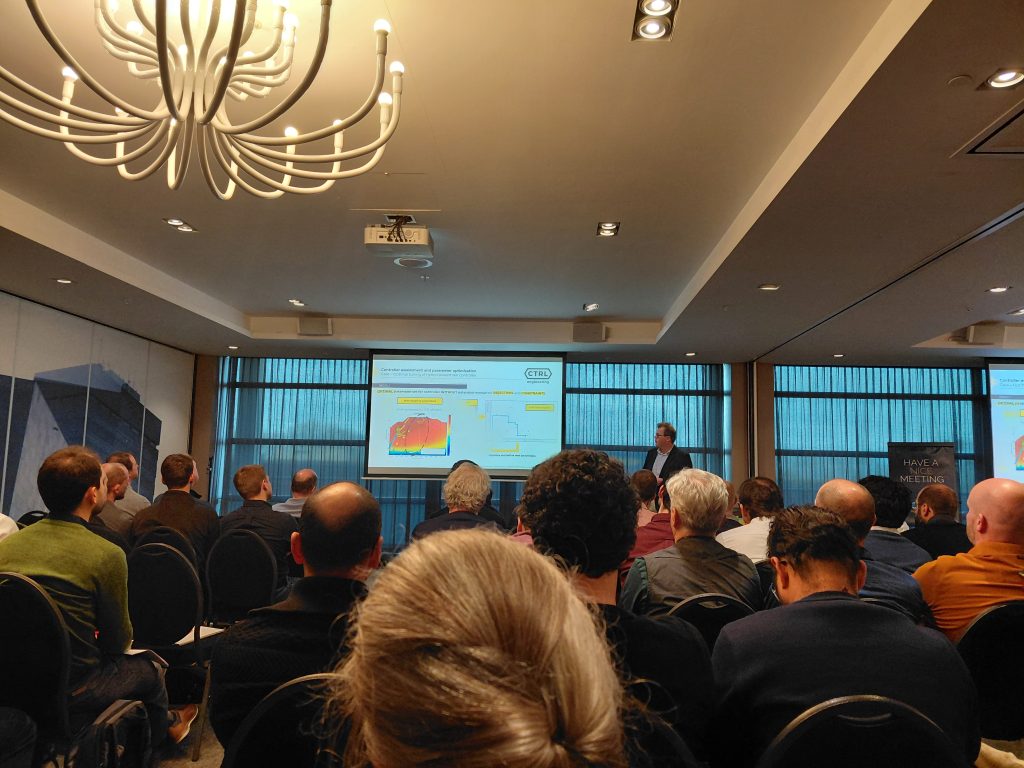



Kinetron: continuous improvement with OptiStruct/RadioSS and automation
Wesley Peijnenburg gave a great example of how simulation maturity is as much about process as it is about solvers. At Kinetron—where products range from self-charging wearables to micro motors and turbines—FEA is integrated as a natural step in the project timeline to predict outcomes against standards (including Eurocode testing) and improve performance. Two themes stood out: (1) building reliability by verifying against analytical solutions, and (2) shortening setup time through pre-processing automation (notably TCL scripting). It was a reminder that “faster simulation” often starts with repeatable models, clean workflows, and the willingness to continuously refine the way we work.
I am sure there were other great presentations, but I could only be in one track at a time, sorry to those that I have therefore not included.
Overall, it was an energizing day: grounded in real engineering constraints, rich in practical detail, and forward-looking without drifting into hype. If you were there too, I’d love to compare notes—what talk (or hallway conversation) changed the way you think about your simulation workflow?
This event runs each year in the BeNeLux region, but there are others around the world to look out for as well. The biggest is Realize live that takes place in Detroit, Amsterdam, and Bengaluru. It includes everything Simcenter, normally at a slightly higher level than the presentations shown at this event, which got into the details of the individual products.
The most similar event to this that is coming up is the Simcenter Technology Conference, which I am told is the replacement for the old Altair Technology Conference. I have never been, but the speaker list includes Bentley, Rolls-Royce, Astec Industries, Gordon Murray Group, Boeing, and Airbus so it looks like it is worth the trip, Register here. For other events, check out my monthly blog ‘Simcenter 3D: The latest,’ where I try to keep a list of events as and when I hear about them.
Special thanks to Bernardo Lopes for putting on the event and adding me to the guest list.


