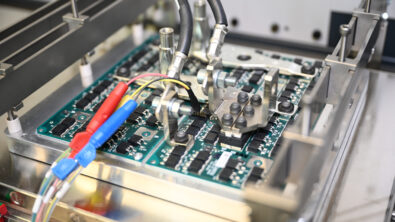
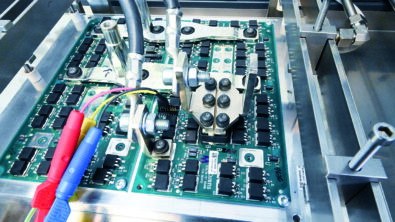
Bring laboratory-grade thermal verification to inverter manufacturing

What’s new in Simcenter Micred quality tester
Thermal verification should not end when an inverter design enters production. The new Simcenter Micred Quality Tester evaluates all semiconductor positions in a full-bridge inverter against predefined criteria, helping manufacturers identify outliers, validate process changes, and maintain continuity between design targets and manufactured products.
A qualified design does not guarantee consistent production output
Power electronics sit at the heart of electric vehicles and other electrified systems. In an EV inverter, multiple semiconductor devices must work together to convert and control electrical power while operating under demanding thermal conditions.
Engineering teams can carefully characterize components, calibrate thermal models, and define performance targets during development. But once production begins, a different question emerges: Does every manufactured inverter still reflect the thermal performance established during design?
Material variations, assembly conditions, and changes in manufacturing parameters can alter the thermal path within a module. These deviations may not be visible through functional electrical checks alone. If they remain undetected, they can become reliability problems later in the product lifecycle.
Automated end-of-line thermal testing addresses this gap by identifying production defects, detecting assembly errors, and supporting go/no-go decisions or classification into predefined quality ranges.
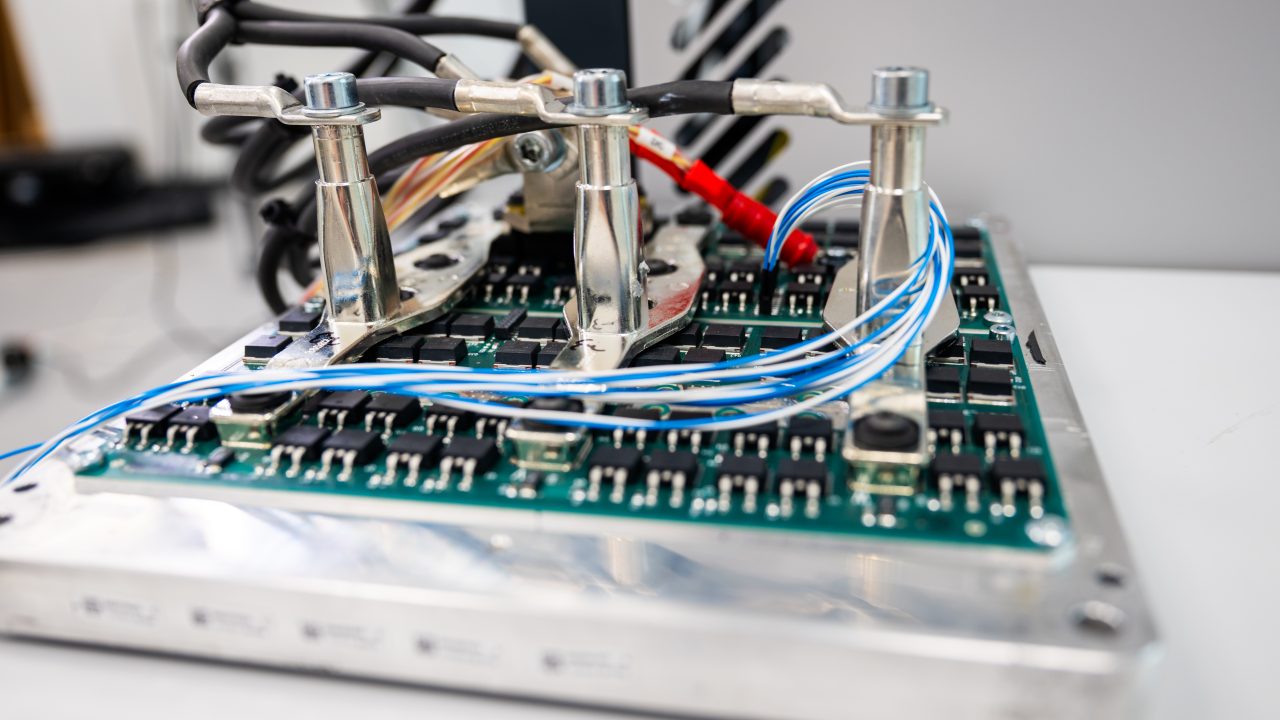
Simcenter Micred thermal testing
Create a measurement thread from design to manufacturing
The better approach is not to treat design validation and production quality as disconnected activities. It is to use comparable thermal measurements across the lifecycle.
The new Simcenter Micred Quality Tester brings laboratory thermal transient test technology to the shop floor. The measurements obtained near manufacturing are directly comparable with measurements made during earlier design phases, including results used for thermal model calibration or the investigation of thermal
degradation.
This creates continuity between what engineering intended and what manufacturing actually produced.
Instead of evaluating production solely against broad electrical limits, teams can verify thermal behavior against criteria established by engineers. The same measurement principle can also be used to assess the effect of changes in materials, manufacturing time, or production-line settings.
Thermal verification, therefore, becomes more than a final inspection. It becomes feedback for improving and controlling the manufacturing process.
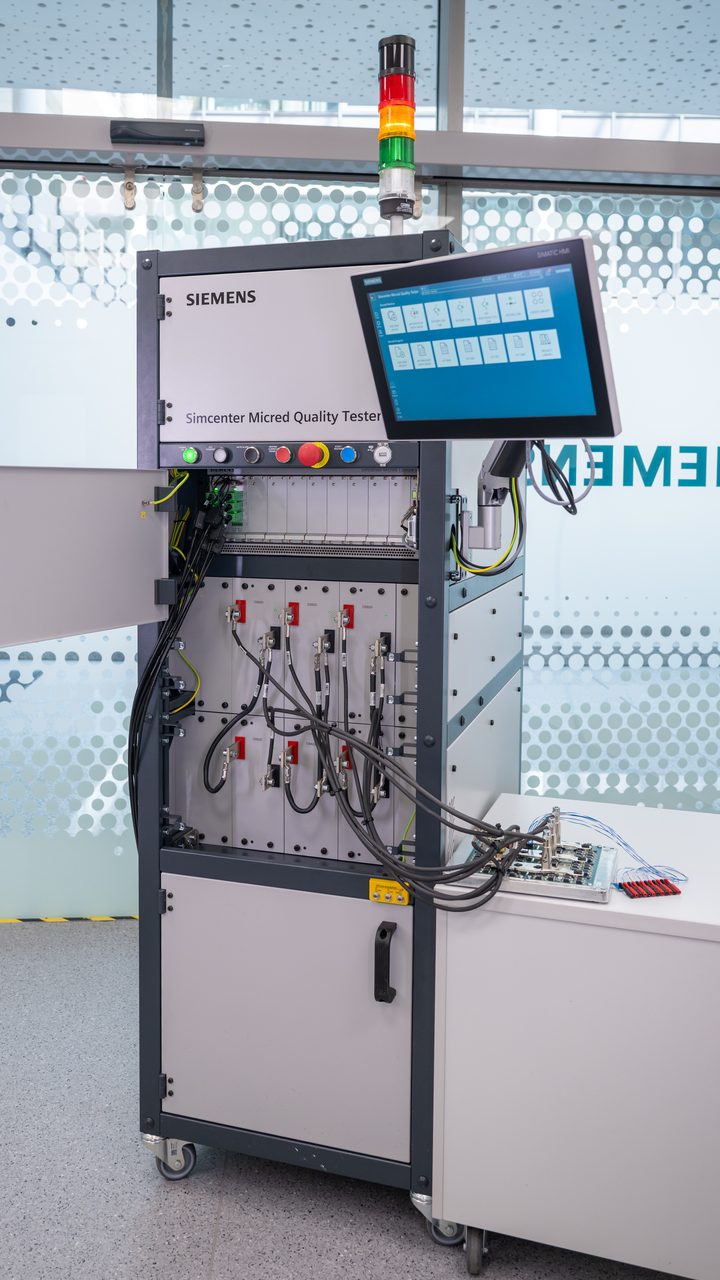
Simcenter Micred Quality tester
Automate expert-defined thermal testing
Laboratory thermal characterization often requires experienced engineers to configure the measurement, review the results, and determine whether a device behaves as expected. That approach is valuable during development, but it does not readily scale to routine shop-floor operation.
The Simcenter Micred Quality Tester separates test definition from test execution. Engineers define the measurement and acceptance criteria in advance. The actual measurement can then be performed by a technician or initiated through an automation system without requiring engineering expertise for every test.
The workflow combines three capabilities:
- Automated measurement: A predefined thermal transient test is executed consistently.
- Automated evaluation: Results are assessed against the configured quality criteria.
- Centralized data output: Measurement results can be sent to central storage for further analysis, simulation, or statistical evaluation.
The software can support communication protocols including OPC UA, SECS/GEM, and Modbus, allowing the quality tester to connect with different manufacturing and automation environments.
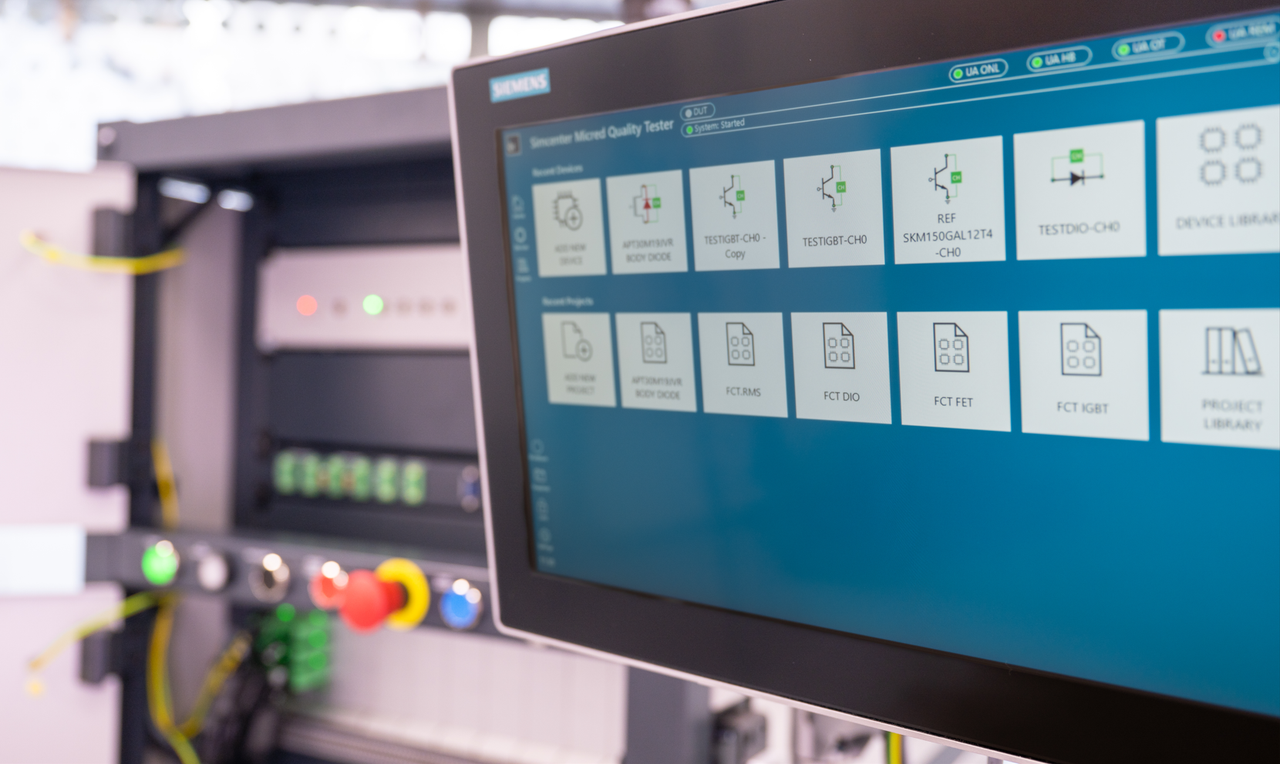
Simcenter Micred Quality tester software workflow
Evaluate the complete inverter, not only an isolated device
The new configuration is aimed at power electronics and electric vehicle inverter applications. A full-bridge inverter contains multiple semiconductor positions assembled into a common system. A localized issue at a single position can therefore affect the quality of the entire module.
In the demonstrated workflow, a measurement configuration is prepared for all six positions of an inverter module. Once the operator starts the test, the system measures the transient response of each position and displays the resulting curves. It then identifies any position that falls outside the predefined acceptance criteria.
An outlier does not automatically prescribe a single corrective action. It gives the manufacturing and engineering teams evidence that the sample needs further assessment and may require analysis, rework, or rejection.
This is a critical distinction. The system is not simply checking whether power flows through the inverter. It checks whether the thermal behavior at each measured position remains within the expected quality boundaries.
Use a short thermal event to reveal internal quality
Simcenter Micred thermal transient technology uses the semiconductor device itself as a temperature sensor. A controlled power pulse creates a thermal response, and the system measures the resulting change in junction temperature.
The transient contains information about the thermal path through the semiconductor package and assembly. Because the method is electrical and nondestructive, it can provide insight into the product’s internal thermal behavior without opening or damaging it.
For high-throughput semiconductor applications, the Quality Tester can apply a short power pulse, verify junction-to-case thermal resistance, and compare the measured thermal impedance response with predefined limits or a reference curve. Products can then be accepted, rejected, or assigned to quality bins.
For the inverter-focused workflow, this approach is extended to test the semiconductor positions in the full bridge as part of one automated process.
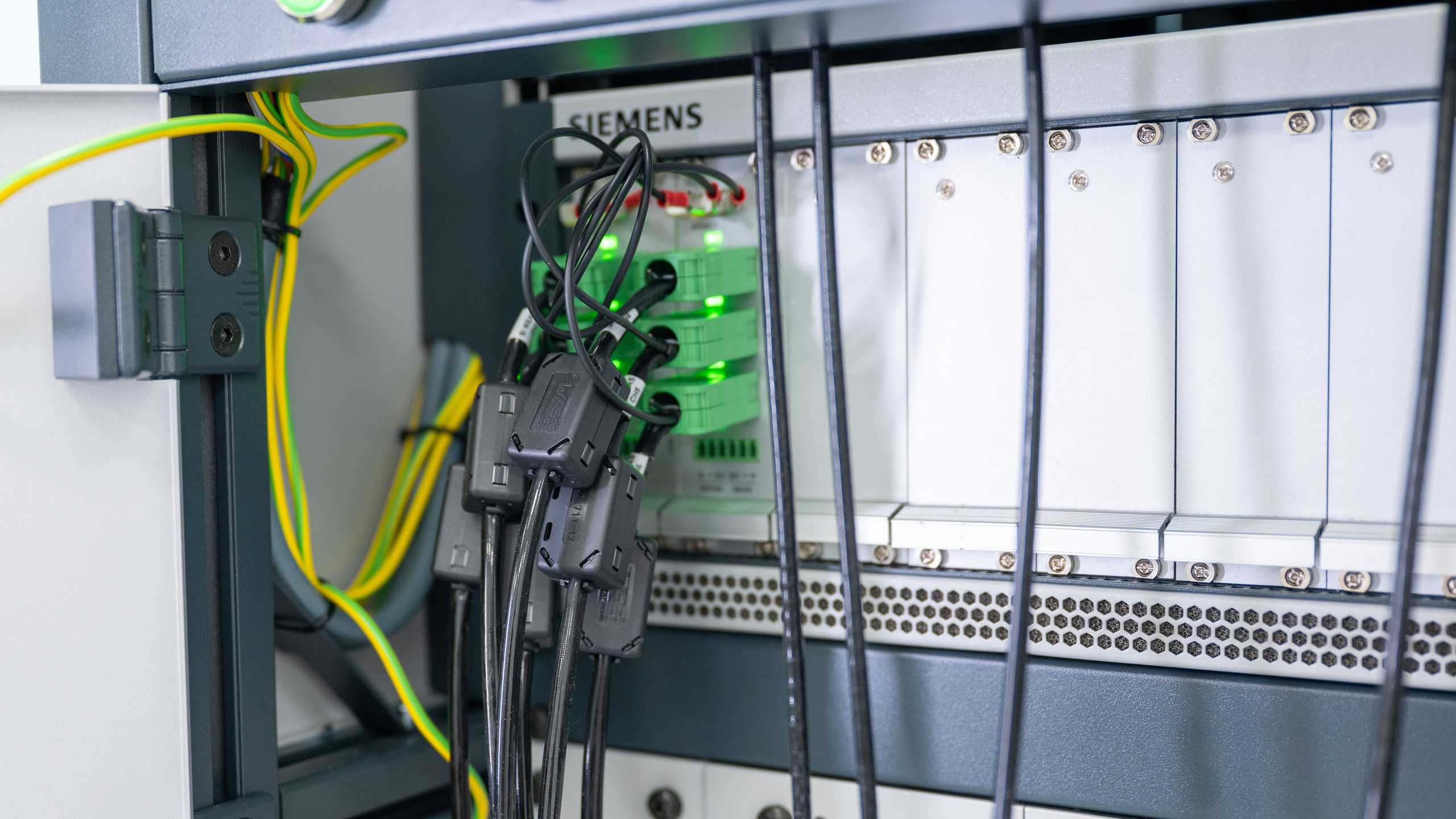
Simcenter Micred Quality tester
Detect product deviations and process changes
The value of shop-floor thermal testing extends beyond identifying a single bad unit.
Validate manufactured products
Each measured inverter can be assessed against thermal criteria established during engineering. Outliers are identified before the product moves further downstream or reaches the customer.
Verify manufacturing process changes
A material substitution, adjusted assembly time, or altered line setting may change thermal performance. By running a comparable measurement before and after the change, teams can immediately evaluate its effect against the original design target.
Build traceable manufacturing data
Results can be stored automatically for deeper engineering review. The data can support statistical analysis, simulation activities, or corrective actions related to the design or manufacturing process.
Connect development and production teams
Because shop-floor results remain comparable with measurements generated during design and model calibration, manufacturing teams gain a technically meaningful reference rather than an isolated pass/fail value.
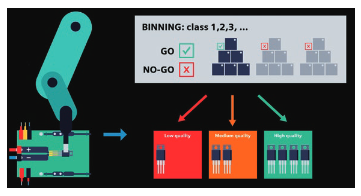
Assure quality with automated thermal testing
Make thermal quality part of production
Electrification is increasing the performance and reliability expectations placed on inverter systems. Meeting those expectations requires more than qualifying a prototype or testing selected samples in a laboratory. Manufacturers need a repeatable way to verify that production output continues to meet its thermal design intent.
The new Simcenter Micred Quality Tester brings laboratory-type thermal transient testing to the shop floor in a fully automated workflow. From one-click initiation through measurement, evaluation, and data storage, it enables consistent verification of a complete full-bridge inverter.
The result is a stronger connection between engineering and manufacturing, faster identification of thermal outliers, and actionable data for improving both product quality and the production process.
Additional resources for learning more about Simcenter Thermal testing