Unlocking agility in manufacturing simulation: an introduction to Process Simulate X Value Based Licensing

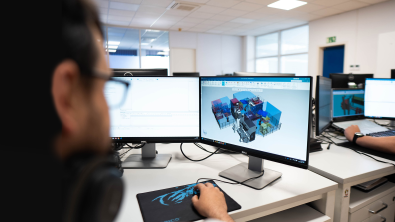
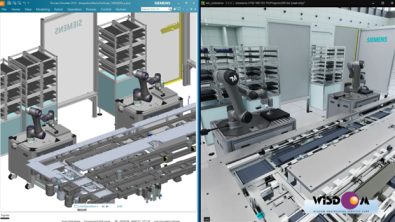
In the dynamic landscape of modern manufacturing, companies are constantly striving for greater agility and efficiency to remain competitive. However, organizations often face a common challenge when evaluating their software investments: balancing cost optimization with intentional use of specific capabilities. Investing in comprehensive software solutions shouldn’t mean paying for features that are only used occasionally. This dilemma frequently results in underutilization of advanced capabilities or hesitation to adopt them altogether, ultimately limiting innovation. Siemens addresses this challenge with Value Based Licensing (VBL) for Process Simulate X, an innovative approach that simplifies software access and consumption while enabling users to maximize value and scale with confidence in their manufacturing simulation operations.

The rise of AI Factories: accelerating the design and operations of next-gen data centers

AI infrastructure is entering a new era, one where data centers are no longer just storing information, but actively producing intelligence. These data centers, also known as “AI factories,” introduce a new level of complexity, driven by three forces: the need to build faster, operate more efficiently under tight power constraints, and engineer and validate hardware that doesn’t yet exist. In this blog, we’ll break down the core challenges shaping AI factory development, the emerging metrics that will define success, and why traditional approaches are no longer enough. We’ll also explore how a new generation of tools, like Siemens’ Digital Twin Composer, helps teams design, build, and operate these facilities with greater speed, coordination, and confidence.
Realize LIVE 2026: Where Advanced Manufacturing Takes Shape with AI, Industrial Metaverse and more

The future of manufacturing is here and Realize LIVE 2026 is where that future comes into focus. This flagship digital transformation conference from Siemens is returning to North America and Europe with two high-impact events that bring together the people, technologies, and ideas shaping next-generation manufacturing.

This year, the spotlight is firmly on four powerful themes redefining industrial innovation: AI-powered manufacturing planning and simulation, cloud-enabled collaboration from planning through production, digital threads that connect the entire manufacturing lifecycle, and the accelerating movement to reshore manufacturing.

Igniting the industrial AI future: Roland Busch at CES 2026 introducing Digital Twin Composer

At CES 2026, Siemens CEO Roland Busch introduced Digital Twin Composer, a new way for companies to design, simulate and optimize factories and operations digitally before they ever break ground. Built on the Siemens Xcelerator portfolio, it brings software from the Tecnomatix portfolio among other solutions, to improve material flow, validate automation and boost performance long before commissioning.
Busch also spotlighted the expansion of our partnership with NVIDIA, combining Siemens’ industrial expertise with accelerated AI to create smarter, more predictive digital twins. And the results are already tangible: PepsiCo is using Digital Twin Composer to modernize manufacturing and warehouse operations, cutting capital costs and identifying issues early in the virtual world, before they become real.

Discover what’s new in Tecnomatix 2512 (December 2025)

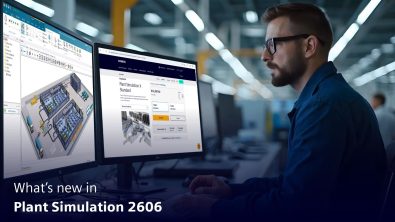
The Tecnomatix® portfolio delivers advanced digital manufacturing software to empower businesses across diverse industries and sizes. Tecnomatix 2512 launched recently with several exciting new advancements in the areas of cloud computing, AI-driven technologies, Teamcenter connectivity, UI updates, collaboration, augmented reality, robotics simulation, offline programming, virtual commissioning, human simulation and virtual reality. 

Shaping the Future of Aerospace & Defense: Human-Centric Design at Northrop Grumman 

Few industries move faster, or demand more precision, than aerospace and defense. Designs can change overnight, compliance requirements tighten without warning, and mission needs evolve at a relentless pace. That’s why Northrop Grumman has turned to Siemens Process Simulate Human software, brought to life inside the HIVE (Highly Immersive Virtual Environment). Together, these digital tools give engineers the ability to collaborate globally in real time while simulating human interactions with complex systems before they’re ever built. Hear from Northrop Grumman’s Systems Engineer, Sibo Chou, to explore how the aerospace and defense leader combines Siemens Process Simulate Human with motion capture technology to bring a human touch to the design to aircraft assembly process. 

Before Humanoids Hit the Factory Floor: Validating the Future with Manufacturing Simulation

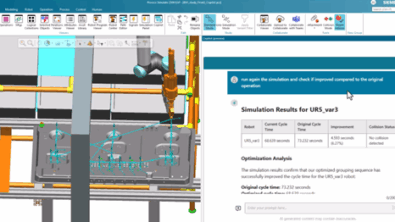
Humanoid systems are inherently complex, requiring substantial investment not only in physical hardware but also in intelligence, the “brain” of the robot. Expertise in sensors, control systems, machine learning, AI, and natural language interaction are all essential to humanoid development. At Siemens, this understanding is built through high-fidelity simulation. Using tools such as Tecnomatix Process Simulate, Siemens software enables manufacturers to precisely model how manufacturing labor resources respond to task requirements. With strong competencies in advanced robotics and human simulation, Siemens solutions are uniquely positioned to model flexible manufacturing environments that blend automation, human workers, and emerging humanoid systems.

Washington Post features how Siemens digital twin technology is helping reimagine the future of modern manufacturing [ARTICLE]

Manufacturing is entering a new era, one where factories are designed, tested, and optimized long before a single piece of equipment is installed. In a recent Washington Post article, “The Digital Twin Age: Using Simulations to Boost Real-World Business,” journalist Jason Dan, Lead AI & Tech Analyst, explores how digital twin technology is transforming the way companies plan and operate industrial facilities.

At the center of this transformation referenced is Siemens, whose digital twin capabilities are helping manufacturers move faster, reduce risk, and rethink what’s possible in modern production.

The future of bridging humans, robots, and humanoids with Process Simulate software [VIDEO]

Humanoid robots are expected to gradually enter the factory floor within the next few years. However, their ability to rapidly learn and adapt makes them particularly exciting — but also introduces new levels of uncertainty for manufacturers. This is where Siemens advanced manufacturing simulation and validation software, Process Simulate, becomes indispensable, allowing manufacturers to virtually model and simulate the entire ecosystem — humans, robots, and automation systems — and eventually humanoids, within a unified production environment. By modeling humanoids within Process Simulate Human, manufacturers could test feasibility, validate ergonomics, plan workflows, and de-risk integration before deployment.