Not to be missed Simcenter papers from ASME Turbo Expo 2026
Take a sneak peek at the upcoming research coming from Simcenter
ASME Turbo Expo 2026 is taking place in Milano, Italy
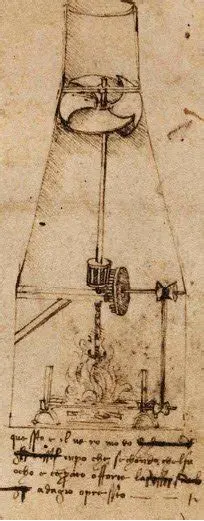
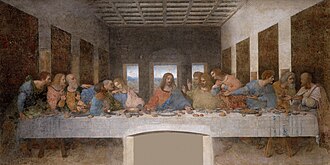
“In simplicity resides beauty.” These are the words engraved on my favorite cup. Italians take their coffee seriously. Important to note as the ASME Turbo Expo 2026 is staged in Milano this year. Italy and Milan are synonymous with fashion, food and football, which are some of my favorite interests. Not only that, in Milan you can find the Last Supper painted by Leonardo Da Vinci. A man of extraordinary talents in both engineering and art.
The more time that passes, the more complex the engineering becomes, and the future of turbomachinery is bright and more exciting than ever. We have a saying:
Turn complexity into competitive advantage.
To stay competitive, you must push the limits of each product you release. This is where advancements in simulation technology can help you design more efficient, more robust turbomachinery equipment.
At ASME Turbo Expo, our engineers will provide insight into new developments and demonstrate new methodologies.
My guide to the must-see Simcenter papers from ASME Turbo Expo 2026
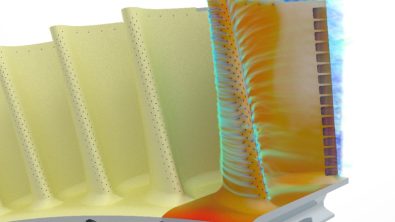
1. Exploration of simulation strategies for modelling conjugate heat transfer across thermal barrier coatings on gas turbine blades
Presenting author: Siddhartha Gautham A V Siemens Digital Industry Software
This paper evaluates three simulation methods for Thermal Barrier Coatings (TBCs) on gas turbine blades to improve accuracy and efficiency. It compares Contact Resistance, 2D Shell, and 3D Thin Mesh modeling in Simcenter STAR-CCM+. The study concludes that 2D Shell modeling offers the best balance of accuracy and computational speed, providing crucial guidance for optimizing gas turbine design and TBC simulation.
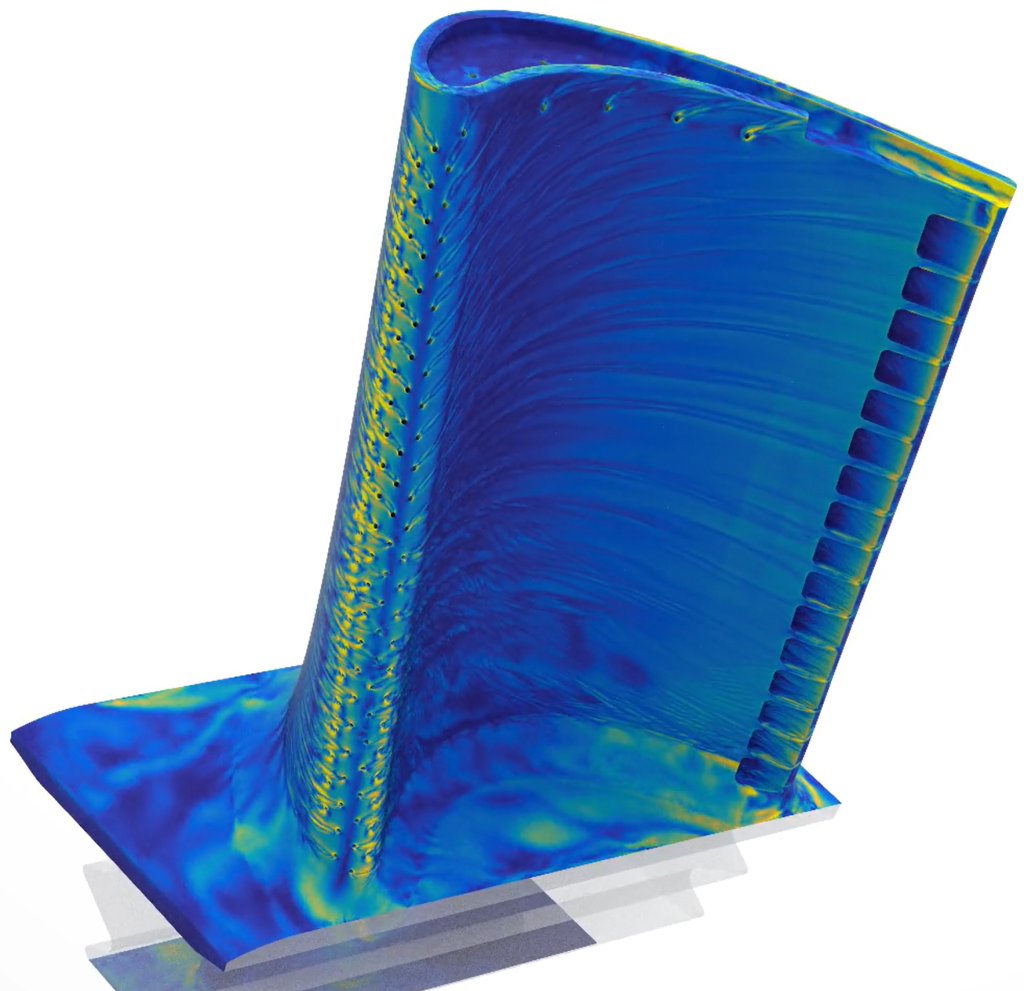
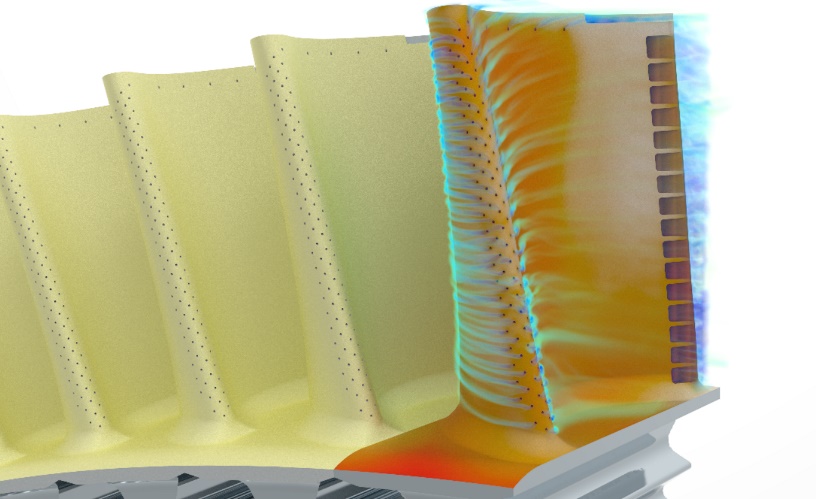
Here are two papers from the event that use adjoint optimization. For an introduction to this topic, read this blog: Infinite problems, finite solutions: Adjoint optimization at full speed – Simcenter
2. Efficient Gradient Based Parametric Optimization of a Compressor Rotor Using Flow Adjoint and a Novel Geometric Sensitivity Algorithm
Presenting author: Qingyuan Zhuang Siemens Digital Industries Software
This paper introduces a new method to optimize rotating machinery by seamlessly integrating CFD adjoint sensitivities with standard CAD software, even without the CAD program having its own adjoint capabilities. The key is an intermediate “geometric sensitivity” calculation, which accurately translates flow sensitivities to CAD parameters using finite differences and a novel feature-matching algorithm.
Demonstrated on the NASA E3 turbofan engine’s high-pressure compressor, this technique achieved significant efficiency improvements at nearly 2% for a single-stage with a parametric CAD model and a sequential quadratic programming algorithm, proving its effectiveness for robust turbomachinery design
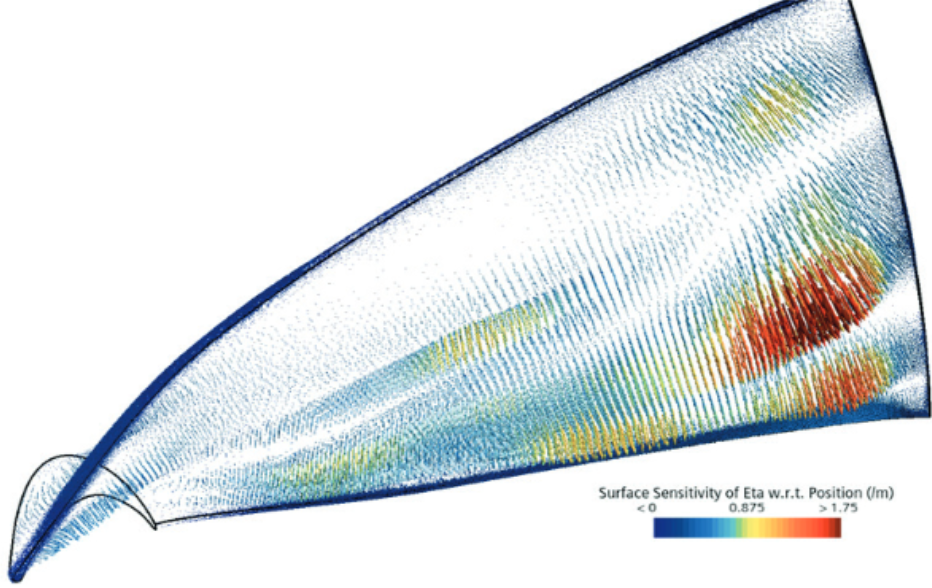
3. Adjoint-Based Optimization of Fuel Spray Nozzles for Enhanced Gas Turbine Combustion Performance
Presenting author: Daniele Obiso Siemens Digital Industries
This paper introduces an advanced method for optimizing fuel injection nozzles in gas turbines to improve combustion efficiency. By leveraging recent advancements in additive manufacturing, which allows for more complex designs, the authors use an adjoint-based optimization approach.
The core of the optimization is to reduce pressure losses within the nozzle while maintaining a specific swirl number, which is crucial for effective fuel-air mixing. The results show improvements in nozzle performance.
4. Radiation Heat Transfer in Turbomachinery: Accelerating Cyclic Symmetric Analysis of 2D and 3D Models
Presenting author: Hussein Daou Maya HTT
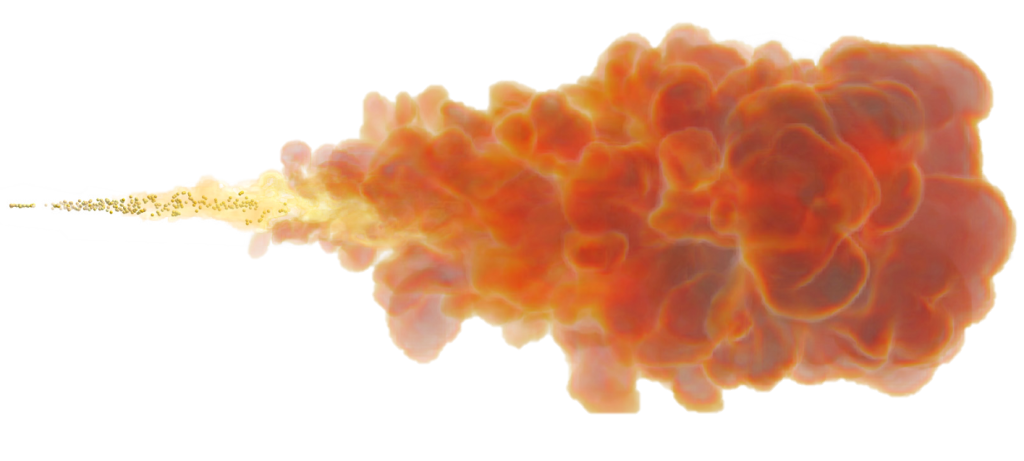
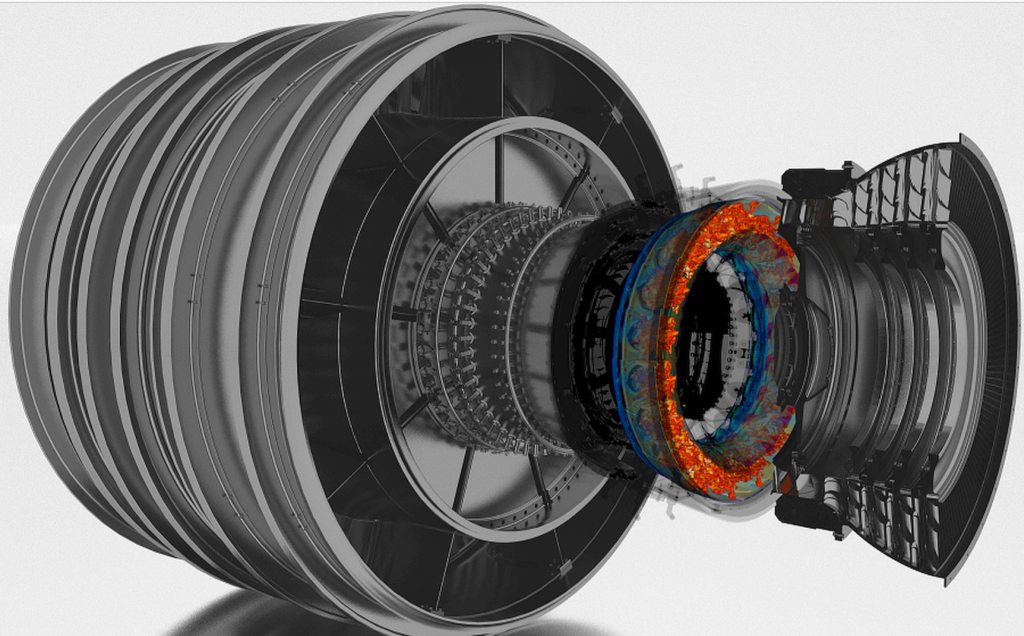
The authors present various radiation modeling approaches that balance fidelity and efficiency for turbomachinery. These include full 3D geometries, simplifications like cyclic symmetry sectors with full and partial view factor computations, and mixed 2D-3D hybrid models. They compare these methods, highlighting differences in assumptions, accuracy, and performance, with an emphasis on GPU-accelerated radiation computation.
The paper concludes by offering practical guidelines for selecting appropriate geometry representations (2D or 3D) based on accuracy needs, structural requirements, and available computational resources. By adopting these methods, engineers can reduce computational burden, maintain confidence in thermal predictions, and accelerate design iterations for improved engine performance.
5. Experimental Modal Testing of Rotating Disks via Low-Speed Imaging
Presenting author: Alessandra Cesaretti Politecnico di Torino
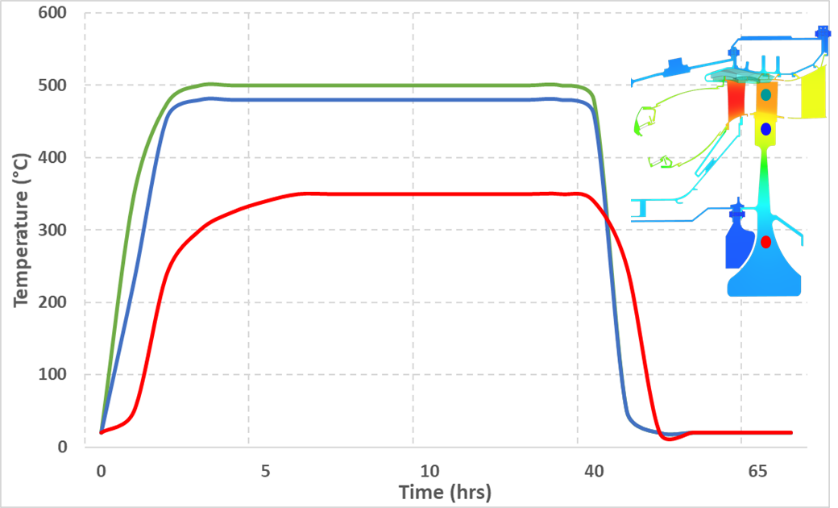
This paper introduces an experimental method for characterizing rotating blisks using digital image correlation (DIC) with low-speed cameras. It details algorithms for rigid-body motion compensation and bandpass reconstruction to overcome sampling limitations and accurately identify resonance frequencies and modal shapes, offering a non-contact, low-cost solution for high-frequency vibration analysis.
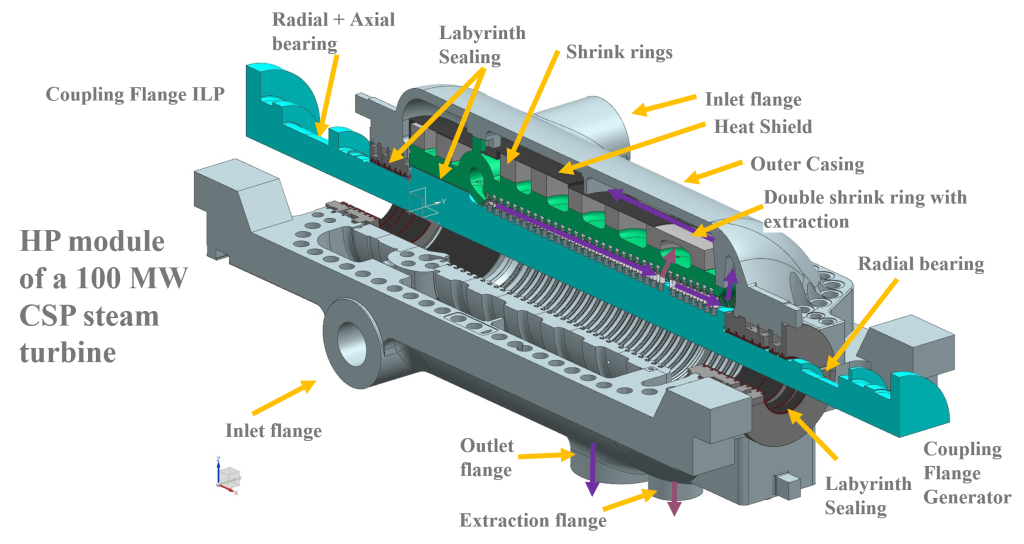
6. Mission Cycles Simulation of Concentrated Solar Power High-Pressure Steam Turbine via Coupled Thermo-Mechanical Simulations
Presenting Author: Flavio Quattrone Siemens Industry Software S.r.l.
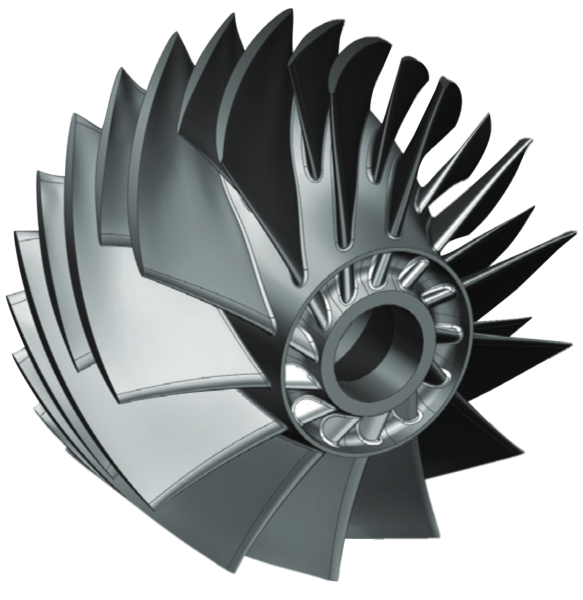
This paper focuses on optimizing steam turbines for increased flexibility, especially given the rise of renewable energy and applications like Concentrated Solar Power (CSP) and Small Modular Reactors (SMRs).
The authors introduce a Whole Engine Model (WEM) approach, using co-simulation between a thermo-mechanical model and a 1D fluid network, connected via a Functional Mock-up Interface (FMI). This integrated model captures the interaction between thermo-mechanical responses and fluid flows.
Many more great papers to come at ASME Turbo Expo
These are just a few examples of papers that I picked that are using Simcenter. There is of course a lot more amazing research that will be presented in Milan. To see the full programme, click here.
What are your favorite subjects to read and learn more about? Fluids, thermal, structural, material science or testing?
Want to learn more about turbomachinery simulations?