Bridging design & simulation in humanoid robotics
This article explains how simulation-driven workflows can overcome integration challenges in humanoid robotics development, particularly for teams working across CAD, simulation, and ROS environments.
For decades, humanoid robotics remained confined to science fiction lore, imagined as assistants or workers capable of human-like behavior and interaction. Today, advances in AI, robotics, and simulation are rapidly turning that vision into reality, pushing humanoids beyond research labs into real industrial environments.
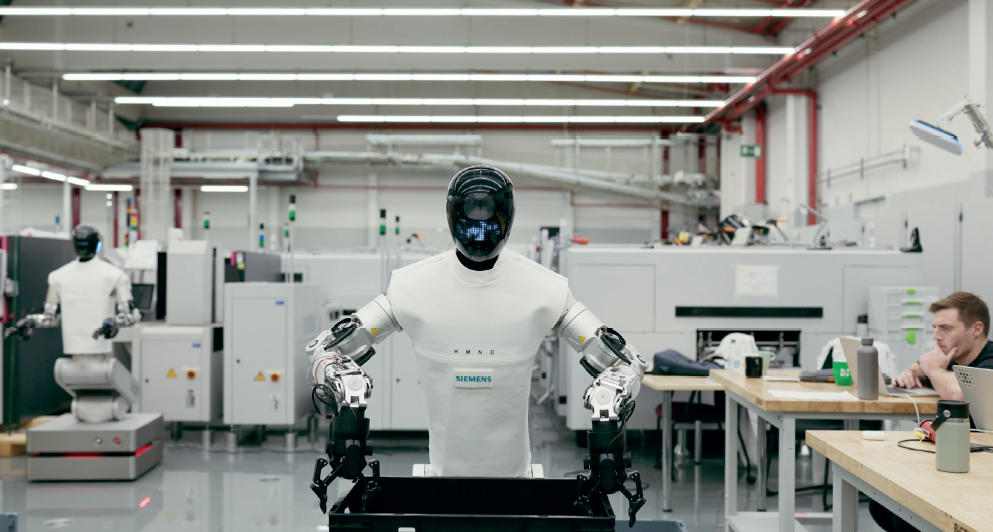
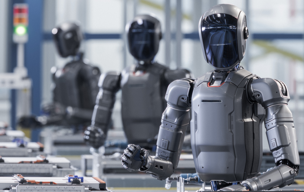
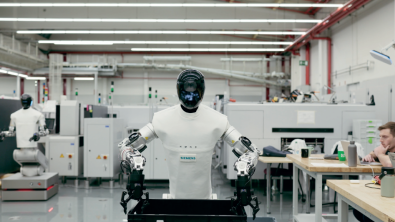
Unlike traditional industrial robots designed for fixed, repetitive tasks, humanoids are built for mobility and adaptability in human-centric spaces. They can navigate existing infrastructure and work alongside people without requiring changes to facilities or workflows. This makes them increasingly relevant for factories and service environments.
As technology matures, companies are piloting applications in logistics, machine tending and assembly support, while countries such as Japan and South Korea continue advancing service and elder-care robotics. At the same time, growing demand for customization across simulation and system integration is shaping how robotics platforms are developed for specific requirements.
The Integration Challenge
Despite this momentum, scaling humanoid robotics remains complex. Safety, reliability, and integration continue to present key hurdles, particularly as robotics workflows span disconnected design, simulation and control environments.
Modern robotics development increasingly depends on tightly connecting mechanical design with simulation and control systems. As robotics converges with software and AI, robots must be engineered as integrated systems, where design intent flows consistently from CAD models through simulation into execution.
In practice, this still depends on robust data exchange between tools, as robot models often need to be translated into simulation-ready formats for validation, testing and control development.
URDF as the Interoperability Layer
At the center of this workflow is URDF (Unified Robot Description Format), a standardized XML-based format widely used within the ROS ecosystem to define a robot’s geometry, sensors and kinematics.
URDF acts as a single source of truth for robot models, enabling consistent interpretation across simulation and control environments. As a result, it has become a critical interoperability layer between mechanical design and robotics simulation platforms.
Supporting Simulation-driven Robotics Development
For our customer, an AI and robotics company building safe and commercially viable humanoids, this capability was essential.
Their development pipeline relies heavily on simulation-driven validation, requiring robot models to be exported into ROS-compatible environments to test kinematics and behavior before deployment. Without a reliable URDF export workflow, mechanical definitions would need to be recreated manually for simulation, introducing inefficiencies in the validation cycle.
Simcenter’s Simulation Services Practice, through its Automation and Customization expertise, plays a key role in bridging gaps between standard software capabilities and customer-specific workflows. By developing tailored solutions that integrate seamlessly into existing engineering environments, the team helps customers move quickly from initial deployment to productive use. Their focus remains consistent throughout the customer journey – ensuring that powerful simulation tools adapt to real workflows, rather than forcing workflows to adapt to the tools.
In this case, the team delivered a fast-turnaround proof of concept using the native Block Styler technology for dialog definition and NXOpen for automation export. Thus, they leveraged NX’s kinematic capabilities to enable a temporary but fully functional URDF export workflow. The solution replicated the required export structure, streamlined kinematic definition through NX Animation Designer, and introduced a simplified export interface to reduce manual effort and improve usability.
Although implemented as an interim solution, it enabled continuity in the design-to-simulation workflow. At the same time, it highlights the value of flexible, fast-response engineering support in closing critical workflow gaps, accelerating integration and helping ensure deployment readiness.
Enabling a More Connected Robotics Workflow
Beyond the immediate project, this points toward a broader direction for simulation-driven robotics development. As humanoid systems become more complex, seamless interoperability between design, simulation and control environments is increasingly central to accelerating development cycles and reducing integration friction. Within this context, standardized data exchange such as reliable URDF generation plays an important role in connecting mechanical design with downstream simulation workflows.
Further reading