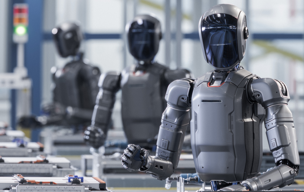
How to put your humanoid robot to the test
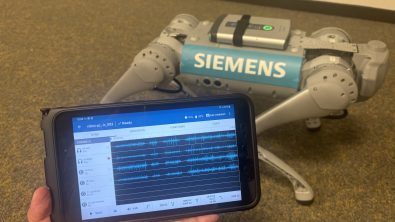
The last week of June was “Take your pet to work day”, so I decided to take my dog to work …
This robot dog perfectly illustrates how the market of humanoid robotics booms these days: it is estimated to grow from 2$ billion to 40$ billion by 2035, being a crucial part of the broader physical AI ecosystem, which is projected to become a $1 trillion market.
Designing humanoid robots is something different from the classical industrial machine or component. These sophisticated robots contain articulated joints that must work in perfect harmony, requiring precise control over mass, inertia and center-of-gravity. Humanoid robots are the most complex systems ever built for mass production. Once built and interacting with their human owners, also the noise and vibrations they produce are important attributes to validate, while testing and confirming the reliability of the individual components is crucial to guarantee a 24/7 availability of the humanoid robot.
Validation through physical testing
Even if most of the development work is done using simulation solutions, the real validation of those attributes is only possible when doing a physical test on the final humanoid robot. Being part of the Simcenter physical testing solutions team, I decided to simply strap one of our measurement systems to the back of my dog: the Simcenter SCADAS XS.
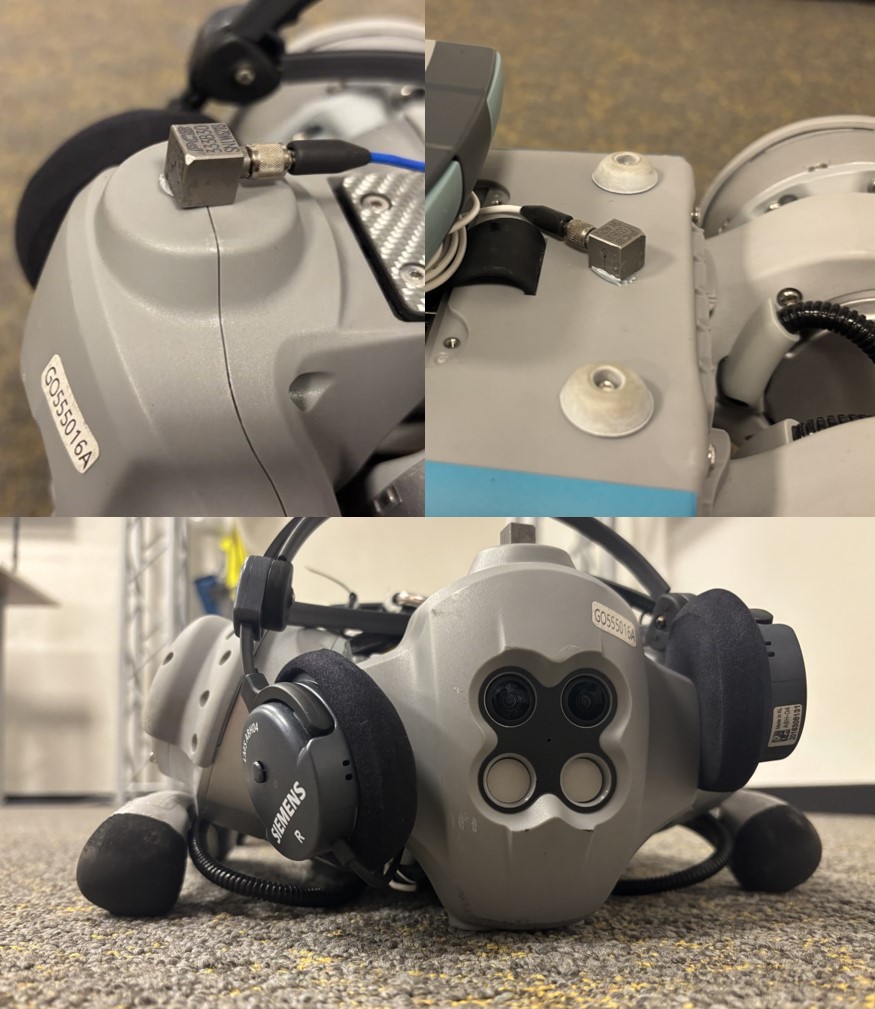
After adding some sensors to measure the acceleration and movement, local stresses, (binaural) acoustics and position and speed based on GPS, my dog was ready to go for a walk with me and collect some operational sensor data.
Using a tablet that wirelessly connects via WiFi to the Simcenter SCADAS XS, allows me to control the measurement, visualize and check the data and do real-time processing to already understand the underlying phenomena on the spot.
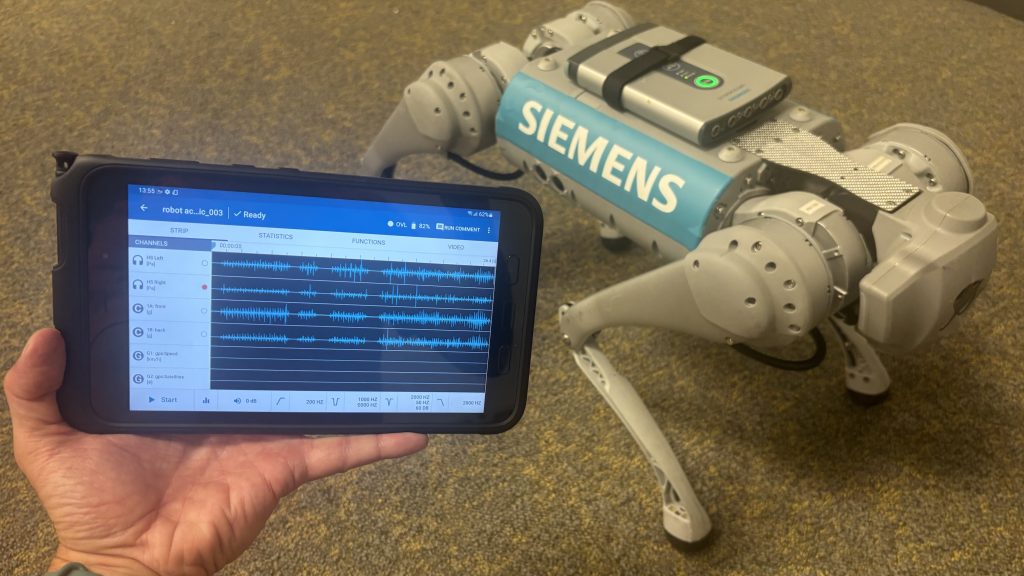
This operational data can be further visualized and analyzed in our Simcenter Testlab Desktop, combining the time signals with video information, GPS maps and replay of the recorded “dog walks”. Processing of this data into various domains like structural dynamics, acoustics, fatigue and durability,.. , is highly customizable yet user friendly and can be automated for higher efficiency.
Quiet dog, good dog
Measuring the noise using the binaural headset is one thing, but knowing how to improve it is something else. While there is no barking, knowing which component of the humanoid robot is generating most of the noise, and at which frequency is crucial. And even if the noise levels are not very high, some sounds might be really annoying for the environment or the human beings interacting. More advanced techniques like sound source localization and sound quality come to the rescue here.
Sound source localization with the Simcenter Sound Camera shows in real-time the location and frequency content of the main sound sources. It allows easy reporting using both video and static images with clear indication of the critical acoustical hotspots.
Sound quality allows to do audio replay and real-time filtering, as well as calculating a series of acoustic and sound quality metrics to evaluate in an objective way how comfortable or annoying the noises are that your dog makes.
Healthy dog, happy dog
A correct functioning of the humanoid robot is only possible if all of the components of this complex creature are working in a reliable, optimal and healthy way. Looking at some of the main components, Simcenter physical testing can help with optimizing and verifying:
- rotating elements like joints, motors: linking the measured torques, rotating speeds, positions to the noise and vibration effects
- batteries and servo drives: thermal testing using Simcenter Micred solutions, specifically suited for GaN type of devices (for further info, please read further here)
- limbs, casing elements, solid parts: modal analysis based on hammer impact or (mini)shaker testing
- …

Happy dog, happy owner
This was another nice occasion for me to use the Simcenter SCADAS XS and the Simcenter Testlab software to validate, analyze and help improving the behavior of my robot dog.
Curious to see more application areas where the Simcenter SCADAS XS is your perfect measurement companion? Checkout how we strapped it on bikes, snowboards and took it inside a football stadium.
Interested to see how our Siemens Simcenter solutions help overcome the key engineering challenges in the humanoid robotics industry? Checkout our latest ebook.