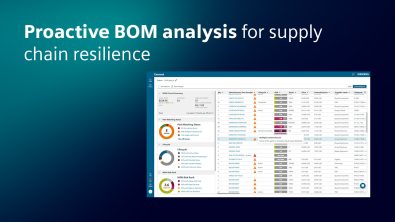
Proactive BOM analysis: Turn supply chain risk into a competitive advantage
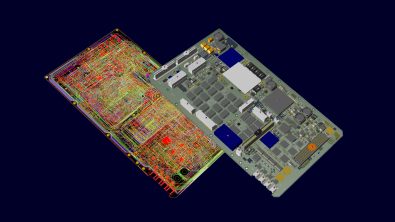
A component decision that takes minutes can create months of rework, and millions of dollars in downstream costs. A part may become difficult to source, increase in price or fall out of compliance after a team has built it into a product. If the team discovers the risk late, engineers may have to redesign and retest the product under pressure.
In this episode of The Printed Circuit Podcast, host Steph Chavez speaks with Eric Rimkeit and Ryan Chan of Supplyframe, a Siemens company. They explain how proactive bill of materials (BOM) analysis can help engineering and procurement teams spot risks earlier, make better-informed decisions and protect product schedules and margins.
Catch part risks while you still have options
The cost of changing a part can rise sharply as a product moves from design to production. That difference reflects the work a late change can trigger: redesign, testing, requalification and schedule recovery. The earlier a team identifies a risk, the more flexibility it has to evaluate alternatives before the design becomes difficult or expensive to change.
Obsolescence is only one risk to track. Additional risks include shifting availability and lead times, geopolitical events and tariffs disrupting supply, changing environmental regulations rendering a part unsuitable for a market, and price increases that erode margins even when the part remains available.
These risks also change over time. A component may meet requirements when it enters a library, then face new supply, cost or compliance challenges years later. Teams need current information throughout the design lifecycle, not just a one-time review.
Bring engineering and procurement into the same conversation
Engineering and procurement have different duties. Engineers need to meet performance requirements and keep development moving. Procurement needs to secure supply and manage cost. When teams work with different information or communicate only after a design decision, they may uncover conflicts late.
That gap can create repeated work for engineers and unexpected costs for procurement. For example, a sourcing team may not know whether a design change came from a new customer requirement or an internal revision. Without that context, it becomes harder to manage costs, source the right parts or understand who should absorb the impact.
Shared visibility helps both teams make decisions with the same facts. Engineers can consider availability, lifecycle, compliance and cost alongside technical requirements. Procurement can see how design choices affect sourcing and supply. The goal is not to give engineers another manual research task but to make useful data available in tools and workflows they already use.
Protect the design-and the approved parts
A BOM also helps teams confirm that production matches the design they qualified. Eric describes discovering unauthorized component substitutions at a contract manufacturer. If a supplier changes a part without approval, the product may no longer match the team’s requirement for quality, performance or supply.
A clear process for approved parts and alternatives can help teams catch those changes. It also gives engineering and procurement a shared way to evaluate substitutions before they reach production.
Here’s how Eric demonstrated the importance of compliance using ivy and a fishing weight (embedded video).
Make BOM analysis part of the design process
A proactive approach can deliver enormous efficiency gains. One aerospace and defense company reduced engineering work by about 14,000 hours (about 1 and a half years) per month by considering supply chain risks during new-product design. An industrial company recovered close to $14 million in less than a year by analyzing parts across the long tail of its portfolio.
These results are examples, not guarantees. They show how systematic analysis can help teams spend less time researching parts, reduce avoidable redesigns and find cost or sourcing opportunities that might otherwise go unnoticed.
Use AI to support engineering judgment
The conversation explores AI as a design partner and agentic automation.
An AI design partner could consider a project’s requirements and operating environment alongside component characteristics and supply risks. Instead of returning a generic list of alternatives, it could help engineers compare parts in the context of the design. Agentic automation could also take on repetitive tasks that consume time and invite errors.
AI still depends on relevant, reliable information. Engineers must review recommendations and make the final decisions. The technology can help teams work through routine analysis; it does not replace engineering judgment.
Start with one program, then build on what works
A company does not need to change every process at once. Ryan recommends a crawl-walk-run approach: choose one program or product, try the new process, and learn where it helps. Then standardize the practices that work and expand them to other teams.
A focused start makes adoption more manageable. It also helps teams demonstrate how shared information can reduce rework, improve sourcing decisions and protect schedules before they scale the approach.
A BOM is more than a parts list. It captures decisions that affect cost, availability and product readiness throughout a product’s life. When teams review risk early and work from shared, current information, they can spend less time reacting to surprises and use supply chain insight to build a stronger competitive position.