Proactive BOM analysis: Turning supply chain risk into competitive advantage

What if the part you approved in five minutes ends up costing your company ten million dollars down the line?
In this episode of the Printed Circuit Podcast, host Steph Chavez sits down with Eric Rimkeit, Director of Marketing at Supplyframe, and Ryan Chan, Vice President of Solutions Consulting at Supplyframe — a Siemens company focused on Bill of Materials risk. Eric spent his career in procurement, from a semiconductor fab through commodity management at HP; Ryan spent two decades guiding companies through supply chain strategy before joining Supplyframe.
The conversation traces what happens when a design gets released without accounting for what’s coming downstream: part proliferation, geopolitical disruption, tariffs, and shifting compliance standards that can turn a thousand-dollar swap into a ten-million-dollar redesign. Eric and Ryan unpack why engineering and procurement talk past each other, and share real stories — from an unauthorized parts swap caught on a factory floor to a homemade stunt involving a lead fishing weight and fake ivy — that show what’s at stake when teams don’t share visibility into risk. They close on where AI is headed next: not replacing engineers, but becoming a design partner that folds supply chain context directly into part selection.
What you’ll learn:
- (00:12) Why the Bill of Materials is quietly one of the biggest risk factors in electronics engineering
- (02:23) Eric Rimkeit’s path from semiconductor procurement to HP commodity management to SupplyFrame
- (03:15) Ryan Chan’s 20 years in supply chain strategy — and how Supplyframe joined Siemens
- (04:24) A day in the life of an engineer buried under vintage charts, build checkpoints, and redesign requests
- (09:06) The real cost curve of a bad part: $1,000 to swap it on paper vs. $10 million once it’s in the field
- (16:24) Why engineering and procurement don’t talk — and who ends up “picking up the tab”
- (20:29) The unauthorized-parts-swap story from an overseas contract manufacturer
- (22:46) The lead-fishing-weight-and-ivy stunt Eric used to shake a team out of denial
- (29:43) Real results: 14,000 engineering hours saved a month, and $14 million recovered on tail-end parts
- (38:20) The three AI shifts reshaping BOM analysis: AI fabric, AI as a design partner, and agentic automation
- (43:40) The crawl-walk-run approach to actually getting a resiliency program off the ground
View the full episode transcript
Stephen V. Chavez (Siemens) (00:03.548): Hi everyone, thanks for tuning into the Printed Circuit Podcast where we discuss trends, challenges, and opportunities across the Printed Circuit engineering industry. I’m your host, Steph Chavez. Today we’re diving into a topic that touches every corner of electronic industry. It’s the Bill of Materials, also known as the BOM. You know, imagine this: you know, you’re an electrical engineer pouring your heart and soul into a brilliant new design. You’ve meticulously selected every component, optimized every trace, and finally you release it into the wild, only to have it boomeranged back for a redesign. Not once, not twice, but again and again. Does it sound familiar?
Stephen V. Chavez (Siemens) (00:03.548): Or perhaps you’re on the procurement side, you know, tasked with sourcing parts, only to discover that perfect component is suddenly unavailable due to geopolitical tensions, or its lead time has ballooned from weeks to months, or even worse, it’s now illegal to use that part. These aren’t just minor hiccups. They’re costly, demoralizing and can bring even the most innovative projects to a grinding halt. Today we’re pulling back the curtain on these hidden challenges. We’ll explore the silent erosion of margins, the communication gaps that plague engineering and procurement teams, and the staggering financial impact of undetected risk lurking within your BOM.
Stephen V. Chavez (Siemens) (00:03.548): It’s not just all doom and gloom though. We’ll also uncover powerful strategies for proactive BOM analysis, share real-world success stories, and peer into the future to how AI and deeper data integration are set to revolutionize supply chain resilience. So whether you’re an engineer, procurement specialist, or a product manager, or simply curious about what makes the electronics world tick, you’re in the right place here. Get ready to gain invaluable insights that could save your company millions and transform the way you approach product development. So let’s get started. I’m excited to welcome Eric Rimkeit, Director of Marketing, and Ryan Chan, Vice President of Solutions Consulting, who are both with Supplyframe. Gentlemen, thanks for coming onto the podcast.
Eric Rimkeit (Supplyframe) (02:15.885): Yeah, cool to be here. Thank you.
Ryan Chan (Supplyframe) (02:16.209): Thanks for having us.
Stephen V. Chavez (Siemens) (02:18.756): Awesome. Eric, Ryan, would each of you give our audience a brief introduction of yourself and your role at Supplyframe? So Eric, we’ll start with you.
Eric Rimkeit (Supplyframe) (02:25.523): Sure. Yeah, no, sounds good. Yeah. So I started my career in procurement in a semiconductor fab and then moved on to Hewlett Packard where I did a number of roles as far as like commodity management and risk and even shortages during COVID. And some of the coolest moments in my career in procurement was setting up like early just in time inventory programs when that was a thing, in a semiconductor fab. And another cool moment was where we established a reverse e-auction process if folks are familiar with that at HP where you’re bidding down the price of a component. We had pizza in a room and we had all the VPs come in and we’re watching our price come down and our profit go up. So I spent most of my career in procurement and I enjoyed that, but switched over to the solutions side and I now am the director of marketing for Supplyframe.
Stephen V. Chavez (Siemens) (03:06.162): Yeah.
Stephen V. Chavez (Siemens) (03:23.044): Awesome, right? Ryan, you wanna go ahead and give us the audience a you know, a little bit of your background and your role at Supplyframe?
Ryan Chan (Supplyframe) (03:41.832): Sure. So yeah, hi, my name is Ryan Chan. I am the Vice President of Solutions Consulting with Supplyframe. I unfortunately don’t have those cool stories like Eric does about procurement. My background is in supply chain strategy. So I spent about 20 years guiding companies on everything from, you know, designing their footprint to optimizing inventory and production and so on. So I came to Siemens as part of the Supplyframe acquisition or just after. And it’s been amazing working with companies to not just, of course, optimize their design, but also optimize the risk profile around that design. And so I’m very excited to talk about the things that we’ve learned and hopefully give you some tips and tricks on how we might be able to make you a little bit more competitive regarding risk and costs and so on.
Stephen V. Chavez (Siemens) (04:44.37): Awesome, awesome. You know, this is a great topic, so let’s just get right into it. So we’ll start with the human side of the story. You know, can you paint a picture of what a typical day looks like for an electrical engineer who is stuck in a cycle of endless redesign? You know, I’ve been there many a time throughout my decade. So what we really want to know is what’s really driving this frustration. Eric, you want you wanna take this one?
Eric Rimkeit (Supplyframe) (05:03.787): Yeah. Yeah, absolutely. Yeah. I mean, so I come from a procurement background, but one of the cool things about my career is I actually sat and I was co-located with all the stakeholders to developing a program, which was really interesting. So I sat with the electrical engineers, with the mechanical engineers, with operations, with marketing, with finance, whatever. So that was really interesting because you’re understanding people’s frustrations, you’re reading body language, you’re really seeing how they do the work. I was literally going over their desk and being like, what are you what are you working on? You know what I mean? So it was an interesting hands-on view. And here’s my view of engineers. One, with my personality, when I would call them if they weren’t on site, they would actually hang up the phone because of my personality. Maybe you get that a little bit because they thought it was a sales call. So I’d have to call them back and be like, no, I work with you. I’m just over across the street. Then they would talk to me. But number two is looking at the what engineers have to do, let’s think about it.
Stephen V. Chavez (Siemens) (05:34.684): Mm-hmm.
Stephen V. Chavez (Siemens) (05:47.685): Yeah.
Stephen V. Chavez (Siemens) (05:55.932): Hmm.
Eric Rimkeit (Supplyframe) (05:59.884): Okay. So they’ve got a vintage chart out there from marketing and operations. A vintage chart is like basically a future very high level view of a forecast. And all those products on the vintage chart are very different technology, very different architecture that they have to build to. Not just putting in new parts, but designing for a completely different performance or what the product does. So you’ve got that. Every electrical engineer has tens of thousands of parts that they have to manage and not just put it in the design and be like check. But you know, they have to do things like HALT testing, like life testing, RFI testing. And they have to work between Asia and US, because very few companies actually have, you know, co-located production. So they have to do that as far as coordinating the testing. Then there’s the board schedule, right? So for every single program you have about six or seven different checkpoints. You know, everyone knows what they are, you know, breadboard, pre-production, limited production. So you’ve got to meet those and at each of those have deliverables as far as like.
Stephen V. Chavez (Siemens) (06:40.402): Mm-hmm.
Eric Rimkeit (Supplyframe) (06:57.397): All right, does the design work? What’s the cost? All that, right? And then that’s done in different locations around the world. Then on top of that, it’s not just like you’re slotting in the parts, it’s what’s the performance of the product. It’s what does the heat signature look like? What’s the power requirement? Like in a printer world, is it is it doing what you want it to do from a throughput paper perspective and and that sort of thing. So notice everything I just mentioned has nothing to do with like the commercial items around like you know procurement or risk or anything like that. Then you had people like me from procurement saying like, gosh, you know, the program team is asking us for a 10% reduction. I have some ideas here. I think they’re good parts, you know, can you please do this? Or asking to speed up the program build schedules because you need to get the program out faster or sometimes redesigns. So really engineers, they’re not really thinking downstream.
Stephen V. Chavez (Siemens) (07:02.074): Mm-hmm.
Stephen V. Chavez (Siemens) (07:13.724): Mm-hmm.
Eric Rimkeit (Supplyframe) (07:24.801): They’ve got all these things that I mentioned that they’re having to work on to get through the program build. And engineers want to build things. So that’s my view of a day in the life of being in an office with the engineers.
Stephen V. Chavez (Siemens) (07:58.854): Mm-hmm.
Stephen V. Chavez (Siemens) (08:10.386): Brian, would you like to add to that?
Ryan Chan (Supplyframe) (08:15.769): Yeah, I you know, I think part of what I’ll be talking about as well as some of the frustrations as well of what engineers have to live with today, right, because of a potential lack of intelligence and that manifests itself and work that has to be done repeatedly or it’s just completely missed timelines, not because of their own doing, but because of some forces that they won’t be, that they’re not aware of. And so these are the things that, you know.
Stephen V. Chavez (Siemens) (08:47.442): Mm-hmm.
Ryan Chan (Supplyframe) (08:51.997): There was some really great solutions in the past that can solve it, not because the data didn’t exist, but because it just wasn’t put in the right context or because bandwidth is a big issue for engineers. So they just don’t have the time to deal with it, but it comes back to haunt them. And so that’s the part I really want to focus on in terms of what that does to a person who obviously pours their heart and soul into a design, but then having to deal with going back and redesigning it over and over again because of these issues that they have to deal with downstream.
Stephen V. Chavez (Siemens) (09:28.924): Yeah, I I will tell you, you know, I I have felt that pain, you know, thinking back, you know, my days in in the mil-aero industry and that supply chain pain is brutal. And I must have, you know, at one particular design I recall, I must have redesigned that board like twelve times because of supply chain issues and obsolescence and, you know, geopolitical issues that just caused havoc to the engineering team and it was very difficult to deal with and like I said, I I must have redesigned that board twelve times before we officially released it and you know, it’s it’s demoralizing.
Ryan Chan (Supplyframe) (09:56.893): Mm-hmm.
Ryan Chan (Supplyframe) (10:04.697): And I would imagine that that’s probably extremely stressful, right? Because you’re trying to, you probably have a stack of things you have to do and you’re just trying to move on from project one to project two. And, you know, when somebody tells you, have to do it over and over and over again, not because of your own fault. It’s gotta be stressful.
Stephen V. Chavez (Siemens) (10:17.018): Yeah, exactly.
Stephen V. Chavez (Siemens) (10:21.596): Yeah. Mm-hmm. So let’s go on to the next question. You know, beyond the obvious issues like, you know, part obsolescence, which you know, we’re sharing here, what are the less visible risks lurking in the bill of materials that most engineers simply aren’t aware of? Ryan, you want to take this one?
Ryan Chan (Supplyframe) (10:55.185): Yes.
Ryan Chan (Supplyframe) (10:58.597): Yeah, so you know. If you’re an engineer today, I think most of the time when somebody says what’s a risk to you, you’ll probably think about life cycle and last time buy and not for new design, that kind of thing in terms of the part itself. And unfortunately, the world over the last, you know, I guess post COVID, right, last five, six years has really introduced a new layer of risk that we really haven’t seen before, right, to the point where it’s now causing real supply chain disruptions.
Stephen V. Chavez (Siemens) (11:18.886): Mm-hmm.
Ryan Chan (Supplyframe) (11:30.367): Some of these things include just the part proliferation. Today we’re tracking about 1.2 billion active parts that the world is using. That’s a lot of parts and staying on top of what’s happening to each one is not easy. But it’s not always external, sometimes there are internal risks. So for one company, for example, I’ve heard from, because we work with all the suppliers and distributors, one company would place 30 POs, purchase orders with them for the exact same part because there’s no easy way to coordinate between programs, between design teams. And so as a result, they leave a lot of.
Stephen V. Chavez (Siemens) (11:40.912): Mm-hmm.
Ryan Chan (Supplyframe) (12:00.32): You know, savings and leverage on the table, right? But beyond that, it’s also if you’re in defense, right, or products with high turnovers, lead time, it could be a huge thing, right? And today, that’s not a very predictable thing and it changes dramatically. And so it’s highly important, especially for let’s say defense companies to be aware of what’s the bottleneck in that whole design supply chain and what are the parts that it’s gonna keep them from releasing their product on time.
Stephen V. Chavez (Siemens) (12:18.372): Mm-hmm.
Ryan Chan (Supplyframe) (12:43.487): And then, you know, the geopolitical issues, wars, trade wars, sanctions, embargoes. And, you know, I’m sure a lot of people are familiar with the whole Nexperia thing between the Dutch government and Chinese government. And so you really need to stay on top of these geopolitical events, sometimes to avoid, you know, huge bills or, you know, terrible costs. Sometimes to just to make sure that you can even get a part allocated to you because you need it to complete that production. And the other part too is environmental compliance, right? Those rules are getting stricter. They’re changing all the time for good reasons, but at the same time as a manufacturer, you need to be on top of, you know, can I still use that part? You know, and does it meet some of the new standards like, you know, PFAS and ROHS2 and some of these things that people are looking at.
Stephen V. Chavez (Siemens) (12:54.098): Mm-hmm.
Stephen V. Chavez (Siemens) (13:25.422): Mm-hmm.
Ryan Chan (Supplyframe) (13:43.28): And again, if you’re not on top of it, you could then also introduce the risk downstream when the regulators don’t approve your product, right? So these are just tip of the iceberg. A lot of things our customers are seeing. But in terms of your second question, what is the cost? I like to quote this 2015 study by the US Defense Standardization Program Office. They did a study for what’s the impact cost to the program as you go from concept design all the way to the part making it into the field. And I’ll just quote the two ends, right? If you’re still looking at approving parts in the program and you’re changing one out, back then, 2015, was about $1,000 per part to change out, administrative costs. But if a part actually makes it into production, into the field, and at that point you need to do a redesign, the average cost across the 50 organizations that they studied, 50 to 100 organizations they study, was about$10 million per unit. So it goes up like a hockey stick, exponentially. So this is why this is so important for most companies. Yes, to an engineer, very stressful that they have to redesign.
Stephen V. Chavez (Siemens) (13:44.508): Mm-hmm.
Stephen V. Chavez (Siemens) (14:35.356): Mm-hmm.
Stephen V. Chavez (Siemens) (14:52.53): Yeah, it’s crazy.
Ryan Chan (Supplyframe) (15:03.039): Especially when it’s already five, six steps downstream, getting ready to be manufactured. And now there’s also that time crunch and pressure on the engineer to, again, redesign something because he or she didn’t have all the information they needed at the point of design.
Eric Rimkeit (Supplyframe) (15:22.069): Yeah. And I’d I’d add something there if that’s cool, Ryan. You know, it’s not not just about redesign, oh my God, the part’s out. You know, like right now, for instance, we’re seeing a structural change in cost. You know, like the cost for electronic components went up during COVID and people were thinking, okay, it’s gonna come down, right? It was COVID. No, it stayed there and it’s going up and now all these companies are announcing price increases. So me from a procurement perspective, you know, it could be a redesign or or qualifying an alternate part in because the cost is just so high and you’re eating into the margin of the program.
Stephen V. Chavez (Siemens) (15:33.819): Mm-hmm.
Ryan Chan (Supplyframe) (15:49.79): (Silent)
Eric Rimkeit (Supplyframe) (15:51.649): So that’s a that’s a common thing that we saw too.
Ryan Chan (Supplyframe) (15:54.588): So yeah, you think about those data center related parts, right? Memory, processors, there’s, and even storage now, people are buying up capacity all the way out to 2028 and 2029. Those costs are not coming down anytime soon. And you’re lucky if you can get your hands on some DDR5 memory and so forth. So that’s really what we’re battling with. And it’s about not just being aware of what’s happening now, but also what’s coming and what are some of the trends and being aware of those is highly important.
Stephen V. Chavez (Siemens) (16:01.596): Yeah.
Ryan Chan (Supplyframe) (16:24.541): (Continued from above)
Stephen V. Chavez (Siemens) (16:30.278): Yeah, you I I’ve had a few colleagues of mine that are you know, when I look at it from the small business perspective, where they’re small individual companies, two or three engineers, versus like an enterprise level. I’ve even seen them have locked in parts on order and they get bumped after, you know, several months waiting for their parts to come in. Then they get bumped. And because somebody a larger company or a larger fish came along and purchase a significant, you know, quantity and for a spot buy and it’s just crazy how this is really impacting engineering and and you know how what is required to be you know resilient and able to bring your product to market. It’s crazy. That story you just told, you know, we hear that all the time from aerospace because, you know, they don’t buy that many parts, right? It’s you’re making a couple hundred, two thousand of something. You’re not building a million satellites. And so even though you have commitment from some of the semiconductor manufacturers, they will de-prioritize aerospace because you just don’t have to leverage from a market perspective.
Stephen V. Chavez (Siemens) (17:37.016): Mm-hmm. Correct.
Stephen V. Chavez (Siemens) (17:44.368): Mm-hmm.
Ryan Chan (Supplyframe) (17:51.472): Aerospace because you just don’t have to leverage from a market perspective. And the cost is extremely high to replace because not only is the redesign cost gonna hit you, in defense, some of the parts need congressional approval, right? Then now you’re talking about millions of dollars to get something re-qualified and time, of course, right? So it’s a ripple effect that just keeps going. And that’s something that is, completely avoidable but you can at least have some foresight ahead of time to deal with it.
Stephen V. Chavez (Siemens) (17:54.157): Mm-hmm.
Stephen V. Chavez (Siemens) (18:12.644): Yeah.
Ryan Chan (Supplyframe) (18:21.375): (Continued from above)
Eric Rimkeit (Supplyframe) (18:27.637): You know, that was a key item in that I was always driving, you know, from procurement. Lead time is very important. The faster you get your parts and the faster you do your builds and your production and bring in revenue and all that kind of stuff. But when I got a lead time, I didn’t know is it good, is it good, great, is it bad? I don’t know, even as HP. Do you know what I mean? But one of the interesting things, you know, from a supply frame perspective that I love is that yeah, we have the market lead time out there as far as what’s the average lead time for a part. But one of the cool things that we have is that we have lead time from an actual very large contract manufacturer that’s making purchases at volume. So you have like this benchmark for at scale purchases and most companies aren’t gonna be at the level that they’re at, but then you have a thing of like, well, they’re a really big player, they’re getting eight weeks. Eight weeks is really good. I’m gotten ten weeks, okay, I’m cool with that.
Stephen V. Chavez (Siemens) (18:28.442): No, definitely. Yeah.
Stephen V. Chavez (Siemens) (18:49.852): Mm-hmm.
Stephen V. Chavez (Siemens) (19:06.994): Mm-hmm.
Stephen V. Chavez (Siemens) (19:22.086): It’s a challenge indeed. And what’s even worse is like, you know, and I seen it a lot in mil-aero, where we have teams working together, but in many cases, we had silos or swim lanes, and whether it’s engineering, it’s a supply chain or procurement, it it was always an issue, you know. There seemed to be a fundamental communication breakdown between engineering and procurement teams. You know, can you walk us through, you know, how this disconnect plays out in practice and and what it ends up costing companies?
Ryan Chan (Supplyframe) (20:26.566): Some of these things are not necessarily things that people want to do, right? If they could have more time and they could work in parallel, I think a lot of people would, right? So first thing is, I think it’s important to take the blame away from the participants, the engineers and the supply chain folks.
Stephen V. Chavez (Siemens) (20:26.566): Mm-hmm.
Stephen V. Chavez (Siemens) (20:33.445): Exactly.
Ryan Chan (Supplyframe) (20:36.453): Because they don’t always have the right process or the right communication channels to be able to do that. But fundamentally, there’s also a difference in terms of their objectives. Engineers are there to make sure that they’ve engineered a good product at the highest speed possible and hopefully at the lowest cost possible. Procurement is much more focused on, number one, assurance of supply, making sure the parts are available to be built. And then secondly, securing a good cost so the company can make a good margin. Those needs fundamentally sometimes don’t overlap, right? Sometimes they’re actually in tension. And the other part is today because of the way that things evolve from product design to let’s say scale to volume, it’s a pretty linear process, right? I can’t really go source something until I’ve designed something. I can’t really go analyze the downstream needs from a sustainment perspective until I have got products in the market.
Stephen V. Chavez (Siemens) (22:14.000): (Implied acknowledgement)
Ryan Chan (Supplyframe) (22:40.347): Because of that sequential nature, it kind of forces people to work in sequence and in a linear way. And so then if I’m an engineer and I’m designing, I’m not really necessarily all that concerned about availability of supply, because all I’m trying to do is design a good product that works well. So by nature, people don’t talk. So to give you an example, in the automotive industry, you have the OEMs that build the cars. Then you also have the tier ones that build the components that go into the cars. So the tier ones oftentimes work very closely with OEMs. Let’s say I’m designing the next ADAS system to assist the driving. I’m designing this thing with my favorite auto OEM, and I’m evolving this design 20, 30 times while we go. And by the time I’m done, there’s been hundreds and hundreds of changes. But maybe my sourcing team doesn’t know about that, right? And they don’t know, can I attribute that to the OEM changing the requirement, or should I attribute that to my own engineering team saying, hey, I need to adjust my design to fit the original requirement? In other words, who picks up the tab, right? So if they don’t talk, that’s just lost, right? And as a result, what happens a lot is the tier one sourcing teams, they end up absorbing the budget in terms of all the changes that happens during the design, because hundreds of iterations have gone by and people aren’t talking, right? And that’s one of the areas that can happen. The other part is the same team might be tasked to create proposals, right, to propose back to the OEM, to win a contract, to go build that next ADAS thing we’re talking about.
Stephen V. Chavez (Siemens) (23:04.422): Mm-hmm.
Ryan Chan (Supplyframe) (23:30.943): Unfortunately, you know, for most companies today, it’s a 99% engineering exercise with a 1% attention paid to the proposal process itself. So they’re given, you know, almost no time to pull together a cost estimate for what that new fancy ADAS component will cost. And they rely on outdated spreadsheets that they rarely update and they don’t look at any kind of updated market prices. So they launch that quote out there and then they come back. When they come back and actually quote that list of parts out, they find out that, my goodness, I’m actually at half the margin that I originally planned for. So these are some of the things that can happen when the teams don’t talk. But fundamentally, what needs to change is how do we make the information they need much more scalable, meaning being able to look up thousands and thousands of parts in seconds. And then the second part is how do we make that information relevant to what you’re doing, the decision you’re making in context of what you’re doing, make it more accessible. And if we can do those things, then the whole dynamic can change.
Stephen V. Chavez (Siemens) (23:58.138): Mm.
Stephen V. Chavez (Siemens) (24:17.19): Mm-hmm.
Eric Rimkeit (Supplyframe) (24:55.723): Yeah, and what about Ryan, what about design changes from contract manufacturers from unscrupulous contract manufacturers? So when I used to go over to Asia and visit some of them, I’d notice some very nice cars in the parking lot driven by the VP of procurement and it wasn’t exactly their stated income, whatever. And I’d noticed changes on the bill of materials that would happen that we didn’t authorize. I’m not making a joke here, right? You know, that actually happened. So the adherence of a preferred supplier list is very important, not just to prevent that from happening, to make sure the right parts are coming through and you the parts that you qualified for for quality and speed and insurance to supply and cost are actually being put in and it’s not it’s not something later on that someone sources that’s not the right choice.
Stephen V. Chavez (Siemens) (25:03.325): Yeah.
Ryan Chan (Supplyframe) (25:19.751): Okay.
Stephen V. Chavez (Siemens) (25:24.115): (Implied acknowledgement)
Ryan Chan (Supplyframe) (25:39.07): Absolutely. I mean, that speaks to the BOM health, right? If again, I like to go back to the automotive industry because it’s so decentralized in terms of who owns the designs, who owns the production. And so it’s not only important that you check your own designs, but you also, it’s also important for you to check your suppliers designs, not necessarily, you know, copying their IP or anything. We’re talking about, are they picking the right parts, right? And do those parts carry risks that I may not know about because I can’t sell that car to a customer unless all the parts are in it, right, that I need to be in it and they’re as design or built as originally intended from a design perspective. That’s something that’s super opaque today, not just in automotive but across, you know, all industries and that’s part of problem that, you know, we’re trying to solve is to create that level of transparency so that if there’s any kind of risk, the awareness is on the front end, not something that you have to react to later.
Stephen V. Chavez (Siemens) (25:52.988): Mm-hmm.
Stephen V. Chavez (Siemens) (26:09.073): (Implied acknowledgement)
Stephen V. Chavez (Siemens) (26:44.464): Yeah. You know, I’ve seen, you know, in my experience, you know, the successful teams I’ve been on, communication was like paramount. And and it was always like what was best for the project and and like egos aside and goals aside is like what was the goal for the team and and those teams that I had true success or are like really good success, that those barriers or those silos didn’t exist. But for the most part, throughout my career, it has always been a struggle when you think about how the teams communicate and how they or like I say, the internal culture in some companies just that it’s not conducive to that. So even when, you know, the value of a proactive BOM analysis is clear, you know, getting teams to actually adopt it is another challenge entirely. You know, what are the biggest culture or organizational barriers you see and how can companies realistically overcome them?
Eric Rimkeit (Supplyframe) (27:26.000): So one of the issues I had around BOM analysis was when environmental regulations were in full steam in kind of the early to mid 2000s with the reduction of hazardous substances and all that. And I would present to the electrical and mechanical engineering teams about what the requirements are and we have to meet this. And guys, if we don’t do this, we’re not gonna be able to ship into Europe. And I just, you know, they just kind of be like, hmm, okay, don’t care. So I tried an interesting organizational change management process. I took two printers into a conference room with all the executives during a review. And in one of the printers, I lived in San Diego, so this is easily accessible, I I stuffed a very large lead fishing weight in the printer. And in the other printer, I put a 10-foot piece of ivy in it. And I said, I got up in front of the room and I said, Hey guys, I have zero ability, I have zero confidence in this team’s ability to get us to this hazardous substance mandate so we can ship products. And then I pulled out this lead fishing weight, and everyone was aghast and they laughed. And I said, if we do this though, this is what our printers are gonna look like. And I pulled out a 10-foot wreath of of ivy. So that’s one way to like shake things up and wake up. You know what I mean? Like, hey, we need to do things. That’s probably not a repeatable process, but if anyone can implement that, hey, that’s great. Good deal. But onto the constraint of what I think it actually is, you know, like I talked about, there’s a lot of constraints with engineers as far as what they do. They have they have full plates. Asking them to take on supply chain analysis or business type folks is is an added burden.
Stephen V. Chavez (Siemens) (29:09.212): Okay.
Stephen V. Chavez (Siemens) (29:32.273): Mm-hmm.
Eric Rimkeit (Supplyframe) (29:37.186): One of the big things that I saw was that even though engineers love to design and create things, they still have this tendency to copy and paste parts of the bill of materials that are supporting, but they’re very important parts, kind of like what Ryan talked about. You know what I mean? Like some resistors and caps and discrete and all that, or even a USB controller that can get you into trouble. But the constraint that I saw is when I went to them with a valid need around a you know, an environmental compliance need or a cost need or assurance of supply, the process that they use to to let me know when a design is actually frozen and when it’s not frozen was opaque, you know, meaning I’d say, Hey, I need to Stephen, I need to I really need to put this part in. It’s gonna help enable our six percent cost you know reduction goal next quarter. And they’d say, I’m sorry, design’s frozen. We’ve gotta make you know we’ve got to make this next build. And then it became a Larry David “Curb your enthusiasm” kind of staring competition where I just look at him like this. And sometimes I’d win, sometimes sometimes I’d I’d lose. But it was very opaque because they can control, you know, what goes into what can what goes into the next build or or what they can do or what they can’t do. Right. So so, you know, we get in this issue of the design works, the prototype works, the testing passes, and you have a basically like a celebration of you launch the product, but it can be a successful failure.
Stephen V. Chavez (Siemens) (29:42.657): Yeah.
Stephen V. Chavez (Siemens) (30:06.379): (Implied acknowledgement)
Stephen V. Chavez (Siemens) (30:09.261): Mm-hmm.
Stephen V. Chavez (Siemens) (30:29.018): Yeah.
Eric Rimkeit (Supplyframe) (30:55.371): Like some of the issues that Ryan mentioned. And I’d add onto that, like Wi-Fi modules have been a recent thing where people have had to redesign complete boards because of Wi-Fi modules and technologies that don’t work. USB controllers, yeah, the automakers during the chip shortage where they shipped out, you know, cars that didn’t have, you know, seat heaters and things like that. But there is a way around this. And if I would have had something like this when I was doing that in procurement, and what it is, it’s around one, you need shared metrics. People need to not just be focused on, hey, this is the build date, you know, you did you meet it? Steven, did you meet it? It’s June 15th, BB1. Okay, yeah, good. You’re good. You know what I mean? Like it’s other things like cost and risk and all that. And then the second thing is shared visibility. So do you really think the engineers that I worked with, if they had visibility to the environmental compliance or to the lead time or to the cost within the system that they were using, that they would pick apart with an 18 month lead time, right? They wouldn’t do that. So if you have shared visibility into parts and what you’re doing, people are gonna make the right decisions.
Stephen V. Chavez (Siemens) (30:44.305): Mm-hmm.
Stephen V. Chavez (Siemens) (31:53.596): Mm-hmm.
Ryan Chan (Supplyframe) (31:59.016): Yeah, if I may add to that too, you know, we have Siemens, we followed a model called EDCar in terms of, you know, we use the term what’s in it for me, right, to get people to adopt something. It’s about what changes the engineer’s life for the better and something that motivates them to act because of their own self-interest, right? But that happens to align with the wider interests. So to me, there are two things. One is engineers are people too. They tend to not want to be the first to do something, right? So it’s really important to pick some volunteers who are enthusiastic about trying something new and change and adopting a new approach to solving an existing problem. And hopefully as somebody influential, somebody that other people respect, and once they do that and they share within their daily communication or data, I think that can drive a lot of at least curiosity from their cohorts. The second piece is about time, Engineers are perhaps the most precious resource that any company could have because they’re expensive, but they also obviously are at the core of designing the very things that keep the company alive. And so it’s also about designing a process in which they don’t have to change very much, right? Everything should be available at their fingertips.
Stephen V. Chavez (Siemens) (32:48.038): Mm-hmm.
Stephen V. Chavez (Siemens) (33:12.274): Mm.
Ryan Chan (Supplyframe) (33:35.76): This is an example that we picked up when we were working with one of the major automotive OEMs where they’re introducing a resiliency program. Adoption is not going to be easy because you have to get thousands and thousands of people to all fall in line and standardize to the same point of view in terms of, let’s say, what risk is. And so to me, the most friction-free thing you can do is to say, you don’t need to learn anything new. It’s just going to show up in the existing tools that you’re using today and it will just be very easy to understand and interpret and it will be there to guide you in terms of what’s the right thing to do. That’s all you, think it’s the concepts are very easy right. The execution of that is anything but because that means you have to do a lot more on the front end. Maybe from a technology perspective, maybe from a process design perspective, of course change management. But at the end of the day, if we’re in tune with individual needs for the people that need to touch this process change or transformation, then I think it’s something that you can actually plan and design for to get the adoption that you need.
Stephen V. Chavez (Siemens) (34:20.09): Mm.
Stephen V. Chavez (Siemens) (34:54.544): Yeah, yeah. Most definitely. I agree with you. I think you know, you know, the internal company culture, that that could make or break the success of teams and how they function, how they communicate and breaking down those barriers and visibility, you know, across the board so we all are seeing the same thing or at least have vision so we make the right decisions, but we do it collectively as a team is is the key and what I’ve learned over you know, the three decades of, you know, designing ports. So I’ll tell you before we look ahead, you know, let’s ground this into reality. You know, can you share some concrete examples of what proactive BOM analysis has actually delivered? You know, and a bust a common myth about how easy or supposedly it’s done. You know, Ryan, we’ll start with you on this.
Ryan Chan (Supplyframe) (35:44.158): You
Ryan Chan (Supplyframe) (35:55.698): Sure, I’ll start with some of the successes that we’ve seen by customers that have taken a proactive approach to analyzing and of course managing their BOMs. The first one is an A&D company and it’s much more focused on new product design. So this company was able to remove about 14,000 engineering hours per month by being more proactive in doing the BOM analysis.
Stephen V. Chavez (Siemens) (36:11.569): Mm.
Ryan Chan (Supplyframe) (36:14.655): Part of it was because, again, they take into account some of the downstream risks right at the point of design. So there’s fewer redesign needs because of, let’s say, supply chain, unanticipated supply chain issues. They’ve designed in alternates and some of these things. The other part is just the research that it takes during the design process, right? In defense, the DoD has a very specific set of programs or steps in a new product design design program. Companies that are taking this approach, it takes less time. I mentioned earlier the two major factors are scalability and accessibility to the data itself. It’s much more scalable than, you know, we like to say our biggest competitor is Google. So a lot of engineers today are still Googling. And so yes, it works. AI works. But they’re not dedicated and purpose built for this purpose.
Stephen V. Chavez (Siemens) (36:30.193): Mm-hmm.
Stephen V. Chavez (Siemens) (37:09.658): (Implied acknowledgement)
Ryan Chan (Supplyframe) (37:14.495): So they end up spending a lot of time just analyzing the quality of that information. And then it’s also about how fast can you quote, how fast can you analyze the risk pre-production, and then also how fast can you get the parts ready for low volume or high volume ramp ups. And so those are the pieces that went from potentially months or weeks down to minutes or seconds that these teams can do. So a very dramatic shift in efficiency. The second story is more on the other end, on the supply side. So a lot of companies have this problem today. If you’re in the supply chain side, you’re in charge of, let’s say, a couple hundred thousand different MPMs or parts that you need to source. And you don’t have thousands of people doing that. So just to make things practical, lot of companies focus on the Pareto rule. Take the first 80% of the costs and then manage that, right? And that could be 20% of the parts. But then you leave a lot of value at the tail end because they can’t cover those parts. So by using a digital approach and being more systematic and having data available at your fingertips, it empowers these companies to do much more with far less resources, right? And so what that means is for this one company in the industrial space, they were able to negotiate on the tail end of their products was able to remove something close to like $14 million in less than a year.
Stephen V. Chavez (Siemens) (38:44.646): Mm-hmm.
Ryan Chan (Supplyframe) (38:55.359): They also were able to proactively look at the PCBAs that are already in production to actively manage out risk by replacing them with harder time when they can see the years to end of life is coming down. And also more importantly, looking at removing costs because newer components come to market all the time. And a lot of times they’re actually cheaper. And so they were able to then engineer out millions of dollars of costs per quarter. And then finally, access to, sometimes people think of the independence or the spot market as an evil thing. And I’m not saying they’re angels, but they do have a purpose, right? And so if you use them smartly and you’re able to get intelligence on who’s got what inventory and what’s being offered and, you know, what’s the reputation, what’s the quality. And if you have time to actually spend a little bit more time checking the quality, you can use that to your advantage. So companies do that and they’re able to really hit their savings budget a lot of times by just tapping the spot market in a very measured and kind of a systematic way to drive out the risk, but take advantage of the cost savings.
Ryan Chan (Supplyframe) (40:59.411): Now, in terms of your second question, in terms of like, what are some of the misconceptions that, hey, the design is the hard part, the rest is easy? Well, I think as we talked about earlier, the world is not getting less risky. There’s a lot more unforeseen issues and I don’t need to remind everyone, you know, all the manufacturers of all the risks because they’re living through it every day. And so supply chain is no longer a something you do as an afterthought or something that always executes seamlessly. It’s something you need to plan ahead and it’s something that’s becoming a competitive advantage for a lot of companies. The second misconception is well if I have a librarian and a component engineering team that keeps track of all the parts that I’m designing you know in the proof library, then I’m safe. Well, yes in terms of some of the basic parameters that describe the product characteristics, but there’s also these dynamic types of data. We’re talking about right tariff codes or trade codes or tariff country of origin life cycle years and end of life, you know, compliance and all those things, those are dynamic. They actually change by the hour.
Stephen V. Chavez (Siemens) (41:22.073): Yeah, exactly.
Ryan Chan (Supplyframe) (41:29.031): And so what you really need is, of course, the data source that tells you what the good alternate is and what the part characteristics are, but also a very rapidly refreshed real-time data source on what is the actual risk at the point of design and tracking through that design lifecycle all the way to production. Usually, I think the Siemens survey shows us about 15 to 18 months for an average product to go from concept to production, you need to track all the way in that whole process to understand that, by the time I hit production, I’ve already done my best to manage all the risk. And I’ve designed a resiliency in forms of alternate suppliers, alternate parts, in anticipation for some of the parts being more risky. So then I’m ahead of my competition when there’s any kind of disruption.
Stephen V. Chavez (Siemens) (42:05.394): Mm-hmm.
Ryan Chan (Supplyframe) (42:29.277): I can go on all day about other misconceptions, but the key is that there is a better mousetrap, right? And companies that are taking advantage of that, they’re really leapfrogging their competitors in terms of resiliency, profit margins, even market share in some cases.
Stephen V. Chavez (Siemens) (42:46.214): Mm-hmm.
Stephen V. Chavez (Siemens) (42:50.158): Eric, you wanna you wanna add anything to that, Eric?
Eric Rimkeit (Supplyframe) (43:00.000): I think around proactive BOM analysis, I mean, two things that I think are are interesting around supply frame and what I see. One, we have these design insights because we’re like the Google electronic component part search. So we’re seeing what parts people are putting into designs that aren’t even in production. So like we’ve seen indications around like FPGAs, which are now becoming in shortage because of the AI data centers. Those were going into designs in the past. So we have an indication of what’s going to be in demand from the network that we have. And the second thing about proactive BOM mitigation, it’s not just about like line down type stuff. Procurement teams can make commercial decisions and sourcing strategies based on the forecast of cost and lead time and inventory that’s available for the parts. So you can be working with your finance team and if they have a you know cost budget that they’re trying to meet for the program, you can help them understand where they’re actually gonna end up in six months and make the right sourcing decisions as far as having, you know, maybe more suppliers available on a on a part that is gonna be constrained in price. So you can have some opportunity to negotiate. So those are a couple of the other ways for proactive BOM mitigation.
Stephen V. Chavez (Siemens) (44:09.69): Yeah. You know, i i it’s a lot to to absorb, especially when you think about what it takes just to get a library or to get a component released into your, you know, your release library. But it’s another thing to maintain the updated data or the real time data of really what is the is it available, what is this obsolescence? Because that’s just usually done once when you think about the overall process of getting a part into the library for use. But then it’s that’s the like the only time it’s vetted until the next time a BOM analysis done. But that data could be five years old or could be ten years old from when that part was released into the library. And it that is that’s an old legacy approach or a legacy challenge that, you know, many companies unfortunately are still relying on that. And they wait till the end to do a BOM analysis. And it’s just brutal. And, you know, we you know we’ve shared over the last 40 minutes or so, 45 minutes, of you know, what happens when it doesn’t go right? Are they still following this legacy way of doing things? You know, finally, you know, when we think about looking ahead and how do you see AI in a deeper data integration shaping the future of BOM analysis and supply chain resilience? You know, that’s that’s the question, you know, Ryan, where do you see this going?
Ryan Chan (Supplyframe) (45:34.3): Yeah, it wouldn’t be a modern podcast without an AI conversation, right? Absolutely. So I think there are three, I guess they’re no longer emerging trends, three trends that we’re working on and following and they’re what Siemens calls AI fabric, right? It’s about how do you combine IP that’s generated internally with external IP and put all of that information, I’m not talking about data, information in a way that other AI tools can interact with and you can develop new applications, new insights, and just new ways of doing business altogether based on this very seamless combined ontology layer that you’ve developed. I think that’s something that we’re seeing as a real, I wouldn’t even call it a game changer, it’s going to become the new norm for most software companies, if you will.
Stephen V. Chavez (Siemens) (45:40.838): Mm-hmm.
Stephen V. Chavez (Siemens) (45:56.498): Mm-hmm.
Ryan Chan (Supplyframe) (46:21.615): Second piece is we today offer on-prem and SaaS products as a company. And, you know, these products, the fundamental tenet is people will come to these products, they’ll do their work and they will generate IP, they’ll make decisions and they’ll reference and do all of those great things. And I think those are still going to be around for a long, long time. But what’s emerging is AI becoming more of a partner versus just a kind of a system where you can put data in it and get information back out. And so an example is if I’m an electrical engineer and I’m designing this next thing, instead of me saying, hey, I have a part and then I want alternates and the system just lists a bunch of alternates. If you have the AI built correctly, it should be able to say, OK, what are you trying to build? What are some of the design requirements? Where does it live? Is it in space? Is it in water? Is it on land? What are some of the other things I need to understand about the parts around there in terms of Eric’s point earlier, maybe the heat requirements or EMI and that kind of stuff? And it should be able to make a recommendation on parts based on the context of what you’re trying to do, but also bring in what we talked about earlier, which is all the downstream supply chain risk and costs and all those things. And then make a much more educated recommendation on, hey, here’s the top two parts you should look at because I’ve considered all of these things.
Stephen V. Chavez (Siemens) (47:52.049): Mm.
Stephen V. Chavez (Siemens) (48:03.754): (Implied acknowledgement)
Ryan Chan (Supplyframe) (48:10.000): Yeah, it’s going into a rocket, so vibration is a problem. You need a bigger pad, right? And so all of these things are very doable from an AI perspective already. And so it’s all about how do you then pull all of that data together and the context together to be able to offer customers those much more tailored insights versus a generic set of insights. They’re already very useful. And the last part that’s really, I think, something we’re investing a lot of time and energy on is about agentic, right? Automating some of the tasks that are very cumbersome, repetitive and error prone, helping, again, leveraging the last two pieces I talked about to make better and better decisions, everything from proposals to design to sourcing to risk management to just costing out a BOM and of course, making sure that it’s competitive in the market. So these are all the areas that I think, all three areas are where not just Siemens, but every company that’s in the space is really striving to do. So I think the future is pretty exciting for our customers. I think it’s going to free our customers up to really do what’s important. Because there are still a lot of things that AI can’t replace, which is human creativity, ingenuity, and making decisions that ultimately are best for the company and for the shareholders. And then AI can help us deal with some of the stuff that’s more standardized and established and make good decisions that we don’t need to waste time on anymore.
Stephen V. Chavez (Siemens) (49:47.186): Mm-hmm.
Stephen V. Chavez (Siemens) (49:50.451): Yeah. Eric, you want to add to that, Eric?
Eric Rimkeit (Supplyframe) (50:21.781): Yeah, I mean, so our research is showing that about twenty-five to thirty percent of electrical engineers are using AI for part selection. And I’ve seen some of the prompts that they use and they’ll literally say, like, you know, hey, for this input voltage I want to use this package and what part should I use? And that’s a great use case, but AI is only good as it is only as good as the data that’s being put into it. And they can find a good alternate part that way, but they’re not getting any information as far as like I mentioned forecasted cost or lead time or sometimes obsolescence indications or how popular is that part or any of the other kind of things that other intelligence providers like supply frame has as far as a a base layer to not just select a component but select a component that has good performance and also is is commercially viable and it’s gonna be around for a long time. So that’s one of the biggest challenges around AI to have the underlying data set that’s not there if you just go to Claude, for example.
Stephen V. Chavez (Siemens) (50:44.722): Mm-hmm.
Stephen V. Chavez (Siemens) (51:20.678): Yeah, you know, when I think of AI and the evolution and and you know, you hear people, is AI gonna take my job? I I will tell you this, you know, the engineer or the individual or the human still owns the decision. AI is great for sourcing and making some great arguments of to which direction you should go in, but in the end, the human still or the engineer still owns that decision and is driving it and you know, it’s not AI is gonna take your job. It’s the human or the engineer that is wielding it that’s gonna take your job. Yeah, so I definitely see that evolution. You know, we’re we’re already up here on fifty minutes, man. Time sure flies. This is an amazing conversation, amazing topic. You know, is there anything else either of you two like to add before we close this out?
Ryan Chan (Supplyframe) (52:26.000): Yeah, I think we’ve been pretty thorough about what’s possible now and how people should think about the new process. So I’ll just end with how do we get started, right? Because that’s usually the hard part from a change perspective. So I think for most of our customers, it starts small. You don’t go and try to change the whole team of 20,000 engineers over night. You start with a program, a product, you play with it, Try out the new tools and learn from it. Very quickly, our customers start to understand, okay, this is what’s within the realm of possibility. Here’s where things really improve for us. These are the things that we want to start standardizing. And, you know, don’t try to integrate anything in the beginning, right? Do everything manually first. to understand the new technology first and what’s possible and then very quickly rinse and repeat and try to scale. I think for a lot of customers they see the potential and they get overwhelmed. They’re we got thousands of engineers and hundreds and hundreds of programs. How do we possibly do this? You can do that. It’s a very common crawl, walk, run approach. Start crawling first because you can’t scale something you don’t really understand. Plus once you do, then you can do that quickly. And so I would say that’s the best advice I can leave behind in terms of how do you even start adopting something like this.
Eric Rimkeit (Supplyframe) (53:53.313): Yeah. Yeah, and I’d I’d mention, you know, when I first started working in procurement, I like, it’s cool to be a buyer, kind of sounds like a cool job, whatever. But now it’s in the news, you know, all the time. You know, supply chain is always in the news and that’s a highly vaunted function. You know, and there’s a few trends that you hear about, you know, in supply chain like adaptability over efficiency. Like companies aren’t focused on just in time inventory anymore or squeezing any last, you know, every last penny out. Its adaptability, its visibility to understand what’s out there. And it’s just about time that procurement organizations adopt a transformation mindset, go and get a budget from their CFO to make some changes, stop this madness of passing BOMs back and forth or not having the information. The information is out there, right? So you can either use it at design, you can use an expanded set of information like Supplyframe has, or not use anything. And that’s still what a lot of people have. So with information, people can make better decisions, speed product introductions, increase revenue, reduce cost, reduce the issues later on in a program for making bad decisions.
Stephen V. Chavez (Siemens) (55:03.992): Awesome. Well stated. Well stated, Eric. You know, I want to thank you both, Eric and Ryan for sharing your valuable insights and on proactive BOM analysis for risk mitigation and resilience. You know, to our audience, as always, continue to follow me on the Printed Circuit Podcast and tune in for more trends, challenges, and opportunities across the printed circuit engineering industry.
Ryan Chan (Supplyframe) (55:27.784): Thank you for having us on.
Eric Rimkeit (Supplyframe) (55:29.581): Thank you, Steven.
Stephen V. Chavez (Siemens) (55:31.663): Awesome.
Ryan Chan
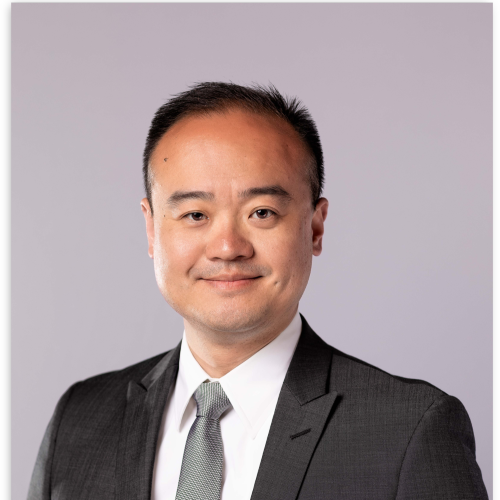
Ryan Chan is currently the Global VP of Solutions Consulting for Supplyframe, a Siemens company offering SaaS solutions. His career began in supply chain design at Saint-Gobain, a French manufacturing firm, where he optimized distribution and logistics networks. He continued to refine his skills in Supply Chain Optimization at Toys R Us, where he enhanced distribution flows and inventory management.
Following his experience as a user of LLamasoft’s products at Toys R Us, Ryan joined the company and held various roles, including Consulting, Pre-sales, and Product Management. In these positions, he helped numerous Fortune 100 companies transform their supply chains using optimization, simulation, and AI/ML techniques.
After his time at LLamasoft, Ryan transitioned to Symphony Retail AI, where he served as the SVP of Solutions and Value Consulting. During his tenure, he consolidated a global presales team and initiated a comprehensive Value Engineering program.
Ryan earned a Master’s degree in Business Administration from Purdue University’s Krannert School of Management and holds a Bachelor’s degree in Electrical Engineering from Purdue University.

Eric Rimkeit
Eric Rimkeit is Director of Marketing at Supplyframe, a Siemens company that provides SaaS solutions for the global electronics industry. He leads strategic marketing initiatives that drive growth, strengthen market positioning, and help customers understand how Supplyframe’s intelligence enables better engineering, procurement, and sales decisions.
Before joining Supplyframe, Eric spent more than 18 years at HP Inc., where he held leadership roles in global procurement. He managed strategic commodity portfolios and led initiatives spanning supplier strategy, cost optimization, and supply chain risk, giving him firsthand experience with the challenges manufacturers face in volatile markets.
Today, Eric combines that operational expertise with marketing strategy to shape Supplyframe’s market narrative. He leads initiatives around AI discoverability, helping ensure Supplyframe’s network is visible wherever engineers and procurement professionals increasingly research technologies, suppliers, and market trends.
Eric is particularly passionate about translating complex electronics market signals—including component availability, pricing trends, and design activity—into clear, actionable insights that drive revenue and profit.
He holds a bachelor’s degree in Entrepreneurial Studies from Babson College and an MBA from Willamette University.