Featured posts

Latest posts

Before Humanoids Hit the Factory Floor: Validating the Future with Manufacturing Simulation

Humanoid systems are inherently complex, requiring substantial investment not only in physical hardware but also in intelligence, the “brain” of the robot. Expertise in sensors, control systems, machine learning, AI, and natural language interaction are all essential to humanoid development. At Siemens, this understanding is built through high-fidelity simulation. Using tools such as Tecnomatix Process Simulate, Siemens software enables manufacturers to precisely model how manufacturing labor resources respond to task requirements. With strong competencies in advanced robotics and human simulation, Siemens solutions are uniquely positioned to model flexible manufacturing environments that blend automation, human workers, and emerging humanoid systems.

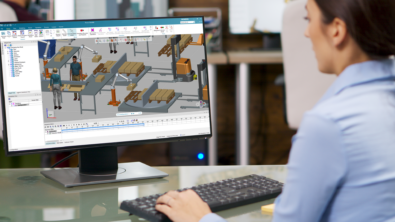
Introducing the AI Powered Copilot for Siemens Plant Simulation software [VIDEO]

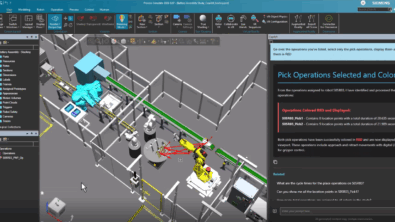
Imagine having an intelligent manufacturing assistant built directly into your simulation workflow, one that instantly answers your discrete event questions, streamlines complex optimization tasks, and helps you build better Plant Simulation models in a fraction of the time. That future is now a reality. 

By offloading the repetitive and technical overhead — model exploration, code generation, data preparation, scenario setup, it guides engineers through search documentation to focus on high-value work like experimentation, insight generation, and system optimization. The result is faster modeling, clearer understanding, and dramatically shorter time-to-decision.

Washington Post features how Siemens digital twin technology is helping reimagine the future of modern manufacturing [ARTICLE]

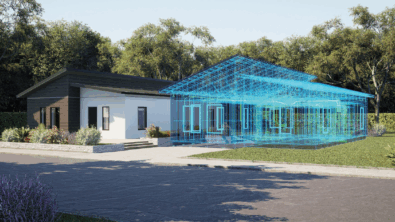
Manufacturing is entering a new era, one where factories are designed, tested, and optimized long before a single piece of equipment is installed. In a recent Washington Post article, “The Digital Twin Age: Using Simulations to Boost Real-World Business,” journalist Jason Dan, Lead AI & Tech Analyst, explores how digital twin technology is transforming the way companies plan and operate industrial facilities.

At the center of this transformation referenced is Siemens, whose digital twin capabilities are helping manufacturers move faster, reduce risk, and rethink what’s possible in modern production.

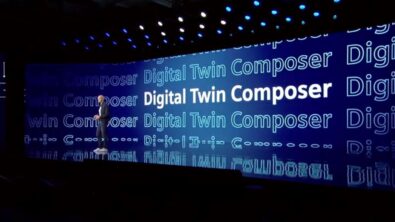
Siemens showcases the future of AI-era manufacturing at NVIDIA GTC

At NVIDIA GTC in Washington, D.C., Siemens and NVIDIA demonstrated a new technology stack currently in development for the Siemens Xcelerator portfolio. This live demo showed how engineers will soon be able to rapidly design, optimize, and manage the most advanced and accurate digital twins for future factories. By harnessing the integration between Siemens Xcelerator and NVIDIA Omniverse technologies, the new solution supports the creation of a holistic, highly realistic digital twin that unifies 3D visualization, simulation, and factory data into a single environment. This milestone marks a key step toward realizing the industrial metaverse — Siemens’ vision of seamlessly combining the real and digital worlds to unlock new levels of innovation, collaboration, and sustainable value creation for industry. 

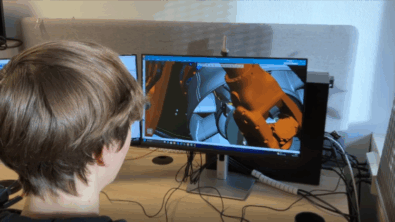
The future of bridging humans, robots, and humanoids with Process Simulate software [VIDEO]

Humanoid robots are expected to gradually enter the factory floor within the next few years. However, their ability to rapidly learn and adapt makes them particularly exciting — but also introduces new levels of uncertainty for manufacturers. This is where Siemens advanced manufacturing simulation and validation software, Process Simulate, becomes indispensable, allowing manufacturers to virtually model and simulate the entire ecosystem — humans, robots, and automation systems — and eventually humanoids, within a unified production environment. By modeling humanoids within Process Simulate Human, manufacturers could test feasibility, validate ergonomics, plan workflows, and de-risk integration before deployment.

Pierre Fabre Driving Sustainable Water Management with Siemens Digital Twin Technology

Pierre Fabre is a leading French pharmaceutical and dermo-cosmetic company. The group faced increasing pressure to improve the sustainability of its water management practices without compromising operational reliability. By creating a digital twin of its water management system, the company gained the ability to simulate diverse scenarios and accurately forecast consumption patterns on both daily and seasonal scales.

Next-generation Ergonomics: Xsens & Siemens Process Simulate join forces to put motion capture and simulation in manufacturing 

In today’s manufacturing landscape, ergonomics isn’t just about comfort, it’s about productivity, safety, and efficiency. Observation and questionnaires only go so far. The integration of Xsens motion capture technology and Siemens Process Simulate software, you can now virtually analyze workstation design using authentic human movement data, leading to more informed decisions earlier in your design process.

Transforming Parcel Hubs: How Digital Twins are Paving the Way for Smarter, Ergonomic Operations 

In today’s competitive logistics landscape, operational efficiency and employee welfare are not mutually exclusive goals. In a “Virtual Parcel Hub”, researchers from the Institute of Logistics Engineering at Graz University of Technology (TU Graz) demonstrated how advanced digital solutions can create a harmonious balance between productivity and ergonomics. This case study, supported by Siemens Xcelerator Portolio, including Plant Simulation and Simcenter HEEDS, offers valuable insights for organizations seeking to optimize their operations without compromising on employee care. 

What’s new in Optimize my plant 2509: Unlocking the Future of Digital Manufacturing

With each release, Optimize my plant (OMP) evolves to provide engineers and manufacturers with more powerful tools for simulation, integration, and decision support.

The new version 2509 introduces enhancements in simulation, connectivity, and visualization that improve precision, accelerate workflows, and enable deeper insights into production performance.