Simcenter Systems 2604: Supercharging battery pack design and expanding simulation capabilities
The latest release of Simcenter Systems 2604 delivers powerful new capabilities that address the most pressing challenges facing engineers today. From advancements in battery pack design and thermal safety validation to expanded gas system simulation and enhanced collaboration workflows, this release empowers engineers to work faster, model greater complexity, and validate designs with unprecedented accuracy.
Whether you’re designing next-generation electric vehicles, optimizing pneumatic systems, or pushing the boundaries of extreme-condition simulations, Simcenter Systems 2604 provides the tools you need to accelerate innovation and bring better products to market faster.
Supercharge battery pack design and validation
The electrification revolution continues, and with it comes increasingly complex challenges in battery pack design, thermal management, and safety validation. Simcenter Systems 2604 introduces six major enhancements to the battery pack assistant that fundamentally transform how engineers approach these critical tasks.
Seamless integration with Simcenter Simlab
One of the most significant workflow improvements in this release is the ability to import 3D models directly from Simcenter Simlab into the battery pack assistant. This integration eliminates the friction that previously existed when moving between structural and thermal simulation domains. Engineers can now leverage their existing CAD and meshing work from Simcenter Simlab, bringing detailed geometric representations into their battery pack thermal models without manual reconstruction or data translation. This seamless handoff across the Simcenter portfolio not only saves time but ensures consistency and accuracy throughout the development process.

Non-conformal interface for flexible cooling layouts
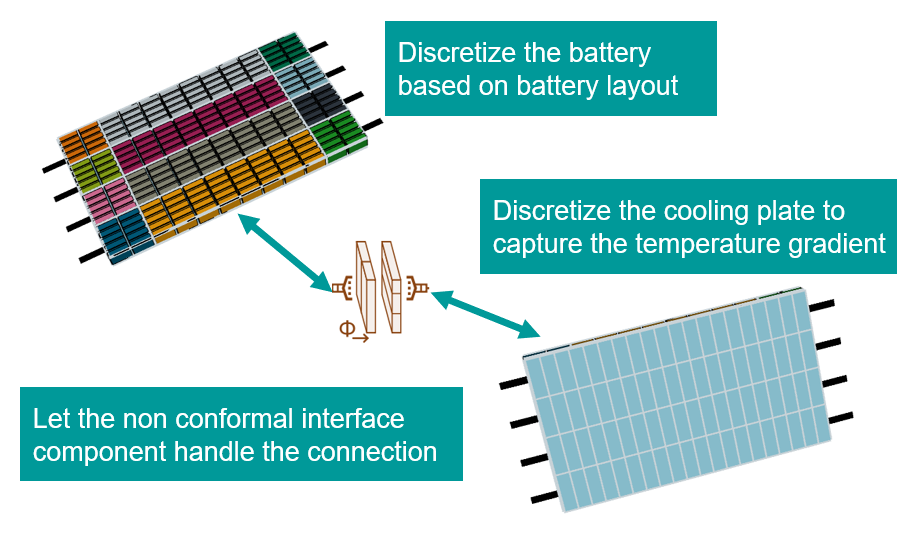
Thermal management is critical to battery performance, safety, and longevity, yet designing effective cooling systems has always presented modeling challenges, particularly when dealing with complex geometries where cooling plates and battery cells don’t align perfectly. The new non-conformal interface capability addresses this head-on by allowing engineers to model cooling layouts without requiring perfectly matching mesh interfaces between components. This flexibility means you can accurately simulate real-world cooling configurations, including offset cooling plates, irregular contact surfaces, and multi-layer thermal management systems, all while maintaining simulation accuracy and reducing mesh preparation time.
Automated side cooling setup
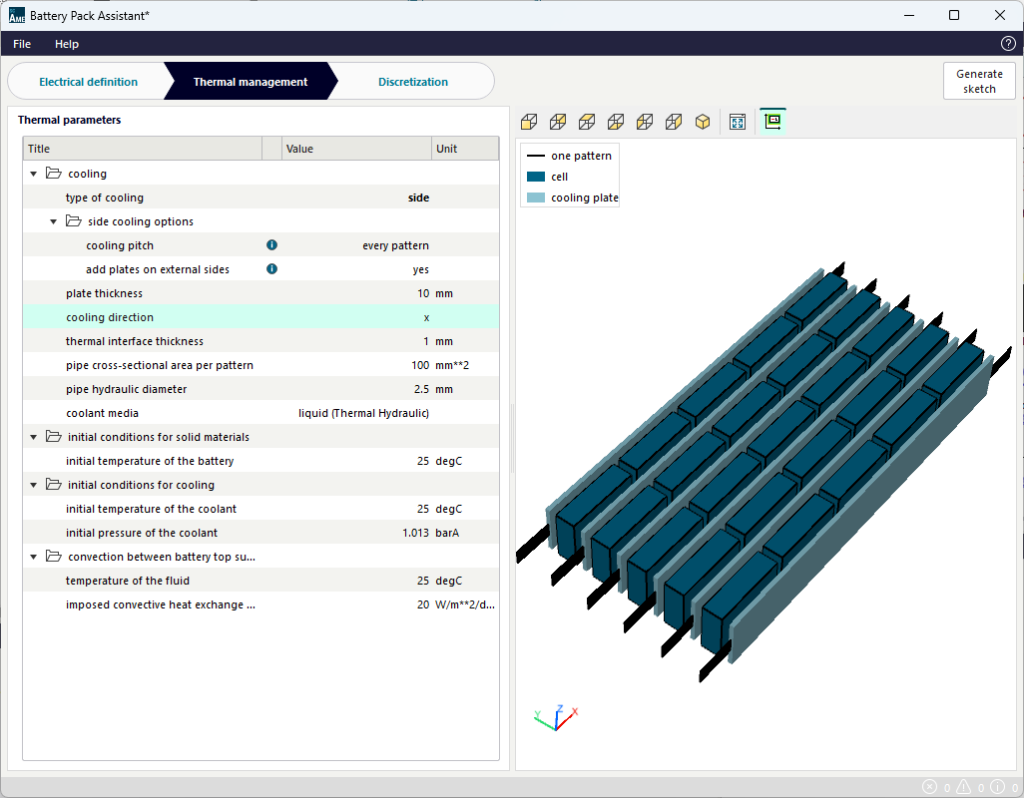
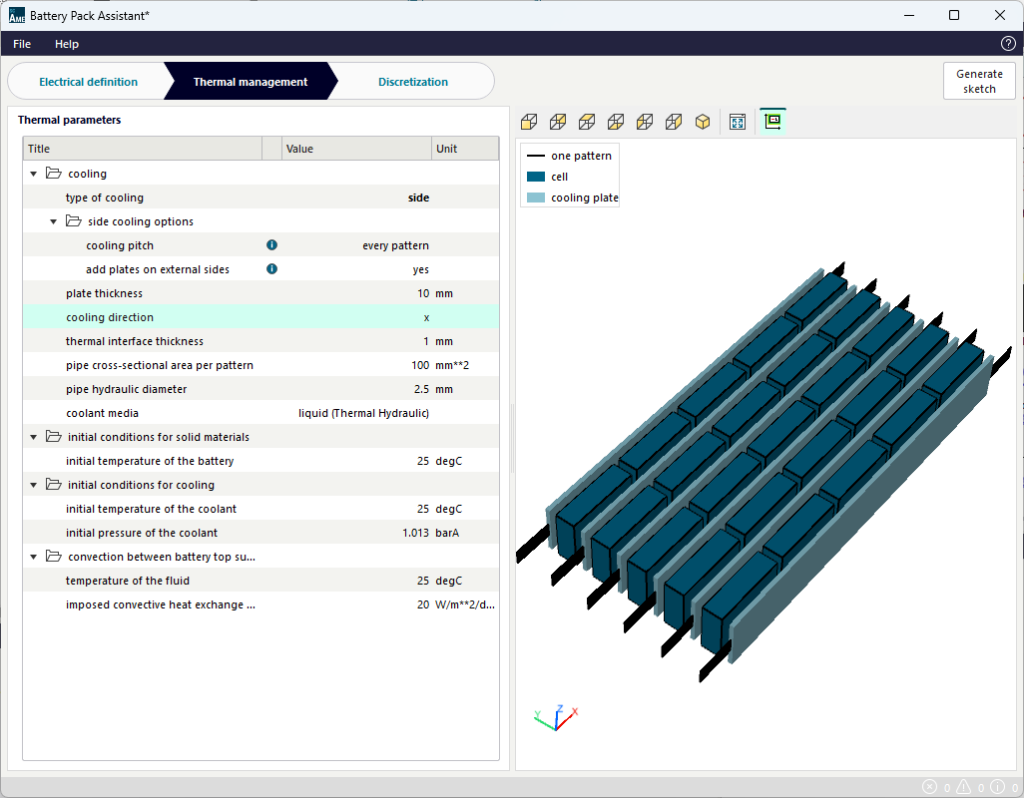
Building on the cooling enhancements, Simcenter Systems 2604 introduces an automated workflow specifically for side cooling configurations. Side cooling has become increasingly popular in battery pack designs due to its space efficiency and thermal performance characteristics, but setting up these models has traditionally been time-consuming and error-prone. The new guided workflow automates the placement, connection, and thermal coupling of side cooling components, dramatically reducing setup time while ensuring best practices are followed. Engineers can now explore multiple side cooling design variants quickly, accelerating the optimization process and helping identify the most effective thermal management strategy for their specific application.
Faster sketch generation
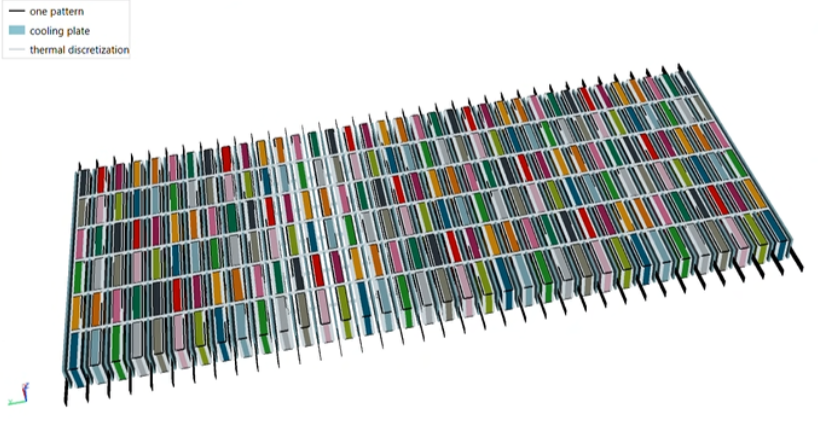
Performance improvements often go unnoticed until you experience them firsthand, but the 30x speed increase in sketch generation for the battery pack assistant is impossible to ignore. What previously took minutes now happens in seconds. This breakthrough performance enhancement transforms the interactive design experience, allowing engineers to rapidly iterate through different pack configurations, test various cell arrangements, and explore design alternatives without waiting. The impact extends beyond individual productivity. It fundamentally changes the design process, enabling more thorough exploration of the design space and ultimately leading to better-optimized battery packs.
Advanced electrochemical modeling with blend electrodes
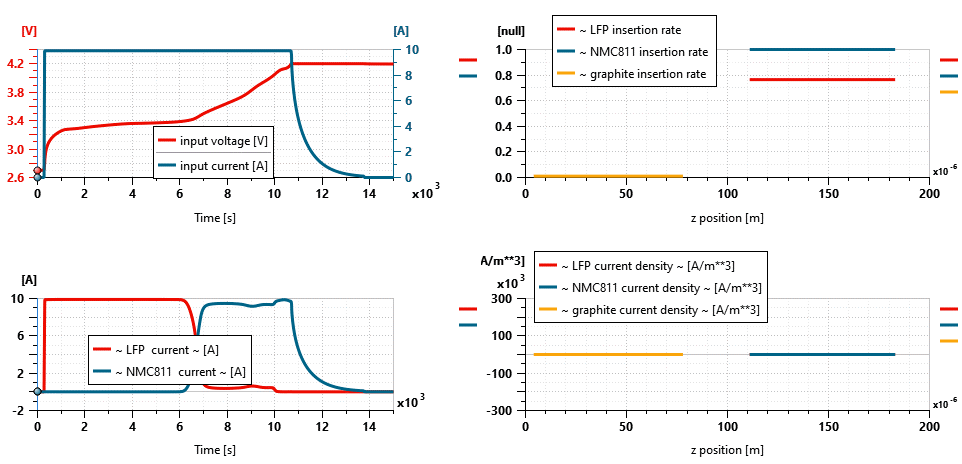
Modern battery cells increasingly use blend electrodes, combining multiple active materials in the anode or cathode to optimize the balance between power density, energy density, cost, and lifespan. However, accurately simulating these multi-material cells has been challenging. Simcenter Systems 2604 enhances both the single particle model with electrolyte (SPME) and the pseudo-2D (p2d) electrochemical models with blend material definition capabilities. Engineers can now define multiple active materials within a single electrode and accurately predict how these blended materials interact during charge and discharge cycles. This capability enables precise optimization of material mixing ratios to achieve target performance characteristics. Critically, it allows for accurate modeling of aging mechanisms for each active material independently. The result is more accurate cell-level predictions that directly inform pack-level design decisions.
SOC-dependent thermal runaway modeling
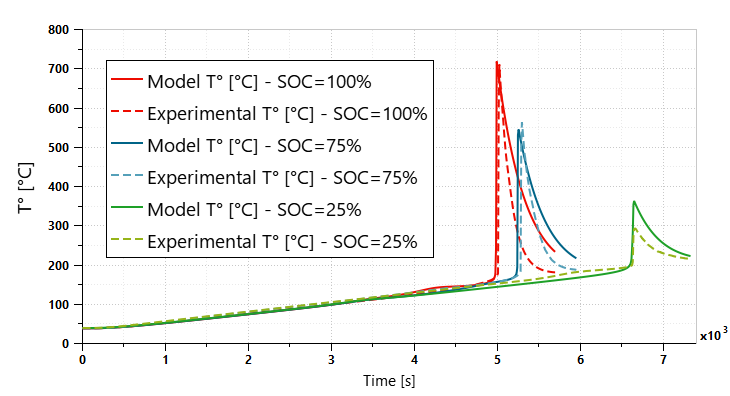
Safety is paramount in battery design, and thermal runaway represents one of the most critical failure modes. The challenge is that thermal runaway behavior changes dramatically depending on the battery’s state of charge (SOC). A fully charged battery behaves very differently under thermal stress than a partially discharged one. Simcenter Systems 2604 introduces an enhanced thermal runaway model that explicitly incorporates SOC dependency, allowing engineers to simulate thermal runaway behavior accurately across varying load profiles and charge levels. This eliminates the need for manual kinetic parameter adjustment for each SOC condition, saving valuable engineering time while improving accuracy. Perhaps most importantly, this capability enables adoption of robust thermal runaway demonstration methodologies to accelerate pack validation. By accurately simulating these critical safety scenarios virtually, engineers can significantly reduce reliance on expensive and time-consuming physical testing while ensuring their designs meet stringent safety requirements across the full operational envelope.
Expanding gas system simulation capabilities
While battery electrification captures headlines, gas systems remain fundamental to countless applications, from pneumatic controls in industrial automation to compressors in HVAC systems and specialized gas handling in extreme environments. Simcenter Systems 2604 delivers three significant enhancements to the gas library that expand simulation capabilities and streamline workflows.
Compressor map migration tool
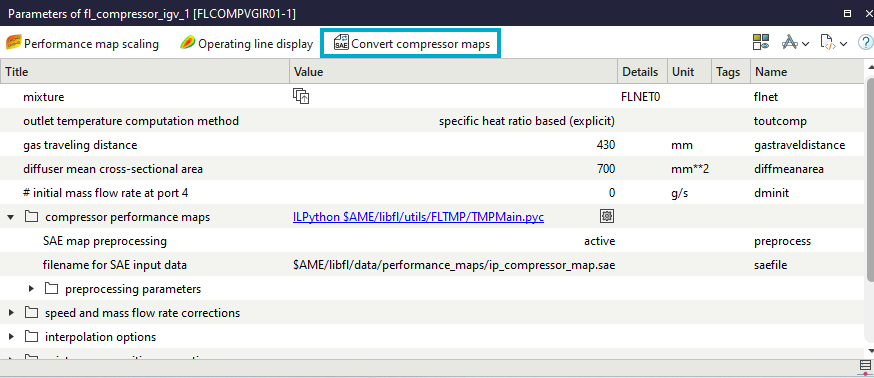
Engineers working with compressor models often need to migrate data from the legacy gas mixture library to the more advanced gas library, a process that historically required manual file editing. This tedious work consumed time and introduced potential for errors. The new compressor map migration tool automates this entire process, transforming compressor maps to the standard format used by gas library compressors with a single click. The tool launches directly from the compressor component itself, integrating seamlessly into existing workflows. It supports both table-based and constant efficiency inputs, ensuring flexibility for different types of compressor data, and produces ready-to-use output that’s immediately compatible with gas library models. This automation frees engineers to focus on higher-value design and analysis work rather than data wrangling.
Tabulated thermo-physical properties
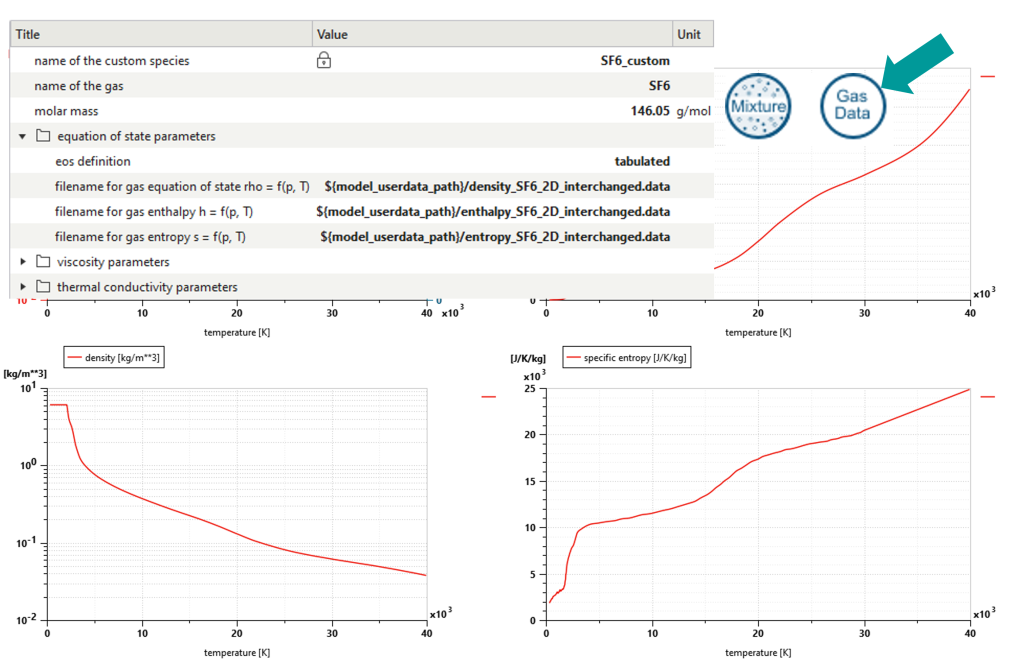
Simulating systems involving specialty gases has always presented challenges. These gases operate at extreme temperatures or pressures, or they lack standard property correlations altogether. Simcenter Systems 2604 now allows tables to be used for defining thermodynamic and transport gas properties, providing unprecedented flexibility. Engineers can input experimental data or highly specialized property tables directly into simulations, defining gas density, enthalpy, entropy, viscosity, and thermal conductivity as functions of pressure and temperature with precision. This capability dramatically expands simulation applicability to non-conventional systems. A prime example is high-voltage circuit breakers involving plasmas reaching temperatures up to 40,000 Kelvin. These conditions fall far beyond the range of standard correlations. With tabulated properties, these extreme applications can now be modeled accurately.
Valve builder for gas library
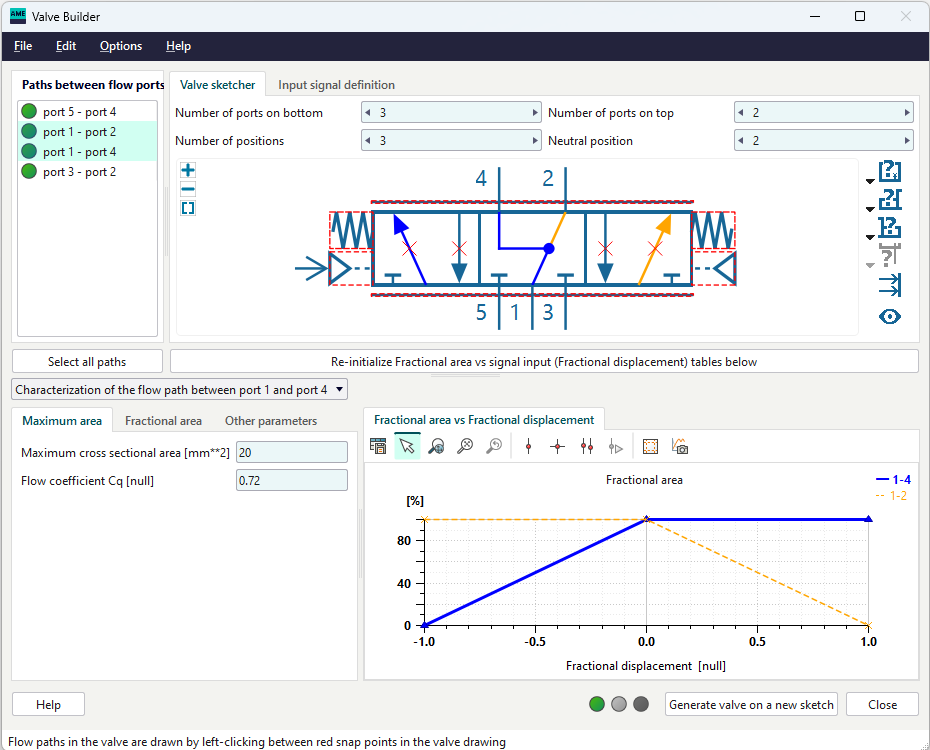
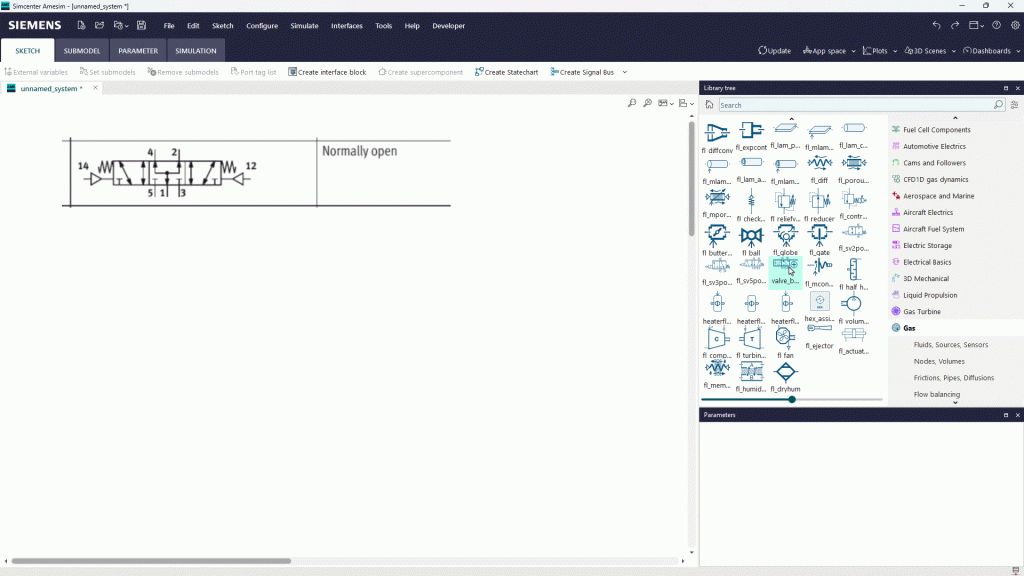
Pneumatic valves come in an enormous variety of configurations, with different numbers of ports, positions, and flow characteristics. The sheer number of possible combinations far exceeds what any predefined model library can realistically cover. Engineers frequently need very specific valve configurations that aren’t immediately available, leading to workarounds or compromises. The new valve builder for the gas library solves this problem by providing a dedicated tool for creating custom valve models. Using a flexible graphical interface, engineers can visually configure valve structure, define flow paths, and characterize behavior without writing code. Whether modeling a simple 2-way valve or a complex multi-port, multi-position directional control valve, the valve builder provides the freedom to define exactly what’s needed, unlocking new levels of simulation accuracy for pneumatic systems.
Gas turbine simulation with Simcenter Flomaster
Gas turbine design demands exceptional precision, particularly when it comes to blade cooling and thermal analysis. The extreme operating conditions, tight tolerances, and complex multi-physics interactions make accurate simulation essential for achieving performance targets while ensuring component durability. Simcenter Flomaster 2604 introduces three powerful enhancements specifically addressing the needs of gas turbine engineers.
Enhanced duct scripting with local flow data
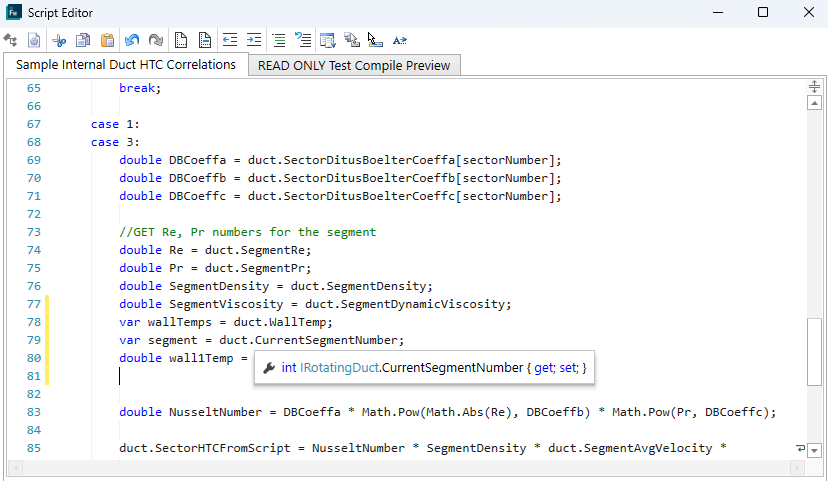
Custom correlations are often essential for capturing the unique physics of proprietary gas turbine cooling designs, but applying these correlations accurately has been challenging when local flow and wall conditions vary significantly. The enhanced duct scripting interface in Simcenter Flomaster 2604 now exposes segment-level flow data and wall temperatures directly to custom friction and heat transfer calculations. Engineers can access static and total pressure, static and total temperature at each internal node, and wall temperatures broken down by segment and sector. The current segment number is also available, allowing calculations to vary along the length of the duct. Component metadata such as group, type, and title lets scripts know which component they’re running on, enabling reuse of the same script across different ducts with different behavior. This enhanced data access allows engineers to implement proprietary correlations using correct local conditions rather than relying on averaged or external assumptions, significantly increasing confidence in application-specific simulation results.
Independent circumferential wall temperature control
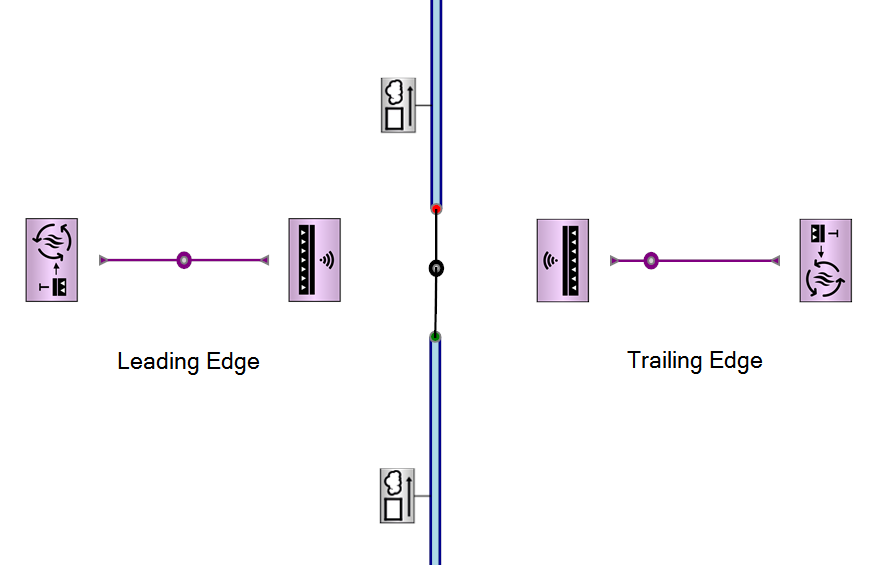
Cooling passages in gas turbine blades often experience dramatically different temperatures on different sides. For example, a cooling channel may have significantly different temperatures on the trailing edge versus the leading edge, or between the pressure and suction sides. Previously, Simcenter Flomaster could only apply a single wall temperature to the entire perimeter of a duct, forcing engineers to split ducts into multiple components to represent different wall conditions around the circumference. This artificial splitting complicated models and introduced potential for error. The internal duct component now supports up to four independent wall temperatures around the circumference, one per face, using the existing heat transfer and pipe run components. Each face of the duct can be connected to a different heat transfer boundary, eliminating the need for artificial duct splitting. Combined with the existing axial variation capability, engineers now have temperature control in both directions, along and around the passage, from a single component. This enhancement improves cooling performance prediction accuracy while simplifying model setup and reducing the potential for modeling errors.
Fully coupled co-simulation for blade design
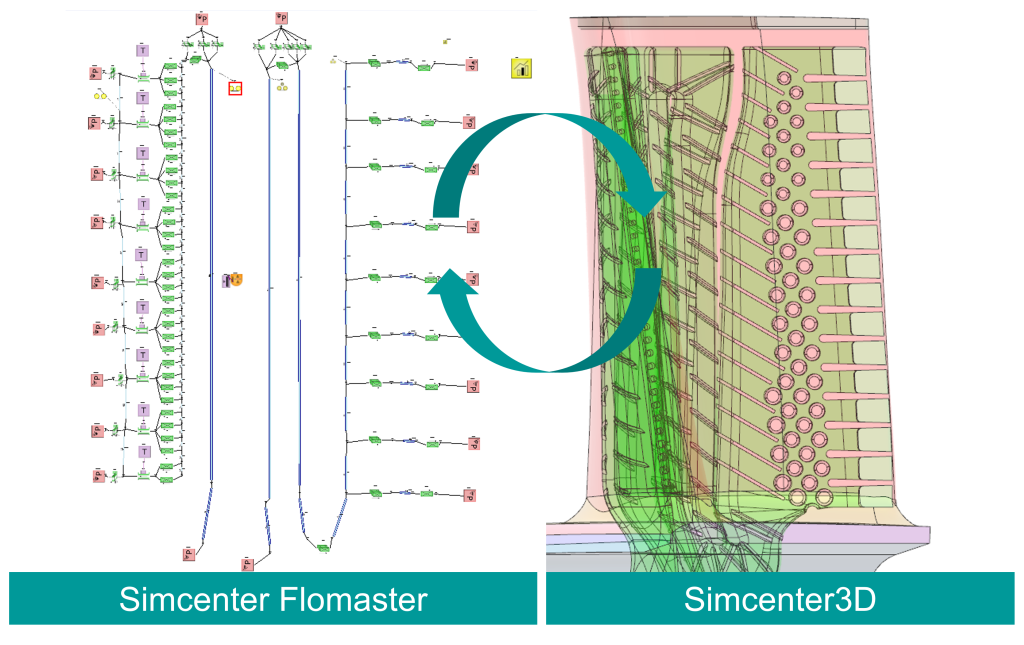
Gas turbine blade design is inherently multi-physics. Aerodynamic loads affect structural deformation, which changes flow paths and cooling effectiveness, which in turn affects metal temperatures and thermal stresses. Loose coupling between thermo-fluid and structural analysis can cause inconsistent blade aero-thermal-structural design results, leading to design iterations, increased risk, and difficulty meeting the tight accuracy requirements demanded by modern blade designs. Simcenter Flomaster 2604 introduces fully coupled co-simulation with iteration-level thermo-fluid and structural synchronization between Simcenter Flomaster and Simcenter 3D. This true iteration-level coupling ensures consistent multi-physics convergence across tools, allowing engineers to meet blade design accuracy requirements that would be impossible with loose coupling approaches. The fully coupled predictions reduce design risk by capturing the true interaction between aerodynamic, thermal, and structural phenomena, providing engineers with the confidence that their virtual predictions accurately represent real-world blade behavior. This capability will be available with the Simcenter 3D 2606 release.
Enhanced visualization and mechanical simulation
Understanding simulation results is just as important as generating them, and visualization plays a crucial role in extracting insights from complex mechanical systems.
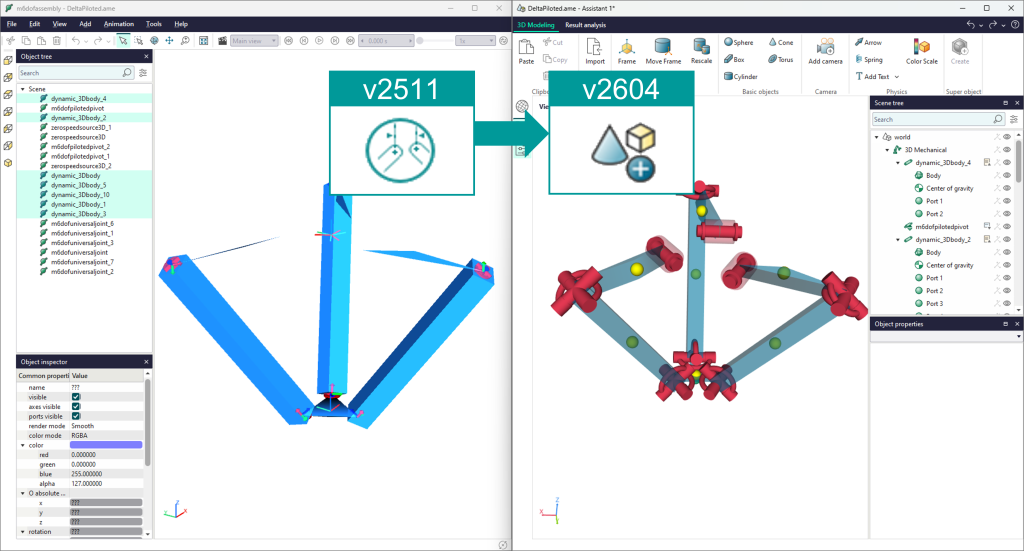
Simcenter Systems 2604 introduces a new 3D mechanical domain within 3D scenes that modernizes how engineers visualize and communicate mechanical simulation results. This enhancement brings advanced animation capabilities and contemporary visualization techniques to mechanical domain models, making it easier to understand dynamic behavior, identify potential issues, and communicate findings to stakeholders. The modernized visualization environment provides clearer insights into mechanical system performance, supporting better decision-making throughout the development process.
Seamless integration and collaboration
Modern engineering is collaborative, and effective collaboration requires robust tools for model sharing, version control, and variant management. Simcenter Systems 2604 delivers three key enhancements that strengthen integration and collaboration workflows.
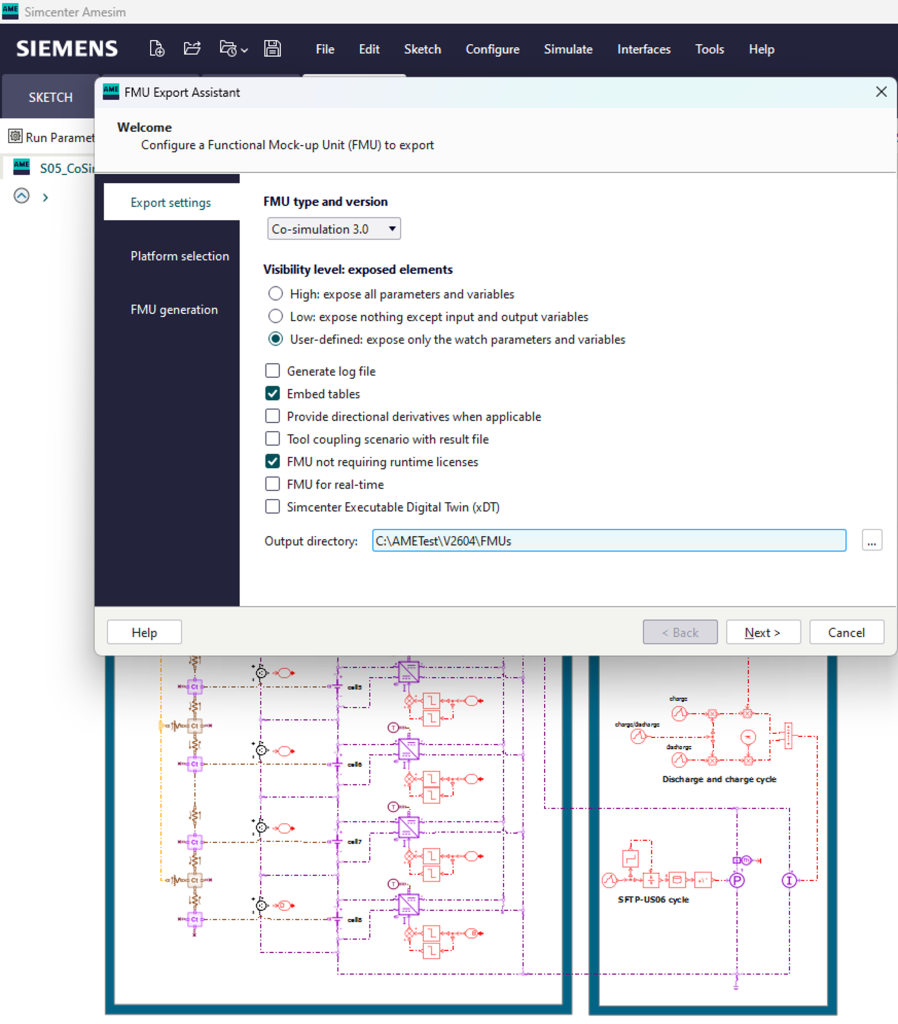
Variable step solver in license-free FMUs
Functional mock-up units (FMUs) have become a standard way to share validated simulation models across organizations and tools, but limitations in solver capabilities have sometimes constrained their applicability. Simcenter Systems 2604 now supports variable step solvers in license-free FMUs, providing more flexible and efficient model deployment. This enhancement allows exported FMUs to automatically adjust their time step based on system dynamics, improving both accuracy and computational efficiency. Engineers can now deploy sophisticated models to partners, suppliers, or other departments with confidence that they’ll run efficiently without requiring Simcenter licenses.
Parameter sets for model variants
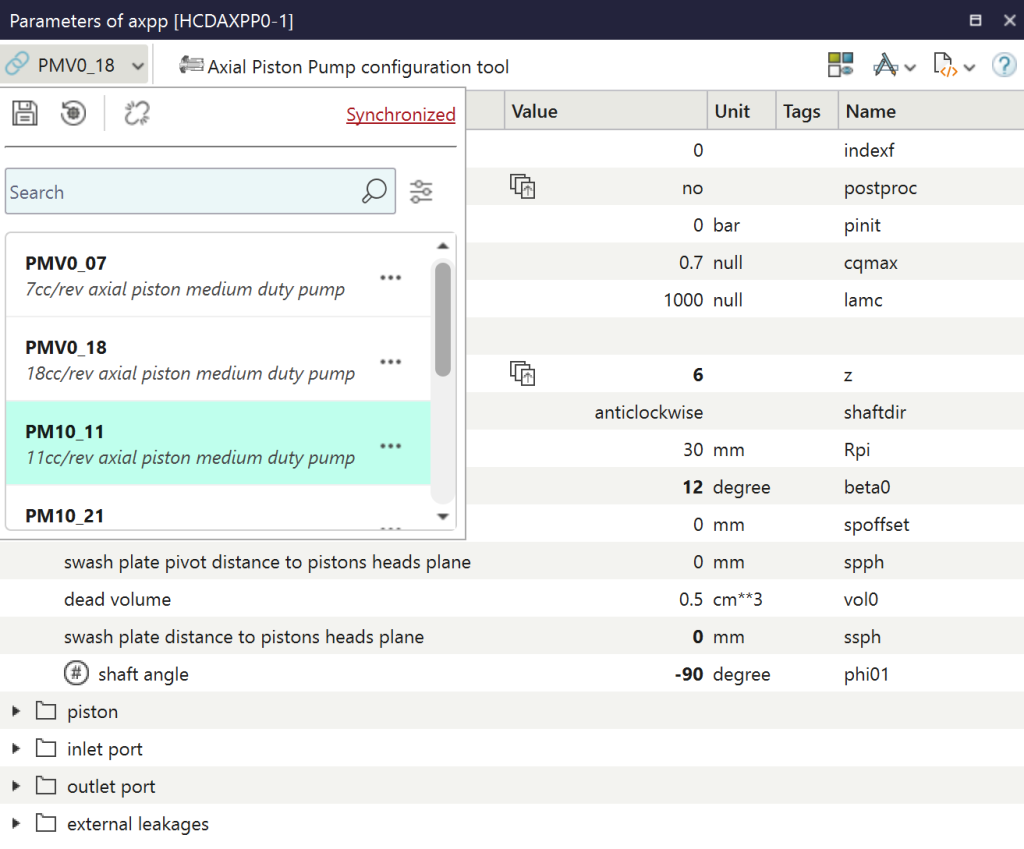
Managing multiple variants of a model has traditionally meant maintaining separate model files or manually changing parameters, both error-prone approaches. Different configurations, operating conditions, or design alternatives all required careful tracking. The new parameter sets capability provides centralized management of model variants through organized parameter collections. Engineers can define multiple parameter sets within a single model, each representing a different configuration or operating scenario, and switch between them instantly. This approach reduces errors, ensures consistency, and makes it far easier to explore design alternatives or maintain models for different product variants.
External Git repository integration
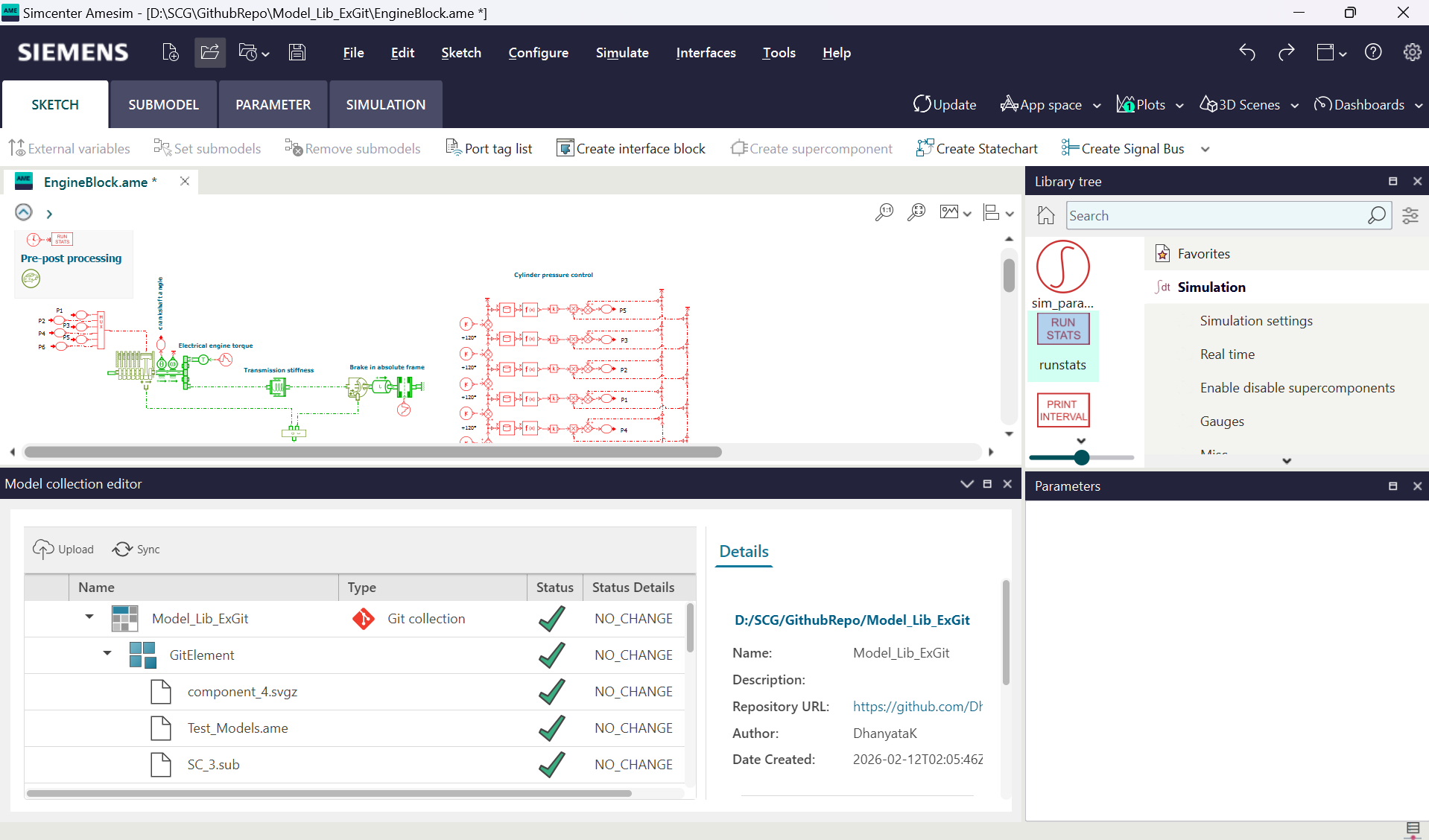
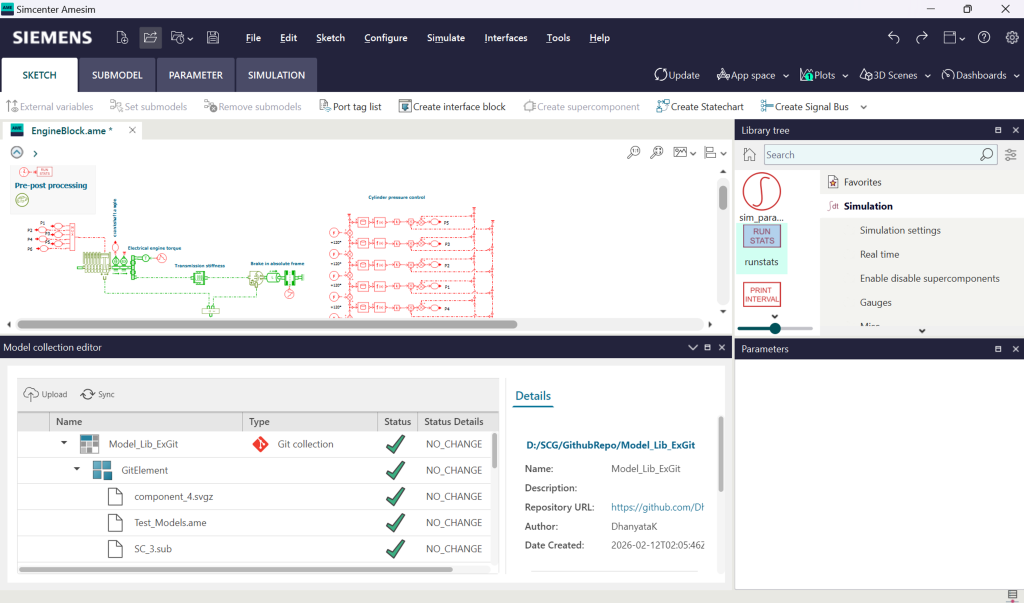
Version control is essential for managing model evolution, enabling collaboration, and maintaining traceability, yet integrating simulation models with modern version control systems has often required external tools and manual processes. Simcenter Systems 2604 now provides direct integration with external Git repositories, including GitHub, GitLab, and Azure DevOps, directly from within Simcenter Amesim. Engineers can commit changes, track history, manage branches, and collaborate with team members using industry-standard git workflows without leaving their simulation environment. This integration brings simulation model management in line with modern software development practices, improving collaboration, traceability, and overall project management.
Experience Simcenter Systems 2604 today
Simcenter Systems 2604 represents a significant leap forward in systems simulation capabilities, with particular emphasis on battery pack design and validation, expanded gas system modeling, and enhanced collaboration. These enhancements empower engineers to tackle increasingly complex challenges with greater speed, accuracy, and confidence.
Ready to experience these capabilities firsthand?
- Read reviews on g2.com to see what other engineers are saying about Simcenter Systems
- Register for an online trial and discover how these enhancements can accelerate your development process
Whether you’re designing the next generation of electric vehicles, optimizing industrial pneumatic systems, or pushing simulation boundaries in extreme environments, Simcenter Systems 2604 provides the tools you need to innovate faster and deliver better products.
A new era for Simcenter
And it does not stop there. With the Simcenter June 2026 release we are bringing together Simcenter and Altair – two of the world’s most powerful simulation portfolios – in a defining moment for engineering.
Gain access to the broadest range of capabilities across modeling and visualization, mechanical, fluids, electromagnetics, systems, HPC, data science, and AI—helping accelerate innovation, simplify workflows, and drive smarter decisions with confidence.


