What’s new in Simcenter Culgi 2605?
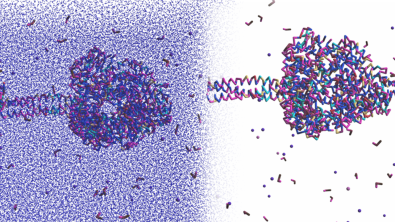
Automate coarse-grained protein parameterization. Accelerate protein formulation development. Optimize runtime with smart equilibrium detection. Plus, many more.
Simcenter Culgi 2605 delivers targeted advancements that directly address some of the most time consuming and risk prone steps in molecular and formulation modeling. The release introduces automated coarse grained protein fragmentation and parameterization, removing manual workflows that traditionally slow down protein formulation studies and introduce variability. It significantly accelerates protein formulation development by enabling faster, more representative simulations of complex protein systems, supporting earlier and broader screening. In parallel, Simcenter Culgi 2605 optimizes simulation runtime through automated equilibrium detection, ensuring simulations stop at the right moment with reliable result precision.
These capabilities are complemented by many additional enhancements across the software. Together, they help you move faster from model setup to trustworthy results, while increasing confidence in both predictions and decisions. Explore the full release to discover all new features in Simcenter Culgi 2605!
Learn how to use Support Center
New enhancements in Simcenter Culgi are designed to:
Model the complexity
Automate protein fragmentation and parameterization at coarse-grained level
Many pharmaceutical and food formulation use cases involve proteins. To accurately predict large systems with complex proteins in acceptable computational time, coarse-grained models are essential.
However, manual protein fragmentation and parameterization have long slowed formulation development, especially as protein systems grow in size and chemical diversity. Breaking large biomolecules into consistent coarse-grained representations typically requires expertise, time, and repeated trial and error.
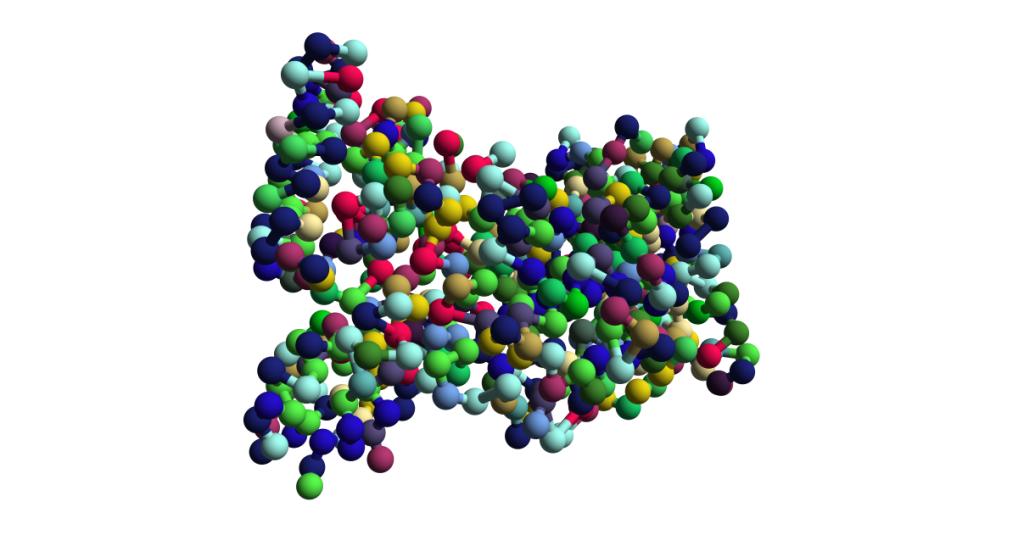
With the Simcenter Culgi 2605 release, this bottleneck is removed through an automated protein fragmenter that maps each amino acid directly into beads using proven parameterization strategies. You can now generate coarse‑grained protein models without manual intervention, while remaining compatible with a wide range of chemistries. The workflow is fully integrated, eliminating the need for custom scripts or external preparation steps. Because the parameterization is consistent and validated, prediction reliability is improved from the very start of the simulation. This automation also helps reduce variability between users and projects. As a result, protein modeling becomes faster, more robust, and easier to scale across pharmaceutical and food formulation use cases.
Get the best of quantum chemistry
Being able to predict energy barriers is a very important aspect of any materials development as reactions are a key aspect of formulation development. Advanced users often find that limited integration with quantum chemistry tools restricts productivity. Previously, extending NWChem workflows required external Python scripts, breaking continuity and adding complexity.
In Simcenter Culgi 2605, direct in‑line input for NWChem is introduced within the graphical interface, closing this gap. You can now define advanced quantum chemistry commands directly in the exporter while still benefiting from the structured workflow setup. Any changes made in the exporter are immediately reflected in the editable input, ensuring transparency and control. Templates can be saved and reused, making sophisticated studies repeatable and easier to maintain. This tighter integration removes dependence on external packages and improves overall usability. The result is a more capable and satisfying quantum modeling experience for expert users conducting fundamental studies.

Explore the possibilities
Ensure reliable prediction across all scales
When dealing with applications that require both long equilibration time and the details of atomistic simulation, such as predicting the diffusion coefficient of a gas molecule in a polymer membrane for sustainable packaging development, accurate transition between scales is crucial. In previous workflows, backmapping could sometimes fail to reproduce the original molecular structure, especially for complex chemistries such as aromatics or rigid molecular domains, undermining confidence in multiscale results.
With the Simcenter Culgi 2605 release, an improved backmapping capability guarantees that what you map to beads is exactly what you retrieve at the atomistic level. Users no longer need to provide external templates or mapping dictionaries, as all required information is embedded directly in the simulation box file. You can therefore move between scales without worrying about structural inconsistencies. This is especially valuable for systems with rigid or complex molecular components. By ensuring consistency across scales, multiscale simulations become safer to execute and easier to trust. Ultimately, you gain more reliable predictions and greater confidence in scale transitions.
Make smart decisions with optimal runtime
Computational chemistry is a statistical technology. Computing the viscosity of a polymer formulation destined to the tire industry takes significantly more time than predicting the interfacial tension of a detergent at 30 °C. From millions of steps down to a few tens of thousands. Most industrial challenges require some form of manual benchmark to ensure that the simulation have reached equilibrium before production as no clear indicators really exist.
With Simcenter Culgi 2605, automated equilibrium detection removes this uncertainty by continuously monitoring the system during simulation. You can specify the precision you need, and the software determines when equilibrium has been achieved. Combined with the previously introduced stop‑on‑met‑precision capability, simulations can automatically terminate at the right moment. This means you spend no more time than necessary while still ensuring result quality. The learning curve is reduced, particularly for new users. Overall, this feature supports smarter decision‑making and more efficient screening workflows.
Go faster
Achieve 30× faster protein formulation screening

Being able to quickly and reliably model protein based formulations is crucial in the pharmaceutical industry, where the pressure to deliver safe medicines continues to increase. Research on vaccines and cancer treatments is accelerating, and formulation teams must generate insight faster without compromising confidence. Yet protein formulation studies are still often slowed down by explicit solvent simulations dominated by water, which adds high computational cost with limited incremental value. Even though those approaches reduced physical testing, runtimes of several days per formulation remained a major constraint.
With the Simcenter Culgi 2605 release, support for colloids in the Brownian Dynamics implicit solvent solver fundamentally changes this balance. You can now focus simulations on the small fraction of relevant chemistry while still capturing essential environmental effects such as pH and molecular rigidity. In addition, Simcenter Culgi 2605 introduces support for Smooth Particle Mesh Ewald, making this approach particularly well suited for protein formulation aggregation studies involving charged systems.
Together, these capabilities enable formulation studies to run up to 30 times faster than explicit solvent approaches. What previously took around ten days can now be achieved in less than one day on a single core, directly accelerating screening campaigns and shortening time to market. At the same time, aggregation behavior predictions become more representative of real protein formulations.
Tackle fast screening of charged proteins under varying pH conditions

Electrostatic interactions play a critical role in protein aggregation, yet traditional Poisson–Boltzmann approaches can be unnecessarily costly for implicit solvent simulations. This limitation made fast screening under varying pH conditions difficult.
With the introduction of Smooth Particle Mesh Ewald in Simcenter Culgi 2605, you now have a more efficient alternative for charged protein systems. You can evaluate electrostatic effects with improved performance while maintaining accuracy relevant to protein formulations. The method integrates seamlessly with the Brownian Dynamics solver and complements the new colloid support. Users retain the option to use Poisson–Boltzmann when needed, but are no longer constrained by it. This flexibility enables faster exploration of formulation conditions. The result is quicker insight into protein behavior and a more efficient path from simulation to decision.
These are just a few highlights in Simcenter Culgi 2605. These features will enable you to design better products faster than ever, turning today’s engineering complexity into a competitive advantage.


