AI-based part classification: because no engineer wants to sort bolts all day
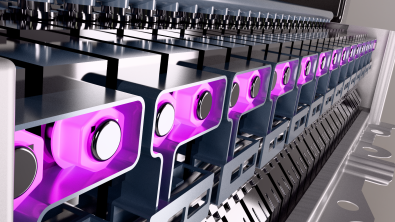
Simcenter STAR-CCM+ AI-based part classification helps engineers identify, group and classify parts in large assemblies faster, reducing manual pre-processing and speeding simulation preparation.
Let’s be honest: sorting parts manually in a large assembly is not how engineers want to spend their time. It is repetitive, slow and difficult to scale – and – at best a nostalgic throw-back experience to our time as kids trying to re-assembe that LEGO model from the pile of bricks:
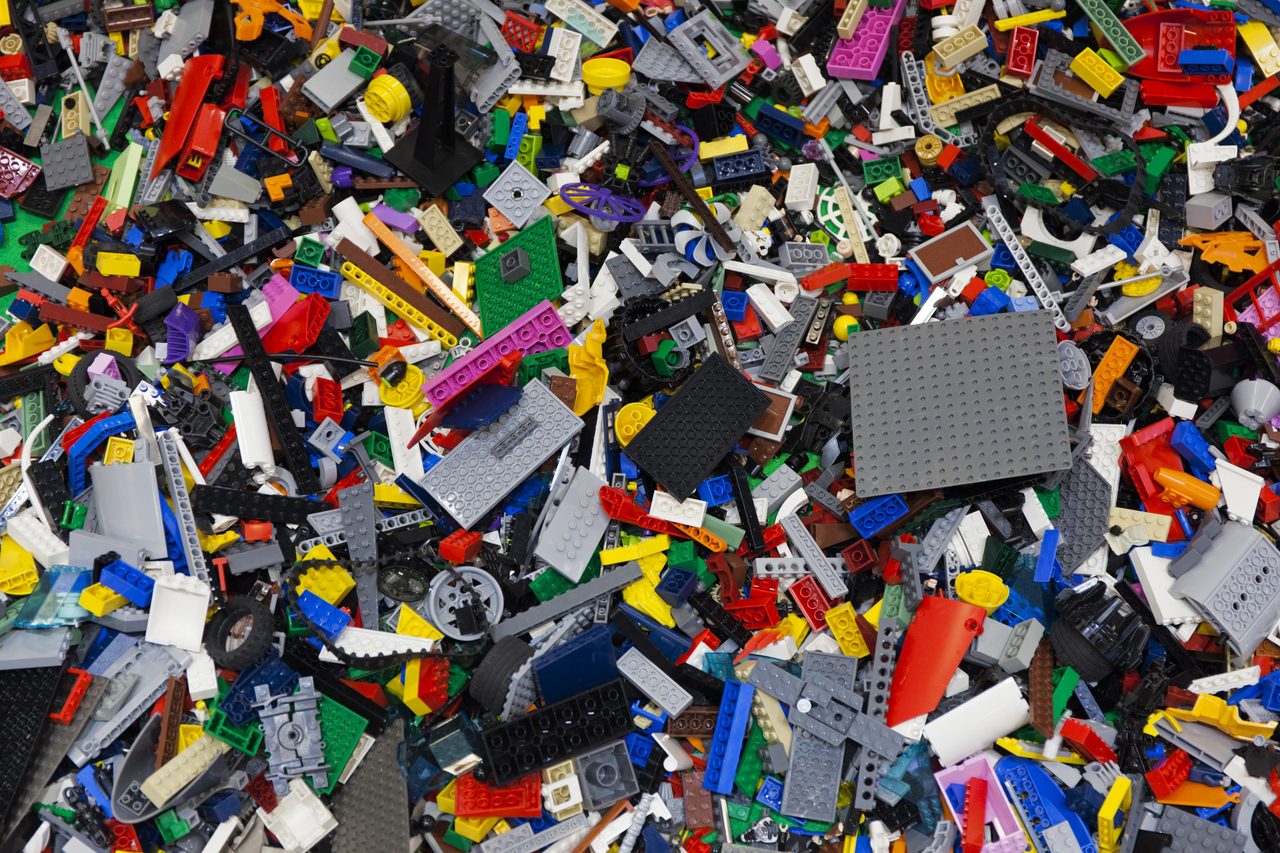
And as even a six year old quickly learns, when an assembly contains hundreds or thousands of components, even a basic task such as identifying similar brackets, fasteners, covers or support structures can consume valuable time before simulation (or model assembly) work even begins.
And while most kids will probably still have to bite through and find the right bricks manually, we have good news for the grown ups among us engineers:
AI-based part classification in Simcenter STAR-CCM+ 2612 will change the game
Simcenter STAR-CCM+ 2612 helps engineers recognize geometric similarity, classify components more efficiently and organize assemblies faster with AI-based part classification. The result is straightforward: less time spent on repetitive pre-processing and more time spent on engineering analysis.
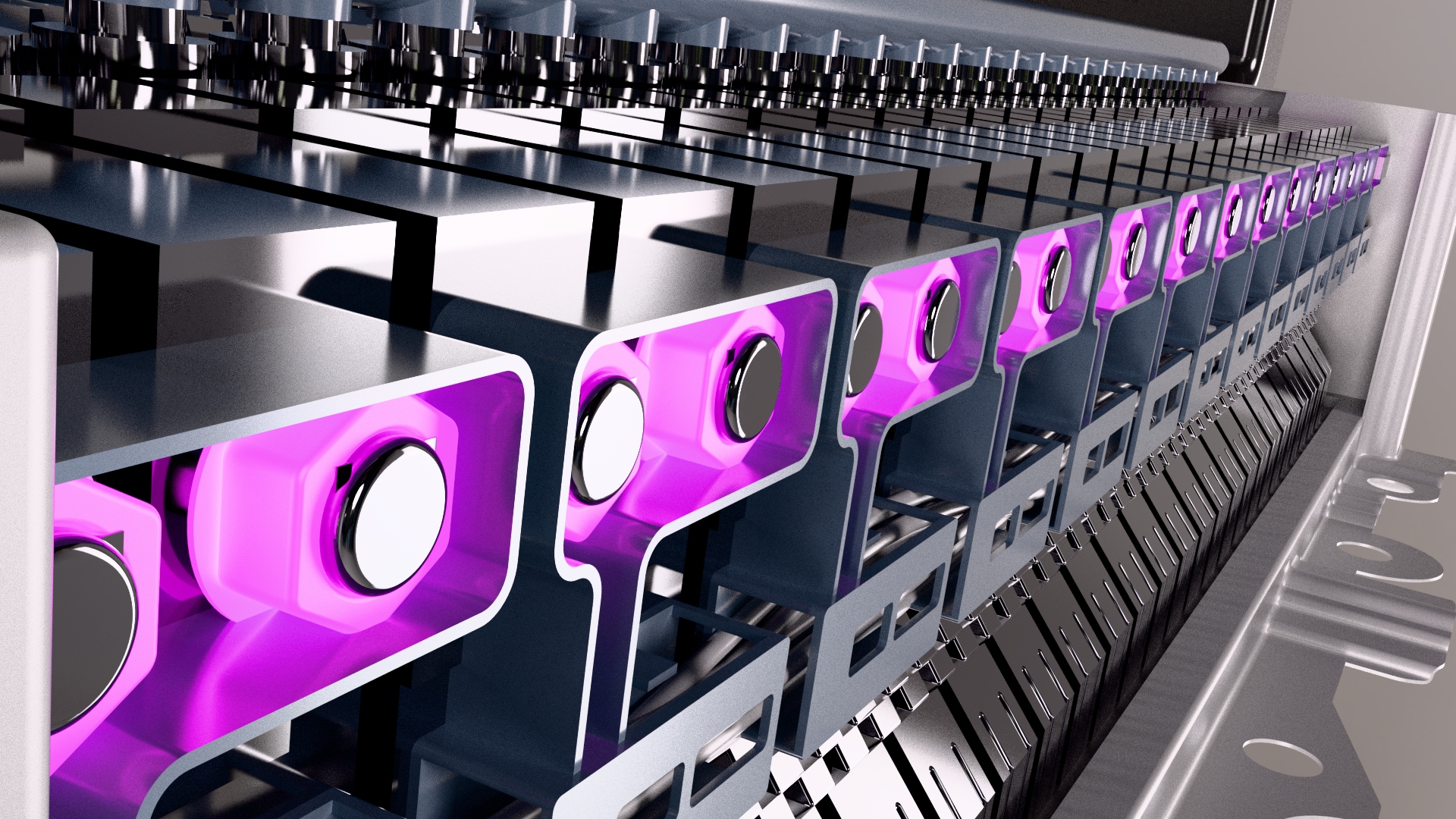
Manual parts classification does not scale Simulation models continue to grow in size and complexity. At the same time, teams are expected to move faster and work more consistently across projects. Manual classification does not scale well in that environment. It depends on experience, attention to detail and a significant amount of repetitive effort. Simcenter STAR-CCM+ offers a more efficient approach by helping engineers identify similar parts and apply AI-based classification logic across an assembly.
That helps teams prepare geometry faster, improve consistency and reduce manual effort.
From geometric similarity to a practical workflow
Simcenter STAR-CCM+ AI-based part classification supports several workflows, depending on the data available and the task at hand. Some users want to find repeated shapes quickly. Others want to train a model to recognize known part types. Some need a hybrid approach that combines geometric matching with AI-based classification.
Find Similar parts quickly
“Find Similar” looks at similarities of the Parts and groups them in bins. This functionality is particularly useful if labeled data isn’t available for training. Because the groups of similar Parts that come out of this can then be used as labeled data for training AI model for classification
Classification through a supervised AI workflow
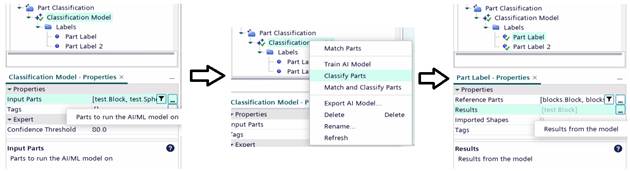
“Classification” uses a supervised AI workflow. Users label representative parts, train a model and apply that model to classify new parts into predefined categories.
If a labeled data set already exists, “Match” classifies parts based on geometric similarity without requiring full model training.
Match & Classify
“Match & Classify” combines both approaches. It first uses geometric similarity to classify parts and then applies the AI model to the remaining parts.
This flexibility matters because engineering workflows are not always standardized. Some teams have well-labeled data. Others are starting with a large assembly and need a faster way to organize it in Simcenter STAR-CCM+.
Built for the way engineers work
The workflow is available in the Part classification area of the geometry tree in Simcenter STAR-CCM+, which makes it a natural part of assembly preparation.
A typical workflow looks like this:
- Review the assembly.
- Identify and label representative parts.
- Train a model or use similarity matching.
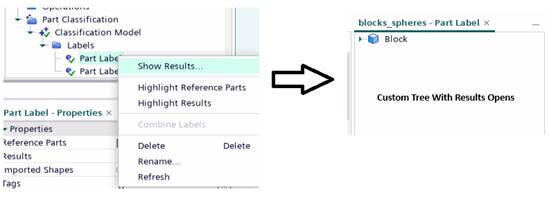
- Classify the remaining parts.
- Use the results to support downstream preparation tasks.
The workflow is straightforward by design. AI should make engineering tasks easier, not more mysterious. AI-based part classification in Simcenter STAR-CCM+ fits into familiar geometry preparation steps while reducing repetitive manual work.
Less sorting, more engineering
The main advantage is speed, but the value extends beyond time savings.
- Reduce repetitive work: Engineers can classify similar components in bulk instead of reviewing parts one by one.
- Improve consistency: Once a model is trained, teams can apply the same classification logic across multiple assemblies.
- Scale more effectively: As assemblies grow, AI-assisted classification helps teams manage higher part counts without increasing manual effort at the same rate.
- Support downstream automation: Once parts are classified, teams can more easily support later workflows such as simplification, meshing and simulation setup in Simcenter STAR-CCM+.
This is where AI delivers practical value. It reduces tedious work and helps engineers focus on tasks that require engineering judgment.
Turn engineering knowledge into a reusable asset
There is another benefit that is easy to miss. When engineers label parts and train a classification model, they are not only solving an immediate task. They are also capturing knowledge that can be reused in future projects. Over time, that can help teams create more repeatable and efficient preparation workflows.
In that sense, AI-based part classification in Simcenter STAR-CCM+ is more than an automation feature. It is also a way to preserve and reuse engineering knowledge in a practical workflow. Once the AI model is trained with label data, the model can be exported as a file which can then be distributed to teams within the organization for use in their simulations. The trained model can be imported in a new simulation either for use for classification or to further add more data to fine tune the trained model.
A practical use of AI
Many discussions about AI in engineering focus on prediction, optimization or generative workflows.
Those topics matter. But some of the most immediate value comes from improving the everyday tasks that slow engineers down. Part classification is one of those tasks.
By applying AI to geometry recognition and assembly organization, Simcenter STAR-CCM+ 2612, available on December 4, turns assembly preparation from a manual, repetitive task into a more intelligent workflow. Whether users want to find similar parts, train a reusable model or combine similarity matching with AI-based classification, the result is faster setup, less tedious work and a more efficient path to simulation.