AI in the engineer’s seat: Speeding up PCB design without giving up control 

In this episode of the Printed Circuit Podcast, host Steph Chavez sits down with Antonio Becerra Esteban, Head of Customer…

Unmanufacturable via structures you may not know in a design

Understanding the characteristics of manufacturable via structures is important for successful PCB design and fabrication. By following solid DFM guidelines and consulting your fabricators, designers can prevent unmanufacturable boards, reduce costs, and accelerate the development of reliable electronic products.

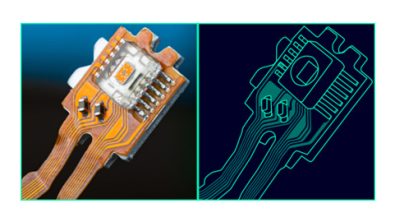
An image of a flex circuit

Six challenges that make flex circuits more difficult to manufacture

Flex circuits present manufacturing challenges and let’s look at six to avoid when designing these regions.

Why UHDI is pushing the limits of what’s possible 

In this episode of the Printed Circuit Podcast, host Steph Chavez sat down with Anaya Vardya, CEO of American Standard Circuits…

two engineers looking at a PCB design in Xpedition software

Elevating enterprise project success: The power of managed design review workflows in PCB design

A single error in a PCB layout can lead to costly re-spins, significant project delays, and even product failure in the field. Enter managed design review workflows for PCB design.

Cloud-native PCB design: a new era of agility, security, and scale 

In this episode of the Printed Circuit Podcast, guest host Matthew Walsh — stepping in while Steph Chavez attends PCB West — welcomes Adam…

PCB traces and impedance planning

Minimizing insertion loss: Why understanding trace width is critical at high frequencies

Material matters An engineer asked me recently about the relationship between trace width and insertion loss while adjusting dielectric height…

ECAD/MCAD collaboration is no longer optional — it’s survival 

In this episode of the Printed Circuit Podcast, host Steph Chavez welcomes two long-time friends and PCB design veterans —…

fabricator etching a PCB

Etch effects exposed: discover where your copper really goes

Etching inner layers involves cleaning the copper on both sides of the piece of laminate, applying a photoresist, exposing the photoresist to create the inner layer pattern, developing the resist, etching away the unwanted copper, and removing the etch resist. This process is automated in most shops and the chemistry is automatically monitored. As a result, the accuracy and repeatability is quite good. It is possible to etch inner layer traces using this process to an accuracy of ±0.5 mils. This accuracy control helps keep impedance within the tolerances required for transmission lines.