Why curvilinear OPC demands a new optimization approach
The semiconductor industry’s transition to sub-5 nm nodes has fundamentally changed photomask design economics. For years, teams relied on rectilinear geometries and coupled fragmentation strategies that worked well at larger nodes. But as critical dimensions shrink and curvilinear features become essential for pattern fidelity, traditional optical proximity correction (OPC) methods are breaking down in ways that directly impact schedule, yield and mask manufacturability.
When fragmentation sites and edge placement error (EPE) anchor points are rigidly coupled, teams face an impossible tradeoff: either accept excessive fragmentation that bloats mask data and extends write times, or compromise EPE control in lithographically sensitive regions. Neither option is acceptable when process windows are razor-thin and time-to-market pressures are intensifying.
Organizations working at advanced nodes are adopting a fundamentally different approach. By decoupling fragmentation sites from EPE anchor points and treating them as independently optimized entities, mask design teams focus computational effort exactly where it delivers process benefit while eliminating unnecessary complexity. This shift changes how teams balance EPE accuracy, mask manufacturability and recipe development speed.
The hidden costs of coupled fragmentation
Traditional model-based OPC treats fragmentation sites and anchor points as a unified construct. Sites define where mask modifications occur, while anchors provide locations for EPE sampling and optimization. For Manhattan-style rectilinear features, this coupling works reasonably well because geometry is predictable and fragmentation patterns align naturally with lithographic sensitivity.
Curvilinear masks expose the fundamental limitations of this approach. When sites determine where anchors can move, this places limits on what mask geometries can be produced. Furthermore, if sites and anchor points come in pairs, data volume is therefore also paired to measurement density. The EPE requirements along tight curves and long straight sections might be the same, but the number of mask anchor points required is not.
This creates cascading problems:
- Extended mask write times from unnecessarily complex data in non-critical regions
- Compromised EPE control where lithographic sensitivity demands tighter management
- Longer OPC convergence cycles as the optimizer struggles with inefficient fragmentation
- Reduced process window robustness from inadequate anchor density in critical areas
- Difficult tradeoffs between data size and EPE accuracy
The schedule impact is worse than the computational cost. When OPC recipe development extends by days or weeks because fragmentation strategies can’t adapt to curvilinear complexity, the entire product introduction timeline suffers. In high-mix foundry environments where agility determines competitive advantage, these delays compound across multiple design iterations.
How independent site and anchor control changes the workflow
Vector-based site and anchor decoupling treats fragmentation and EPE optimization as separate, dynamically controlled processes. Instead of placing sites and anchors together based on geometric rules, this methodology analyzes lithographic sensitivity and process requirements to position each element where it delivers maximum benefit.
Fragmentation sites are placed selectively based on local curvature, topology and anticipated process sensitivity. The vector-based framework interprets mask shapes as networks of dynamically adjustable points, giving the optimizer finer control over edge evolution during iterative correction.
Anchor points are generated independently using lithographically aware algorithms that cluster them where EPE control is most critical. These algorithms analyze pattern density, predicted hotspots and process window sensitivity without any constraint from underlying site locations. During optimization, anchor density can increase dynamically in response to evolving process window analysis.
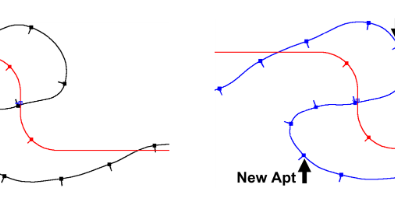
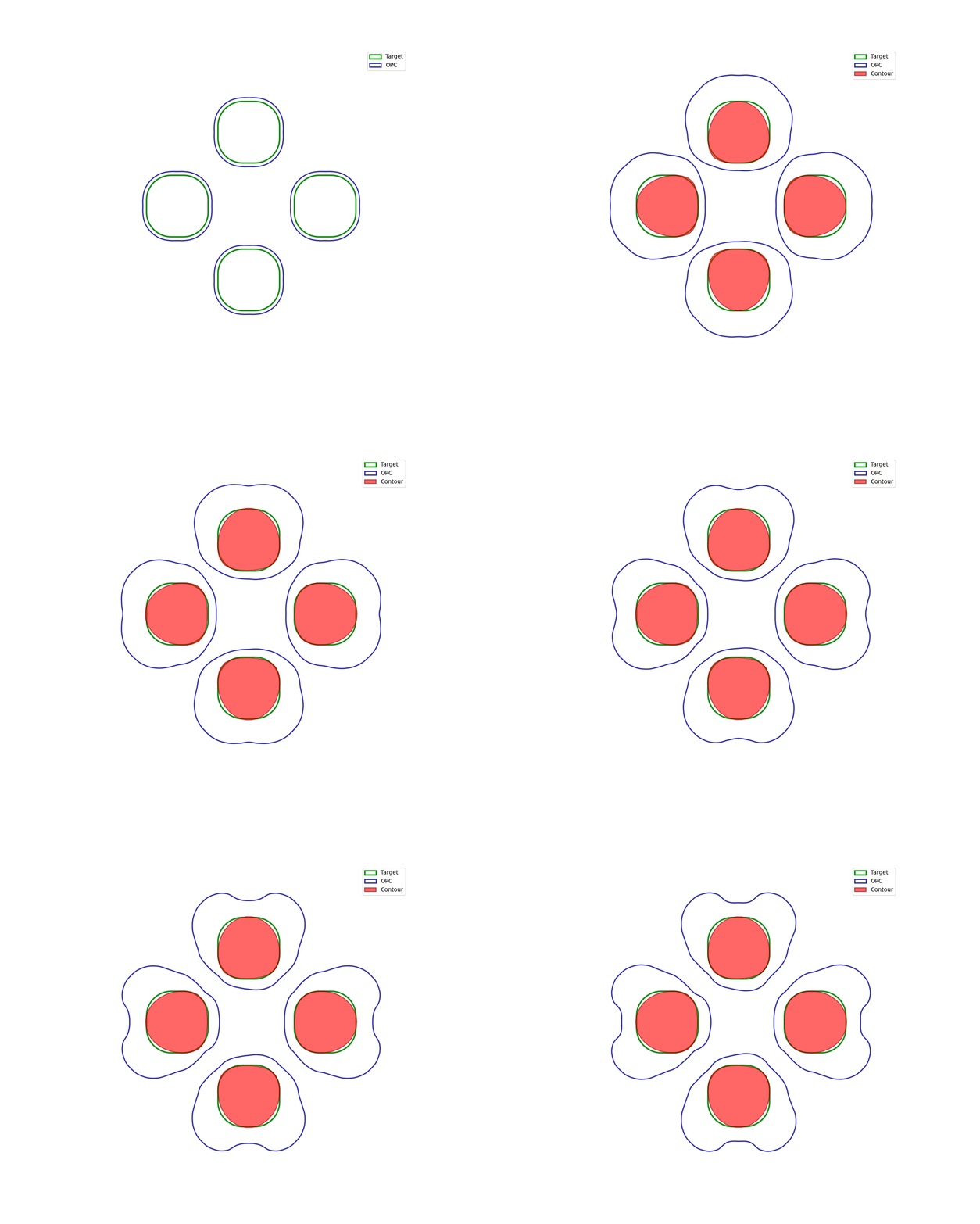
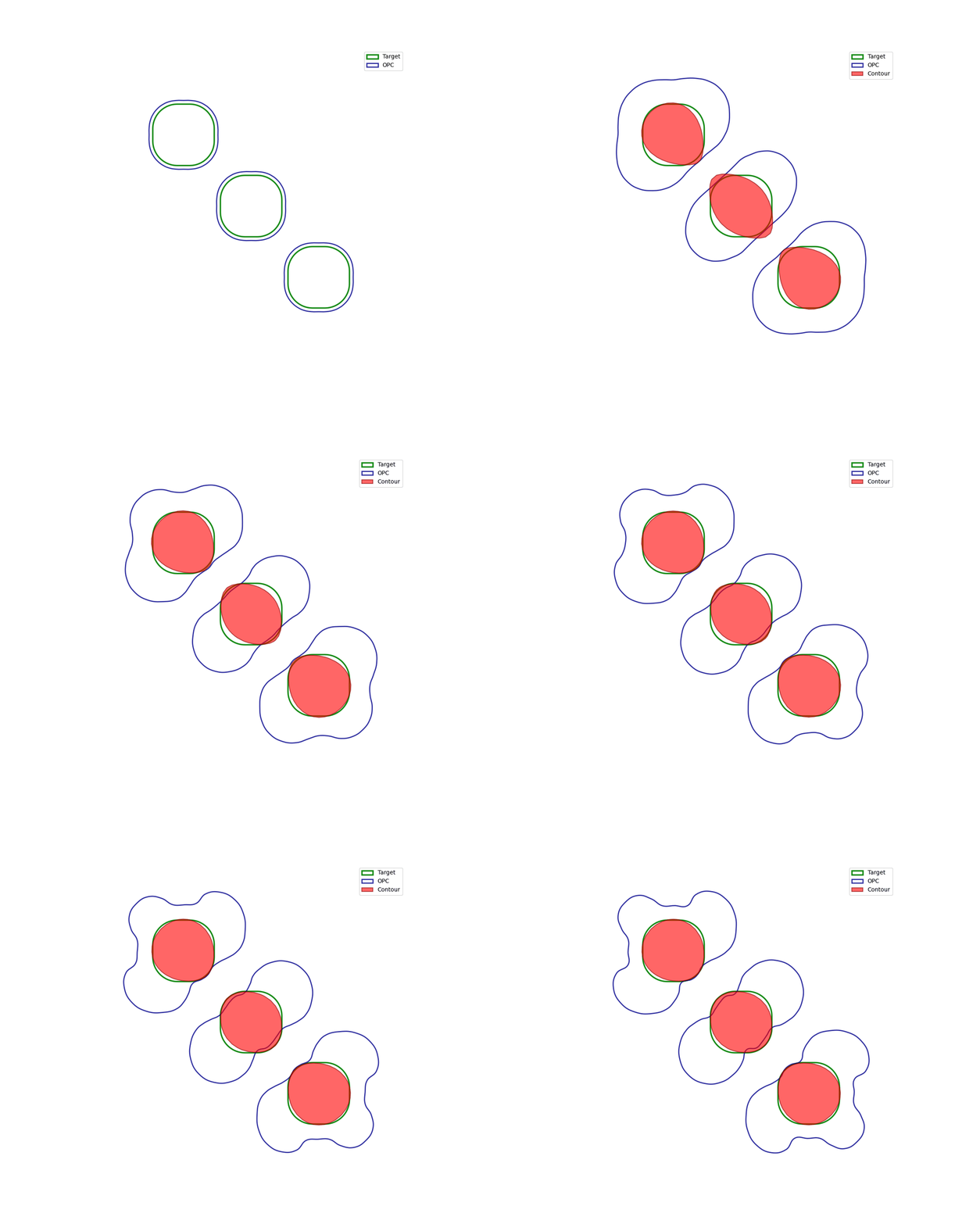
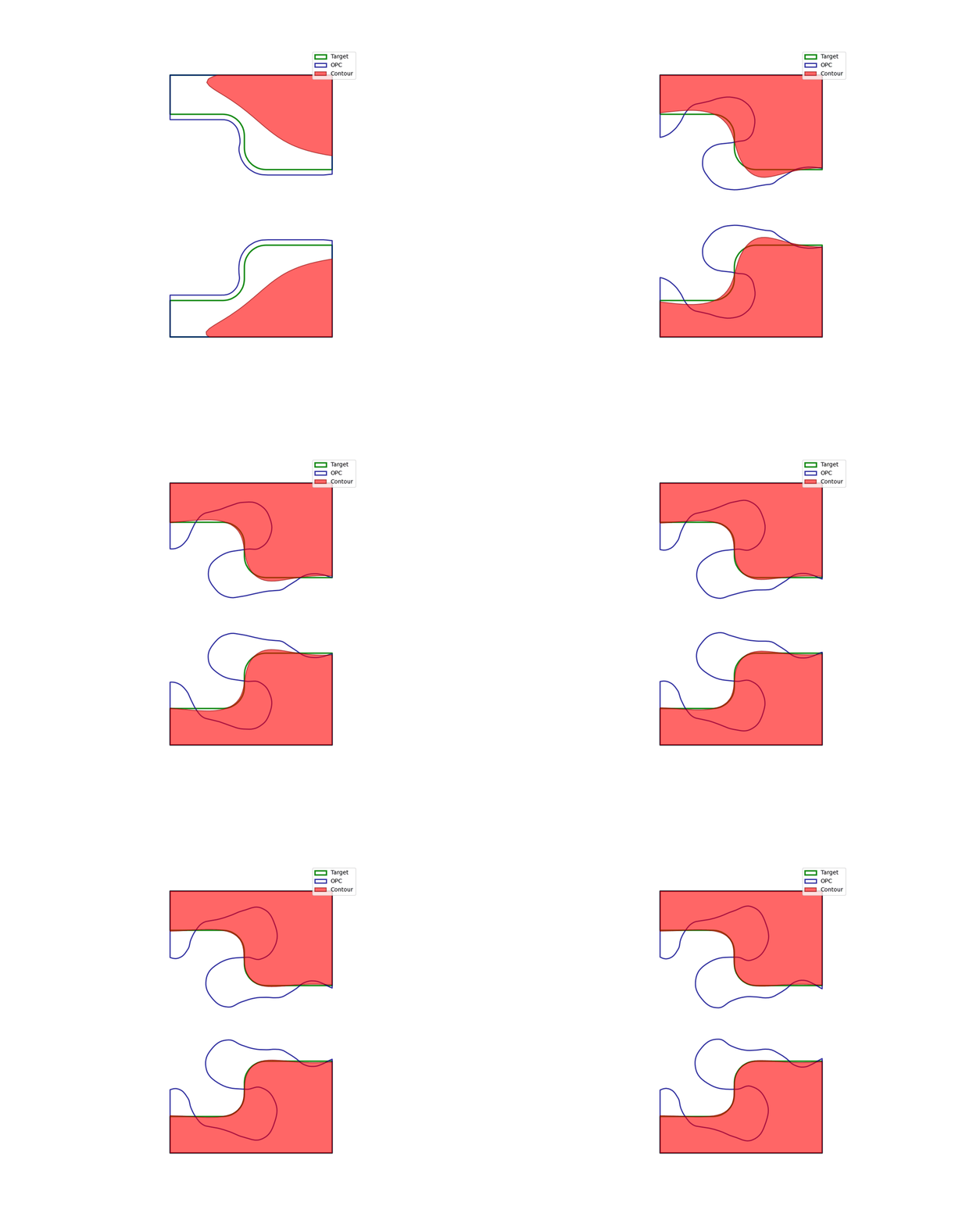
This decoupling enables workflow improvements that directly address curvilinear mask challenges. As shown in Figure 1, anchor points can be added, removed or repositioned as optimization progresses. Regions that converge quickly are de-fragmented to simplify mask data, while areas with persistent EPE challenges can be given additional sites or anchor points. Anchor clustering focuses optimization on tip regions, corners and densely curved arcs where process window robustness is most sensitive.
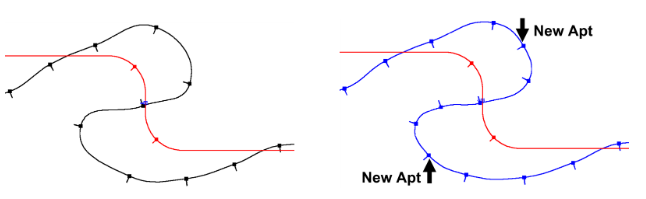
By separating fragmentation from EPE sampling, teams achieve superior process window results with manageable data complexity. Mask write times decrease because fragmentation is optimized for lithographic impact rather than geometric uniformity. When both sites and anchors adapt dynamically to optimization needs, convergence accelerates and teams can qualify new designs with greater confidence and speed.
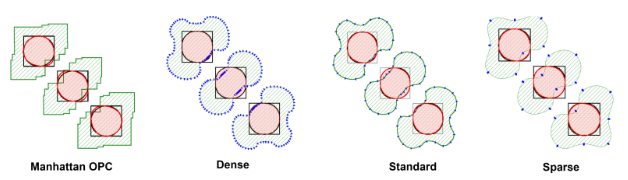
Measurable improvements in EPE control and manufacturability
Organizations that have adopted vector-based site and anchor decoupling report consistent improvements across multiple dimensions of mask performance. The most significant gains appear in EPE minimization for curvilinear regions where process window requirements exceed the capabilities of conventional fragmentation.
Comparative studies show that decoupled optimization achieves tighter EPE control with reduced mask complexity. This improvement is particularly pronounced in challenging geometries like sharp corners, line ends and tightly curved features where lithographic sensitivity is highest. By concentrating anchor density in critical regions while minimizing fragmentation elsewhere, teams achieve better process window robustness without the data bloat that typically accompanies finer fragmentation.
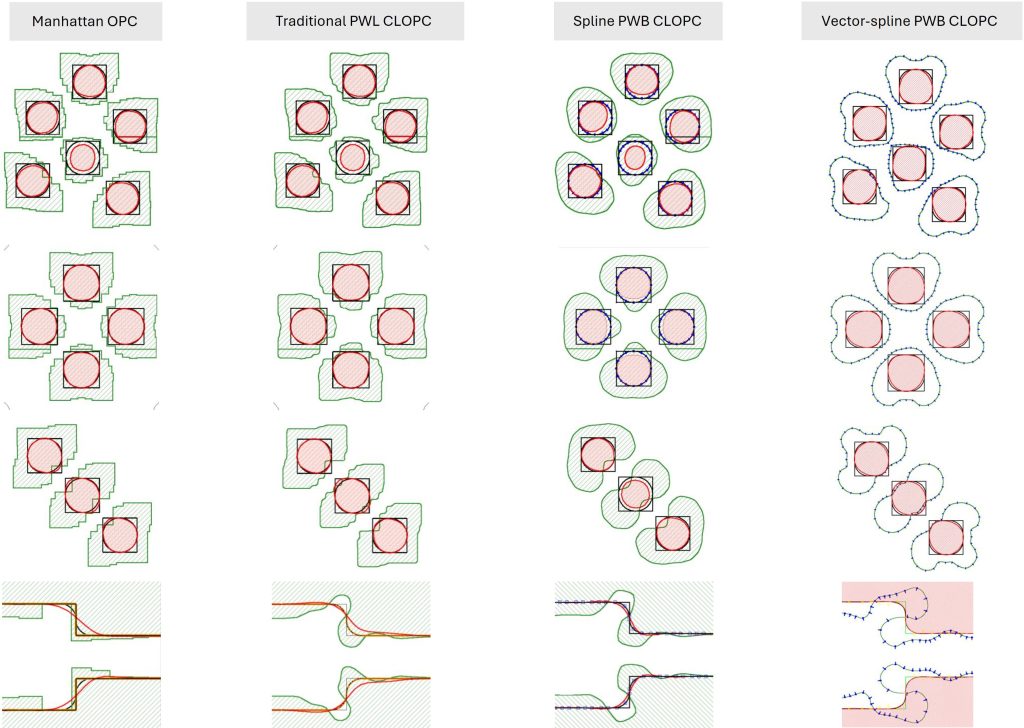
The manufacturability benefits are equally important. Reduced mask complexity translates directly to shorter mask write times, fewer potential defect sites and higher production yields. Recipe development cycles compress significantly when optimization adapts dynamically to design requirements. This agility is particularly valuable in high-mix foundry environments and new product introduction scenarios where time-to-market determines commercial success.
Process window analysis confirms that masks produced using decoupled optimization exhibit superior robustness across exposure, defocus and process drift variations. This expanded process margin provides additional insurance against yield loss and enables more aggressive design rules.
The Vector OPC process
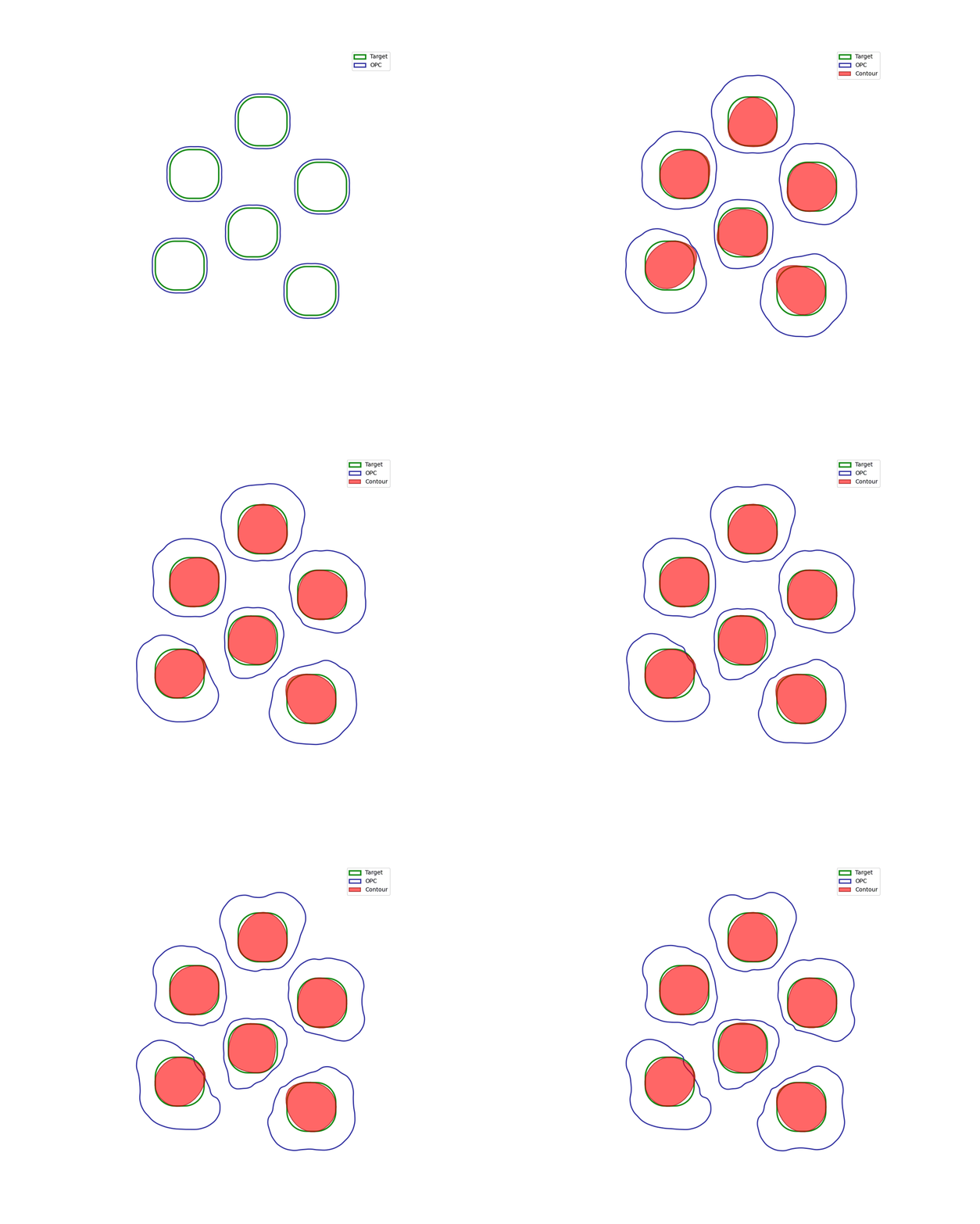
Making the transition to advanced curvilinear OPC
Curvilinear mask shapes have become essential for advanced semiconductor manufacturing, demanding OPC methodologies capable of handling increased geometric complexity and tighter process requirements. Vector-based site and anchor decoupling provides the independent, dynamic control that teams need to optimize these challenging designs effectively.
Organizations adopting this approach realize critical advantages. EPE control improves significantly for curvilinear features, particularly in lithographically sensitive regions where process window robustness determines yield. Mask complexity decreases as fragmentation concentrates where it delivers benefit rather than following rigid geometric rules. OPC recipe development accelerates because optimization adapts dynamically to design requirements.
The methodology scales naturally as designs become more complex and process demands intensify. By treating sites and anchors as independently optimized entities, teams can embrace curvilinear technology without the computational penalties and manufacturability compromises that plague traditional coupled approaches.
For mask design teams working at sub-5 nm nodes, the question isn’t whether to adopt more sophisticated OPC methodologies but when. As curvilinear features become ubiquitous and process windows continue to tighten, the limitations of coupled fragmentation will only become more constraining. Vector-based site and anchor decoupling offers a clear path forward, enabling teams to maintain EPE control, preserve manufacturability and support aggressive product introduction schedules even as geometric complexity increases.
Calibre nmOPC software incorporates this advanced vector-based site and anchor decoupling framework, providing mask designers with the tools needed to optimize curvilinear OPC effectively. The solution is part of the Siemens Xcelerator business platform of software, hardware and services.
Download our in-depth white paper, Optimizing curvilinear OPC: Vector-based site and anchor decoupling, to explore technical details and workflow examples. Discover how decoupled OPC can help you accelerate tapeout schedules, tighten EPE control and enhance manufacturability—even for your most challenging designs. If you have questions or want to discuss how Calibre nmOPC can support your process needs, contact us today to start the conversation.