The case for digitalizing heavy equipment manufacturing
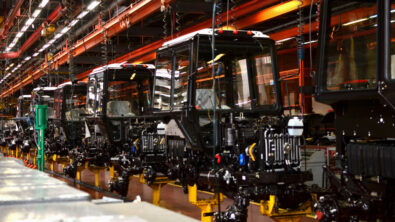
Manufacturing for the heavy equipment industry faces a number of variable challenges. For example, the products the industry deals in are highly customizable and diverse, each built for particular purposes and needing their own unique sets of manufacturing requirements. Additionally, success in the industry is deeply intertwined with demand for its products, which can fluctuate significantly due to multiple economic factors. Manufacturers may find themselves overproducing when demand is low, or underproducing when demand is high.
It is more imperative than ever that manufacturing processes in the industry remain flexible and adaptive to adjust to these changing conditions, especially as the complexity of heavy equipment products increases with the advent of advanced software and electronics. Every manufacturer’s path to achieving those goals will be different depending on their circumstances. Some may find modifying existing factories to be the optimal strategy, while others may look toward building entirely new factories for their purposes.
What is true for all manufacturers, however, is how digitalization can help heavy equipment manufacturers chart their path. Using simulation and analysis tools, manufacturers uncover the best path forward sooner rather than later, while leveraging the comprehensive digital twin to share data across the product lifecycle.
Find the best manufacturing strategy with simulation
Any major manufacturing decision, whether it involves refitting existing processes or building new ones, comes with its own costs and risks. Without sufficient knowledge of how a process will work after it is built, there is always the chance an error will be missed that will not be discovered until operation begins. Errors like that can be damaging and even potentially dangerous, especially when working with complex heavy equipment, forcing the manufacturer to spend additional time and money fixing the issue while also reducing customers’ trust.
Therefore, it is critical to gain insights into new manufacturing processes as early as possible before they are built physically, and that is exactly what simulation provides. With the right simulation tools, manufacturers can model their processes at any level of detail they want, from entire factories to individual assembly lines and machines. These simulations can cover numerous aspects involved in a process, including the movement of materials, robotic operations, potential collisions, and even human interactions.
Simulating these kinds of processes helps manufacturing engineers discover potential errors and fix them before they happen, but that is not the only benefit it brings. Manufacturers can also optimize their processes by analyzing their simulations with different key performance indicators (KPIs), such as cost, efficiency, material usage, energy usage, and many more. Running simulations this way enables companies to explore a variety what-if scenarios and best align their processes with their business goals, all without spending resources on numerous physical tests and refits.
This strategy can help heavy equipment manufacturers as they seek to design more modular, flexible processes by studying different factory setups and analyzing costs and other factors associated with fulfilling specific orders. With the help of such KPIs, manufacturers can position themselves better to adapt to changing market demands and conditions.
Integrate data across the product lifecycle
While simulation helps the design and development of manufacturing processes, digitalization also offers ways to bridge data silos between manufacturing and the products they make. Much of this can be possible thanks to the comprehensive digital twin, the virtual representation of a product and its processes across its entire lifecycle. The comprehensive digital twin enables new ways to manage a product’s lifecycle holistically by connecting real-time data between all stakeholders involved with the product.
Not only does this benefit the product itself, but it also benefits the manufacturing processes that build it. For example, if there is a change in, say, a tractor’s design, the manufacturing engineers can have immediate access to the design data and provide input on how the change would impact the product from a manufacturability standpoint. Additionally, the design data can help the manufacturing engineers better plan their processes.
Simulation and the comprehensive digital twin are just some of the technologies digitalization can provide heavy equipment manufacturers. By gaining insights into new processes sooner and integrating data across the product lifecycle, those manufacturers can be in a better position to accelerate innovation and bring new products to market faster, key traits for any industry seeking to become more adaptive.
Siemens Digital Industries Software helps organizations of all sizes digitally transform using software, hardware and services from the Siemens Xcelerator business platform. Siemens’ software and the comprehensive digital twin enable companies to optimize their design, engineering and manufacturing processes to turn today’s ideas into the sustainable products of the future. From chips to entire systems, from product to process, across all industries. Siemens Digital Industries Software – Accelerating transformation.