Flexible automation powered by AI podcast transcript

Humanoid robots bring humanlike flexibility while not being limited by human anatomy. Additionally, humanoids combine human compatibility with scalable, software-driven intelligence to unlock flexible automation that fits existing environments while enabling new levels of efficiency.

Empowering Shop Floor Workers with Industrial AI – Podcast Transcript

The promise of future technologies is always exciting yet the reality can sometimes fail to live up to the dream….

The intersection of data fabrics and agentic AI – Podcast Transcript

Connecting enterprise data is a necessary, yet challenging, step in the process of developing Industrial AI solutions to their fullest…

How Data Fabrics Contextualize AI Data – Podcast Transcript

Data is the core of a good AI solution and, while data is plentiful in enterprise and industrial settings, accessing…

Building Industrial AI for the shop floor – Podcast Transcript

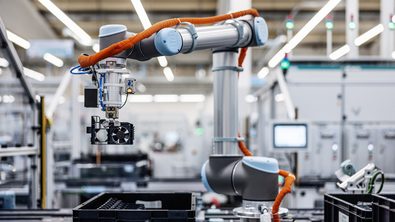
Robotics have been a staple in manufacturing for decades, allowing certain repetitive tasks to be automated yet, for as powerful…

Oil field at sun set.

Energy sectors’ digitalization is a must in an AI world – Transcript 

The energy industry is entering an inflection point of digitalization, data centers and artificial intelligence.

The Digital Twin powers Industrial AI and the future of Digital Enterprise

Moving Digital Twin from Pilot to Core Capability – Podcast Transcript

Mounting complexity, disruption and shifting customer demands are driving companies in many industries to seek faster and more efficient development…

The AI putting the “human” in humanoid

Due to advances in AI, sensors and computing power humanoids can perceive and adapt with a level of flexibility that closely mirrors human performance.

Automotive digital twin connecting simulation, AI, and engineering data to eliminate workflow bottlenecks and accelerate product development.

Simulation Is No Longer The Bottleneck — But Something Else Might Be

For a long time, simulation was clearly a bottleneck. Runs took hours or days, compute capacity was limited, and design…