How software-defined vehicles are changing the automotive industry

The cars and vehicles being manufactured today are nothing like the vehicles made just a few decades ago. Before, cars were largely mechanically centric products reliant on an internal combustion engine and fossil fuels. Now many are electrified and, no matter the model, rely on battery technology for power and contain a multitude of new features enabled by electronics and software. The age of software-defined vehicles is well underway, and the industry itself is changing with the vehicles it produces.
In an episode of The Industry Forward Podcast, Royston Jones, Global Head of Automotive and Transportation for Siemens Digital Industries Software, is joined by Ryan Martin, Senior Research Director at ABI Research with a focus on digital transformation. The two experts use the episode to explore this transition to software-defined vehicles, how it is affecting automotive manufacturing and supply chains, and what companies are doing to adapt for this new kind of vehicle.
The push toward software-defined vehicles
Put simply, software-defined vehicles are vehicles that rely on software to carry out key functions, with varying levels of complexity and integration. The concept is nothing new. Software has been in cars for many years now, starting with fairly straightforward systems such as infotainment.
What is different in recent years, however, is the complexity and scale of features that software is being used for in vehicles. Now cars are being equipped with sophisticated user interfaces, phone charging capabilities and automatic headlight adjustment just to name a few. Vehicle autonomy is also increasing, with features ranging from lane assist to self-parking and even self-driving functions. Furthermore, many of these features can be improved in real-time with over-the-air software updates, allowing companies to be more adaptive to consumer demands and responses. With every year, vehicles are becoming smarter and more connected.
There are multiple drivers behind this transition, but the one Ryan points to the most is safety. These features take many burdens off the driver, not only giving them a better driving experience, but also allowing them to dedicate more focus toward driving, while features such as lane assist also reduce the risk of accidents directly.
Changing requirements
Not only are software-defined vehicles themselves changing, but they are also transforming requirements throughout the industry.
At the ground level, consumer preferences are evolving. For example, as Royston points out, when consumers sought to purchase a car, they typically focused only on how it looked or the color, on top of making sure the vehicle properly functioned, of course. Now, however, there are more features that will influence consumers’ decisions. As more consumers expect these features, the more demand carmakers face to create vehicles that include them.
Naturally, these changes can impose difficulties on OEMs and their supply chains. According to Ryan, the average automobile consists of over 3,000 parts, and there are models out there where one vehicle is produced every minute or so. To maintain these levels of production, automotive manufacturers rely on complex global supply networks. New features, however, especially those enabled by software and electronics, demand that not only new suppliers, but new components, be added to these complex supply equations.
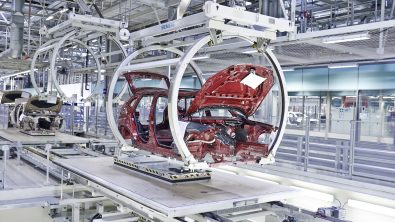
Additionally, there is the challenge of orienting manufacturing for these new vehicles. The industry has largely been producing the same kind of vehicles equipped with internal combustion engines for decades, resulting in factories and floor space that have largely remained unchanged. It takes a long time to build a factory, though, so Ryan posits how companies need to figure out how they can do more with what they already have.
The digitalization of production
While these challenges may seem difficult to overcome, they are not impossible to solve. Both Royston and Ryan stress in the episode how crucial integrating digital technology into production cycles will be to accelerate the development of software-defined vehicles.
Digital technology already has extensive use in automotive for purposes such as simulation and data analysis. Similar strategies can be applied to production, gaining information earlier in the process to have more time to optimize factory floor plans or find optimal supply chains. Companies are already putting this to work. Ryan states how some companies have managed to cut their production cycles in half thanks to digitalization.
Turns out, the solution to challenges presented by the transition to software-defined vehicles is not only leveraging software in vehicles themselves, but also in the production cycles that make them.
Learn more about how digital technology plays a role in the production of software-defined vehicles in future episodes of The Industry Forward Podcast.
Siemens Digital Industries Software helps organizations of all sizes digitally transform using software, hardware and services from the Siemens Xcelerator business platform. Siemens’ software and the comprehensive digital twin enable companies to optimize their design, engineering and manufacturing processes to turn today’s ideas into the sustainable products of the future. From chips to entire systems, from product to process, across all industries. Siemens Digital Industries Software – Accelerating transformation.