Industrial AI Success Built on Trust and Scale
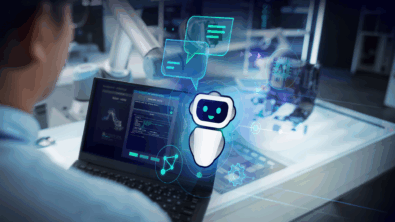
As artificial intelligence (AI) transforms industrial operations, companies are wrestling with how to build trust in Industrial AI systems while scaling them effectively across global operations. The path forward requires transparency, careful data stewardship, thoughtful implementation strategies, and a commitment to augmenting rather than replacing human expertise.
In a recent podcast, host Conor Peick is joined by guests Matthias Loskyll, Senior Director of AI and Robotics at Siemens Digital Industries and Samir Desai, Senior Director and Global Program Head for Data and AI at Siemens Digital Industries to explore the ways AI is being integrated with existing processes from design to manufacturing and beyond.
Check out the full podcast below or keep reading for a summary of the highlights from that conversation.
Transparency Fosters Trust in AI Systems
The conversation opens with a focus on trust. Desai describes how transparency is critical to cultivating trust in Industrial AI. Industrial companies adopting AI need clear visibility into how these systems are developed, what technologies power them, and how they align with regulatory requirements. This means openly sharing information about AI development processes, the underlying technology stack and how third-party solutions are vetted for compliance with cybersecurity, privacy, and other critical concerns.
Regulatory compliance represents a significant trust-building opportunity. Companies that can demonstrate their approach to meeting regulatory requirements, such as those outlined in the EU’s Cyber Resilience Act, give customers confidence that AI implementations meet the highest standards for security and reliability.
Partner technologies also require careful management. Whether using open-source frameworks, collaborating with technology partners or leveraging standard large language models (LLMs), companies must maintain rigorous oversight to ensure these components meet the same accountability standards applied to internally developed solutions.
The handling of customer data also fundamentally shapes trust in AI systems. As Desai explains, customer data represents proprietary knowledge and competitive advantage and must be handled with extreme care. “Customers have their data, which is proprietary to them. It’s trade IP for them. Number one, we never use customer data to train our models or to bring it within Siemens unless there’s an explicit agreement and a permission with the customer.”
Stepwise Introduction Accelerates AI Learning and Familiarity
The method of AI adoption also affects the willingness of users to engage with new AI capabilities. Rather than wholesale replacement of existing processes and tools, a stepwise introduction of AI capabilities into familiar environments proves more effective. This approach recognizes that trust develops gradually as users gain experience with AI systems.
Engineers and operators need to understand what’s happening behind the scenes. As Loskyll points out, “AI being a black box model in many cases is a challenge for engineers by definition.” The solution is embedding AI capabilities as assistants within existing tools that professionals have used for years or even decades. Users already understand these tools and increasingly use AI assistants like ChatGPT in their personal lives, making the transition less daunting.
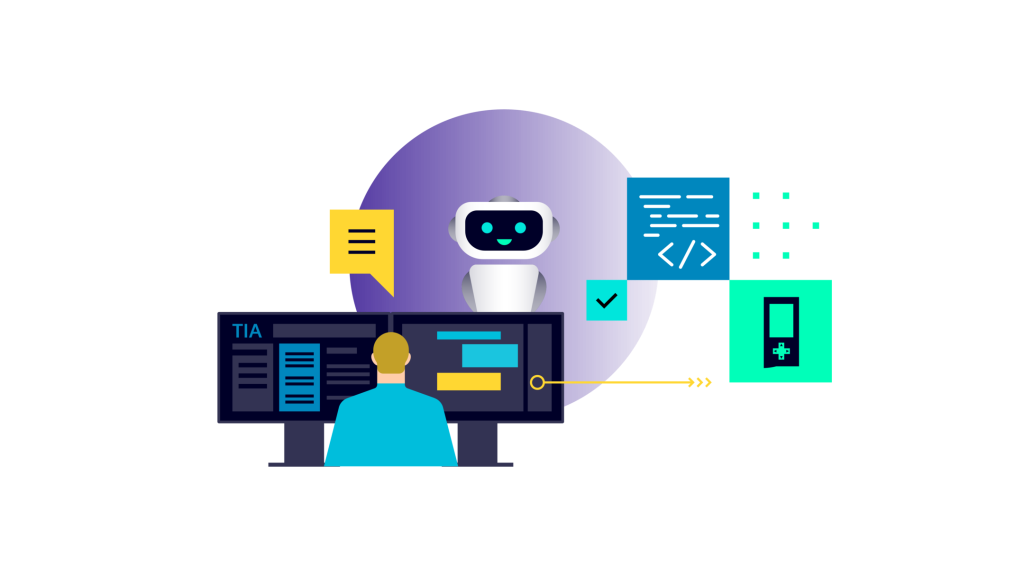
Maintaining human-in-the-loop workflows is essential. AI systems should ask permission before taking action and present results for review before committing changes. “The tool then asks the user, ‘I can do this for you. Would you like me to do this?'” Desai explains. “After they do it, they won’t actually commit all the changes. They’ll say, ‘Here’s what I’ve done. This is what it looks like now that I have done what you asked me to. Would you like me to go ahead and save this change that I have made?'”
Breaking Through the Scaling Barrier
The conversation also explored the challenge of scaling in AI adoption. Recent analyst reports indicate that a large majority of AI projects fail to progress beyond the pilot stage. While Industrial AI deployments often start small, companies are not interested in large investments to solve isolated problems. Rather, they are seeking to deploy solutions across global facilities to truly optimize production, accelerate product development and drive value.
Loskyll explained the two primary obstacles prevent successful scaling. First, many companies have yet to develop solid data foundations. Data often is stored in disconnected systems and repositories that prevent true orchestration and contextualization across the enterprise. Second, many organizations fall into the trap of reinventing the wheel, building new software stacks and even developing AI agents for specific hardware.
The solution, as Loskyll describes, lies in establishing common infrastructure—a standardized software layer that enables Industrial AI models to run close to machines where needed. For many industrial applications, AI must be embedded in real-time environments on the shop floor rather than running in the cloud. This infrastructure makes solutions portable across facilities and hardware, dramatically reducing the effort required to scale beyond initial pilots.
Unlocking Industrial AI Potential through Transparency, Scale and Collaboration
Building trust in Industrial AI requires a multifaceted approach: transparency in development and deployment, rigorous protection of customer data, stepwise introduction of capabilities, standardized infrastructure for scaling, and a commitment to augmenting rather than replacing human expertise.
Companies that master these elements will successfully navigate the AI transformation, unlocking unprecedented optimization and value across their global operations. With this vision, the future of Industrial AI centers on empowering people with intelligent tools that make them more productive, innovative, and effective than ever before.
Siemens Digital Industries Software helps organizations of all sizes digitally transform using software, hardware and services from the Siemens Xcelerator business platform. Siemens’ software and the comprehensive digital twin enable companies to optimize their design, engineering and manufacturing processes to turn today’s ideas into the sustainable products of the future. From chips to entire systems, from product to process, across all industries. Siemens Digital Industries Software – Accelerating transformation.