Bob Ransijn on System Simulation, Digital Twins & AI: Insights from the Engineered Mind Podcast

In an increasingly complex engineering landscape, the ability to accurately predict and optimize system behavior is paramount. This critical need was the central theme of a recent insightful discussion on the “Engineered Mind by Jousef Murad” podcast, featuring Bob Ransijn, a seasoned System Simulation Specialist and Presales Manager at Siemens Digital Industries Software. Ransijn’s deep dive into the world of system simulation offers a compelling perspective on its evolution, current capabilities, and future trajectory.
Defining System Simulation: Beyond the Basics
Ransijn clarifies that system simulation, particularly “lumped parameter system simulation,” involves representing physical properties as discrete elements—such as a mass, spring, damper, or inductor. This approach allows for the rapid solution of ordinary differential equations, often in real-time. “We take all the different physics—mechanical, electrical, fluids—and create a comprehensive model of a whole system,” Ransijn explains, emphasizing the multi-physics nature of the discipline. He further demystifies concepts like 0D/1D modeling, noting that 0D models lack spatial dimensions, while 1D models add a single spatial dimension, often used to break down complex systems into manageable, interconnected blocks.
A Historical Journey: From Manhattan Project to Modern Accessibility
The origins of computer simulation, as Ransijn points out, trace back to the 1940s with the Manhattan Project, where it was used to simulate nuclear detonation. However, it wasn’t until 20-30 years ago, with the advent of personal computers, that behavioral simulations became more widespread. Early tools faced significant limitations in computer power, solver technologies, and user-friendliness, often requiring extensive coding by specialists.
A pivotal shift occurred in the early 2000s when the ability to combine different physics domains—electrical, mechanical, and fluid—became available. Today, Ransijn highlights the “democratization” of simulation, where tools are designed for ease of use, making them accessible to a broader range of engineers. He proudly notes that Siemens’ Simcenter Amesim solver, for instance, now runs 50% faster than it did just a few years ago, allowing engineers to focus more on model development and analysis rather than solver intricacies.
The Digital Thread, Digital Twin, and the Power of AI
The conversation naturally progresses to the intertwined concepts of the Digital Thread and Digital Twin. Ransijn defines the Digital Thread as the seamless connection of data throughout the engineering workflow, ensuring a “single source of truth.” This enables a “shift left” in the product design cycle, allowing simulation to commence as soon as product ideas and requirements are formed, even before physical prototypes exist.
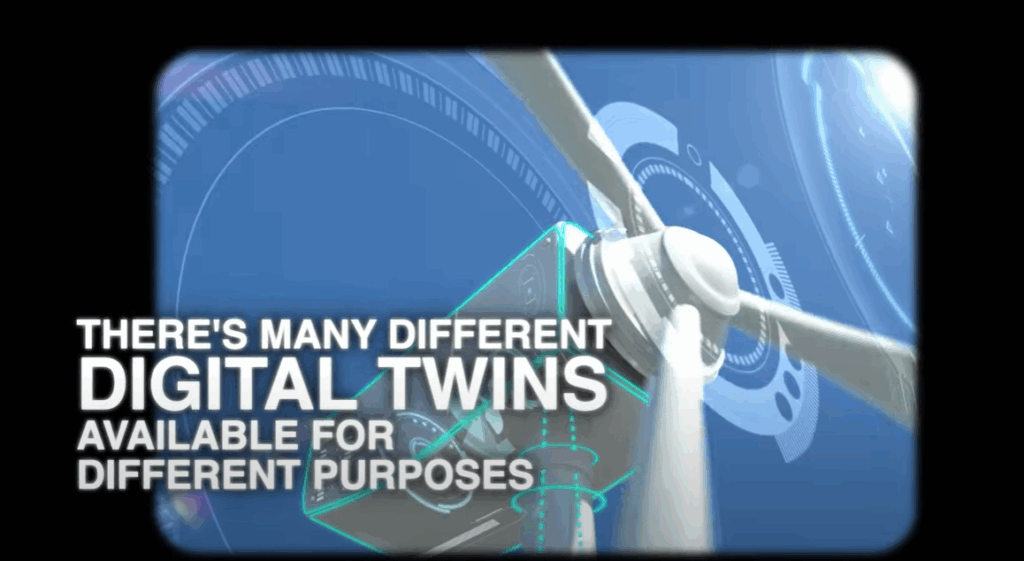
The Digital Twin, Ransijn clarifies, is not a singular entity but a versatile concept. “A digital twin is a concept… There’s many different digital twins available for different purposes,” he states, ranging from a simple CAD environment to complex models running alongside physical machines.
A significant portion of the discussion is dedicated to the transformative impact of Artificial Intelligence (AI) and Machine Learning (ML) on system simulation. Ransijn explains how AI is used to create “reduced order models” (ROMs). These ROMs are incredibly fast and accurate, capable of capturing complex dynamics without the need for detailed physical models. “You lose all the physical details in there, but you get the right outputs from them,” he explains. These AI-driven ROMs can be deployed in embedded control systems or as “executable digital twins” that run in real-time alongside operational machinery. This capability facilitates advanced applications like predictive maintenance, allowing the system to predict unmeasured values or warn of potential issues by comparing simulated data with actual sensor readings.
Siemens’ Comprehensive Approach and Future Outlook
Siemens is at the forefront of this evolution, offering a robust suite of tools within its Simcenter portfolio. Ransijn details key offerings such as:
- Simcenter Amesim: A versatile tool for multi-physics system performance analysis.
- Simcenter Flomaster: Dedicated to thermal fluid networks.
- Simcenter Reduced Order Modeling: For creating AI-driven ROMs.
- System Architect & Simcenter Studio: Tools for developing and optimizing system architectures.
- System Analyst: Designed to enable non-experts to use complex models for trade-off studies and design optimization, further promoting the democratization of simulation.
Looking to the future, Ransijn envisions continued advancements in user-friendliness, automation, and capability. This includes leveraging GPUs for faster computations, developing automated apps that generate models from geometry, and integrating AI into documentation to guide users. He also emphasizes the ongoing effort to fully integrate the digital thread, ensuring seamless data flow and co-simulation between different tools and vendors, notably through the Functional Mock-up Interface (FMI) standard.
Simulation: No Longer Optional
In his concluding remarks, Bob Ransijn delivers a powerful message: “Simulation and also specifically system simulation, it’s no longer optional.” For companies aiming to develop products efficiently and remain competitive, adopting simulation is a necessity. It provides the means to analyze product performance early in the design cycle, optimize designs, and accelerate time to market.
Ransijn’s insights underscore Siemens’ commitment to pushing the boundaries of simulation technology, making it more powerful, accessible, and integral to the engineering process. For anyone involved in product development, design, or digital transformation, understanding these advancements is crucial.
To learn more about the fascinating world of system simulation and hear Bob Ransijn’s full discussion, listen to the “Engineered Mind by Jousef Murad” podcast on Youtube or Spotify!