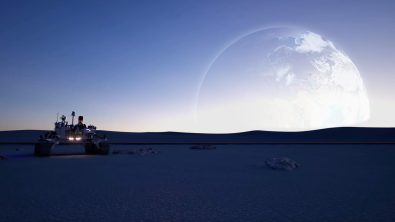
Spacecraft thermal simulation – Where would you park your best spacecraft?
What is it about the moon that has inspired humanity for centuries? Whenever I am in an unfamiliar place, I take comfort in looking up at the moon. I take comfort in knowing that wherever we are and whoever we are, we share the same moon. As I gaze up, I wonder, what must it be like up there? One quote captures this sentiment, “Exploration is wired into our brains. If we can see the horizon, we want to know what’s beyond.” – Buzz Aldrin, Apollo 11 astronaut.
The moon is in the news
The Moon is kind of having a moment right now, and for the first time in 50 years, we traveled to the moon and beyond. Why go there? As Buzz Aldrin said, it’s wired in us, but this time, the mission isn’t the same: it’s not just to explore but to establish a human presence, and this is a much bigger challenge.
NASA’s next spacecraft mission
NASA’s Artemis 2 took off last week, as part the wider Artemis mission to establish a permanent human presence on the moon’s south pole. The location is primarily because of the potential presence of water, which is fundamental for long-term human habitation. But such a mission poses incredible risks, notably the large temperature extremes, larger than those previously experienced on previous missions to the moon’s equator.
The moon’s thermal problem
These large temperature extremes can be incredibly detrimental to spacecraft and habitations, as it takes a significant expenditure of energy to ensure they have adequate power during long lunar nights and no solar power. It is, therefore, critical to predict, simulate, and design structures to withstand such an environment. Fortunately, Simcenter can help.
The thermal simulation problem
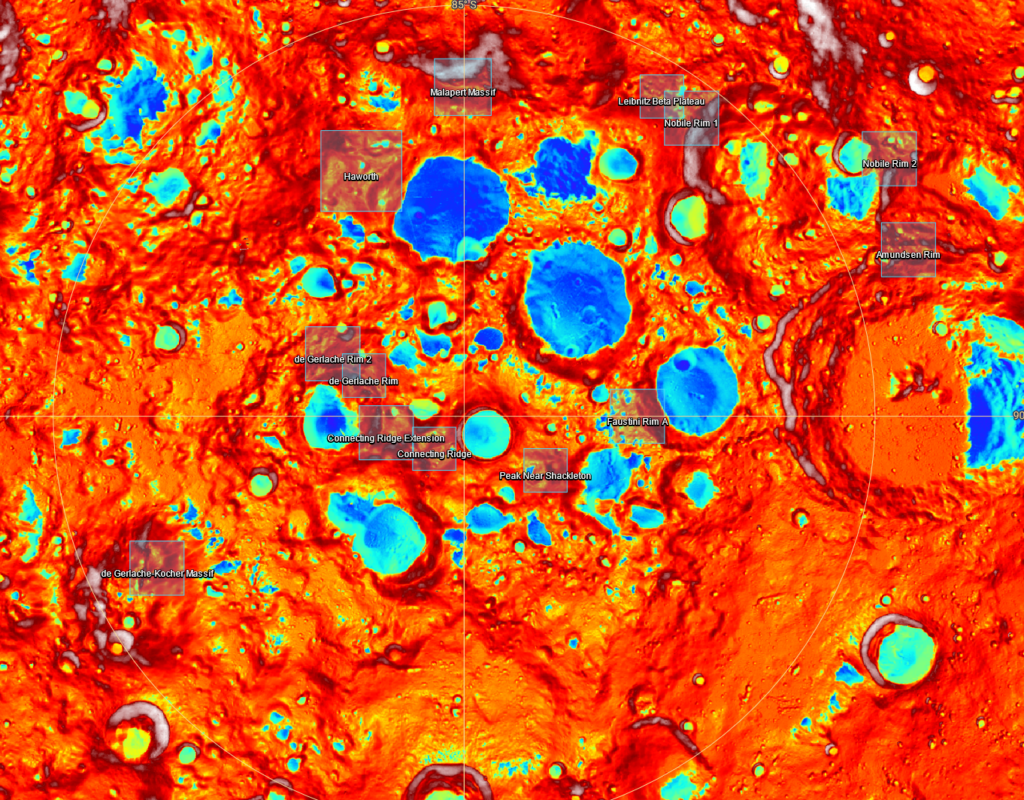
Using the capabilities of Simcenter 3D Space Systems Thermal simulation, as shown in this video, our engineers were able to simulate a thermal map of the moon’s surface using publicly available data from NASA’s Lunar Reconnaissance Orbiter (LRO) mission, accounting for local terrain and subsurface heating, and the thermal gradient of the lunar day at the south pole.
Thermal simulation helps you find the perfect place to park your spacecraft
To capture the full lunar day for such a large surface, we used GPU processing in Simcenter 3D Space Systems Thermal and were able to subdivide the surface to ensure a refined mesh in the area of interest while also using progressively larger element sizes further away to reduce overall count. By doing so they were able to simulate areas of illumination of the lunar surface over time as well as compute areas of continuous darkness and use this thermal map to predict the solar power available or lack thereof for any spacecraft.
Thermal simulation of the environment at the lunar south pole is only a small part of the challenges required to get back to the moon for NASA, but it is a necessary step to continue our journey to the red planet, a trip we are also simulating. So when you look up to the Moon, not only will you not be alone, but in a few year’s time, there might be someone looking down at you!
Related content:
Blog – How to cool a spacecraft with heat pipes: co-simulate with Simcenter 3D Thermal and Simcenter Amesim
Webinar – Space systems performance engineering: launch it before you build it
Webinar – Spacecraft thermal control