From optimization to AI: The evolution of intelligent PCB analysis

PCB designers face a difficult reality: every generation of electronics demands more performance, tighter margins, and shorter development schedules. High-speed interfaces continue to push signal integrity and power integrity challenges to new levels, while engineering teams are expected to deliver products faster than ever before.
The traditional approach to design validation relies heavily on expert knowledge, manual simulation set up, and repeated design iterations. While these methods have served the industry well for decades, they become increasingly difficult to scale as system complexity grows. Engineers can spend valuable time configuring simulations, evaluating countless design variables, and manually interpreting large volumes of results before identifying the root cause of a problem.
The combination of optimization, automation, and AI offers a path toward faster PCB analysis, improved consistency, and more informed design decisions. Rather than replacing engineering expertise, these technologies help engineers focus on solving problems by reducing the overhead associated with repetitive tasks and complex data interpretation.
Many of these capabilities already exist today within HyperLynx™, where PCB optimization and automation have long been part of the engineering workflow, and emerging AI technologies are beginning to further enhance productivity.
How HyperLynx transforms PCB analysis through optimization, automation, and AI
One of the most powerful ways to improve engineering outcomes is to systematically explore design tradeoffs rather than relying solely on manual iteration.
Optimization: Systematic and data-driven PCB analysis
HyperLynx provides several optimization technologies that allow engineers to evaluate large design spaces efficiently. For example, swept parameter PCB analysis enables designers to study how variables such as trace width, spacing, and stackup characteristics affect signal performance. Rather than guessing which design change may improve results, engineers can quantify the impact of each parameter and identify optimal configurations.

Figure 1. Rising edge waveform results from swept parameter PCB analysis.
Power delivery networks benefit from a similar approach through the HyperLynx PDN Decoupling Optimizer. This technology can automatically evaluate numerous capacitor strategies and identify solutions that satisfy impedance requirements while reducing component count, cost, and board area use.
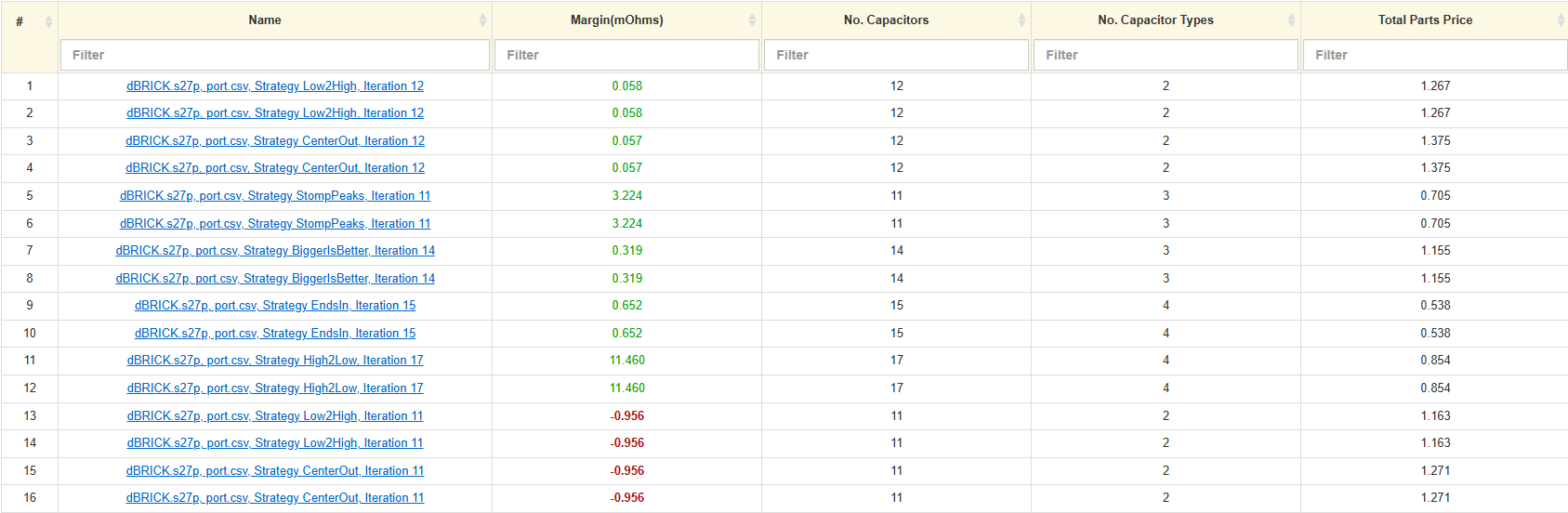
Figure 2. Available strategies from PDN Decoupling Optimizer.
For even more complex problems, HyperLynx Design Space Exploration (HL DSE) allows multiple variables to be evaluated simultaneously. Engineers can optimize factors such as via geometry, pad size, and anti-pad dimensions while balancing competing objectives, such as impedance, insertion loss, and return loss. What would otherwise require thousands of simulation combinations can be narrowed down to optimal design regions, increasing efficiency.
Optimization provides engineers with deeper insight into their designs and helps them arrive at better decisions with greater confidence.
Automation: Scaling engineering expertise
As designs become larger and more complex, generating better answers is only part of the challenge. The decisions based on those answers must also be applied consistently and efficiently across the entire design process. HyperLynx automation capabilities help engineers scale their workflows while maintaining accuracy and repeatability.
A great example is the SerDes Compliance Wizard. High-speed channel validation often requires numerous set up steps, protocol definitions, model assignments, and simulation configurations. The wizard automates much of this process through a guided workflow, helping engineers perform compliance PCB analysis faster while ensuring industry best practices are followed.

Figure 3. HTML results generated from SerDes Compliance Wizard showing eye height and width metrics.
For organizations looking to further streamline validation processes, HyperLynx also supports Python-based automation. Engineers can create repeatable workflows that execute simulations, perform parameter studies, collect results, and generate reports automatically.
Automation not only saves time but also improves consistency across projects by reducing the risk of human error and ensuring established methodologies are applied uniformly.
AI: Transforming data into insight
Modern simulation workflows generate enormous amounts of data, including eye diagrams, insertion loss plots, return loss measurements, and compliance metrics. Extracting meaningful insight from this information often requires significant expertise and careful PCB analysis. Emerging AI capabilities within HyperLynx are helping simplify this process.
Through Copilot functionality, engineers can interact with the tool using natural language to quickly access product knowledge, workflow guidance, and setup assistance. Instead of searching through documentation or navigating complex menus, users can ask questions directly within the design environment.
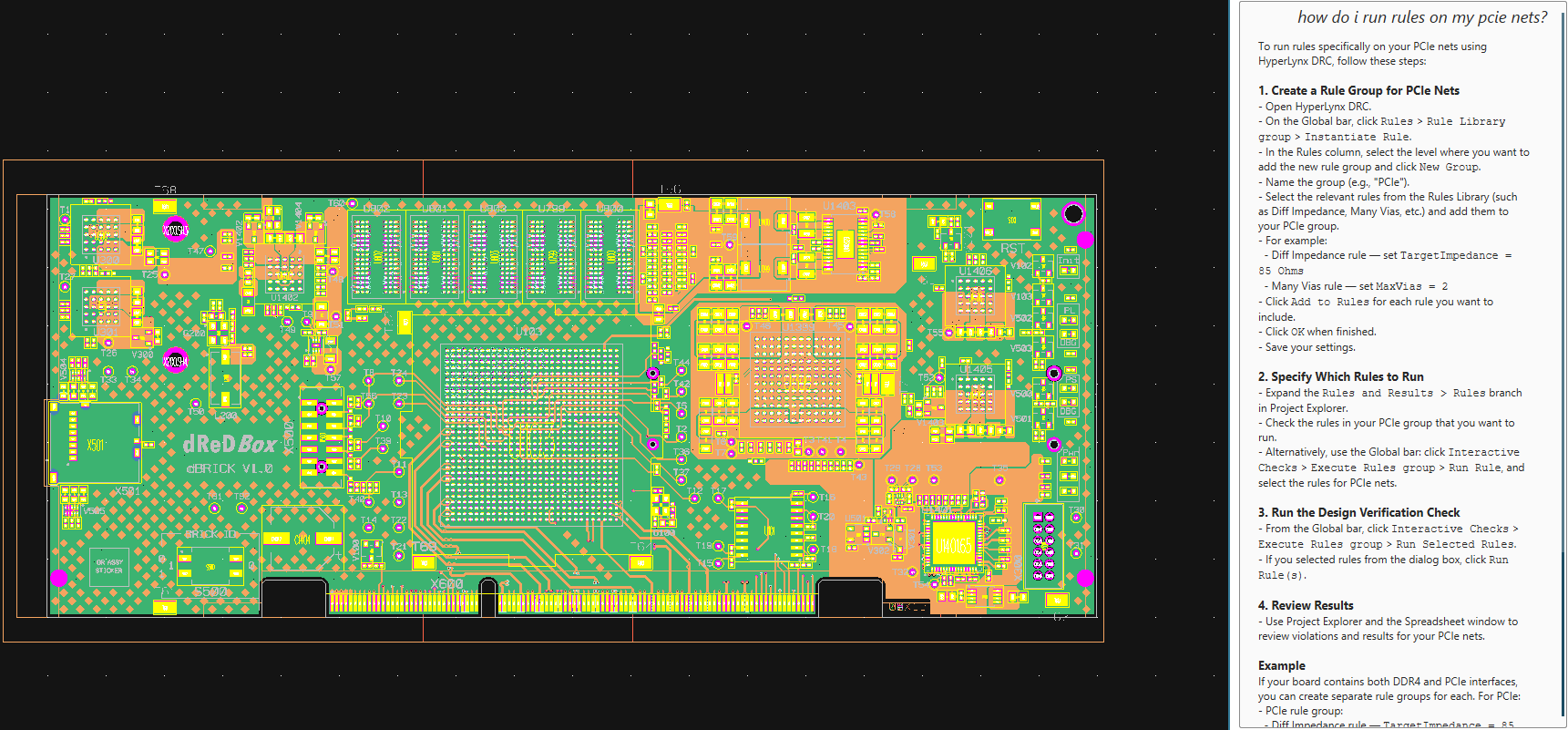
Figure 12. Copilot being used in HyperLynx DRC to run rules checks
Beyond user assistance, AI is increasingly being used to aid result interpretation. By analyzing simulation outputs, AI can help identify problem areas, highlight performance risks, and surface potential root causes that warrant further investigation. This allows engineers to spend less time searching through reports and more time evaluating potential solutions.
The goal is not to replace engineering judgment but to make expert PCB analysis more accessible and efficient.
The future of intelligent engineering starts today
Together, optimization, automation, and AI form a natural progression that helps engineers navigate growing design complexity while accelerating product development.
The conversation around AI often focuses on what might be possible in the future. However, intelligent engineering workflows are already delivering value today through optimization and automation technologies that help designers make better decisions, execute analyses more efficiently, and gain deeper insight into system performance. As AI capabilities continue to mature and integrate with existing workflows, engineering teams will gain even more powerful tools for managing complexity and accelerating innovation.
The question is no longer whether intelligent systems will become part of PCB design. The question is how quickly organizations can leverage them to gain a competitive advantage.
If you’re interested in learning how HyperLynx can help transform your signal integrity and power integrity workflows through optimization, automation, and AI-driven PCB analysis, explore the latest HyperLynx capabilities and see how the evolution of intelligent engineering can benefit your next design.
If you’re interested in learning more about intelligent automation in HyperLynx, there is a whitepaper that goes in-depth on all the topics covered in this blog. You can find the whitepaper here on the Siemens website, https://resources.sw.siemens.com/en-US/white-paper-the-evolution-of-intelligent-systems-from-optimization-to-automation-to-ai/.