Redefining Adaptability: Tessent Vector Callbacks for Superior Semiconductor Test Customization
In the rapidly evolving field of semiconductor testing, the ability to adapt and optimize test strategies is crucial for achieving better device quality. While automated test pattern generation is essential for coverage and efficiency, subtle design nuances and specific project needs may require customized approaches. Tessent’s Vector Callback technology gives engineers real-time, programmable control to modify test pattern vectors based on actual design conditions. This ensures that each test sequence targets the exact needs of your design, closing the gap between automated processes and detailed, design-level test goals.
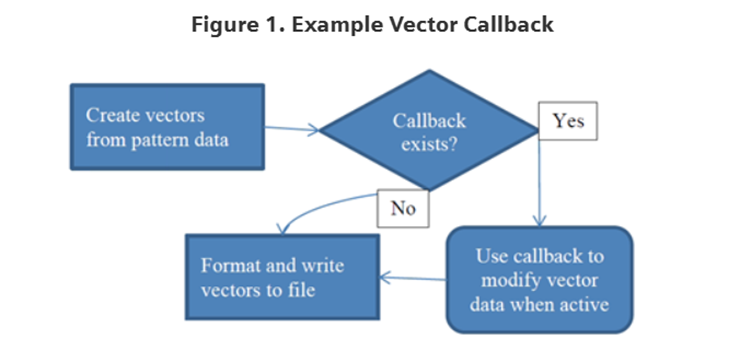
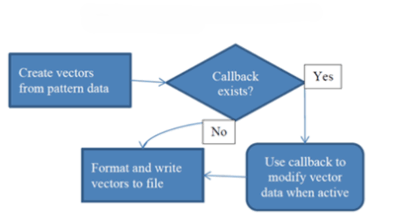
Tessent Vector Callbacks offer flexibility to address customer-specific requirements in customized semiconductor designs. By letting you inject lightweight, programmable logic through Tcl procedures that tailor test patterns dynamically, asserting control signals or skipping unnecessary cycles, this enhances pattern quality and fault coverage, focusing test effort right where it matters most.
What truly sets Vector Callbacks apart is their precise control at the vector level. Each cycle can be adjusted in real time to support specific objectives like custom tester protocols. specialized fault isolation, or advanced debugging. This flexible approach integrates seamlessly with Tessent ATPG flows and scales to any chip complexity.
In practice, callbacks are used to align control signals with unique test conditions, add stress cycles for reliability, or capture subtle defect signatures. When requirements shift, callbacks make it easy to refine test strategies without rebuilding entire patterns.
By offering this level of flexibility and insight, Tessent Vector Callbacks make semiconductor test strategies both robust and highly adaptable, helping teams deliver high-quality devices faster and with greater confidence.
For a practical example of using a vector callback to modify the pattern’s vector set, please refer to the Siemens support knowledge base article: An example of using a vector callback to modify the patterns vector set.