Solido Layout Analyzer: AI-powered post-layout analysis
“We found a layout issue.” The sentence that no chip designer wants to hear.
Late-stage design performance degradation caused by parasitics and layout effects results in weeks of debug time, ECOs, and a lot of very stressful conversations that can potentially affect production cycles or force a release of the design with suboptimal performance results due to time constraints.
Post-layout analysis and layout sign-off shouldn’t be the bottleneck of the design cycle. Designers need a powerful way to uncover the effect of parasitics and layout in the design and identify those rare and hard layout issues that affect performance. And it was from this starting point that we built Solido Layout Analyzer.
Find out everything you need to know in the video below or keep reading for an in-depth look at the tool: why we created it, what it does, and what our users are saying.
The post-layout analysis gap that is costing your production cycle weeks of delay
Parasitic elements and effects grow significantly with every new generation of ICs due to the increase in the number of transistors. In addition, at advanced nodes, the placement and routing of the layout have a huge effect on the device parameters of the transistors, which directly affect circuit performance.
The process to debug, analyze, and fix these issues is hectic and complex. It requires deep circuit expertise, several trial-and-error iterations, multiple simulations to identify the major problems, and back and forth implementation trials between the designer and layout engineer, resulting in days to several weeks of debug time. In some cases, designers can end up not finding the issue at all within the design cycle.
Traditional layout analysis tools are very limited in what they offer. They may help analyze the extracted DSPF file and visualize it, but they do not connect the extracted layout to the testbench or show how layout effects influence device parameters and circuit performance.
What makes Solido Layout Analyzer different: connecting layout to circuit performance
Launched at the Design Automation Conference (DAC) 2026, Solido Layout Analyzer is an AI-powered, measurement-aware solution for visualizing, exploring, and analyzing parasitic and layout-dependent effects in post-layout designs. It’s part of Solido Design Environment and gives teams something they haven’t had before: a direct connection between parasitics and layout-dependent effects and their design performance specs.
This is what we mean by measurement-aware. Rather than simply showing engineers what is present in the extracted netlist, including parasitics and coupling, Solido Layout Analyzer connects these effects to the testbench and design performance specifications.
Using a simulation-in-the-loop approach, Solido Layout Analyzer identifies which parts of the layout have the greatest impact on circuit outputs.
Four flows that cover the full post-layout picture
Solido Layout Analyzer is organized around four main flows that together take teams from initial exploration through root cause identification and experimental validation.
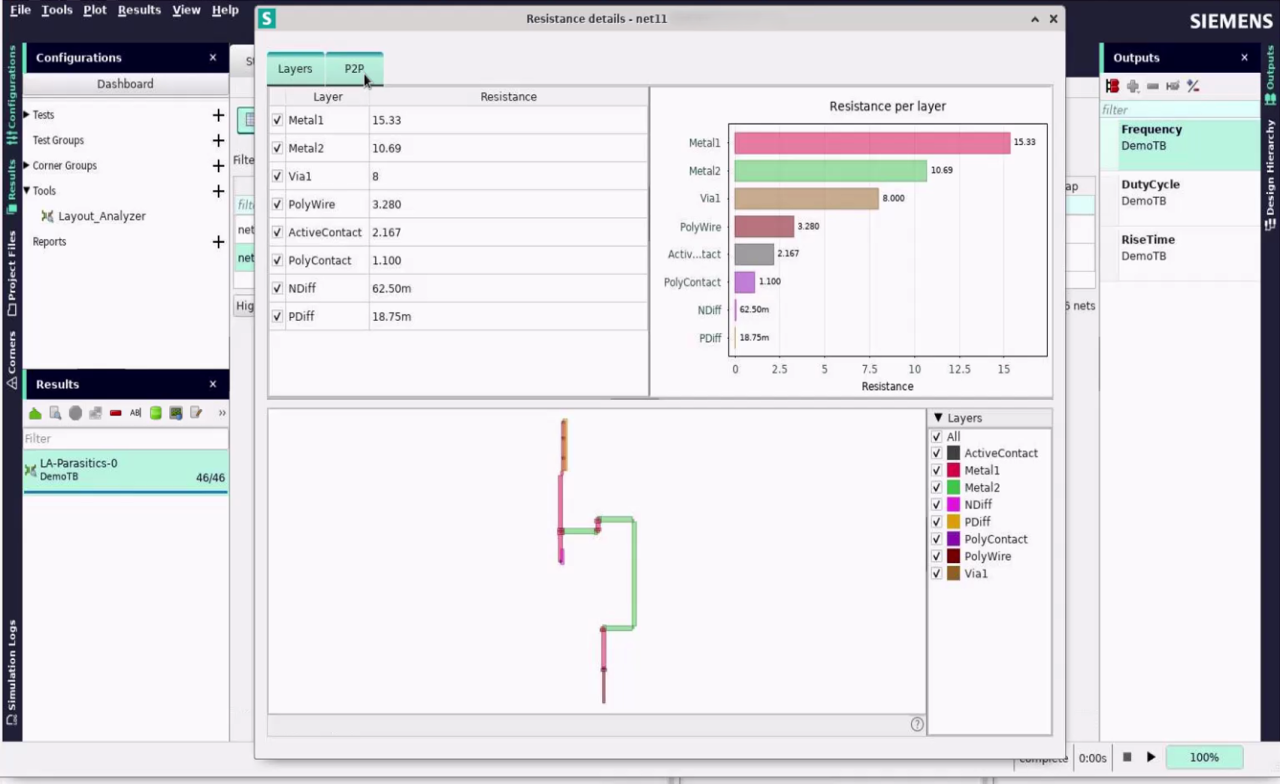
1. Explore Parasitics
This flow gives you a deep understanding of the parasitics in your design, by analyzing and visualizing the DSPF file in interactive and easy-to-read formats. Even for very large DSPF files, it is designed to quickly identify any parasitic outliers and nets that might need to be investigated further through the dynamic flows if you couldn’t find the issue in the parasitics.
2. Explore Layout-dependent Effects (LDE)
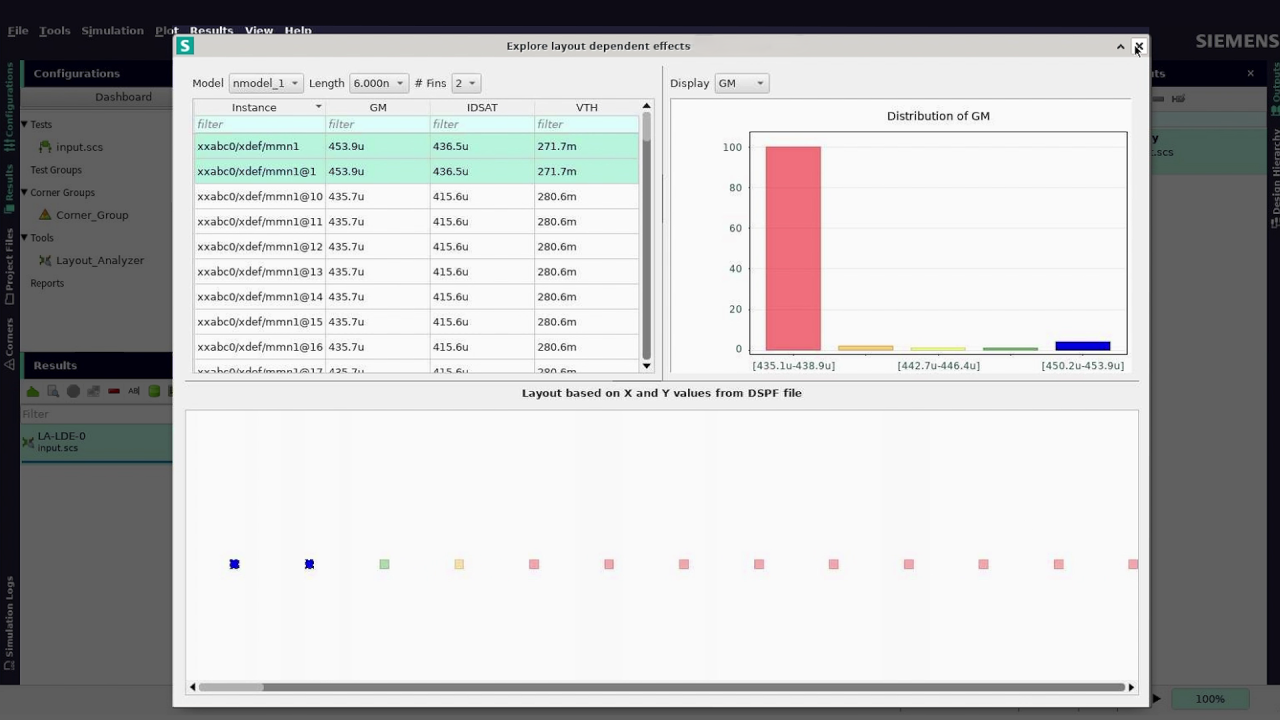
The Explore Layout-dependent Effects flow provides the ability to explore the effects of the placement and routing of the layout on device parameters. On schematic, all devices of the same model type with the same length and width will have the same electrical characteristics. But on layout, the electric characteristics may vary due to the impact of neighboring devices. The LDE flow shows this variation, which is very important for designs in advanced process nodes.
3. Impacts on Outputs
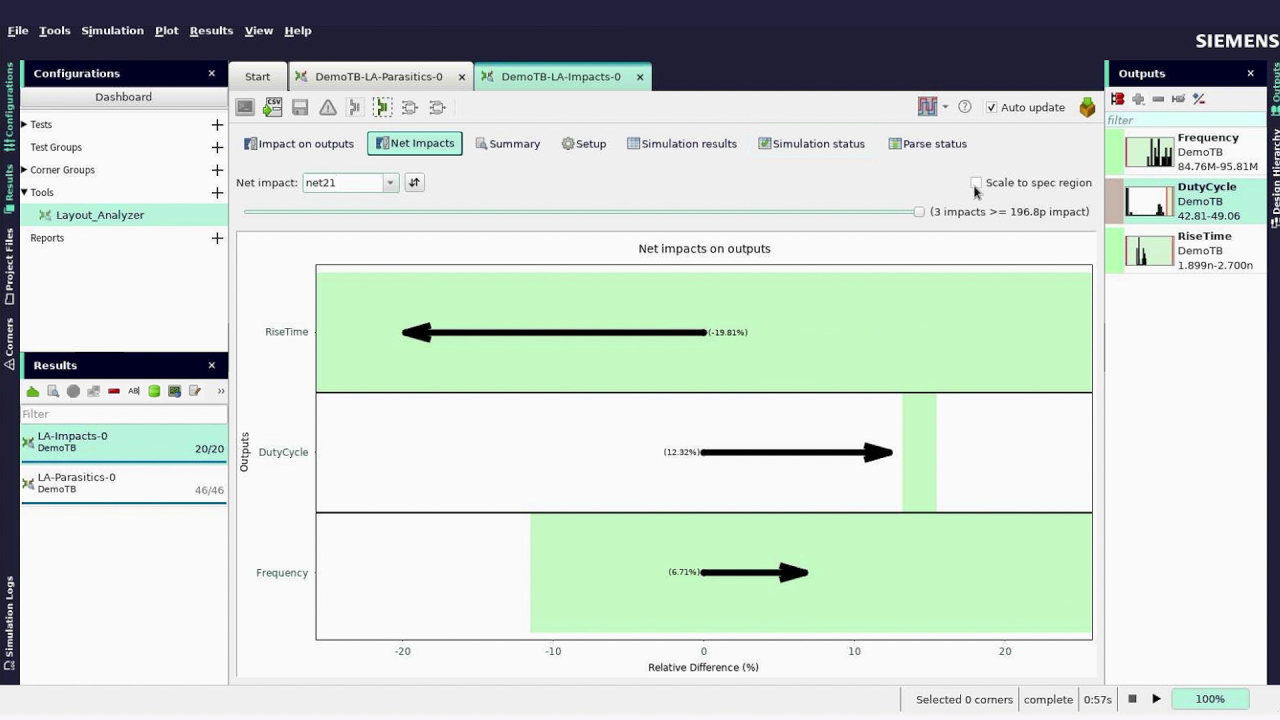
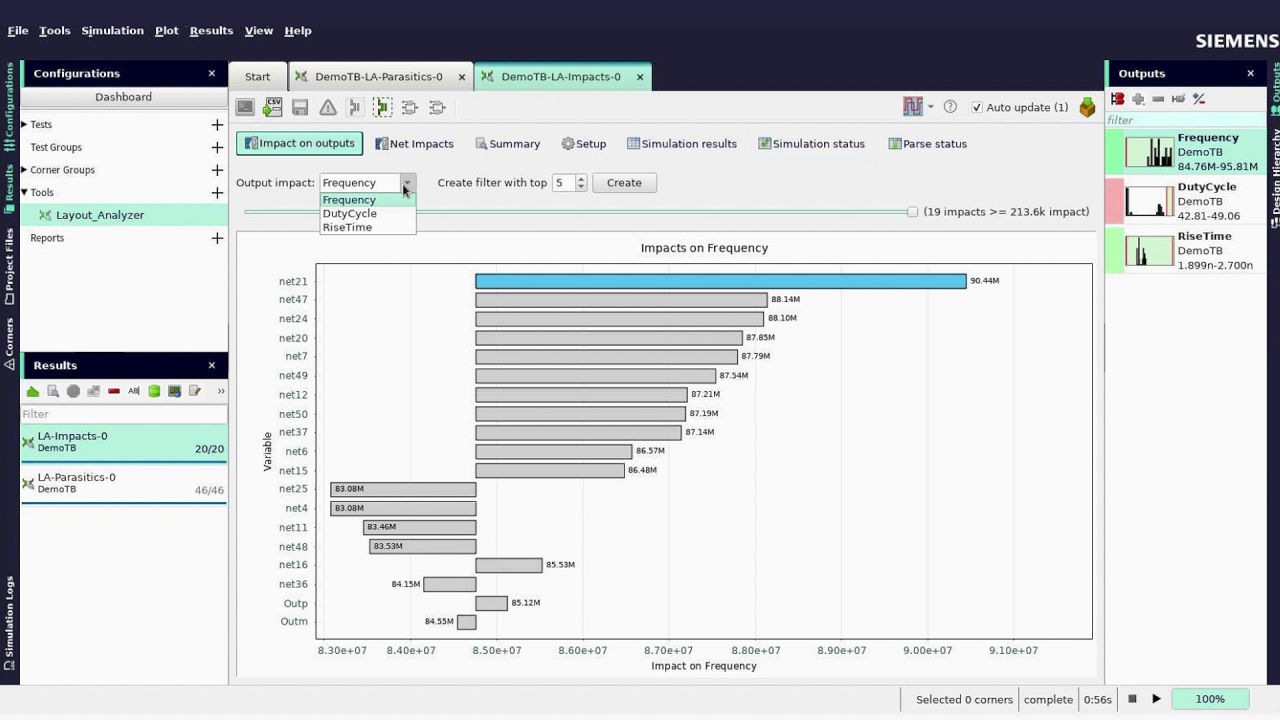
Not every element in the layout has the same impact on design performance. The challenge is knowing which ones do, efficiently, without running exhaustive simulations across every possible net. The Impact on Outputs flow runs simulations to determine which net(s) have the greatest impact on a given output. Think of it as a smart sensitivity analysis. It automatically finds the most impactful nets on specified output(s), establishing clear a cause-and-effect between parasitics and design goals.
4. Experiments
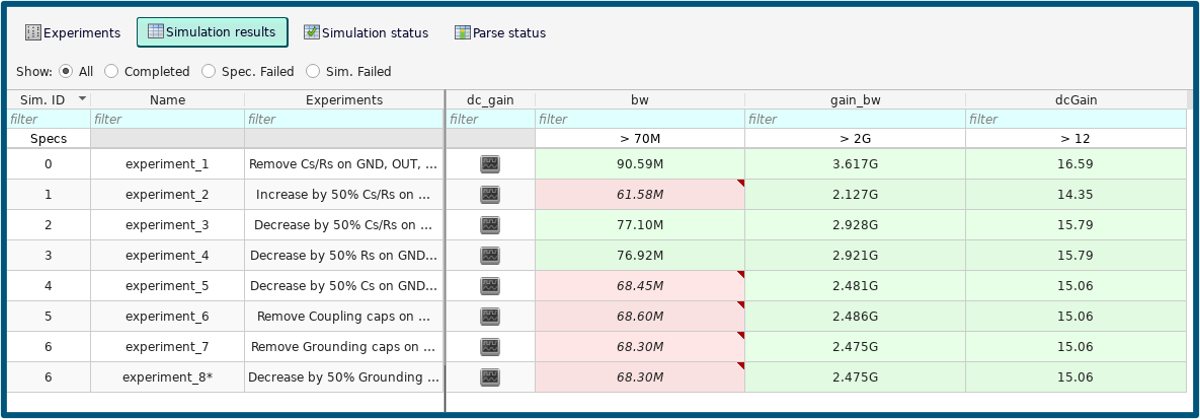
Once the high-impact nets are identified, the Experiments flow lets engineers test what-if scenarios: what happens to circuit performance if parasitics associated with the selected net(s) change. By showing the effect of specific changes in parasitics, it helps guide which layout changes are worth making before actually making them in the layout. Engineers can build several scenarios independently to determine which ones will successfully bring performance back within specifications. This flow boosts productivity and saves a lot of back-and-forth between designers and layout engineers.
Agents that give engineers an entirely new way to work
Even with the right analysis in front of them, engineers still spend time on the steps that surround it: processing files, running jobs, analyzing results, creating reports. Solido Layout Analyzer adds agentic post-layout workflows powered by Fuse that change how engineers interact with their results.
Ask a question in natural language and Fuse handles the rest: DSPF file processing, running the analysis, surfacing what matters, and generating the report. You can do all this from your IDE of choice or directly in the tool. What took hours of manual steps now happens autonomously, getting engineers to answers faster.
Part of a complete AI-powered design environment
Solido Layout Analyzer is part of Solido Design Environment, an AI-powered environment for nominal and variation-aware verification, now extended to the layout domain.
Teams already running Solido Design Environment get layout analysis without adding a separate tool or workflow. For everyone else, the environment is PDK-agnostic, supports third-party simulators, and integrates with our broader Siemens EDA portfolio.
What engineers working with Solido Layout Analyzer have found
Here’s how one team is already putting it to use, from our DAC 2026 press release:
“For STMicroelectronics’ non-volatile memory team, the ability to relate layout insight directly to electrical behavior is critical. Rather than discovering layout dependent effects late in the process, Solido Layout Analyzer brings this analysis earlier into the flow, improving design confidence and helping cut down the time we spend debugging complex design blocks by weeks. We are planning to test and validate the advantages in our on-going design activity.”
— Gianbattista Lo Giudice, non-volatile memory design manager, STMicroelectronics
A solution that boosts productivity and finds hidden layout issues
Post-layout debug has long been one of those problems that gets absorbed into the schedule rather than solved. The result is extra iteration cycles and a hidden dependence on the engineers who know the circuits well enough to find layout-dependent effects quickly. Those workarounds have a cost, and they compound across every design, every node, and every tapeout.
Solido Layout Analyzer is designed to change that.