The Digital Twin opens the way to shift automotive development left

As today’s vehicles are being transformed by the integration of software, electronics and other digital technologies, the processes used by the automotive industry to produce said vehicles also need to change. Software-defined vehicles carry with them new requirements and complexities that demand design and manufacturing processes that compensate those requirements while remaining fast and flexible. Fortunately, those processes can also meet their goals thanks to digital technology.
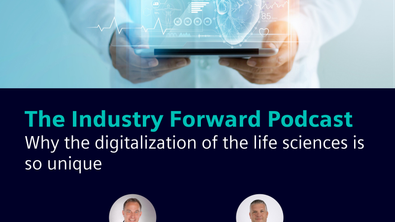
In an episode of The Industry Forward Podcast, Royston Jones, Global Head of Automotive and Transportation for Siemens Digital Industries Software, is joined by Ryan Martin, Senior Research Director at ABI Research. Together, they explore how digitalization technologies can enable automotive companies to shift left—or move important decisions to earlier in the product lifecycle—and accelerate the development of new vehicles with tools such as the Digital Twin.
The benefits of shifting left in automotive
In short, the term “shift left” refers to the act of solving critical decisions regarding a product, whether they lie in its design, manufacturing, supply chains, or otherwise, as early as possible in the product lifecycle. As Ryan says, “every day a product is not available is real money,” so if companies are able to remove efficiencies and get major choices related to their product sooner rather than later, and less issues they face down the line, allowing their product to enter markets faster.
Much of this is achieved thanks to digital technology and has significant potential for application across the automotive industry. For example, Royston points to how simulation technology can transform vehicle design, enabling engineers to test designs virtually and optimize those designs before ever building a physical prototype. This reduced reliance on physical prototypes can save companies time and resources, while ensuring the product enters the market in its best possible form.
There is also great potential for application in production processes. Ryan points to how commissioning a new production line can involve extensive amounts of physical travel of people and transport of materials, taking several months to complete. If that commission were shifted left by happening virtually, however, that time can be significantly reduced, down to as much as two months, while also assuring the production line is installed right the first time.
Powered by the Digital Twin
As mentioned, many of these capabilities are enabled with the integration of digital tools and technology, and the Digital Twin is particularly notable among them. At its simplest form, the Digital Twin is the digital representation of a physical asset. It has been around the industry in various forms across the product lifecycle, such as a digital sensor reading of a heat pump.
Today, however, Digital Twins have grown to become more comprehensive, complete, and contextual in the capabilities they provide. While companies employ the Digital Twin at different levels of maturity, it is becoming more capable of connecting data from across the product lifecycle, with the ability to represent not just products, but also production processes, systems, and even entire factories. This Digital Twin can also extend into operation, receiving over-the-air data from physical products or processes so engineers can continue optimizing after “completion.”
This connectivity provides the foundation of data for companies to shift left, to leverage that data to gain early insights into their products and processes, such as optimizing vehicle designs or commissioning production lines. By tying data from all over the product lifecycle into one accessible form, automotive companies can be better equipped to make the best vehicles possible that can meet the demands being faced by the industry today.
For more information on the digital transformation of the automotive industry, be sure to check out more episodes of The Industry Forward Podcast.
Siemens Digital Industries Software helps organizations of all sizes digitally transform using software, hardware and services from the Siemens Xcelerator business platform. Siemens’ software and the comprehensive digital twin enable companies to optimize their design, engineering and manufacturing processes to turn today’s ideas into the sustainable products of the future. From chips to entire systems, from product to process, across all industries. Siemens Digital Industries Software – Accelerating transformation.