Paris Air Show 2025 Recap: Digital transformation is fueling innovation in aerospace
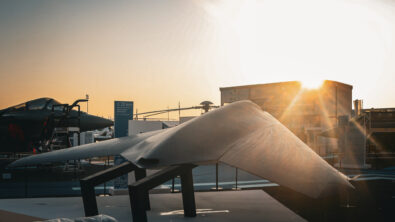
Aerospace and defense (A&D) is taking off across all sectors in the industry. The pace of innovation is accelerating to previously breathtaking speeds in commercial, defense, and space, bringing the aircraft and spacecraft of the future closer to the present with each passing day.
To keep up with this extraordinary pace, A&D companies are turning to digital transformation to boost their processes by merging the real world with the digital world. This need for digital transformation will only increase as companies also grapple with increased product complexity and industry demands faster time-to-market, higher product quality, and reduced costs.
At the 2025 Paris Air Show, Siemens ran a chalet demonstrating the technology and tools critical to carrying out digital transformation across the value chain, from digital threads and the digital twin to adaptive production, as well as emerging technologies such as artificial intelligence and the Industrial Metaverse. With these strategies, A&D companies can integrate and digitalize their product and production lifecycles, and get their new aircraft and spacecraft into the skies faster.
Connecting the physical with the digital
One of the most pressing challenges is rising product complexity. More and more A&D systems are being driven by advanced software and electronics, and some products are being fitted with entirely new systems with new design considerations or capabilities, such as sustainable propulsion methods or autonomous flight.
Not only do technologies such as these add to the complexity of the product itself, but they also add more requirements to certification, a process often more costly and time-consuming than design. This can be made even more obstructive when the product data is not easily accessible or connected to provide context for certification. To make certification more efficient, data from across the lifecycle must be more traceable.
Digital technology is vital to overcome this complexity and integrate disparate data. These capabilities can be found in the digital twin and digital threads, both of which are core components of the Siemens Xcelerator open business platform.
The digital twin is the virtual representation of a physical asset that changes over its lifecycle, capable of representing anything from a product to an entire production processes. Engineers can use the digital twin to simulate and optimize such products and processes virtually before ever building them physically, reducing the need for costly, time-consuming physical prototypes. With it, they can grasp a better understanding of new aerospace systems and how to produce them while minimizing expenses and risks of errors.
Meanwhile, digital threads are real-time seamless flows of data across an asset’s lifecycle, capable of integrating data from different systems and domains throughout design, manufacturing, operation, and more. This enhances traceability and collaboration between all stakeholders of a project, as well as optimizing workflows and productivity, ensuring processes like certification run as smoothly as possible.
Adaptive production for flexible manufacturing
Siemens Xcelerator also provides tools to help the shift toward adaptive production, which integrates smart technology to help manufacturing processes be more flexible and responsive. Such flexibility is needed as the A&D industry faces changing market demands, labor shortages, and new products that consist of high variability, such as drones and satellites.
Adaptive production utilizes IT/OT capabilities to gather real-time data on manufacturing processes. This goes on to support software-defined automation, data-driven production modular operations, and open industrial ecosystems capable of adapting to sudden changes or multiple directives, making production more agile and efficient.
Harnessing AI and the Industrial Metaverse
Emerging technologies also have exciting potential to bolster A&D’s digital transformation, namely industrial artificial intelligence (AI) and Industrial Metaverse.
Industrial AI is AI that meets industry standards, providing reliable, secure, and trustworthy solutions to optimize processes throughout product and production lifecycles. Its key strengths lie in the enhancement of human-machine interaction, in addition to gaining insights to better overcome obstacles such as product complexity and shorter innovation cycles. Siemens Xcelerator offers an AI-powered Industrial Copilot that streamlines operations with instant access to existing documentation and real-time data, transforming how aerospace engineers work, as well as learn.
The Industrial Metaverse has the potential to transform the way aerospace engineers interact with their work through an immersive, digital collaborative space that accurately reflects the real world. Like the digital twin, the Industrial Metaverse model and simulate assets from the physical world, but goes further by enabling direct interactions with the digital space through virtual reality. A&D companies can gain even better comprehension of their products and processes and find solutions quicker in a risk-free, immersive digital environment.
Digitally powered aerospace
The presence of Siemens at the Paris Air Show highlights how digital transformation provides the means to unlock an era of unprecedented innovation for the A&D industry. Tools and strategies such as the digital twin, digital threads and adaptive production can integrate products, processes, and data to streamline the entire lifecycle and launch new aircraft and spacecraft quicker. Emerging technologies such as AI and the Industrial Metaverse, meanwhile, have the potential to transform aerospace engineering entirely, unlocking new insights and understanding through new human-machine interactions.
Whatever the future brings for A&D, digital transformation opens multiple, exciting new paths for the industry to soar to new heights.
Siemens Digital Industries Software helps organizations of all sizes digitally transform using software, hardware and services from the Siemens Xcelerator business platform. Siemens’ software and the comprehensive digital twin enable companies to optimize their design, engineering and manufacturing processes to turn today’s ideas into the sustainable products of the future. From chips to entire systems, from product to process, across all industries. Siemens Digital Industries Software – Accelerating transformation.