Governance is the key to generative AI
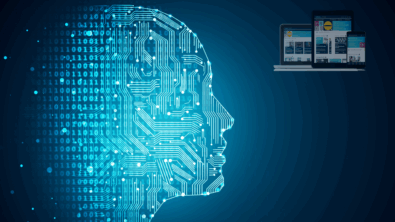
Generative AI has become indispensable when it comes to writing code across several industries. The industrial machinery industry has harnessed generative AI not only to simplify coding but also to significantly improve equipment maintenance and accelerate design workflows. While generative AI grants users the flexibility to build applications and leverage new technologies, it is imperative that these solutions can be validated throughout the complete softwarenb development cycle while remaining secure, consistent and compliant.
In the seventh episode of industrial machinery and AI series in Siemens’ Digital Transformation podcast, governance in AI-driven software development was discussed. Host Chris Pennington, global industry marketing leader for industrial machinery, along with Rahul Garg, Vice President for industrial machinery vertical software strategy, spoke with Subba Rao, Director, Manufacturing Industries Cloud, Siemens Digital Industry Software on the role of AI and digital transformation in industrial machinery. Their conversation focused on the importance of governance in the era of AI-generated code, as well as how manufacturers can deploy the digital twin and weave data fabric to reach the industrial metaverse.
Getting the most from AI
Even though using generative AI as a foundation for coding software applications can be a powerful tool for OEMs, some have not been reaping the expected benefits from AI integration. And this could be happening for two reasons: bad data consistency causing improper supervision of AI-generated code and/or underdeveloped deployment strategies.
At its core, AI relies on clean, consistent data; poor data leads to poor outcomes. Companies need consistent information and data that they use to solve their specific operation hiccups. To guarantee generate reliable data for AI systems, businesses must first sanitize it through thorough consistency checks and governance. Governance prevents siloed solutions and promotes interoperability, helping to create scalable solutions and connect them seamlessly within existing enterprise systems.
What’s more, governance needs to be applied across the entire software development lifecycle. When data is controlled and secure, it should enable an organization to:
- Identify problems and acknowledge use cases
- Validate AI models and applications
- Deploy software solutions across facilities with standardized processes
From there, the organization should be able to draft a well-defined deployment strategy. Part of a good strategy is having a good understanding of the maturity of the capabilities of the software. Many companies take on AI integration without comprehending the limits of generative AI or knowing what solutions work best for their operations.
More use cases than just AI
Businesses that make sure that data adhere to safety and security protocols can weave a digital thread. Then from there, use that thread to integrate siloed PLM, MES, ERP and OT systems. With this strong digital thread connecting what was once disparate data, companies can go even further beyond and take steps towards actualizing the industrial metaverse.
Integrated and connected data facilitates the creation of the Digital Twin of the Factory which is the basis of the industrial metaverse, a digital space that enhances collaboration and maximizes production efficiency. Tools like Mendix and NVIDIA Omniverse help in building a robust industrial metaverse through visualizing the factory, integrating data and delivering user experiences for roles like plant managers and supervisors. This all enables high-fidelity visualization and real-time insights for operational efficiency.
AI isn’t one size fit all
At the end of the day, technology should solve tangible problems, not be adopted for its own sake. AI has been a boon for industrial machinery but it is paramount that companies start with use case identification and feasibility assessment before taking the plunge into AI integration.
Organizations should prioritize data consistency and governance while getting a good grasp their digital maturity level. Data that is consistent and sanitized will yield the best results for generative AI output. Not only that, clean and secure data will help businesses build the Digital Twin—and then eventually the industrial metaverse—through connected once disparate systems across the organization.
To find out more about how data governance helps your company get the most out of generative AI, listen to our Digital Transformation podcast.
Siemens Digital Industries Software helps organizations of all sizes digitally transform using software, hardware and services from the Siemens Xcelerator business platform. Siemens’ software and the comprehensive digital twin enable companies to optimize their design, engineering and manufacturing processes to turn today’s ideas into the sustainable products of the future. From chips to entire systems, from product to process, across all industries. Siemens Digital Industries Software – Accelerating transformation.