EDA and the Shift-Left with Mike Ellow – Part 3 – Transcript

In our first conversation of the latest season of the Industry Forward Podcast, Dale and I were joined by Mike Ellow, CEO of Siemens EDA! Mike holds 30 years of executive sales and technical management experience in Electronic Design Automation (EDA). We invited Mike on to gain his insights on the transition to software-defined products and systems, the shift-left of engineering processes, and especially the increasing need for the integration of EDA and semiconductor development into the creation of complex systems like airplanes, cars, and more.
Listen to the final episode and read a transcript of the conversation below!
Conor Peick: You know, Dale, we end up, I think asking a lot of guests about kind of the role of digitalization and how they can sort of adopt that more completely as they as they work towards the future. Eda and semiconductors obviously have been digital. Forever. I mean, you know, they’re, you know, sort of an inherently digital. But so Mike is we’re going into this future with software and semiconductors becoming these really central aspects of systems. I’m curious what you see as kind of the next evolution for EDA technology. Like, is there something out there that’s aspirational that that you think can really sort of be the next step for EDA tools?
Mike Ellow: There’s multiple facets to where semiconductors and EDA’s tools are headed, you know one is, at the core, is really the enablement of true 3D IC development, right? We’re dabbling in that space. We live more in a 2 1/2 D world where you’ve got a substrate that’s got compute and some memory that sits adjacent to it. We don’t have things that are really stacked yet in the in the third dimension there. That’s, the entire ecosystem around how do we, as an EDA industry enable the ability for silicon that can be sourced from a variety of sources across the planet, be understood what that looks like in a digital model in a virtual model, and then have a process for the design, optimization, verification, implementation, manufacture of these things. You know, I talk about it as if it’s all solved, it’s not.
You know there there’s a lot of interesting implications associated with the multi-physics of these devices. You know we’ve recently announced a product called Calibre 3D Thermal which is really taking a look at the first order effects that people are encountering as they’re doing these chiplet-based designs with heat that builds up inside of the packages itself and how do you do predictive analytics so that you can avoid hot spots and things like that? And what’s unique about, you know, the Siemens world with this is we’ve got the same engine that sits inside for predictive analytics on thermal with the sign off with a product called Flotherm for the package itself. So this is where you start taking a look at the linkages between what happens on the EDA side and the PLM side inside of Siemens as a company, you know from a multi physics perspective as an enablement.
But moving beyond that core piece where we talked about the virtualization of these architectures for understanding, you know how do you vary configurations and start running your synthetic or real workloads on top of it? You know that’s still in its infancy. So there’s still a lot of work that has to be done in order to build out that capability. On top of that, this idea of connected ecosystem and how do you verify through a series of companies that are required to deliver into a system integrator all these various pieces with a high degree of certainty of schedule, price, and functionality. That’s a massive undertaking, right? And I believe that the EDA industry is uniquely positioned just based on the fact that software and semiconductors are the core to these complex system-of-systems in order to provide that connectivity point for everything that then flows downstream from that.
And then, lastly, you know just for where EDA and semiconductors head, the idea of what happens to an asset as it is operating in real world conditions, and how do you have better understanding of what the condition of that asset looks like, especially from the fact that if software is differentiating then the silicon platforms that are running it are really the heart of the entire system. And how do you plan for what those things look like? How do you provide environments that allow you to actively understand changes and then have feedback into your software platform and the apps that sit on top of it because it’s a software stack that gets deployed to these devices over time, or to these assets over time. That in and of itself too, is another area that EDA is just moving into. So you take a look across from what happens in the very early architectural exploration into implementation of the core of this thing through 3D-IC into the understanding of the asset in real world operations and conditions based on a silicon lifecycle management thought are really the three pillars of evolution into the future for EDA.
Dale Tutt: Yeah, I think when we talk about. The life cycle of the silicon or the life cycle of the electronics or the software for that matter. It really does bring to mind a lot of the conversations that we talk about with the, with the comprehensive digital twin that you need to be able to, you know, you have your digital twin of your system. And in this case, the system, the software. Intimate part or a critical part of that system. Everything’s very well connected, but to really be able to leverage that information that you have, that you’re able to collect, you know while the product is in operation or the manufacturing line is in operation, whatever. To be able to drive that back into your digital twin and to make better decisions, you know in the future is I think it’s going to be critical and you know, kind of another aspect of that.
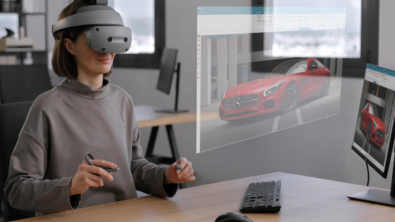
You know we talk a lot about the industrial metaverse and sometimes people think about it on the just. As a visualization and we see a lot of applications that you know, highlight the industrial metaverse as, you know, the production line and the operation of production line and you know when I think about the Metaverse and the comprehensive digital twin and how bringing this together to really be able to manage these ecosystems. Not just the ecosystems of the semiconductor development and the supplier base, but also the multi-domain aspects of the ecosystem and all the different suppliers. Part of that, that you know that the industrial metaverse being physics-based simulations, analysis, operations, it’s really having a holistic view. And so you know how do you see some of the EDA and the semiconductor solutions factoring into this vision of the industrial metaverse that we have expressed? Is it enabling or is it? You know how do you see this playing out?
Mike Ellow: Well the Industrial Metaverse is interesting because I think you’re right, the 1st order imagination is “How do I look at manufacturing environments and how do I contemplate the interactivity of humans and automation and how does that all come together?” Which is interesting, but of course if you don’t have semiconductor and software that starts the product, a well imagined manufacturing environment is useless.
Dale Tutt: No, absolutely.
Mike Ellow: Because what are you building? Right. So for me, you know it’s a natural extension of the of the industrial metaverse to a full system digital twin that contemplates the electronics as imagined by the PCB (printed circuit board), into the advanced package which has the chiplets inside of it, which is then, really the basis of that is the semiconductor, as driven by software requirements, right? So the connectivity of that entire digital twin and you know a multi-physics consideration of it, right because, as you’re looking at the predictability of a schedule, capability, functionality, and price, you have to then take a look at the entire system-of-system itself in a digital world before you’re even going to the manufacturing stage to understand how everything comes together. So I think that’s where the power of the industrial metaverse for that whole system-of-systems digital twin before you’re even contemplating manufacturing, such that you’ve got a well understood entry point into the real world is a powerful, powerful, powerful thing.
So I don’t think that the semiconductor piece, software, EDA is mutually exclusive from it. I think it sits in the center of it because as we talked about, if software is the differentiator for these complex of system-of-systems, then inherently it drives everything outward, which then has an impact on what the delivered physical representation of this system-of-system looks like, which then has an impact on the multi-physics for how you’re imagining it before you ever want to pick up a wrench and a piece of sheet metal and some bolts and build it yourself.
Dale Tutt: Absolutely. And I think it’s becomes the, maybe it becomes the way to really be able to connect everything together and to be able to connect all the systems, all the subsystems, all the different elements together so that you can actually, you know, model it in a cloud with enough fidelity and also to be able to visualize it. Visualization is always, it helps aid people’s understanding of how the system’s operating, and so being able to bring that all together in one place will be, I think, will be critical in the future.
Mike Ellow: Well, and as you look at the enablement point, why all of a sudden now are we heading in this direction, I mean the compute resources we have available today that didn’t exist in the past and AI as contemplated not for the chip development itself, but for the system development and how you can do the permutations of that and understand all the implications associated with it, really have created a tipping point now for where we’re headed.
And if you want to dabble even further out. Where people start talking about quantum computing and where does that head into the future and the and the processing strength associated with that. I mean you start coupling that then with the problems that we’re talking today and the ability to do all of this work in a compressed time cycle. Really has a whole lot of possibilities for how this vision actually comes together, because people today can struggle with all of these points. Saying, yeah, yeah. You know, theoretically it all makes sense, but it’s still pretty heavy and heavy lift. Well, I’m here to look at where we are on this kind of precipice, looking outward, saying damn if there’s not a lot of pieces coming together at a rapid pace now for enabling all of this. And its our requirement as an EDA industry to give the infrastructure to the ecosystem and the methodologies and the tooling to get it all done.
Dale Tutt: Absolutely. Well, and you need semiconductors to make the Metaverse happen so.
Mike Ellow: Basically, you know, with the world doesn’t exist without semiconductors.
Dale Tutt: There you go. I agree with you.
Mike Ellow: But think about that. You know the disruption to semiconductors is a disruption to society.
Dale Tutt: Yeah, exactly!
Conor Peick: So typically to sort of wrap up the show, Mike, we like to ask our guests just for any sort of big picture parting thoughts. I mean, you offered a really good one, right there, so I don’t know if you have anything to add to that? Or, maybe we can cut it right there!
Mike Ellow: Well, so I’ll just say this to Dale’s community out there. And there’s more than just your family, right, Dale? Got more than just them right?
Dale Tutt: Yeah. Yes, I have the three followers that listen to the show will be very excited to hear you.
Mike Ellow: OK, good. You know there are daunting engineering tasks that are out there. But as I take a look at the opportunity for how we as an engineering community can impact the world, I mean, this is exciting stuff. I mean, there’s just so much that is available today and I think Siemens is unique in that we have a lot of assets that can be used today, but also for where we’re headed and what we think about. You know, we’re a big company. €80 billion plus in revenue, more than 300,000 employees worldwide. I mean, there’s a lot of resource behind some of the talk that we have here and I’m excited by where we’re headed and how we’re gonna help all of you out there impact the world around us.
Dale Tutt: Yeah, no, absolutely. And. Mike, thanks again for being here. This has been an awesome discussion today and I was just going to kind of go back to something I’d said earlier, Conor, as I wrap up here that earlier on, I was talking about how companies were a little bit reluctant to adopt a custom designed semiconductor because they were trying to manage their risk. And we talked a lot about you need to embrace the complexity. If you’re going to have competitive advantage and you have to be able to do that, and if you’re going to deliver high performing products, you have to be able to use the latest design tools and development tools and be able to develop these. And so really being able to look at these, these new products that are coming 2-3 years from now, we don’t know. We don’t know what’s all coming yet. But they’re gonna be powered by semiconductors and really being able to manage the complexity of the mechanical, electrical, the semiconductor, the software bring all bring it all together is going to be critical for our customers in the future.
Mike Ellow: Well, I guarantee you know, if you’re not doing it, one of the competitors is and you run the risk, even if you’re the market leader, being disrupted by that.
Dale Tutt: Absolutely. Absolutely.
Siemens Digital Industries Software helps organizations of all sizes digitally transform using software, hardware and services from the Siemens Xcelerator business platform. Siemens’ software and the comprehensive digital twin enable companies to optimize their design, engineering and manufacturing processes to turn today’s ideas into the sustainable products of the future. From chips to entire systems, from product to process, across all industries. Siemens Digital Industries Software – Accelerating transformation.