CSRD: Compliance meets competitive advantage

The Corporate Sustainability Reporting Directive (CSRD) is a new EU regulation introduced by the European Union in 2024. It requires thousands of businesses across industries to disclose how their operations affect both the environment and our society. The directive is detailed, demanding and, for many, daunting. While this may seem like yet another regulatory box to check, the CSRD is actually a path to competitiveness.
The companies that treat it as a bare-minimum reporting exercise may miss out on opportunities to improve their business. But those that see it as a chance to enhance performance, attract investment and set themselves apart will gain a real edge.
CSRD goes beyond reporting
The CSRD replaces the Non-Financial Reporting Directive (NFRD), aiming to increase sustainability transparency. It expands to include not just large EU firms, but also certain small and medium enterprises and even non-EU companies with significant operations in Europe. Reports must align with the European Sustainability Reporting Standards (ESRS), which means standardized and comparable data across industries.
This ability to compare ESG data is key for investors, regulators and customers because they can now minimize risk by easily putting companies side by side and assessing who’s taking environmental impact seriously. For organizations, that means metrics from emissions and resource use to labor practices, become accessible.
CSRD reporting can also serve as a driver for performance optimization: With the right tools, companies can use data to make informed decisions that will lead to greater operational efficiency, innovation and access to capital. This requires comprehensive, high-quality data from your products, machines, processes, buildings, energy consumption and more.
Tackling the data challenge
Of course, collecting this data is easier said than done. CSRD requires reporting on over 1,000 data points, ranging from emissions to social impact indicators. But many organizations lack the infrastructure to handle the scale and complexity of modern sustainability analytics, meaning data is scattered across incompatible systems, or in many cases, not being captured at all.
Combining the real and digital worlds is key to overcoming the data challenge. Tools like the Digital Twin—a virtual representation of a product, factory, line or process—make complex data not only manageable, but actionable. A Digital Twin can run thousands of “what if” scenarios, testing the impact of design choices or operational changes before they happen in the real world, saving experimentation costs and reducing the need for resources. The performance data of automation systems, machines or products in use can also be reused for the next development cycle, leading to a continuous loop of optimization. Combine this with industrial AI and organizations can accelerate insights at scale.
That’s how compliance evolves into strategy. By measuring holistically and analyzing continuously and, companies turn sustainability into both a reporting requirement and an advantage.
Learning from leading companies
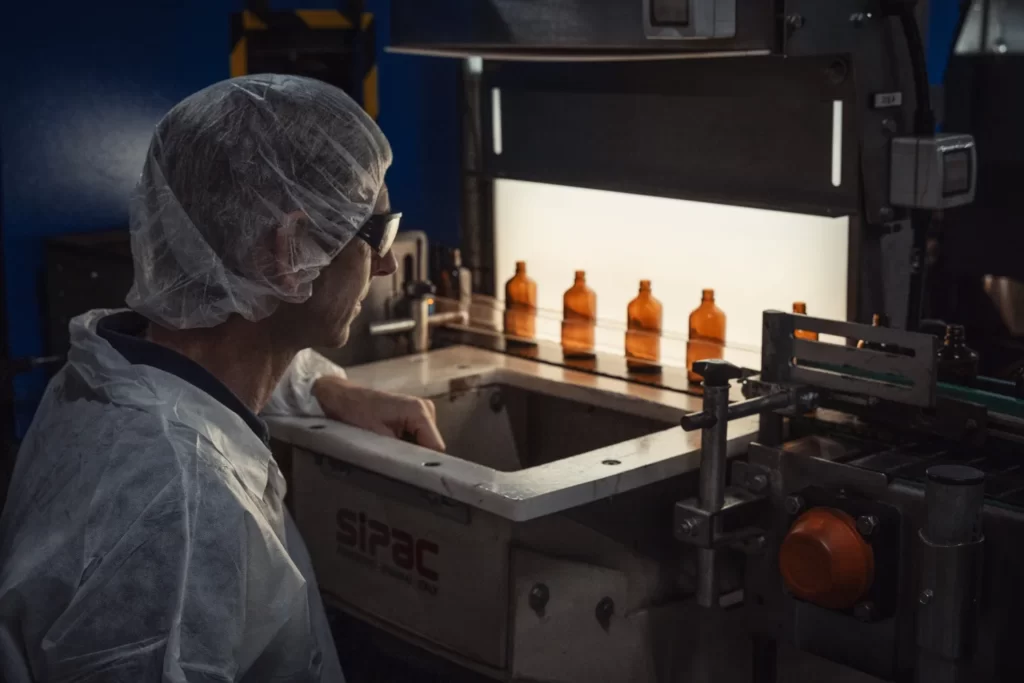
Some companies are already showing what this looks like in practice:
- Siemens’ Erlangen Factory: Siemens’ Electronics Factory in Erlangen, Germany, produces frequency converters, control panels, and power electronics using 100+ AI algorithms and a comprehensive Digital Twin, powered by a flexible IT/OT architecture. Acting as Siemens’ “customer zero,” the factory tests and improves solutions before they reach customers. Its digitalization and automation initiatives cut the site’s carbon footprint in half in just two years, reduced energy consumption by 25% despite higher production output, and set the site on track to achieve full carbon neutrality by 2030.
- Stoelzle Glass: Siemens supported Stoelzle Glass in reducing natural gas use by up to 20% and cutting municipal water consumption by 50%. By defining key energy and carbon KPIs and implementing a holistic metering system, the company was able to standardize emissions data across sites and calculate batch-specific product carbon footprints (PCFs). This transparency made the CO₂ impact of efficiency measures visible at the product level, strengthened supply chain emissions reporting and supported Stoelzle’s long-term decarbonization goals. The scalable solution is now being rolled out across additional sites in Europe and the US.
- Polipak: Polipak integrates sustainability into its core business strategy, focusing on efficiency, cost reduction and minimizing environmental impact while maintaining high product quality. By implementing advanced planning, scheduling and manufacturing execution systems, the company optimized production, reduced raw material waste and increased the use of recycled plastic in its products from 30% to 90%, setting a new benchmark for eco-friendly foil-packaging production.
Companies like Polipak, Stoelzle Glass and Siemens demonstrate why the CSRD should be viewed as a catalyst for transformation and a kickstart to improving your business.
No matter where you are in your reporting journey, the CSRD should encourage you to get transparency into your environmental impact and align your operations with long-term sustainability and profitability goals. It can be a driver for leaner operations, stronger supply chains and future-proof business models that ensure competitiveness despite a constantly shifting market with evolving requirements.
Siemens Digital Industries Software helps organizations of all sizes digitally transform using software, hardware and services from the Siemens Xcelerator business platform. Siemens’ software and the comprehensive digital twin enable companies to optimize their design, engineering and manufacturing processes to turn today’s ideas into the sustainable products of the future. From chips to entire systems, from product to process, across all industries. Siemens Digital Industries Software – Accelerating transformation.