A Digital Enterprise Deep Dive with Jim Brown – Part 1 – Summary

On the latest episode of the Industry Forward Podcast, Dale and I are excited to welcome Jim Brown, President of Digital Transformation Research for Tech-Clarity to talk about the digital enterprise! Jim founded Tech-Clarity in 2002 and has over 30 years of industry experience in the manufacturing and software industries.
Jim began his career in manufacturing engineering and software systems before moving into management consulting and then into executive positions in strategy, marketing, and product development for software companies specializing in ERP, PLM, Supply Chain, and more. Now, Jim covers digital transformation across the product digital thread for manufacturing and industrial companies including PLM, PDM, product development, portfolio management, digital manufacturing, IoT, EAM, SLM, and other solutions.
In our conversation with Jim, we explore the evolving landscape of digital transformation and the progress of companies in manufacturing and industrial sectors to the digital enterprise. Jim shares insights from Tech-Clarity’s research into how companies are progressing toward digital maturity—and what separates leaders from laggards in digital transformation.
Assessing Digital Maturity
To start the conversation, we asked Jim to give use an assessment of digital maturity across industries. Jim noted a “tremendous range” in how far companies have advanced in their digitalization journeys. While some have made significant investments and are reaping the benefits, others remain in early stages or are hindered by fragmented systems and processes. “What we see is actually there’s a really clear correlation between those companies that are further along in their digital transformation with those that are really able to hit their business targets better,” Jim explained, citing new product development as a key area of impact.
Dale agreed, observing that even leading companies acknowledge they have more work to do. “You know, even the companies that I would say are the leaders probably still have a long way to go,” he said. Dale went on to emphasize that digital transformation is a continuous journey, where each step builds on previous gains to deliver increasingly transformational results.
The Power of Data and Digital Threads
A recurring theme throughout the episode was the importance of institutional data and its integration across the digital enterprise. Jim pointed out that a critical attribute of “digital” data is that it must be reusable across applications. “Companies with more digital data and more digital processes are six times more likely to hit their product development targets,” he said. The integration of this data through a digital thread enables seamless collaboration and faster decision-making, unlocking significant value.
Dale added that many engineering teams still spend excessive time moving data around rather than solving problems. These types of tedious activities are very low value-add compared to design work, verification, validation, and other engineering activities. While it may not seem like a huge technological advantage, digitalized flows of data are much easier to handle and let engineers focus their efforts on value-add tasks. This shift improves design productivity, accelerating innovation and driving better business outcomes.

These advantages will prove crucial as customers are under increasing pressure to innovate quickly and stay ahead of competitors. As a result, speed—both in terms of agility and time-to-market—has emerged as a critical driver of digital transformation programs throughout industry.
Jim expanded on this by discussing how digitalization supports agility in the face of disruption. Across industries, companies are facing more frequent and varied disruptions—from natural disasters to geopolitical conflicts and economic instability. Companies can leverage the speed and agility of digitalized processes to better respond to these disruptions.
Extending the Digital Twin to the Supply Chain
Following up on the discussion of disruptions, we shifted the conversation to supply chains, an area often undervalued in digital transformation discussions. Dale highlighted how disruptions—from semiconductor shortages to ships stuck in the Suez Canal—have exposed vulnerabilities in traditional supply chain models. He asked Jim whether companies are now extending the digital twin concept to supply chain dynamics to improve transparency and collaboration.
Jim confirmed this trend, citing Tech-Clarity research that found supply chain disruption to be the most commonly reported factor negatively impacting business performance. “We’re starting to see supply chain resiliency and also really companies looking for sovereignty in their supply chain,” he said. Companies are increasingly modeling their supply chains to anticipate and avoid disruptions, especially in the face of tariffs and geopolitical shifts.
Digital collaboration is also becoming more prevalent among top-performing companies. Jim referenced a study by his colleague Julie Fraser, which found that leading organizations are 49% more likely to report strong collaboration between production, engineering, and product development. Real-time visibility between engineering and supply functions is becoming a differentiator, enabling faster, more informed decision-making.
However, Jim cautioned that technology alone isn’t enough. “It does require trust and it requires some boundaries,” he said, acknowledging that legal and organizational constraints often hinder data sharing. Dale agreed, noting that reluctance to share data—whether due to competitive concerns or security—remains a challenge. Yet, both experts see promise in emerging digital tools that can help overcome these barriers.
Managing Change Holistically
As the discussion turned toward internal transformation, I asked how companies are managing the significant changes in team dynamics and workflows. Jim responded candidly: “Typically poorly, unfortunately.” While some organizations have developed strong change management practices, many still struggle. He emphasized the importance of visible executive support and clear communication of business value to the success of digitalization programs, especially because such transformation asks a lot of employees around the organization. As these employees adapt to change, it is important for them to understand why things are changing.
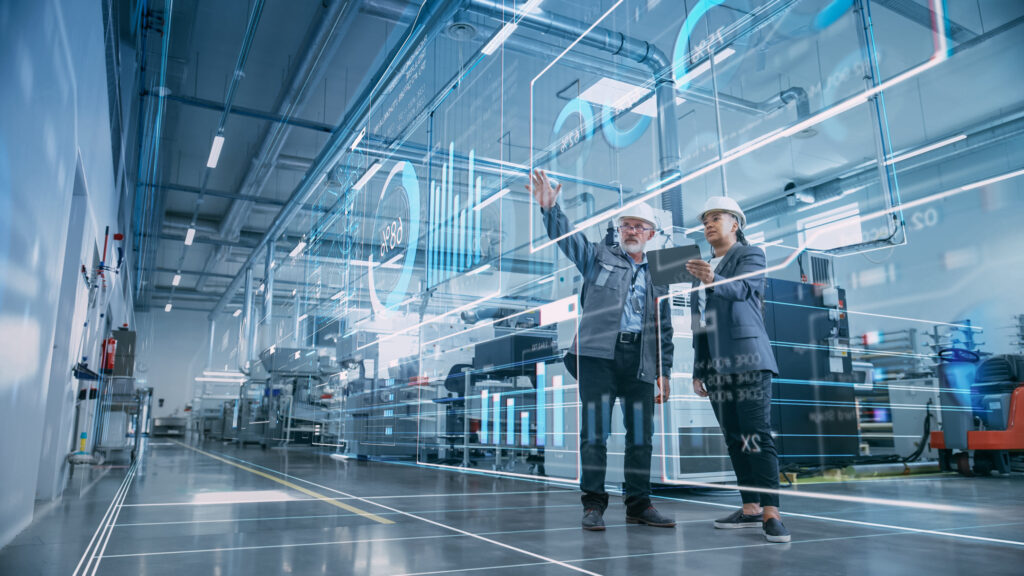
Jim advocated for a holistic approach that considers people, processes, technology, and data as distinct but interconnected elements. “Technology and data are probably two different things to look at in terms of balancing these days. And you know, I think looking at things holistically is one of the key ways to make those transitions stick.” Dale built on this idea, suggesting that data might even be the “glue” that holds transformation efforts together.
Dale also stressed that digital transformation must be driven by business value—not just technological novelty. Whether the goal is faster time-to-market, cost reduction, improved yield, or sustainability, companies must clearly articulate the expected return on investment.
Unlocking the Value of Industrial Data
The episode concluded with a discussion on industrial data and its role in enabling AI and other advanced technologies. While most companies have no shortage of data, Jim noted that many struggle to use it effectively. “They can find data wherever they want—but the quality of it, they don’t know,” he said. Unlocking the full potential of data requires not just access, but structure, context, and integration into decision-making processes.
Siemens Digital Industries Software helps organizations of all sizes digitally transform using software, hardware and services from the Siemens Xcelerator business platform. Siemens’ software and the comprehensive digital twin enable companies to optimize their design, engineering and manufacturing processes to turn today’s ideas into the sustainable products of the future. From chips to entire systems, from product to process, across all industries. Siemens Digital Industries Software – Accelerating transformation.