How to secure the future of the green hydrogen market – Transcript
To learn more about the green hydrogen market, read: Your guide to overcoming green hydrogen challenges.
Shawn Wasserman: Hello and welcome back to the Future Ready Podcast. My name is Shawn Wasserman, Process Industry Marketing Writer for Siemens Digital Industries Software. Once again, I will be curating this podcast experience for you.
Today’s discussion will feature Christian Gueckel, Head of Verticals Chemicals and Energy at Siemens Digital Industries and Philipp Glaser, the Head of Hydrogen Business at Siemens Digital Industries.
The pair will talk about the current state of the green hydrogen market, the current and future companies in this space and how Siemens can help.
So, without further ado, Christian, the floor is yours.
Christian Gueckel: Thinking about the market, what does it mean for the business models of current or future green hydrogen producers?
Philipp Glaser: The business model really plays a crucial role. So, you can react with your business model to the circumstances. And we have already seen that it is possible already today to create a business model that is profitable in [the green hydrogen market today].
So, one of the important aspects is that you do not only consider the green hydrogen production itself, but also if you consider it in a larger value chain. So that you then think about, for example, the transformation into green methane, green ammonia, sustainable air fuels and other things. So, that makes a huge difference.
Also, if you have, for example, continuous production or, for example, because you have a continuous off-taker, or if you’re aiming just at transforming over capacities of green energy into green hydrogen.
So, this means we are supporting the companies we work with, the customers, [holistically]. So, we use, for example, our simulation models in [early] stages not only to make the plant design, or the basic design of a plant, but also to help the customers to find their business model.
Because that’s a big difference, not just selling green hydrogen, but doing this, for example, with green methane. And we do not only make that kind of simulation, [but] we also have our in-house consulting. And with our in-house consulting at [Siemens Advanta], we have already helped a lot of customers to define their profitable business model.
Another thing that’s interesting to look at, when we speak about the business model, is that we see in Europe, there are many companies very much focused on the green hydrogen production itself.
When we look into other countries, we see [huge] investments where they really integrate this whole value chain. For example, when we look, for example, to India as one example.
Christian Gueckel: Interesting. But when we look at open energy [platforms], where we say we go from the green electron, to hydrogen, to derivatives. If I connect it to the business model, you [have to] have a platform going from the electron down to the final customer, and product, because the system is so complex.
Christian changes the topic.
But let me focus on one of the other challenges, complex regulations.
It’s a big word. It sounds like a lot of administrative tasks, legal topics and so on.
So, what is your perception on regulations [in this section] in general?
Philipp Glaser: Let me just make one concrete example on that. [An] interesting question, when we look, [to] the European Union, the question is, “when is hydrogen really green?”
And in Europe, that is, for example, there is a renewable energy directive. We call it RED II and RED III.[1][2] So, there are all the regulations which [define] this. This regulation, for example, is extremely complex.
So, for example, [electricity] must come from new unsubsidized renewable energies, have a geographical correlation, and it must even have a [temporal] correlation. [That] means the hydrogen production must happen at the same time while the wind turbine produces [green power].
So that is … very complex. And I have been in meetings where specialists for this topic were sitting together and we’re discussing how [to interpret this]. So, this regulation should really become easier to unleash the growth, this growth stopper for [the green hydrogen market].
And of course, we will later perhaps speak a bit [about] what we’re trying to do to make this better [and] manageable for our customers.
Christian Gueckel: Okay, so it seems [there are] hurdles ahead, challenges ahead, [but they are] not unsolvable. It’s a task which we need to do where the industry [must] pull jointly at the string to make green hydrogen and green derivatives [come] to life at large scale.
Christian changes the topic.
So, how about Siemens? What’s Siemens’ role to overcome these challenges?
We are not a chemical company. We are not an energy company. We are a technology company. So how do you see our role?
Philipp Glaser: Well, for us [at] Siemens, we want to significantly help to boost the world’s green energy and hydrogen market.
So, the platform that we [spoke] about is the thing where we integrate … every part of the plant [to] various plants together. To orchestrate that together. But the other aspect is that we are really focusing on helping the customers to define their business model and to boost their daily plant operations.
And that we are doing with our open platform-based ecosystem based on the Siemens Xcelerator platform.
So, you know, there are so many technical and [economic] challenges in this industry. [But] on the other hand, there are so many innovative companies which are active in hydrogen. And there is no single company, [not even] Siemens, who can create all these developments on their own.
So, we [created] an open platform based on [Siemens Xcelerator]. So, when you see there are three things which [come] together:
- [Siemens Xcelerator platform]
- Our open hydrogen performance suite platform, and
- That we have a very huge market share in automation systems in hydrogen.
So how does that work? So, Siemens, we are offering [an] open platform to the whole hydrogen industry. So, we are enabling all the players to use data via the hydrogen performance feed platform.
However, all the players can host the data on [their] own servers without sharing them with Siemens, or others, if they don’t want to. So, our interest, at Siemens, is, for example, that researchers are using this to develop their technologies based on that.
And when the technology works, they can commercialize their technologies on the Siemens platform. So, they can offer, everyone can offer their technologies for hydrogen, for green hydrogen, for renewable energies on the Siemens Xcelerator platform.
And they can even integrate this into phase plates into our performance suite. So, this is a strong benefit for the technology company.
[As for] Siemens, we also have our benefit because we want to offer the market the most comprehensive functionalities, or the most comprehensive technologies for green hydrogen.
And the benefit for the companies, for the technology companies, for example, is that they get a … much higher market presence through … Siemens worldwide sales. So, this is how we want to create the platform for the whole industry and for all the players in green renewables and in [the green hydrogen market].
Christian Gueckel: Okay, so it looks like you’re bringing the best of the whole world together on one platform, which can be [used] by any company who has a new innovative technology in this area.
Let me ask you, why do you think it will be successful? It seems like something new which nobody else has tried before.
Philipp Glaser: Well, if you look at these kinds of ecosystems, they are usually successful if they address a real value and if they can create a win-win situation for all these players.
- First, it fully fits into the market challenges that we have discussed before.
- Secondly, it really creates a win-win situation for all these parties, because they can develop their technologies, they can commercialize their technologies. We at Siemens have all the technologies that we can offer to our customers.
- And last, but not least, automation is a very important part [of] that, and we are already covering the market leadership in automation for hydrogen.
So, with this, just imagine that is a little bit like a Google Play store, or like an iTunes store, but for [the green hydrogen market].
Of course, without plug and play installation of apps, which we don’t need in industrial markets. But with this, we want to boost the world hydrogen market.
Shawn Wasserman: Hi, Christian and Philipp. It’s Shawn, popping back in to tell you that we’re out of time for today’s episode. That was great, thank you for your insights.
Today, Christian and Philipp covered the evolving business models that are making green hydrogen commercially viable. They talked about the importance of integrating the full value chain from renewable electricity to hydrogen and its derivatives. They then discussed the challenges posed by complex regulations and why simplifying those frameworks will be critical to accelerating market growth.
Finally, the pair explored how Siemens can help the industry move forward by combining automation, digitalization, consulting expertise and an open ecosystem based on Siemens Xcelerator.
So, with that, I’d like to thank you, our listeners, for tuning in to the Future Ready Podcast. We hope you’ll join us for the next episode as we continue exploring the technologies and trends shaping the future.
Until next time.
To learn more about the green hydrogen market, read: Your guide to overcoming green hydrogen challenges.
[1] European Commission Joint Research Centre. Renewable Energy – Recast to 2030 (RED II). Available at: https://joint-research-centre.ec.europa.eu/welcome-jec-website/reference-regulatory-framework/renewable-energy-recast-2030-red-ii_en (Accessed October 2026).
[2] International Energy Agency (IEA). Renewable Energy Directive III (RED III) – GHG Threshold. Available at: https://www.iea.org/policies/27735-renewable-energy-directive-iii-red-iii-ghg-threshold (Accessed October 2026).
Christian Gueckel – Head of Verticals Chemicals and Energy at Siemens Digital Industries
Christian Gueckel is the Head of Vertical Chemicals and Energy at Siemens Digital Industries. In this role, he is responsible for sales operations within the vertical.
Prior to joining Siemens, Gueckel spent more than ten years at the specialty chemicals company Clariant in various management positions, including Head of Strategy and Marketing. He also earned his PhD in inorganic chemistry from the Ludwig Maximilian University of Munich.
Connect with Christian on LinkedIn
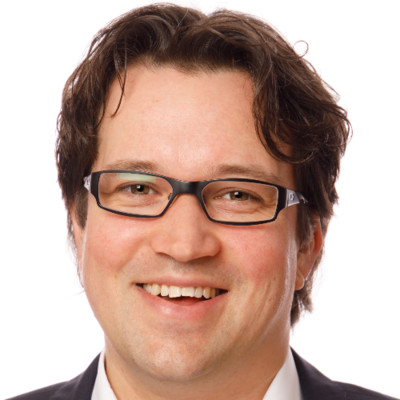
Philipp Glaser – Head of Hydrogen Business for Process Automation at Siemens Digital Industries
Philipp Glaser is the Head of Hydrogen Business for Process Automation at Siemens Digital Industries. In this role, he is responsible for the go-to-market strategy for SIMATIC PCS neo.
Glaser joined Siemens almost 20 years ago where he has spent his whole professional life in various positions associated within the process industry. While in these positions, generating individual value for various companies became his personal passion. He also gained experience in numerous sales, marketing and business positions. Philipp has an Industrial Engineering and Management degree from the Karlsruhe Institute of Technology (KIT).
Connect with Philipp on LinkedIn

Shawn Wasserman – Process Industry Marketing Writer
As a process Industry thought leadership writer at Siemens Digital Industries Software, Shawn produces podcasts and blogs to help leaders in the process industry streamline their operations via new tools, technologies and software. For over 10 years, he has informed, inspired and engaged the engineering and thought leadership communities through online content.
Connect with Shawn on LinkedIn.
All trademarks are property of their respective owners.