How green tech actually solves energy security – Transcript

Christian Gueckel: Welcome to another episode [of the Future Ready Podcast] on the energy transition and what it really means for our energy systems. I’m Christian Gueckel, Head of Verticals … Chemicals and Energy at Siemens Digital Industries.
In our last two episodes, we explored the big shifts in the energy ecosystem: what it takes to scale renewable energy and integrate it into existing systems. Today, we want to take the next step and talk about something that becomes just as important: energy security and, more specifically, secure supply chains.
I’m happy to have my colleague Bernd Kalusche with me. Bernd [is the Director of Vertical Management Chemicals and Energy at Siemens Digital Industries] in my team. Bernd, great to have you with me today.
Bernd Kalusche: Hi, Christian. Thanks for having me today. My pleasure.
Christian Gueckel: Great. So, let’s dive in.
One of the three dimensions of the energy trilemma, which we explored in my first podcast, is energy security. It has always been important. But events like the closure of the Strait of Hormuz remind us of [the] vulnerability of our supply chains.
What is your take on that?
Bernd Kalusche: Yeah, Christian. These kinds of events really put things into perspective.
We often experience energy as something that’s simply there. You flip a switch. And you fill a tank. But behind the simplicity of uninterrupted access to energy is an [incredibly] complex system. We are talking about global transport routes, massive infrastructure networks, storage systems and [the] continuous balancing of supply and demand. And [all] that needs to work 24/7.
What’s changing now is that energy security is no longer a background topic. It directly affects economic stability, industrial competitiveness and even political sovereignty. And that’s why it’s becoming such a central point of discussion.
Christian Gueckel: Sure, sure, sure. So, you’ve already touched on complexity, which itself is a big topic.
Let’s talk about diversification, because that seems to be one of the main levers to increase resilience. What’s really challenging in the topic of diversification?
Bernd Kalusche: Well, Christian, it’s quite a fundamental shift.
Historically, the system was relatively simple. We relied on a limited number of energy carriers, mainly oil, gas and coal. And supply chains were relatively predictable.
Now we are moving into a more diversified system. More energy sources – think about renewables like wind and solar. More energy carriers – think about hydrogen, ammonia, methanol, synthetic fuels for aviation, for instance. And last but not least, more decentralized production.
Which means less reliance on a few global hubs. And this has a very positive effect. It reduces dependency on single points of failure. But it also introduces complexity. I sometimes summarize it like this. In the past, energy security meant securing volumes. Today, it means managing complexity.
Christian Gueckel: Oh, that’s a nice way to put it.
So, what you’re saying is “we are trading complexity for, not complexity, simplicity, as you said, for resilience and carbon neutrality.” But we need better tools to manage it?
Bernd Kalusche: Yeah, exactly, Christian.
Christian Gueckel: Okay, then let’s talk about these tools. Let’s talk about the backbone of all of this: the electrical grid.
We always talk about energy, energy supply, but we need a grid to supply the energy to the point of use. How does this [increase in] complexity impact the grid’s stability?
Bernd Kalusche: Well, in a real big way.
The grid was originally designed for centralized generation: large power plants feeding electricity in one direction.
Now we’re dealing with distributed generation. We’re dealing with fluctuating inputs and bidirectional flows and a rapid search in data center electricity needs.
And as we all know, electricity itself is a bit tricky because it’s hard to store. So, grids need to become much more intelligent. We need real-time monitoring, predictive balancing, and digital twins for simulation. So, in many ways, the grid becomes the operating system of our energy systems. If the grid isn’t stable and flexible, the whole system struggles.
Christian Gueckel: Sure. And that’s where converting electricity into molecules [comes] into play?
Bernd Kalusche: Exactly, Christian.
Electricity is great, but it has limitations. By converting it into molecules, we add flexibility to the supply chain. And this enables [storage] over longer periods. For instance, winter. At times, it enables transport across long distances, and it can be used in sectors that can’t be electrified.
These molecules are essentially energy carriers that connect different parts of the system. However, it will only work if we create the required infrastructure for its storage and distribution – and then at scale, along with the expansion of our electric grid.
Christian Gueckel: Sure, sure. I think I talked about [this] in my first podcast. That we need the balance of all the different parts of the energy transition.
So, let’s talk a little bit about the infrastructure for the green molecules. What changes to the existing infrastructure do we need?
Bernd Kalusche: Yeah, that’s right.
So, besides the electric grids, we also need to look at pipelines and tank terminals for the green molecules. Because this infrastructure was designed for fossil fuels, which will be there for quite some time. But now we [are adding] new carriers. And we need to adapt our infrastructure and add new infrastructure for the new molecules, like hydrogen like ammonia or synthetic fuels and even for CO2. And that’s a major transition and transformation.
This is where the energy transition truly reshapes our midstream and downstream infrastructure. Look at transporting hydrogen. That requires different pipeline materials and compression technologies due to its unique properties.
Or look at tank terminals. These are becoming increasingly complex as they need to manage a broader range of products … from biodiesel, biofuels, blended fuels (with varying specifications) and even temperature-controlled products like ammonia. This fuel diversity adds significantly to the complexity of [energy] storage and its handling, blending and traceability. We are talking about a massive undertaking to repurpose and build infrastructure to support these alternative fuels.
Christian Gueckel: Wow.
That means we need to change a lot of our existing infrastructure to manage the energy transition [for], just as you said, methanol, ammonia [and] hydrogen.
But I’m surprised you, mentioned CO2. That’s quite interesting. What’s behind CO2?
Bernd Kalusche: Yeah, CO2 is not a fuel, but it’s also a molecule that needs to depend on that infrastructure because we need to get rid of it in some way. And it adds a completely new dimension to it.
There are industries that need to rely on carbon capture to reduce their carbon footprint. Think of cement or pulp and paper. This captured CO2 needs to be transported via pipelines to intermediate storage points and ultimately to permanent storage, often offshore. This requires the same effort and infrastructure as transporting fuels from the source to the consumer, only the other way around.
But this logistic challenge has already been accepted by pipeline and tank terminal operators, as I learned.
Christian Gueckel: Okay, so CO2 will not play … a significant role in the energy transition. It’s a molecule we need to take care of. We need to transport it. We need to store it. As you said, that’s a good point.
But now you talked a lot about [physical] assets, the tanks, the terminals. What [do] we need to change in order to lead the energy transition. But this is not the only one. I mean, [there are] steel and iron and concrete [that] we have to put in the ground to run this.
So, what role does automation, in particular the digitalization, play in this scenario? Since … you talked a lot about complexity, it’s a very complex system which a human [cannot] absorb [on their] own.
So, I guess automation and digitalization could play an important role.
Bernd Kalusche: Christian, the short answer is you don’t do it without digitalization.
We need operational technology (OT) for measurement and control. And we need information technology (IT) for planning and optimization. And a strong integration between both, often referred to as the IT/OT convergence, to connect the dots.
This allows operators to simulate scenarios, optimize operations and move towards predictive decision making. And this [is] all for maximum stability, but also efficiency.
Christian Gueckel: Sounds great.
You know I’m a chemist, so I’m not an automation or electrical engineer or a software engineer. So, let’s make it tangible for all of us, for me, for our colleagues.
Let’s take the example of the tank terminals. What does it mean for a tank terminal if we [say], “this shift has to happen in terms of automation and digitalization.”
Bernd Kalusche: Well, traditionally terminals were quite siloed.
Modern terminal operations, and indeed the entire energy supply chain, required both vertical integration (for field instrumentation to automation and business layers) and the horizontal integration (connecting to logistics, storage, landing and dispatch).
This is about creating a seamless flow of information and control. With integrated data and control, operators can achieve end-to-end operational visibility that can trace their material, [optimize] the logistics planning and ensure continuous compliance.
Christian Gueckel: Okay, that looks to me like an end-to-end solution.
You want to have your trace from A to Z. Which is kind of like … a digital twin of your plant that you can simulate, you can follow the process.
Is that what you mean?
Bernd Kalusche: Well, comprehensive digital twins: that means virtual high-fidelity [replicas] of assets and processes that are constantly updated with real-time data from sensors.
[They] are also very meaningful, not only in process plants, but also in the supply chain. Because operators … also need to monitor the performance and predict potential issues, like corrosion or leaks. [And] simulate different operational scenarios without impacting the physical infrastructure and the materials therein.
This predictive capability, and the ability to run what-if [analyses], can not only significantly enhance the resilience and safety of pipelines or tank terminals. But [it can] also contribute to greater efficiency and improved maintenance schedules. And then in the end, that leads to reduced downtime.
So instead of reacting, a digital twin puts you in the position that you can act proactively. And that’s a huge benefit for resilience and reliability.
Christian Gueckel: Wow, that sounds like a monumental task. And with all this new infrastructure and increased complexity, interconnected system, CAPEX, that means a lot.
So, what about the threats of cyber security?
I’m switching [topics] right now. I mean, we talked about liquids, we talked about hydrogen molecules and everything. But you said everything has to be interconnected. We need to use data to connect everything.
So, under the current circumstances, how are we treating the growing threat of cyber-attacks? How do we ensure (energy security) of these vital systems?
Because as you said, in the very beginning … energy security is the key and the secure of the supply chain is the key. And I guess that all [comes], when we’re data-driven, that these systems are safe.
Bernd Kalusche: Yeah, sure.
Cybersecurity is no longer an abstract concern. It’s an operational imperative. A cyber incident can impact operations, safety and supply. As [pipelines] and tank terminals along with other energy infrastructure become more interconnected and digitalized, they become more attractive targets for cyber threats, and there have been incidents.
So, we need robust cybersecurity measures embedded at every level, from the control system to the business layers. And this includes advanced threat detection, secure network architecture and a culture of cybersecurity awareness.
Look at the updated NIS2 [Directive] in the European Union,[1] which expands the scope of cybersecurity requirements. This all underlines the need for active measures.
In simple terms, cyber resilience is as important as physical integrity.
Christian Gueckel: Bernd, wow, that has been very insightful.
We touched a lot of points. [We] started at secure supply chains. We touched molecules [and] data systems. We even touched the grid. At the end, we touched cybersecurity.
We know the complexity is big. We need data to manage the complexity, very, very important. So, if you need to wrap up these things for our listeners, how would you summarize the overarching opportunity that the energy shift presents?
Because it’s not just a challenge, it’s also an opportunity. We all have to think [positively] about that. So, how would you summarize it? What are the topics you would say, this is where we want to go.
Bernd Kalusche: Well, we [discussed] complexity. But despite the complexities, and the significant investments that are required, the energy shift is a tremendous opportunity.
Because it’s an opportunity to not only combat climate change and build a more sustainable future. It’s also an opportunity to become more energy independent by relying on diverse, often domestic, renewable sources. And we can build … more resilient energy systems that are less susceptible to geopolitical disruptions.
However, to truly seize this opportunity, we need substantial and sustained investments. And as discussed, it’s not about just investing into new generation capacity. We also must [invest heavily] in the midstream sector. [This] means in pipelines, in conversion facilities, in storage facilities, as well as in the distribution infrastructure. And that refers to both electrical grids as well as pipelines and tank terminals.
This holistic investment is what will unlock a truly sustainable, secure and prosperous energy future. So, the key question is, can we afford not to invest?
Christian Gueckel: That is a fair question. That’s very true.
I mean, the way I would explain it to my children, “look, the old times are gone. We need to move on. If you still want to use your computer, your iPhone, [or] your cell phone, we need energy. So, we need electrons at the end of the day. And now we don’t need black electrons. We need a lot of green electrons, no matter where they’re coming from.”
And I think you elaborated a lot of the opportunities [of] how we can bring more green electrons to us as the consumer, but also how we secure beyond green electrons with the other renewable topics.
Very, very interesting. So, it was a very powerful and optimistic conclusion.
Bernd, thank you very much for sharing your expertise and your insights with us today. [I’m] very much looking forward to [having a new] conversation with you as new topics [come] up.
Bernd Kalusche: Thanks, Christian. It was a pleasure.
To learn more, read: Decarbonization & energy efficiency.
[1] European Commission, NIS2 Directive: Securing Network and Information Systems, Shaping Europe’s Digital Future, https://digital-strategy.ec.europa.eu/en/policies/nis2-directive, accessed: 23-Sep-2026.

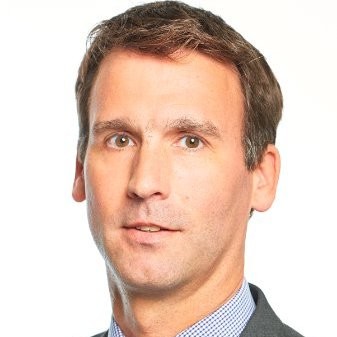
Christian Gueckel – Head of Verticals Chemicals and Energy at Siemens Digital Industries
Christian Gueckel is the Head of Vertical Chemicals and Energy at Siemens Digital Industries. In this role, he is responsible for sales operations within the vertical.
Prior to joining Siemens, Gueckel spent more than ten years at the specialty chemicals company Clariant in various management positions, including Head of Strategy and Marketing. He also earned his PhD in inorganic chemistry from the Ludwig Maximilian University of Munich.
Connect with Christian on LinkedIn
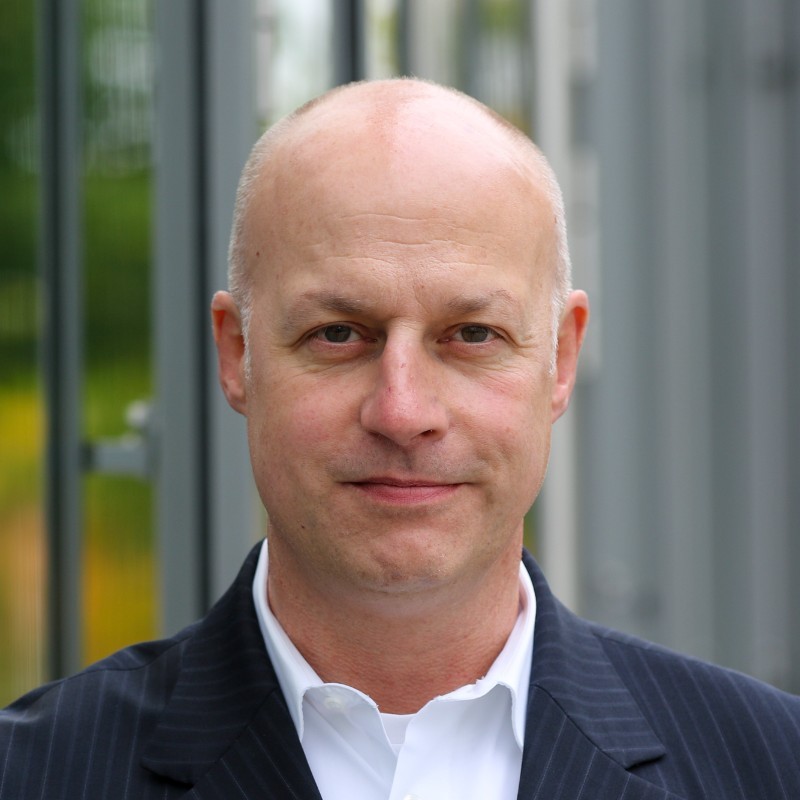
Bernd Kalusche – Director Vertical Management Chemicals and Energy at Siemens Digital Industries
Bernd Kalusche heads business development for the Chemical and Energy sector at Siemens Digital Industries. In this role, he leads an organization that serves customers around the globe with various electrification, automation and digitalization needs. His goal is to help customers successfully navigate both digital transformation and the energy transition.
Bernd Kalusche holds a master’s degree in chemical engineering from the University of Stuttgart, Germany. He builds on his 25-year long experience with Siemens AG at various positions within Germany and the United States.