What a green energy ecosystem actually looks like – Transcript
To listen to the podcast on green energy ecosystems, click above. Or to learn more, read: Green energies and hydrogen: Using simulation to design systems and coupling the system model to the PLC for control evaluation.
Conor Peick: So, hello and welcome to the Future Ready Podcast. My name is Connor Peick, and I will be moderating today’s discussion. I am joined by Christian Gueckel, Head of Energy and Chemicals Verticals at Siemens. Christian, thanks so much for joining me today. Really excited to have you on the podcast.
Christian Gueckel: Thanks, Connor. Happy to be here today.
Conor Peick: So, to jump into our discussion, everyone is talking about the big shifts in energy. What are you seeing in the energy industry? What are you seeing in terms of the dynamics and those big shifts that are going on?
Christian Gueckel: First of all, it’s true. We are certainly in the period where we see big, big transformation of the energy system. [The most change] in decades. I mean, I think we haven’t seen that in a long period of time.
And while most people talk just about the switch from fossil energy to renewables, it’s not about that only. There’s many other things which you have to consider when we talk about the energy transition.
And I think at the heart of everything which is in front of us, it’s what we [call] the energy trilemma. And the energy trilemma consists of:
- you need to have sustainability,
- you need to have security of supply, and
- you [need to] have affordability of your energy.
And to make it more complicated, it all has to happen at the same time. So that is kind of the big transition we have to do. [Focus] dealing with the energy trilemma with these three topics, but all at the same time.
So, while we are certainly clearly moving towards the renewables, which is driven obviously by the public, the climate targets, but also the regulations. But recent, of course, global events have also shown us how critical secure supply chains are.
Energy systems, of course, must be green or greener, but they also need to be reliable and economically viable. And I think balancing these … dimensions [are] the real challenge today.
Conor Peick: Yeah, certainly. And you mentioned that it’s a convergence of challenges, maybe, that are sort of pushing the industry in this direction.
But you also brought up that shift to renewables. So, what do you think needs to happen to make the energy transition become a success? What needs to be overcome?
Christian Gueckel: Again, here also, I think several things need to come together.
First of all, renewable energy must be competitive at scale. When we look [at them] currently, wind and solar [are] becoming much, much cheaper and are competitive in certain areas already. But when we talk about green fuels, electric fuels and energy carriers, they are still much more expensive than the conventional alternatives like gas or oil.
So, that gap needs to close. And how [do] we close it? I think 3 topics have to be considered. It’s scale. It’s technology development, which is very, very important. And of course, we need certain market mechanisms in place.
So that’s the first topic.
Second topic, we need to invest heavily in … energy infrastructure, because conventional energy supply chains are different compared to renewable energy supply chains. So, we need to include renewable production plants for green fuels.
You [also] need storage solutions because green energy is volatile. So, you need to have storage … to balance supply and demand.
And then, of course, you have to establish the whole supply chains, which are, in some areas, locally existing. But globally, we are not there yet. So, without that infrastructure, the transition will [get] stuck.
Third, I’ve talked about [this] many times, secure supply chain is essential. I mean, we know it today [with] the [current] geopolitical situation. If oil transportation gets stuck, we are in a crisis mode.
So, for the many green value chains today, they are still too volatile and vulnerable, which makes them not attractive, not competitive. Since they are dependent on weather, on geography, and also on limitation of feedstocks (particularly [when talking] about biodiesel or biofuels).
So, we need certain redundancy. We need resilience to be built into the renewable energy supply chains. That’s clear.
Finally, regulatory frameworks must provide … long-term security. Why? These energy projects are capital intensive and long term. Without clear and stable regulations, people will not invest in these kinds of projects.
So, we need to make sure that there is a future for these projects, that they have a stable future for 30, 40 years. And then people will go and do these investments.
Conor Peick: It’s where … the regulatory environment and the infrastructure challenge, they come together in that way because to build infrastructure, you need to be sure that your investment is going to pay off. It’s going to be secure in the future, right?
Christian Gueckel: Right, yeah.
Conor Peick: And so, as we think about these challenges, obviously we don’t want to just ruminate on all the things going wrong. Laughs.
Or maybe not “going wrong,” but “all the things standing in the way” perhaps is a better way to say that.
But so, in that vein, what sort of technologies (that we have today), how do they support this energy transition? What do we have available in our toolkit to try and overcome some of these challenges?
Christian Gueckel: Very good, very good question.
Let me start with this statement: “I think technology is the absolute key to make the energy transition become [a reality].” When we look at technologies, of course, we already have proven technologies in our industry and the energy system like biogas, biodiesel, … bioethanol … or hydrogenated fatty acids.
These technologies are available today and they’re already contributing to the energy transition. The problem, however, is they are limited, limited because of feedstock availability. We don’t have endless [supplies], of feedstock to basically feed the energy hunger of the world.
And we know the energy hunger grows bigger and bigger. I mean, we need more and more energy. So, they won’t be able to cover the entire future.
So, what’s next? Then we have another topic, which is the volatile renewable technologies like wind and solar. They’re also there. They contribute, but they’re volatile. The sun is not shining. It’s shining only during days. The wind is not always blowing.
So, they could be the backbone to the future energy system, but they are still, the variability creates these new challenges. So, what we need there, also, is energy storage. [When] we have an oversupply of green energy, we can store [it] and then absorb [and] take [it] out when we need [it].
And of course, we need alternative production technologies. And these are these energy carriers. We often [hear about] green hydrogen, green ammonia, green methanol, or even the e-fuels. If we can store the energy, then the overcapacity energy in these green energy carriers, that will allow us to really store green energy. We can transport it. We [can then] convert it into energy, if it’s needed, for mobility for the industry or even for power generation.
So, the key point [is that] these technologies don’t compete. They complete each other, … they have to work together. That’s very important.
So, it’s like a symphony of different elements who have to be in sync in order to make the energy transition happen.
Conor Peick: Right. That’s a really interesting perspective as well. Because when you say, “energy storage,” and say that in regard to solar or wind or these things [as you put it], they’re volatile, right?
You don’t generate electricity when the sun isn’t shining, that sorts of thing. So, you need a way to store energy to cover gaps. I’ve never thought of e-fuels or some of these carbon neutral sort of fuel sources as energy storage technologies. I just thought that was such an … Yeah, go ahead.
Christian Gueckel: But they are.
I mean, at the end of the day, if you have an overcapacity of green electrons and you don’t have demand, what are you going to do with it?
I mean, we know it already [happens] in certain European countries. You have to shut down the power supply, or you have to shut down the windmills, because there’s simply too much electrons in the system for the demand.
So, what do you do with it? So, this [energy surplus] can [be used] to build up storage. [You] can do battery storage as one part, but it’s capital expensive. [Alternatively], you go into e-carriers, or e-fuels. So that’s another dimension you can use.
Conor Peick: Yeah, it’s just I thought that was such a fascinating idea that had never occurred to me. So that’s really cool.
And among those technologies that you mentioned, there’s obviously a lot of threads we have that we’re developing. But Is there one you think will play maybe the biggest role or a major role in the future?
Christian Gueckel: Honestly, there will not be a single winner. I think they’re all important. All of these technologies are important.
Today, of course, most of them are still niche solutions. There are some lighthouse projects, some lighthouse green hydrogen projects, some lighthouse green ammonia projects, some lighthouse battery storage projects.
So, capacities are small and many plants are not yet operating at their full rates. So, there needs to be development in that area. In the future, what I will see is that the portfolio of technologies [will depend] on regional resources, infrastructure, and also the industrial needs. So, you have to find the right combination for your specific area, your specific location.
So, as I said, it’s not only one technology [that] will win. they all have to play together. But it will [not be] a global system like we have today. You have coal, you have oil, you have gas. It will be different depending on the regional specifics.
So again, not one technology will win. They have to play together, but it’s not this one single solution. It’s a combination of what matters for you, in your region, in your country. I think that’s the way … I would put it together. How the energy transition will finally play out.
Conor Peick: Yeah, right. That combination of things coming together [depends] on what’s available and what you need in your region.
So of course, the other big challenge that we’ve talked about a few times is the idea of a secure supply chain. And of course, with energy it’s so critical that you have a reliable supply of energy coming in to power your homes or your cars, whatever it is.
What do you think needs to happen with these technologies that we’re working on, that we’re developing to contribute to a more secure supply chain in the future?
Christian Gueckel: I think what technologies are there already, they need to scale, as we said. I think the first thing which needs to happen [is that] we need to have [a lot] more green electricity. Yes, today, we talked before, [that] sometimes you have to shut down windmills and so on, but at the end, you need a lot of green electricity to drive this forward.
Green electrons are the basis of everything, of direct electrification, which is an easy way to decarbonize, but also hydrogen e-fuels and so on. All of it depends on having renewable power generation.
So secure supply chains are not so much depending on technologies, they’re really depending on enough green electrons in the system. So, we need to continue to build renewable power, knowing that they’re still volatile, and then coming up with, additionally … these other technologies which can be used to store the green electrons.
But that’s, I would say in the sum up, is the combination [of] how you secure supply chains. Create enough green electrons and then build similarly enough storage capacity that you can spread the green electrons over the whole day, period, months, whatsoever.
Conor Peick: It’s one interesting maybe additional challenge with some of these green sources is I’ve heard recently. One of the advantages of oil, as a liquid, is that you can put it on a ship and send it to another country.
Of course, we don’t have global electrical grids. So, [for] some of these, the global supply chain is not maybe in that aspect is not as existent for some of these green sources.
But It’s a maybe a detriment and an advantage, of course, because we’ve talked about geopolitical tensions and the situation that is, of course, throwing a wrench in the works for the oil industry, of course.
Christian Gueckel: True, but … I would like to comment on that…
Yes, it’s not existing yet, but it’s in principle possible. And I think even… right now the … oil, gas, coal industry is global. I mean, you ship it around, you mine it somewhere, you pump the oil off the ground somewhere, you ship it globally.
That can also be done with so-called energy carriers. We talked about e-fuels, methanol, ammonia, whatever. It can be done. It’s simply not currently available at scale and competitive enough compared to the alternative fuels. But it can be done. And I think it has to be done.
I don’t think the overall energy transition will be just a local topic, [or] a regional topic. It always has this global component in it. There will [always be] a global aspect because we have, even for renewable energy, we have areas which have much more sun, much more space, much more wind, other areas don’t have. So, they will be the supplier of the green electrons.
And as you said, right, … “we don’t have a global grid.” Our grids are very [local] country wise. So, we need to build these energy carriers in order to transport the green electrons from A to B. And then these energy carriers or e-fuels come into place like ammonia or methanol, and they can be shipped. They can be shipped.
It’s simply not done yet. I mean, there was a lot of discussion five, ten years ago or five years ago, blue-green ammonia or low carbon ammonia from the Middle East to Korea to drive the energy transition in Asia.
It has not happened yet because the energy carriers are not competitive yet. And then I’m coming back to one of my first points saying, “we need scale, we need competitiveness for this energy carriers.” It’s not there yet, but we are getting there slowly by building more, going that [way].
Also, the current geopolitics will drive that a little bit to become a little bit more independent from certain areas. So, it’s going in [the right] direction and it’s possible.
You can have a local energy transition. However, you also need, you always have to look into the global aspect.
Conor Peick: Yeah, that’s so good. I’m glad that you commented on that because you’re right, you brought it back to what we were talking about earlier with the e-fuels.
And I mean, presumably you also even have uneven rates of adoption across the globe. And so, while one region is trying to catch up with their local production of wind or solar, whatever it is, maybe they’ll be able to import some of those e-fuels to help reduce their carbon footprint while still meeting their energy demands.
Nice.
So then, assuming as we, as more of this transition takes place, assuming we have enough capacity of green electrons, what challenges still remain? That’s maybe in the same vein of what we were just talking about. But yeah, what do you see out there as hurdles that we still need to overcome?
Christian Gueckel: Good question.
Now you said, “we have enough green electrons. So, what do we do?” Both laugh.
Still, I think there will [be] fluctuation. I mean, you produce electrons, mainly wind and solar [are] good ways to do it, there will [still be] fluctuation.
So, I think what’s really, really important is an intelligent coordination of the overall energy system. We talk so much about, okay, you make the green electrons, you have immediate demand, just supply [them] in the grid.
But then you also have other carriers or other storage opportunities like battery storage, like methanol, like ammonia. And I think what we need to do is find an intelligent way how we optimize supply, demand and storage in a very intelligent way.
And as we know, supply demand for a conventional energy system is very easy. You pour in more, you turn on the gas, or you slow down, you run your gas fired power plant, higher load, lower load, you can easily go down, up and down. That’s very easy and common.
But for green energy, we still have this volatility, and we still need to consider a lot … more factors. Weather is important. Then if you talk about biomass, it’s supply chains. So, you need to connect a lot more input data into a system to organize or orchestrate the whole system in the best possible way.
When do you give the green electrons to the grid? When do you make energy carrier E or B? What’s the demand and so on? So, this is, I think, very, very important. These intelligent coordination across the entire energy system.
And as I said, this renewable or green energy system is much more complex than what we are dealing with today. So, it must be dynamic in the things we are doing. Dynamic in terms of when do we put [it] into storage, battery storage, when we put it into hydrogen production.
Because You can put it in storage, you can put it in hydrogen production. Both are energy storage, but they [serve] different needs. If you have a battery storage, you just take the electrons out of the system. That’s easy.
But if you make hydrogen, you need somebody who can convert the hydrogen into something. [Maybe] he makes green methanol.
So, there’s a [lot] more input factors which need to be considered. And I think we need to come to this way that we develop a platform who takes all these variables into account and then comes up with an optimized orchestration of all these factors.
And this is, I mean, human beings can do a lot, and we have a lot of smart people, but I think it will overwhelm [the] people [that] can orchestrate that. And we at Siemens, we [figured out early]:
“Hey, there’s an opportunity where you could develop like an open energy platform where you can introduce all these input factors and output factors like wind, weather, supply, demand, whatever.” And then you use dynamic models to orchestrate the system to find the best use, storage or demand for your energy system.
I think this is very, very important to have these intelligent energy platforms who [are] capable to absorb all the input factors, which are coming from the supply side, but also from the demand side, and then orchestrating your energy system at the best efficiency.
Conor Peick: So that’s great. Awesome.
Well, Christian, thank you so much for your time today. This is a really, really interesting discussion for me: diving into the energy transition and the complexities of the global energy supply chain.
So yeah, just thanks again for joining us.
Christian Gueckel: Thank you very much. I appreciate it. I really enjoyed the discussion today.
Conor Peick: And thanks, as well to the listeners for tuning in. We’ll have more to come on all things energy in following podcasts.
So, thanks again and we’ll see you next time.
To learn more, read: Green energies and hydrogen: Using simulation to design systems and coupling the system model to the PLC for control evaluation.

Conor Peick – Moderator
Conor Peick is a Marketing Professional helping to create forward-looking content for the Thought Leadership team at Siemens Digital Industries Software. Conor collaborates with seasoned industry experts and executives to produce podcasts, articles, blogs, and other forms of content focused on the trends and challenges companies face in the future, and the technologies that may provide solutions.
Connect with Conor on LinkedIn
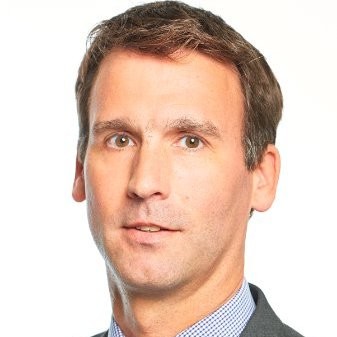
Christian Gueckel – Head of Verticals Chemicals and Energy at Siemens Digital Industries
Christian Gueckel is the Head of Vertical Chemicals and Energy at Siemens Digital Industries. In this role, he is responsible for sales operations within the vertical.
Prior to joining Siemens, Gueckel spent more than ten years at the specialty chemicals company Clariant in various management positions, including Head of Strategy and Marketing. He also earned his PhD in inorganic chemistry from the Ludwig Maximilian University of Munich.