How to Scale the Digital Twin to Boost Industrial Value
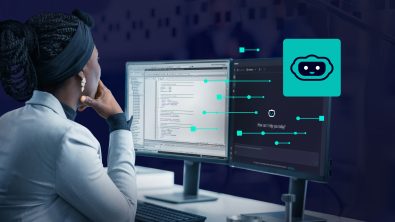
Digital transformation has evolved in recent years from vision to strategic imperative for industrial companies. Companies must accelerate processes and manage exploding system complexity in response to rigorous customer needs and demands. Digital transformation enables companies to combine the real and digital worlds, managing product and production lifecycles through a unified digital ecosystem. Such investments promote a strong data backbone and connected workflows, creating solid footing in a world increasingly shaped by Industrial AI.
Yet, the journey from initial adoption to enterprise-scale digital ecosystems is often circuitous. Short term problem solving coupled with a long-term vision can help companies navigate the journey, delivering immediate value while creating a foundation for greater scale and more advanced capabilities in the future.
This “dream big, start small” approach, as summarized by Dominik Zettler, Vice President of Simulation for Industrial Systems at Siemens, can help companies overcome initial hesitancy and take the most critical step: getting started.
Early Digital Twin, Industrial AI Adopters Bring Unique Perspective
Companies that have already embarked on digital transformation tend to share a strong internal motivation to lead. As Zettler describes it, these early adopters view digitalization not as a cost, but as an investment in their future competitiveness. They want to occupy the pole position in their industries and are willing to commit the resources necessary to get there.

However, even the most motivated organizations encounter obstacles. Adopting new tools is only the beginning. The greater challenge lies in understanding how to integrate those tools into existing workflows and processes. As Zettler notes, companies often return for additional guidance — not because they need help operating a specific piece of software, but because they need to understand how to bring multiple tools together into a coherent, productive system.
Increase Digital Twin Maturity Step-by-Step
For many companies, the possibilities available through digital transformation can be overwhelming, at first. Rather than trying to tackle the digitalization of the entire organization at once, an iterative approach is more likely to succeed. According to Zettler, the answer lies in starting with a valuable, well-defined use case and fostering growth from there.
As Zettler explains, digestible progress allows organizations and teams to develop alongside the technology. Colleagues who were initially skeptical often become the strongest advocates after two or three years of working within a digitalized environment.
A common entry point for companies working close to production and automation is virtual code validation. Rather than testing programmable logic controller (PLC) code against a physical machine, engineers validate it against a virtual instance. This is a relatively simple setup that delivers immediate value and opens the door to a natural progression of further applications.
From virtual code validation, companies often move to virtual pre-acceptance testing, then to virtual commissioning and eventually to using the Digital Twin to train customers on equipment that has not yet been physically delivered. In nearly every case Zettler has encountered, companies discover these next steps largely on their own. Once the technology is in place and delivering results, teams begin to identify upstream and downstream opportunities where the same capabilities can be applied.
The Role of Artificial Intelligence
Looking ahead, Zettler identifies artificial intelligence (AI) as the most significant force that will shape the evolution of the Digital Twin. In his view, AI does not compete with the Digital Twin and will only amplify its capabilities.
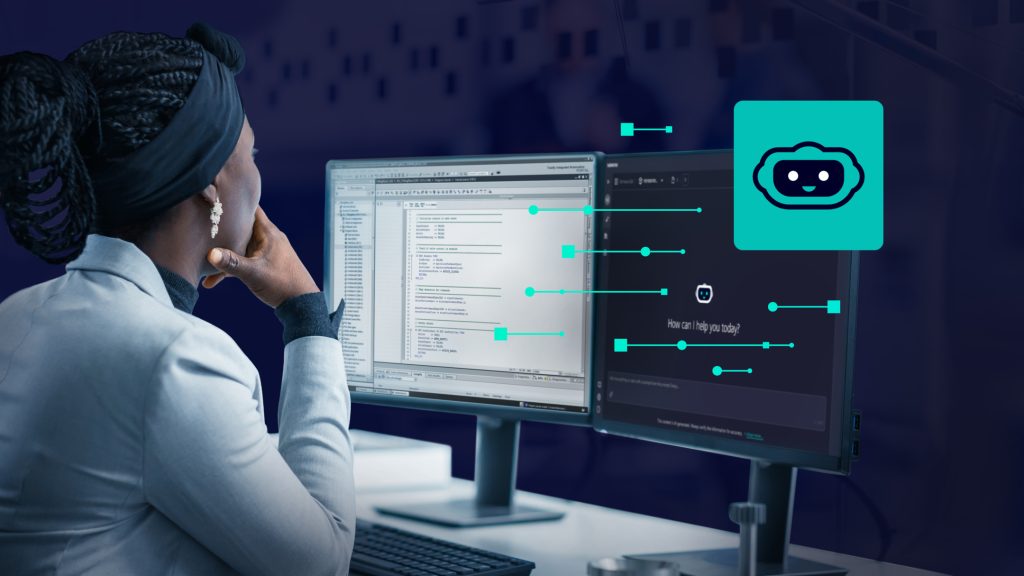
One of the most immediate impacts of AI is the democratization of access to complex simulation and engineering tools. Zettler draws on his own background as a mechanical engineer to illustrate the point. Early in his career, transferring knowledge about a machine’s intended behavior to an automation engineer required extensive written documentation and significant back-and-forth communication. Much was lost in translation. With AI-powered agents embedded in engineering workflows, professionals will increasingly be able to perform tasks that previously required specialized expertise in adjacent disciplines. A mechanical engineer may be able to interact meaningfully with automation tools while an automation engineer may be able to engage with simulation environments — all with the assistance of intelligent agents that bridge the knowledge gap.
Training Industrial AI in the Virtual World
The intersection between Industrial AI and the Digital Twin is also mutually beneficial. High fidelity virtual environments can train AI algorithms before they are deployed in real production settings.By training algorithms against a virtual representation of a machine or production process, companies can begin the training process before any physical hardware exists — dramatically reducing the time it takes for an AI model to deliver value in a real production environment.
Furthermore, the Digital Twin provides a safe environment for testing AI algorithms before they are applied to live production systems. In industries where product quality and process integrity are non-negotiable — such as food and beverage, consumer goods or pharmaceuticals — the ability to validate an algorithm’s behavior in a virtual environment before it affects real production is essential.
Scaling the Digital Twin for the Future
The convergence of the Digital Twin and artificial intelligence represents one of the most consequential developments in industrial technology today. For companies that have already begun their digital transformation, the path forward involves continuing to expand use cases, deepening integrations and extending the Digital Twin across the full lifecycle of both products and production systems. For those yet to start, the message is clear: begin with a valuable use case, set realistic goals and trust that the journey, taken one step at a time, will lead to transformative results.
Siemens Digital Industries Software helps organizations of all sizes digitally transform using software, hardware and services from the Siemens Xcelerator business platform. Siemens’ software and the comprehensive digital twin enable companies to optimize their design, engineering and manufacturing processes to turn today’s ideas into the sustainable products of the future. From chips to entire systems, from product to process, across all industries. Siemens Digital Industries Software – Accelerating transformation.