Digital Twin and AI: Synergies Empower the Digital Enterprise

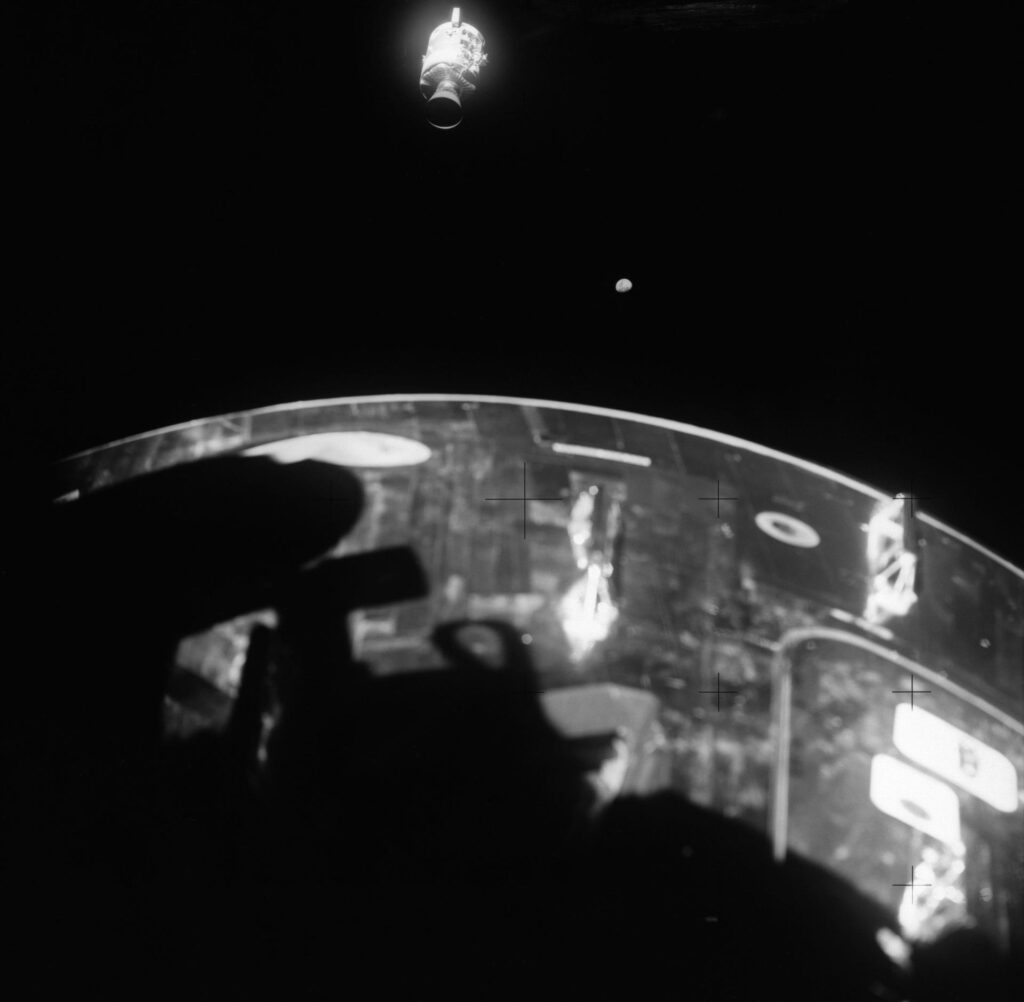
56 hours into its mission, 10pm EST on April 13th, 1970, an electrical short in a fan wire caused a fire that led to the explosion of an oxygen tank on Apollo 13. To diagnose the cause of the explosion and ensure the safe return of the Apollo 13 crew, NASA created a “living model” of the mission that included various simulators that extended beyond physical into the digital. This was the first Digital Twin (DT), and it enabled NASA engineers to leverage data to model the disaster and its precipitating events to understand its causes and plan actions for the crew.
The Digital Twin has been the engine of innovation ever since. Today, companies across all industries have embraced digitalization and the Digital Twin concept to become Digital Enterprises to accelerate product development, project execution and production system engineering in the virtual world. Now, the emergence of artificial intelligence and machine learning (AI/ML) has Digital Twin technology poised to undergo its most rapid gains in years.
How AI Removes Data Barriers
The Digital Twin of any product, process, production plant or system is assembled and updated with everything from structured data authored in various engineering teams and tools to data gathered from sensors. The structured data comprising the Digital Twin may include CAD/CAE data (in 1D, 2D, 3D, etc.), simulations, code, diagramming as well as sensor data such as pictures, temperature, pressure, filling-levels and human feedback, depending on the nature of the system.
Yet, the largest portion of any company’s data is typically unstructured and uncontextualized, having neither standard format nor descriptive metadata. Even more challenging, much of this data is contained in text, images, video files, and PDF documents that are difficult for traditional software to automatically import into existing data-driven systems, such as the Digital Twin.
AI Supercharges Data Preparation
These challenges related to data structure (or the lack of it) have created a data preparation bottleneck. To date, tapping into the data available to most companies has relied on an expensive, time consuming, and highly manual process.
Moving forward, AI will vastly increase the speed and efficiency of connecting unstructured and uncontextualized data with the Digital Twin. This will alleviate the bottleneck that has prevented companies from completely leveraging their data. Additionally, as AI agents grow more advanced, they will help automate the creation and management of data pipelines, increasing the observability of data workflows and automating contextualization tasks – even for highly complex systems.
Widening of the data preparation bottleneck will further enhance the Digital Twin and ease its adoption in sectors that have historically lacked easy access to well-structured, contextualized data as well as those which have traditionally required significant manual effort in data preparation. In sum, AI will unlock the full potential of the comprehensive Digital Twin.
The Symbiosis of AI and the Digital Twin
The Digital Twin also provides a critical function for AI-based engineering processes as it supplies a true-to-life digital sandbox for training AI models and verification and validation of AI-generated results. Future AI design, engineering and operation assistants will rely on the Digital Twin as a ground truth for proposals and final design validation.
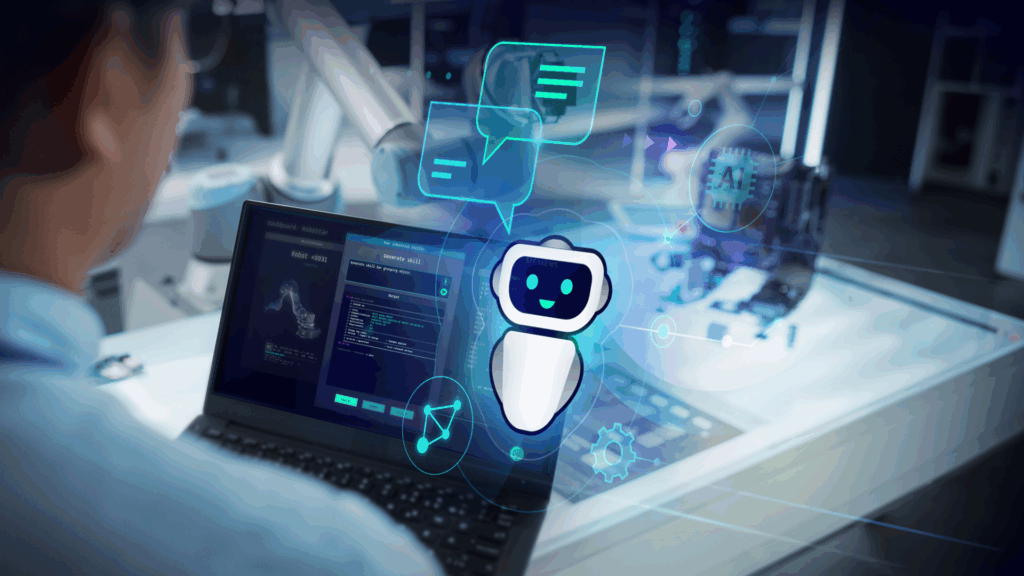
At the same time, AI will expand access to the Digital Twin and unlock additional use cases. The high computational cost and domain expertise required for high fidelity simulation has limited its use, especially in early design stages. AI can help accelerate simulations, reducing their computational cost and schedule burden.
A key advancement to accelerate slow simulations has been the creation of AI-powered reduced order models (ROMs) that are trained on high fidelity simulation data created during traditional design processes. Deploying this technology within the comprehensive Digital Twin allows changes to be tested in a true-to-life digital environment as quickly as they can be imagined. By combining the Digital Twin with AI accelerated design and simulation tools, teams can propose, test, and validate even small design changes to stay current with fast evolving design requirements.
Journey to the Industrial Metaverse
The combination of the comprehensive Digital Twin, Industrial AI, and software-defined automation will create the foundation for the Industrial Metaverse (IMV), a place that connects the Digital Twin, data, AI, and humans at every step of the product design and production process into a complete ecosystem where fast decisions are made leveraging precise and robust data. This true system-of-systems-level simulation will unlock the potential for holistic optimization that accounts for all multi-domain interactions.
Critically, information flows in both directions. Live operational data is gathered from connected machines and supplied to the central compute and control systems, enabling day-to-day production characteristics of individual machines, entire production lines, or even large-scale facilities to be monitored. In the other direction, programming updates can be delivered en masse, pushing new code to all machines of a given type, or updating an entire production line at once.
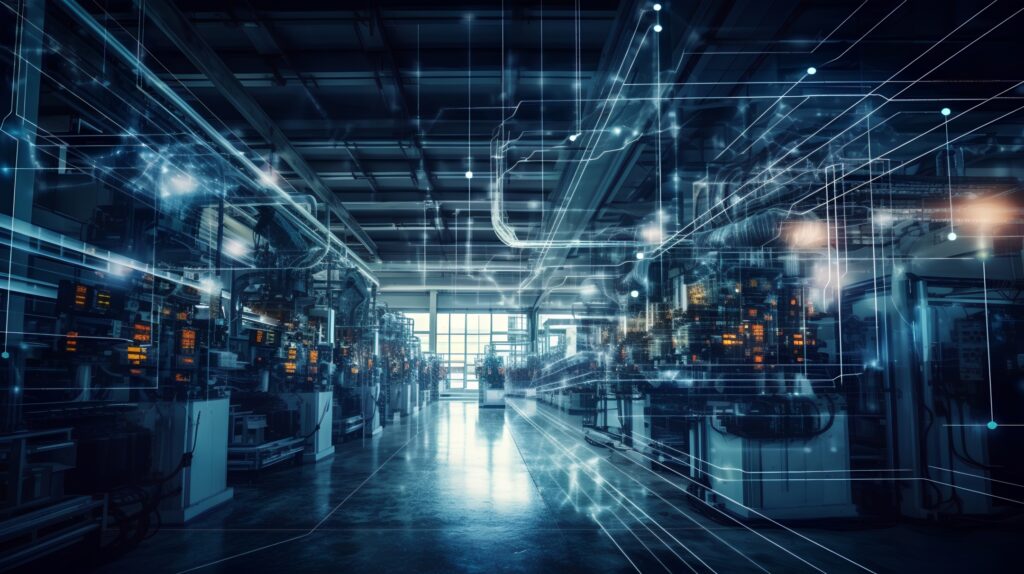
These capabilities will empower humans and AI to collaborate and use the Digital Twin at unparalleled speeds to accomplish product or production optimizations, develop software updates, and understand complex supply chains in the holistic engineering environment of the IMV.
Conclusion
From its origins in crisis management during Apollo 13 to its role as a cornerstone of modern engineering, the Digital Twin has accelerated innovation across industries. Today, the integration of AI is pushing the boundaries of what is possible, removing longstanding bottlenecks, improving the fidelity of digital models, and enabling rapid simulation and optimization.
Looking ahead, the Industrial Metaverse will serve as the ultimate aggregation point for AI, the Digital Twin, and software-defined automation – creating a fully interconnected ecosystem of several Digital Enterprises for collaboration that enables real-time modeling, decision-making, and holistic optimization.
The future is unfolding rapidly, and those who harness the synergy between AI and the Digital Twin on the path to the Industrial Metaverse will position themselves at the forefront of innovation.
Read more: AI and the Digital Twin are transforming engineering!
Siemens Digital Industries Software helps organizations of all sizes digitally transform using software, hardware and services from the Siemens Xcelerator business platform. Siemens’ software and the comprehensive digital twin enable companies to optimize their design, engineering and manufacturing processes to turn today’s ideas into the sustainable products of the future. From chips to entire systems, from product to process, across all industries. Siemens Digital Industries Software – Accelerating transformation.