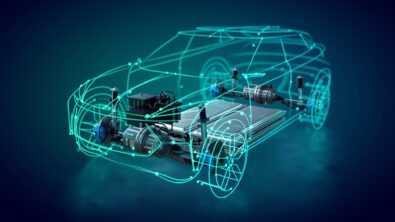
Shift-Left with the Digital Twin: A New Era of Software-Defined Products – Part 3
The rise of software-defined products is reshaping product design and business strategy across multiple industries. In the third part of a recent series on the Industry Forward Podcast, Siemens experts Dale Tutt, Doug Burcicki, and Scot Morrison explore how companies are embracing a new paradigm: shift-left engineering paired with shift-right operations.
With Digital Twin and digitalization serving as key enablers, the shift-left mindset transforms traditional workflows—moving from rigid, one-off programs toward flexible, scalable architectures designed for continuous improvement and long-term profitability.
This blog features some of the key moments from the conversation, edited for brevity and clarity!
Q&A Spotlight: Shift-left Redefines Development
How shift-right compliments shift-left thinking
“We’re not just delivering a product and walking away anymore,” says Tutt. “You have to envision how that vehicle will operate a decade into the future—and make sure it has the capabilities to match.” This shift-right mindset flips the traditional release model on its head. Instead of finalizing software once the vehicle ships, OEMs must plan for updates, enhancements, and fixes across its lifecycle. That demands agility and foresight—especially when aligning modern software strategies with multi-domain hardware environments.
Adding the concept of shift-right enables companies to take new approaches to revenue generation, product maintenance, and the management of risk. Burcicki notes that several major automotive OEMs have been transparent about plans to increase revenues through software that will be developed and sold in the future. Morrison notes that this shift-right of software development and delivery throughout the vehicle or product lifecycle extends the software-defined vehicle to become a “software-maintained and software-enhanced” vehicle, enabling automakers to potentially address software issues through remote patches that prevent costly recalls.
Digital Twin, simulation, and end-to-end digitalization
Morrison breaks it down: “From my role in shift-left software enablement, we see real value across the development process—from early simulation with the Digital Twin to ongoing software maintenance after release.” He stresses that customers want to shift as early as possible—even before physical hardware is built—and stay adaptive throughout. That’s where digitalization plays a starring role: enabling connected, cross-phase insight that informs design, validation, and evolution alike.
Burcicki adds, “Virtual environments let teams identify reusable components and build platforms that scale, rather than reinvent architectures every cycle. These aren’t one-and-done designs—they’re meant to persist, evolve, and grow.”
Collaboration is the competitive edge
“The industry is still in its early stages,” says Burcicki, highlighting that while a few OEMs have taken the lead, many have struggled with first-generation launches. Success, he notes, isn’t just about technical capability—it’s about partnerships. Volvo and Daimler Truck’s joint software facility in Europe, and VW’s collaboration with Rivian, illustrate the value of co-development. Rather than duplicating foundational software, they’re focusing on differentiated customer experiences at the app level.
The takeaway? Legacy OEMs must rethink decades-old mindsets to thrive in the software-defined product space.
Final Thoughts
As Tutt wraps up: “Shift-left will help manage risk and define high-performing products for years to come. But shift-right is just as vital—for maintenance, evolution, and continued customer value.” It’s a multi-domain challenge—but also an opportunity to rethink everything, from chip to cloud and cradle to grave. In a world of evolving software-defined products, the companies who embrace both sides of the shift—and lean into Digital Twin and digitalization—will be the ones who drive forward.
You can listen to this podcast and more great conversations over on the Industry Forward Podcast!
Siemens Digital Industries Software helps organizations of all sizes digitally transform using software, hardware and services from the Siemens Xcelerator business platform. Siemens’ software and the comprehensive digital twin enable companies to optimize their design, engineering and manufacturing processes to turn today’s ideas into the sustainable products of the future. From chips to entire systems, from product to process, across all industries. Siemens Digital Industries Software – Accelerating transformation.