Convergent and divergent needs of the automotive and heavy equipment industries – On the Move S01E09 – Transcript
With episode 9 of On the Move: A Siemens Automotive Podcast, we are starting a three park conversation with an expert from the heavy equipment industry and a subject matter expert on autonomy for vehicles. You can read the full conversation of part one below or hit play to listen in.
Mike Severson
Welcome to On The Move, a Siemens Automotive podcast where we explore the automotive industry, uncovering the trends driving its evolution. I’m your host, Mike Severson. I’m a senior automotive marketing manager here at Siemens. And today I’m joined by Nand Kochhar, the VP of the automotive and transportation industry. For this episode, we are bringing together a few internal experts to talk about how automation is changing vehicle and heavy equipment development by way of the software-defined product. To uncover some of the engineering changes taking place, we have Akshay Sheorey, Automotive and Transportation Industry Specialist for Autonomy. To take a look at the future of vehicle development and learn about the advancements in heavy equipment, we have Hendrick Lange, the Senior Director of Heavy Equipment at Siemens Digital Industries. Great crew we have assembled today. So first question, guys. When we look at heavy equipment and the automotive industry, they seem to have some similar challenges. And we’ve talked about how each industry addresses these challenges differently. But I’m curious, where do the differences in strategies actually come from. Hendrik, would you mind talking to the needs of heavy equipment customers compared to those in automotive?
Hendrik Lange
Yeah, Michael, thanks. Thanks for having me. It’s a pleasure to be on the podcast today. So as you pointed out before, we see a lot of similarity, but also unique requirements for the heavy equipment industry. So there are a lot of commonality when we look at transportation, truck, bus, for instance. But there is a difference to the automotive industry. And that’s the reason why we focus particularly on the heavy equipment industry to satisfy those special requirements and needs for our customers. So as for instance, let me give a couple of examples. So one is the long liberty of our products, right? So they are running for 30 plus years. And typically we operate in very harsh environments. So the other thing is that our customers and the owner-operator want to have maximum use out of their equipment. And that means unplanned downtime is not what is really desired. So there are a lot of specific requirements for our industry. And also another topic where we differentiate is in autonomy, as for instance, autonomous operations. And I’m pretty sure we will talk more about that compared to what automotive has. Again, just because of the environment we are operating in, but also the operations we fulfill with the equipment. So again, a lot of similarity, but a lot of differences compared to automotive and transportation.
Mike Severson
Yes, you bring some good points. So the extended operation durability being very important as these pieces of equipment will have a long life and a very different set of requirements. four wheels on usually both, but yes, I think you highlight some of the key changes. So Nand, what is a software-defined vehicle?
Nand Kochhar
All right, Mike, once again, thanks for having me on this podcast. Software-defined vehicle, there’s many definitions, but you could start with where today and future’s feature functions are predominantly being led by software. And of course, let me expand on that software X on electronics. As we all know, over the last few years, and you could say even decades, we have more and more semiconductor electronics content in the vehicles. Vehicles are no longer today and definitely in the future. In mechanical or electromechanical based systems, there’s more electronics. And the software is what acts on that electronics to do all the maneuvers, to do all the features and functions which are being driven from a customer demand standpoint. So that’s the kind of, you could say, broad definition of software-defined vehicle. Now, of course, some history of electronics, it started way back in the 70s with just simply transmission control units, electronic control units, working on the power transat of the business to offer the fuel economy, et cetera. But over the years, there’s been a maturity in the electronics content that bring in into the brake systems, brake control modules, then bring in into the safety control modules. And ever since, it’s been growing until we got into the ADAS and autonomy features. And when they started to come in, all of a sudden you see a significant growth in the electronic control units in a vehicle anywhere from 100 to 160 based on the type of vehicles. So you can see now how much electronics we have in the vehicle and that all software is acting on it and controlling the feature function offerings, both from a vehicle operation perspective, but also from comfort, convenience, and human-machine interface for the customer driving the vehicles. So that’s kind of a broad definition and a background on the SDV. Of course, this is building on the trends we’ve been talking about in transportation, automotive, and mobility industry broadly. So that is the trends of connected, autonomous, shared mobility, and electrification. So SDV, you could say, in a way, is bringing all these trends we’ve been talking together in a single vehicle and offering that a user experience. That’s kind of the starting definition of SDV.
Mike Severson
Great. Hendrik, is there an equivalent to a software-defined vehicle in the heavy equipment industry?
Hendrik Lange
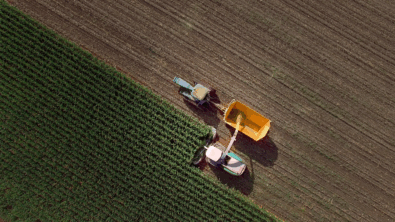
Yeah, Michael, good question. And it is. So we call it software-defined product or equipment, but it is very similar, right? But let me explain a little bit more. So the heavy equipment industry used to be really developing equipment, which was mainly hydromechanical machines, right? So this has greatly changed. So through things like precision farming, automated agriculture. So we see exactly the same, right? So it is not anymore that just hydromechanical machines get developed. There’s a total new generation of machines, highly connected, electrified, autonomous, software-based systems of systems. And this is exactly what we see in automotive or in transportation. So we see exactly the same for the heavy equipment industry, which is a huge challenge for the OEMs, but delivers a lot of opportunities for business, new business models, and obviously addresses some of the biggest challenges in the heavy equipment industry. As I stated before, we operate in dangerous places, consider a mine, under harsh conditions. We see challenges to have skilled labor in agriculture. All of this helps with addressing those kind of challenges. And on top of this, this drives also the demand for, as for instance, more sustainable products, which are, again, very critical in, as for instance, mining. So, yes, we see exactly the same. It’s a huge trend. We are probably a little bit behind the automotive industry and aerospace, which we are leading there. But our industry is in full transformation at the moment.
Mike Severson
Very interesting that there’s different drivers for this technology. In automotive, there’s a shift to autonomy for safety purposes, reduce the number of crashes. And you see some of that overlap within heavy equipment, but also another driver in heavy equipment being the lack of skilled labor to operate the machine. So making them autonomous. Very interesting to see that there is an overlap, but also some key differences there. So there is the perception that there is a lot of overlap between automotive and heavy equipment, and I highlighted some of those. Let’s explore that a bit further. As it relates to autonomous operation, what challenges are unique to each industry and where do we see them overlap? Akshay, do you have some insights here?
Akshay Sheorey
Sure, Mike. Thanks for having me. Yeah, so if you look at overall for heavy equipment industry, right, there are two modes of autonomy that comes into play. One is what one would call a driving dynamic task, right, where you’re driving the machine, and then there is the operation of the machine, which is more towards what does that machine do, right? Whether it’s farming, precision farming, precision irrigation, mining applications. So as such, the sensors, the foundation can be the same. So cameras, lidars, radars, ultrasonic sensors. So the foundation technology remains kind of common across these two industries. But then the details matter, right? So for example, for driving dynamics task, you know, generally most of the ADAS systems that are in operation today or, you know, what we would call semi-autonomous driving systems that are, you know, geared towards what one would call, you know, clearly defined roads, clearly defined intersections, speeds, etc. Or what one call the operational design domain where that machine, in this case, the automotive car will operate in. While in the heavy equipment one, that operation design domain is very different, right? Could be in farms. They could be in mining environments. They could be in, you know, forest areas. So then how do you train the different autonomous algorithms with machine learning AI technologies across these very different operating environments is the challenge. And then where they operate also affects the effectiveness or the efficacy of the different sensors and the modalities that these sensors can offer. So even though the foundational technologies in terms of machine learning, AI, the type of sensors are common across the industry, the training, the rigor that is needed in terms of both the driving dynamics task as well as the training and operating tasks can be pretty different. So, yeah, they are same. They can be similar, but they are pretty different depending on what is that product that is being automated.
Mike Severson
Would there be more rigor required for operating a vehicle on, let’s call it a highway or a freeway versus navigating through a mine? Is one of these models more difficult to develop or presents different challenges? I would say both are different challenges. Right. Highway,
Akshay Sheorey
you know, you know, if you’re in, you know, U.S. or Western countries, you know, highways are typically, you know, there are guard rails around. You don’t typically expect a lot of traffic coming in, crossing you, et cetera. So in that regard, it’s a lot more easier, but at the same time, extremely challenging because speeds are a lot higher. Right. So your time to make decisions is a lot smaller. in the case of say a mining operation etc given the cost and the safety aspects associated with it and the the environment which is very dusty you know if you have a lidar or a camera with a dust cloud around you how are you going to see what’s happening without really perceiving it right all those challenges become so both are extremely different um and you know safety right now for autonomous automotive application is the safety of the passengers the occupant and the you know people around the what you call the vulnerable road users around that is important that is the safety criteria here uh in the heavy equipment the safety criteria is there and it’s up you know safety of the operator, safety of people around. You don’t want to, you know, someone is in the corn fields and walking across, you don’t want them to be run over because they were not perceived through the corn stalks or hay or whatever, right? So speeds are different, but the operating environment is also very different. So safety is a critical aspect. And then the rigor needed is, again, appropriate for each of those things separately.
Hendrik Lange
Michael, please allow me to add something to that. What we also see with our customers and with the supply chain is that obviously the volume for sensors is much higher in the automotive industry. We have very specialized sensors with sensor models. For instance, take a camera and the underlying model. So they are not trained to recognize wildlife, right? So ideas in the field or so. So this is a challenge for our industry. So we don’t have the volume like in the automotive industry, but huge demands when it comes to the sensors and to the cameras, right? So dust plays a role. They don’t operate like this. So this is really a challenge. So we don’t see so much support from the supply chain to really focus on the heavy equipment industry and their specific needs. So what urged our customers, the OEMs, to do a lot of the development themselves, right? So that is, I guess, one of the differentiator to the automotive industry, where you have a much more developed supply chain for those kind of things. And they provide purpose sensors and tray models out of the box.
Akshay Sheorey
Yeah, the whole supplier ecosystem is, again, different. And the skill levels available between, you know, just sheer numbers of engineers who know software, who know automotive applications is, you know, multiple factors higher than what is available in the off-highway, you know, industrial machinery, heavy equipment, machinery expertise, right? So that, again, limits in terms of how fast these technologies can be adopted by these manufacturers.
Mike Severson
Akshay and Hendrick, thank you for coming on the show, but I think it might be a good time to take a quick a break. And thank you to all the listeners for spending some time with us, we hope you found this episode of On the Move interesting and enlightening. We will be back in a couple weeks with part two of our three-part discussion, where we will discuss how OEMs can more effectively tap into the core competencies of their supplier networks. Make sure you subscribe so you don’t miss our next discussion. And in the meantime, you can check out our previous episodes or visit our website to learn even more about how to accelerate automotive development and bring software-defined vehicles to market.